
Look, there are a lot of comics out there. Too many. We can never hope to have in-depth conversations about all of them. But, we sure can round up some of the more noteworthy titles we didn’t get around to from the week. Today, Patrick, Drew, Michael and Spencer discuss Daredevil 15.1, Guardians of the Galaxy 27, Star Wars 5, Archie vs. Predator 2, Jem and the Holograms 3, The Kitchen 7, Ufology 2, and Wytches 6.

Patrick: We’ve been digging deep into the DC and Marvel crossover events lately, and so it’s always a relief when we can spend some time exploring more self-contained stories. But no matter how self-contained a story appears, there’s always a legacy — either literal or adopted — that forces a set of assumptions and expectations on the reader. This round-up includes a Star Wars comic, for crying out loud, so there’s some obvious franchise baggage there, but even as we move into the smaller, creator-owned series, the trappings of the genres (we very neatly have Crime, Sci-Fi and Horror represented there) prove themselves to be just as informative as an entire franchise.
Daredevil 15.1
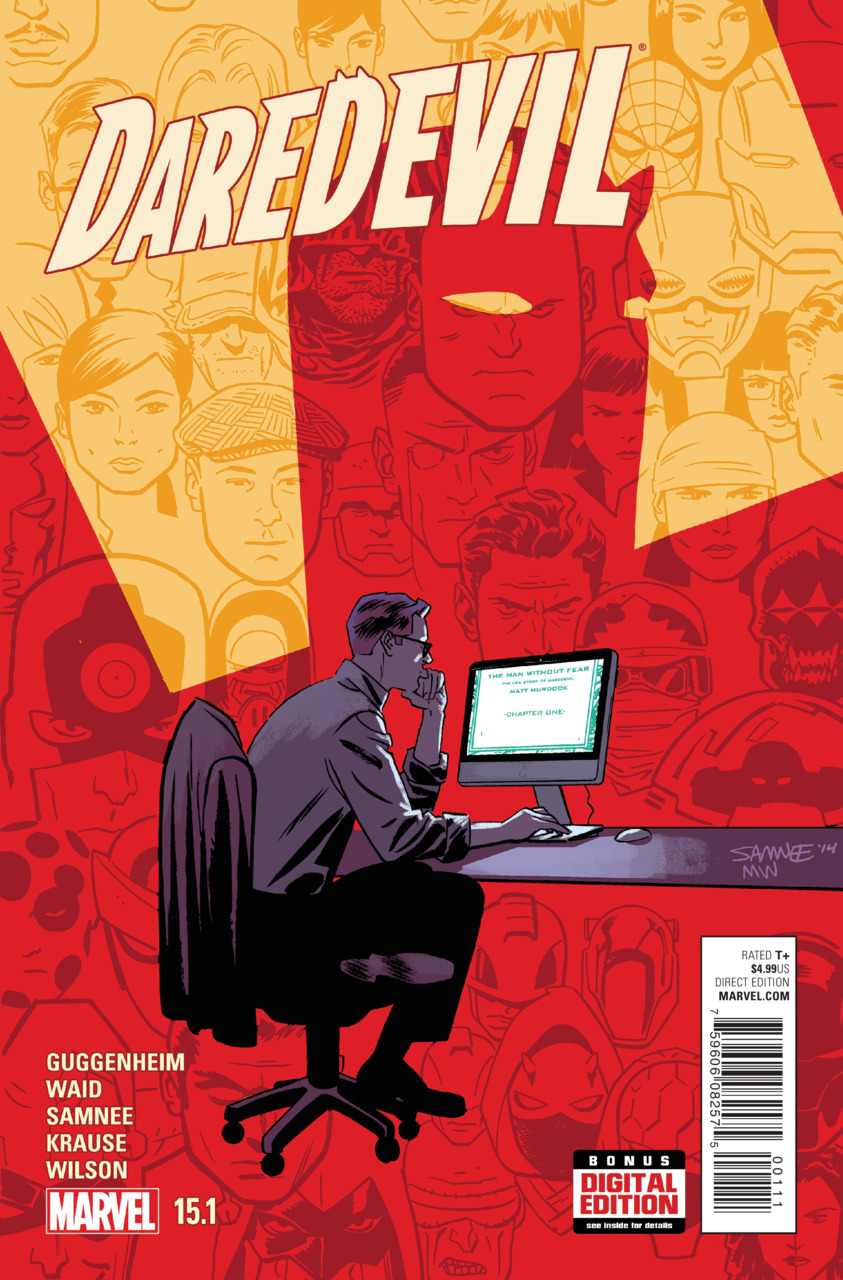 Patrick: Ah yes! A point-one issue — one of the great mysteries of the medium. Is it a side story that takes place between arcs in the on-going continuity? Or an easy jumping-on point? In the case of Daredevil 15.1, we get a lopsided anthology-style recounting of adventures from throughout Matty’s career. Appropriately enough, all of this takes place during a crunch-evening on Matt’s book, so the stories address issues the book sets out to answer (“Chapter Four!” Foggy and Matt respond in unison). It’s a cute premise, but sort of a weird package — there’s nothing that ties these two stories together, and while they both take place at different points in Daredevil’s career, they are tonally consistent with the Mark Waid / Chris Samnee version of the series. So it’s not like they play as homage to earlier Daredevil. That actually may be the point. With Waid and Samnee coming to an eventual end on this series, maybe they wanted to project their sunnier disposition onto an earlier period in the character’s life. It seems to have worked: Marc Guggenheim and Peter Krause’s “World’s Collide” story is even Waid/Samnee-er than the Waid/Samnee story is. I love Guggenheim’s focus on Matt’s developing morality as it relates to his civilian life — that’s an interesting angle too frequently unexplored in Daredevil stories.
Drew: And may do so by finding the link between Waid and Samnee’s run and the more swashbuckling early Daredevil stories. It’s easy to dismiss pre-Frank Millar Daredevil as a B-list waif, but Guggenheim finds the charm of Matt’s vigilante/lawyer, and play it for all it’s gee-whiz sweetness. Of course, Krause’s inks may have more in common with Mazzuchelli than Samnee, wallowing into an shadowy darkness that this volume reserves for key moments. That was enough of a departure for me to label that story a success.
Samnee’s own story — written and drawn by the series’ regular artist — definitely feels a bit more familiar, but the fact that it is placed so specifically in the continuity of the series gives me faith that the themes tie in to that first volume. I can’t claim to know what those might be, but I suspect that tearful goodbye with Karen might speak more to folks invested in their relationship. That’s not to call that story a failure, by any means, just to illustrate how independant I think it is from this volume.
Guardians of the Galaxy 27
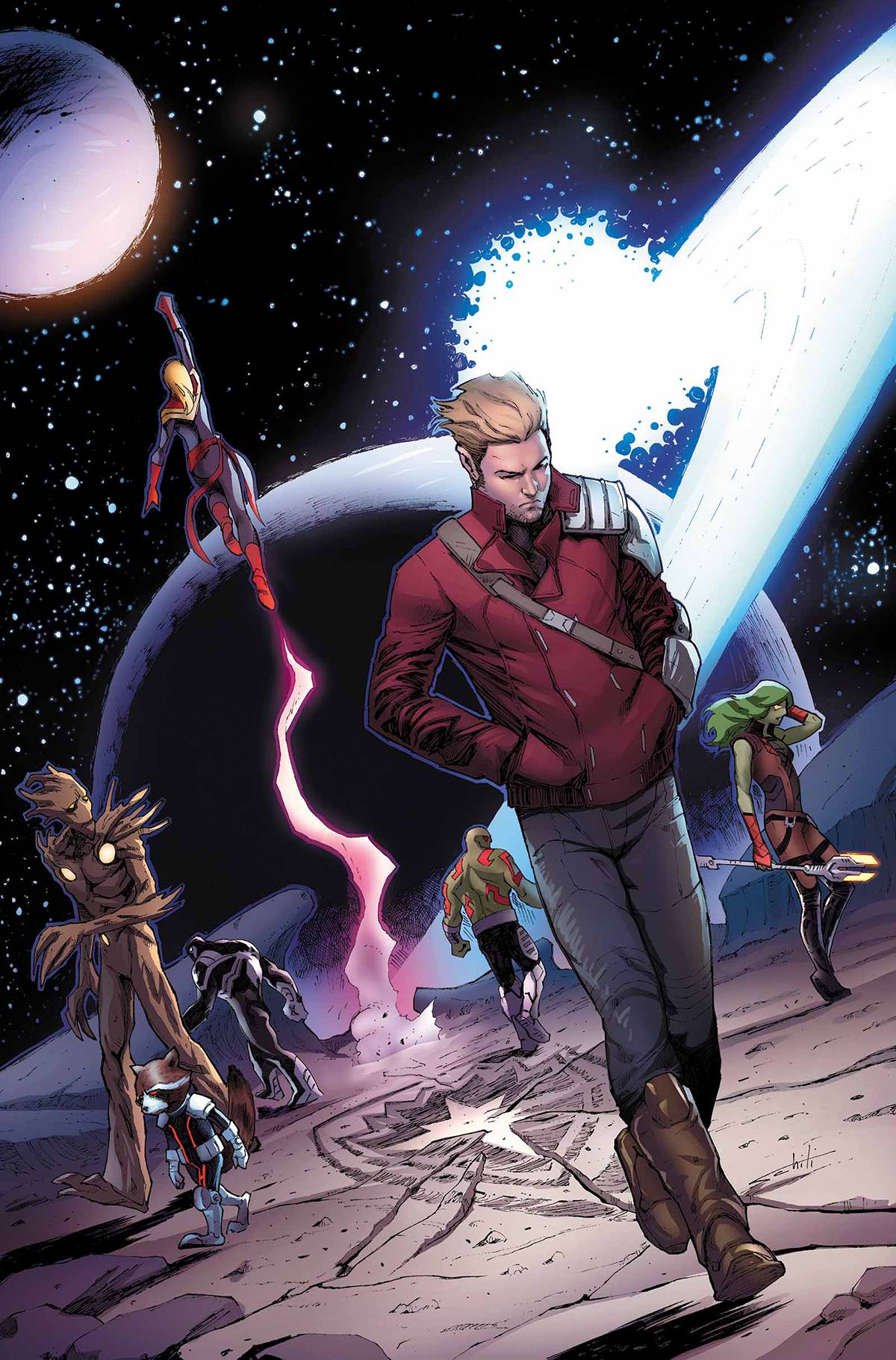 Drew: One of the big problem with telling episodic stories about saving the world is making each new threat feel credible. If Superman can go back in time to solve problems, can he really have problems any more? That’s the question that haunts Guardians of the Galaxy 27, an issue that wants us to buy into the enormity of a threat that it introduces and disposes of within 16 pages. Writer Brian Michael Bendis hangs a lantern on just how small the problem must have been, referring to it as kicking “an entire planet off our lawn,” but he also wants us to buy into it’s bigness, hoping that we understand how it could motivate Gamora to leave the Guardians. Those two purposes don’t quite sync up, but it doesn’t really matter — Bendis has to wrap this thing up with some kind of bow before turning it over to the ubiquitous “There is only Secret Wars” badge. It’s not clear what we’re meant to make of the halfhearted open-ended question this issue ends with, other than I guess the team went to Earth to appear in Secret Wars 1? Who knows! I guess we’ll find out once this series is able to resume in earnest.
Star Wars 5
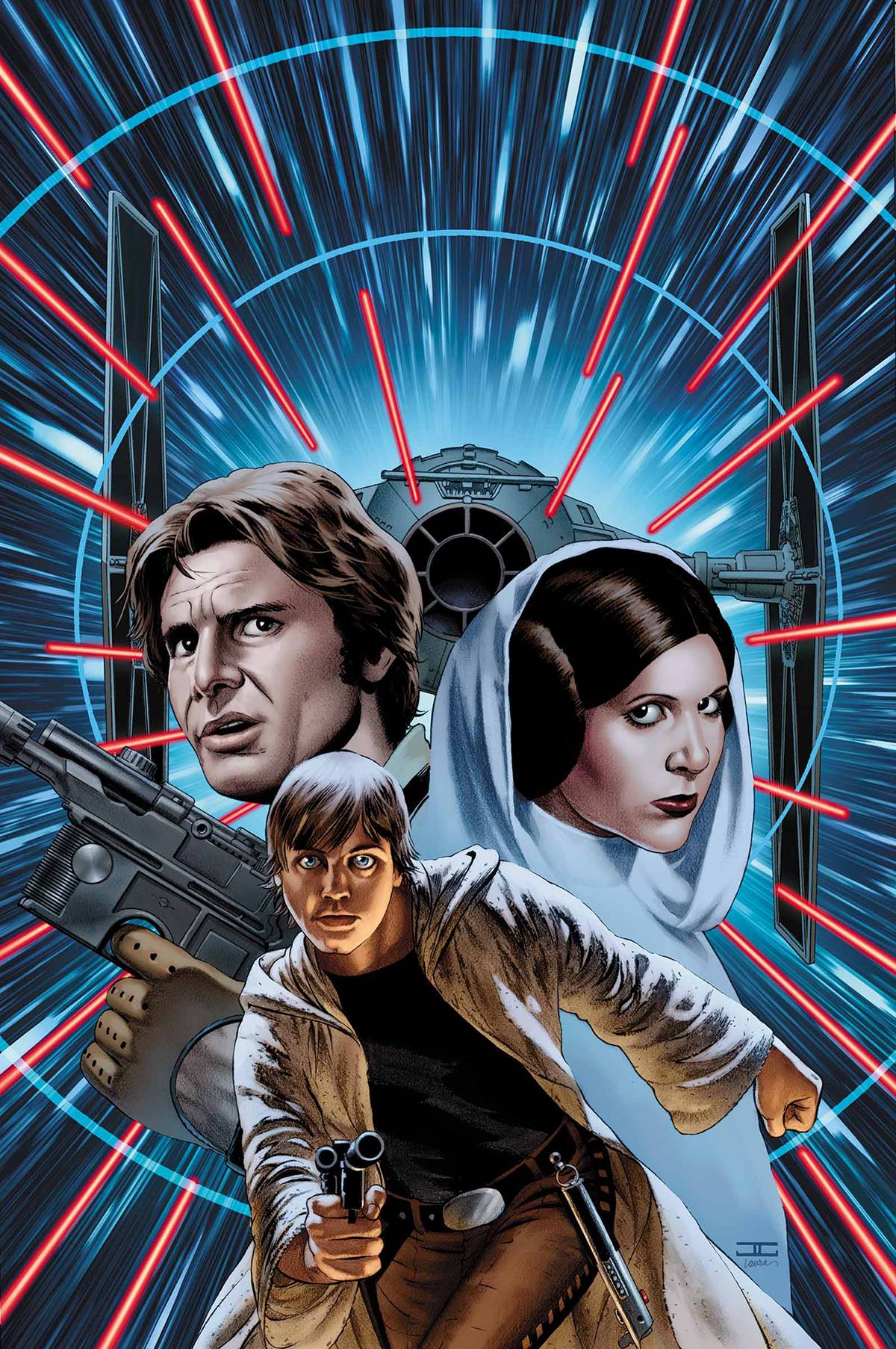 Michael: The general argument against Marvel’s Star Wars is that a lot of story progression can’t happen because it has to cater to what’s coming down the line in Empire Strikes Back and Return of the Jedi. This feels mostly prevalent in the Han/Leia relationship, which so far have been echoes of their scenes in Empire before they share their first kiss. Don’t get me wrong, Jason Aaron crafts a great script in Star Wars 5 that fully takes advantage of Star Wars fans’ knowledge of what’s to come. I appreciated the sly moment where Han almost name-drops Lando but gets cut off – saving Lando’s intro for Empire. Gags aside, there still doesn’t feel like there’s much weight to it all.
What works better for this issue/series are interactions between characters that we haven’t seen in the films; or at least haven’t been given as much importance as a Darth Vader/Luke Skywalker confrontation. The inevitable Boba Fett/Luke showdown next issue is a perfect example of this: Fett briefly fights Luke in Return of the Jedi, but that’s about all we see of the two together. Their solo quests on Tatooine are the highlights of Star Wars 5. You get to see Boba Fett be awesome and Luke do some self-reflecting without the guidance of Obi-Wan or Yoda. John Cassaday is still rocking it on the book, making a 2D Han Solo’s grin feel as genuine as Harrison Ford’s. I’m curious about Stuart Immonen’s take when he takes over art duties.
Patrick: I’ve whizzed right past curiosity to outright sheer excitement – Immonen’s one of my current favorites at Marvel, and he trades in the just the right mix of stylistic design and cinematic execution to really make Star Wars sing. No doubt I’ll miss Cassaday’s hyper-devotion to hard-edged, mechanical detail. His drawings of Boba Fett in this issue are fucking incredible, and serve to emphasize just how cold, calculating and cutthroat that dude really is. I don’t know why I never fully internalized it before, but that design — while still cool as shit — is also sorta terrifying. How best to remind me? Having him torture a child. In public.

This panel’s got it all – lighting, detail, perspective, the acting on the kid. Somehow a character I spent the first 15 years of my life referring to as “that cool looking bounty hunter” is also the scariest thing on the page.
I’m also digging the rest of Luke’s storyline – partially because Aaron is paying careful attention to the character beats being laid down in Darth Vader. When Luke encounters a gang of Sandpeople around Obiwon’s house, he goes into berserker mode, and there totally would have been a massacre, except that the Raiders recognized the threat Luke represented and retreated. Darth Vader 1 had that scene of Anakin sport-killing Sandpeople, as a call back to Episode II — how well that moment played for individual readers is probably going to depend on one’s relation to the Prequel Trilogy. At the time, I saw it as writer Kieron Gillen trying to recontextualize Anakin’s impotent rage, and builing an emotional bridge between the Prequels and the Original Triology. Aaron makes that connection explict again here, but this time between a father and his son.
Archie vs. Predator 2
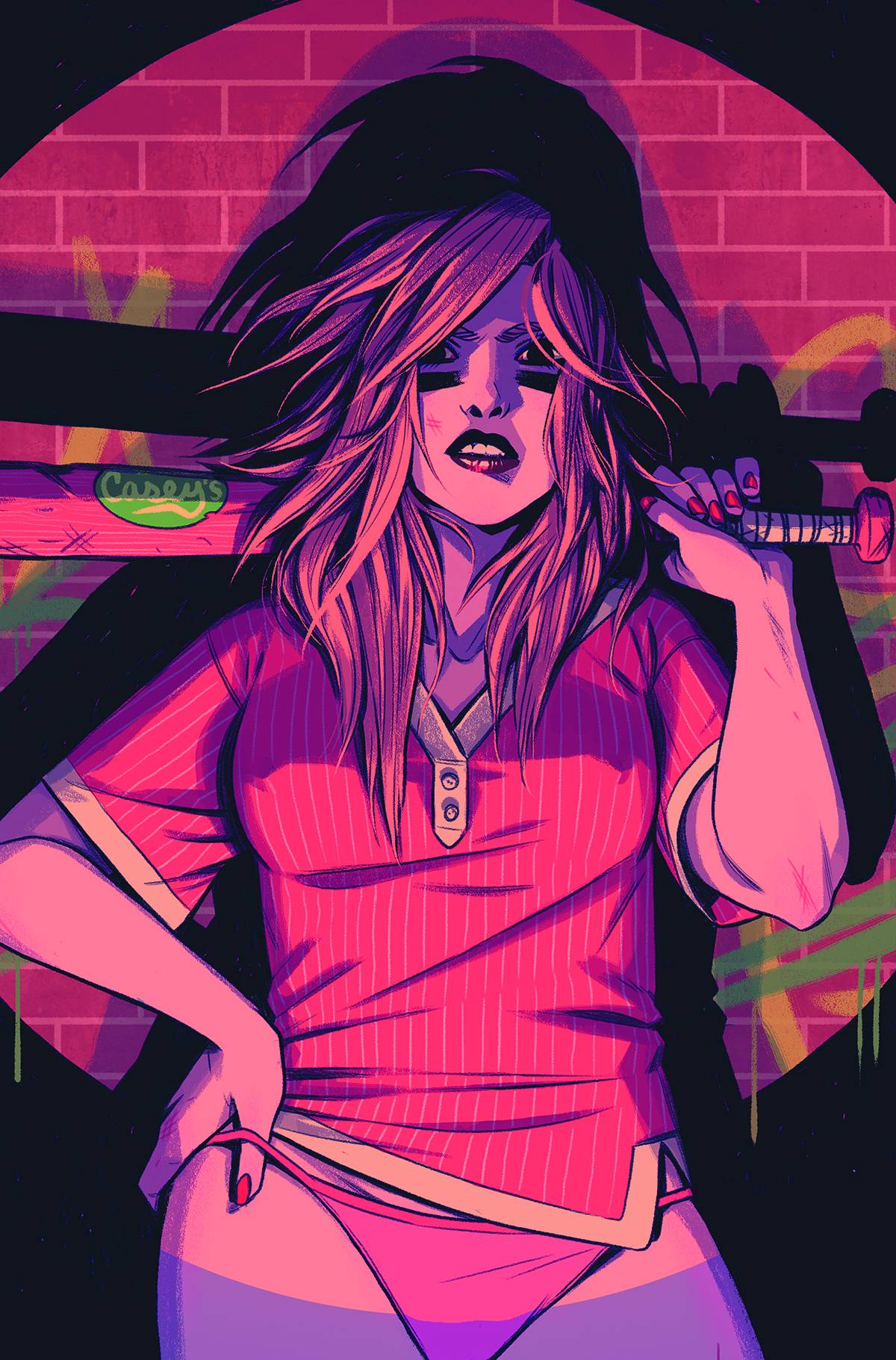
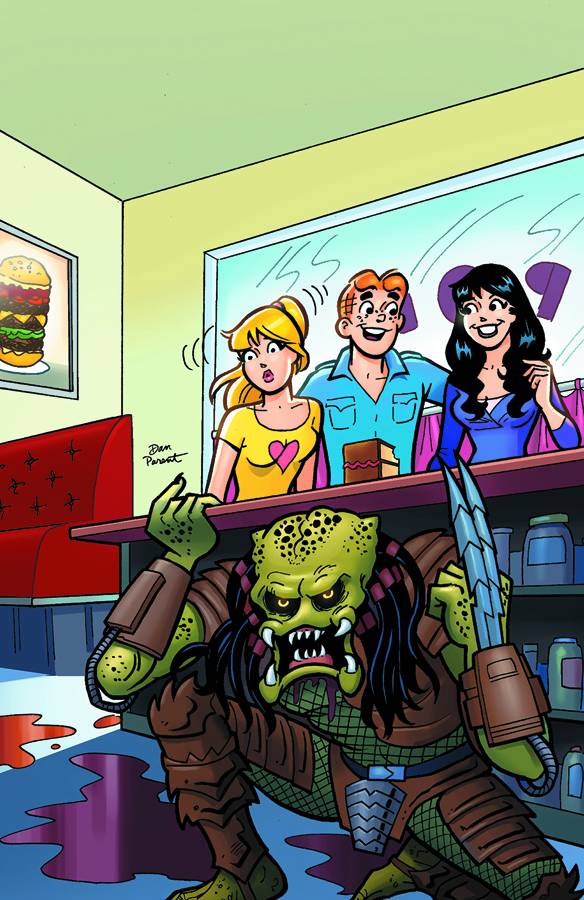 Spencer: As the title would suggest, Alex de Campi and Fernando Ruiz’s Archie vs. Predator is a manic mash-up of Archie‘s classic teenage shenanigans and Predator‘s over-the-top violence and gore. If previous efforts to branch Archie out into new genres (such as the zombie-infused Afterlife with Archie) recast Riverdale as a place where, say, a zombie apocalypse could actually happen, then Archie vs. Predator does the exact opposite, dropping the Predator straight into a classic-style Archie story and watching the sparks — and blood — fly. The sheer incompatibility of these two styles fuel the issue’s best jokes — such as Veronica’s blithely bitchy remarks about how a certain character whose head (and spine) has just been ripped off Mortal Kombat style won’t need her turtlenecks anymore as she raids her closet, or an entire set of pages where Jughead hangs around in the background deciding whether or not to eat a cake that’s been splattered with the guts of the Predator’s latest victim — but also manages to generate some serious melancholy. The world of classic Archie is so innocent that it’s hard to see these characters slaughtered (even if most of them are awful), and that goes a long way towards giving such a silly title some legitimate stakes and maybe even a tiny bit of heart beneath its cartoony, blood-soaked exterior.
Jem and the Holograms 3
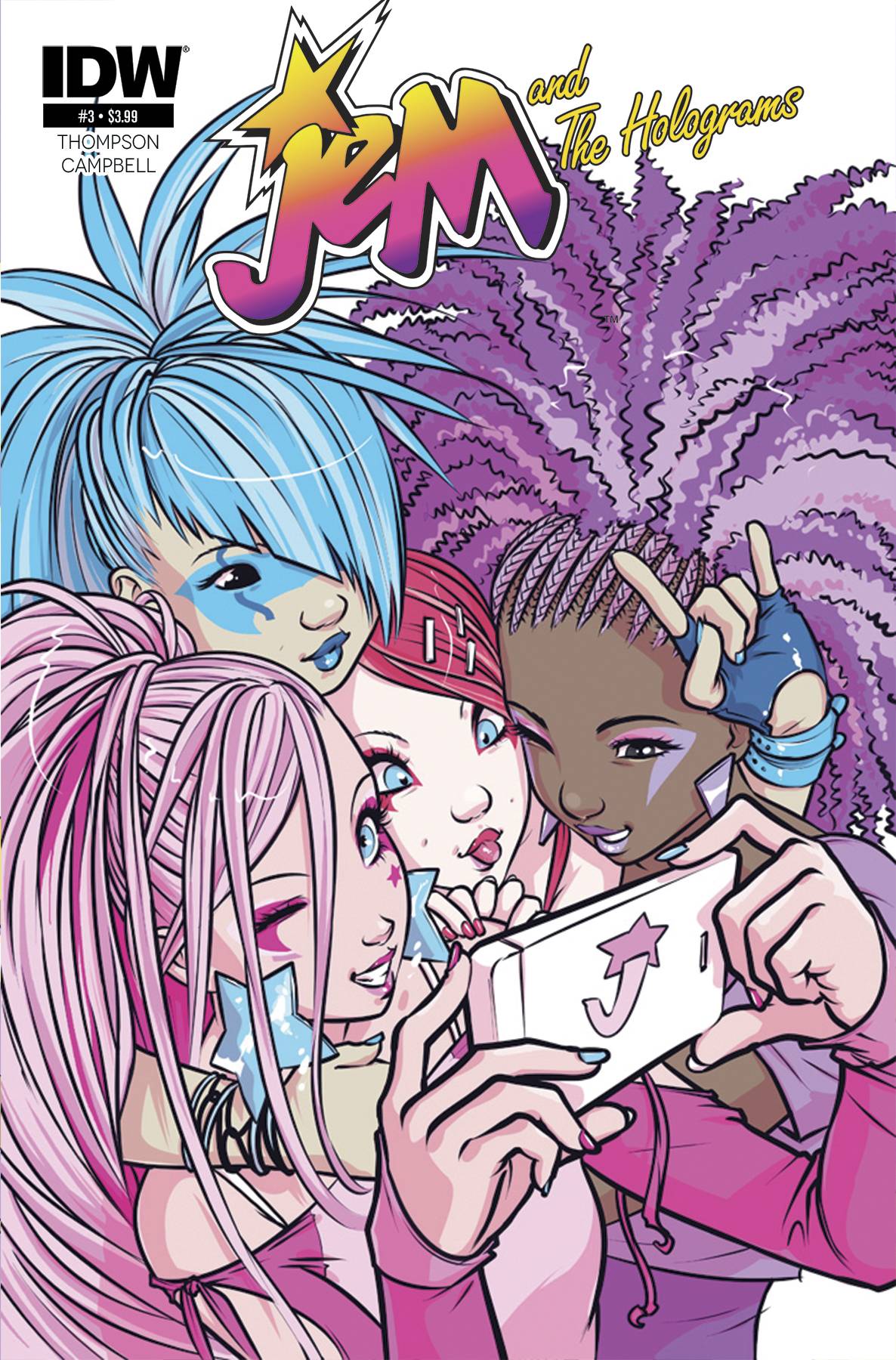 Patrick: The world of Jem and the Holograms keeps slowly spiraling outward, but in increasingly grounded ways. I’ve mentioned this in our previous discussions of the series, but I always remembered The Holograms as kind of an action cartoon. If writer Kelly Thompson is working her way toward ass-kickery, she’s certainly being careful to lay out a world worth kicking ass for. This issue fleshes out the relationships within the Misfits and the Holograms, pretty clearly demonstrating that our ‘Grams are all about love and acceptance of each other, while the ‘Fits are basically the opposite. We also get to spend a little time with Clash, a fan / acolyte of the Misfits and her performer friend Blaze. Blaze’s deal is a total mystery, but we do get that she’s another player in this world. When we meet her, she’s sporting rad face make-up and meditating.
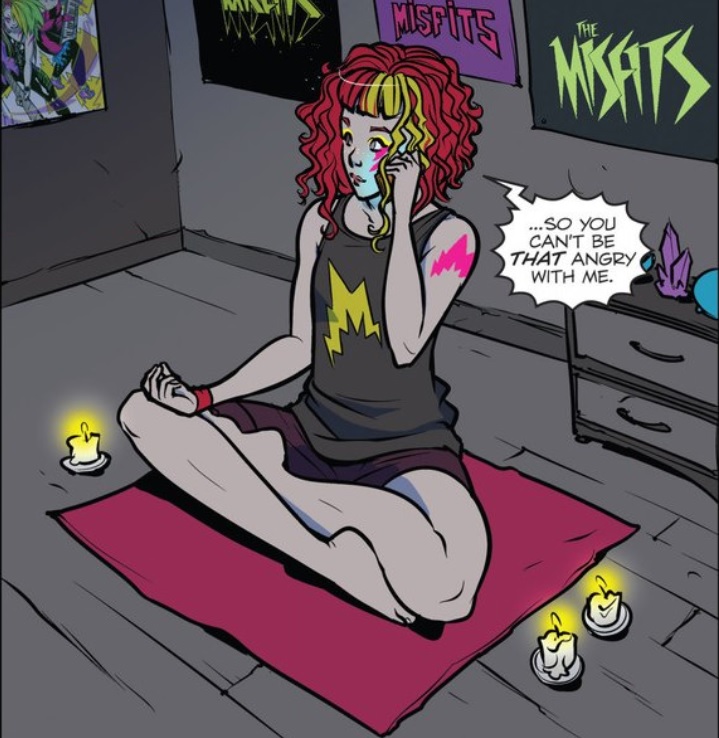
It’s a delightfully self-contradictory image, which hints at a much more complex personality profile for this character. She seems like she’s simultaneously a Misfits fan (i.e., a bad guy) and a thoughtful, empathetic friend. While Pizzaz comes off as something of a cartoonish villain, it seems like there are lots of shades of gray at play here.
Spencer, you can talk about whatever you want – but did you read that letter in the back from the disappointed Jem fan? I understand fandom, and I understand liking what you like, but man-oh-man was that letter hard to read.
Spencer: It took me a few tries to get through that letter myself, Patrick, and while it feels a bit mean-spirited to gripe about this guy too much (especially in a review of the issue itself), I couldn’t help but guffaw when the fan complained about the profiles being “entirely fictional,” as if the entire franchise wasn’t fictional and IDW was slandering real people or something. Also, I wish I could see his reaction to the first Jem movie trailer cause I saw it yesterday and I really didn’t like it. But that’s a story for another day.
I did like this issue, though, which really helps to flesh out much of the band members who aren’t Jerrica, Kimber, or Pizzaz. I walked into this issue thinking that I couldn’t tell much of the cast apart, and walked out with a much stronger handle on all of them, thanks to the time spent watching the characters interact (along with Jerrica’s charming run-down of each sister and why she loves them). Surprisingly, though, I feel like the most insightful moment of the issue comes from Pizzaz:
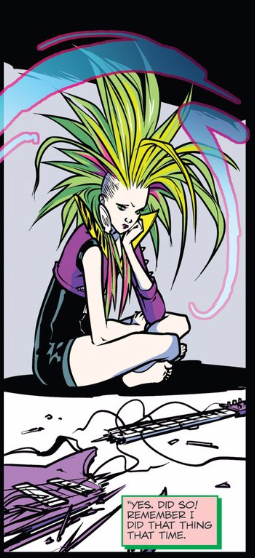
Patrick, you called Pizzaz a cartoonish villain, and you’re not wrong, but from this panel I can also see that she’s someone suffering from some serious issues — an out of control temper, a desire for fame and adulation that probably stems from some deep insecurities — and that she isn’t as happy with that side of herself as she’d like everyone to think. Just this one brief moment of introspection greatly fleshes out the series’ greatest villain, and I hope to see more of that kind of deft character work in the future.
The Kitchen 7
 Spencer: When discussing Ollie Masters and Ming Doyle’s The Kitchen in the past, we here at Retcon Punch have often wondered about the motivation behind these three mob-wives turned mob-bosses. Why exactly do they do what they do? Set during a city-wide blackout, issue seven wastes no time answering this question, digging to the core of these characters thanks to one insightful monologue from Raven.
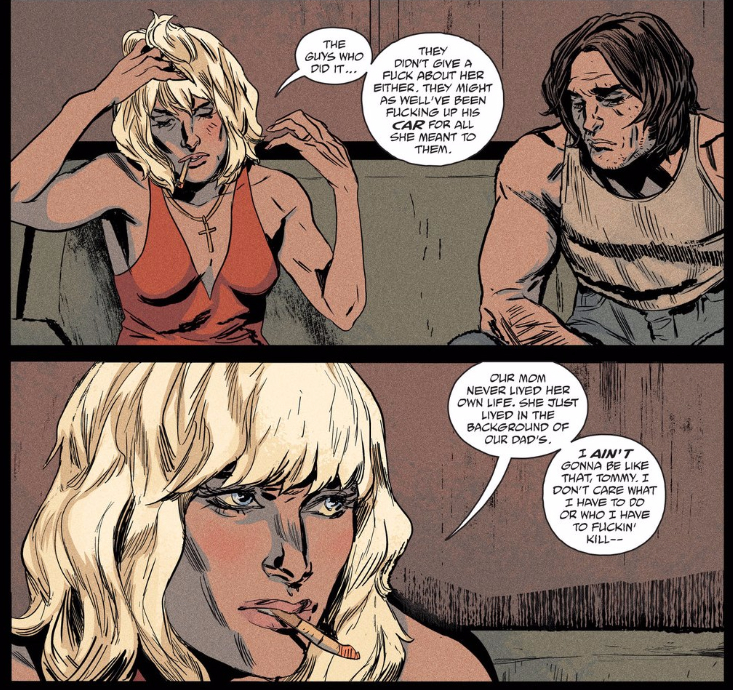
So why do Kath, Raven and Angie do what they do? In many ways, they never had a choice. Growing up with a mobster father — especially one as monstrous as Kath and Raven’s dad — there was never really a chance to that they’d escape the mob’s orbit. But if they’re fated to that life, they’re going to live it on their terms. Unlike their mother, they’re going to show some agency. They won’t be objects — no, they’ll be the best damn mobsters they can possibly be.
It’d be inspirational if it wasn’t so destructive, as we can see when Jimmy kidnaps his and Kath’s kids. Even after they’re recovered Kath contemplates getting out of the business, sparing her children this life, but in all likeliness it’s probably already too late. During her monologue Raven comments that Kath was always oblivious to her father’s faults, and that seems to extend to her own faults as a mother too — being in the mob has already harmed her family in ways that won’t be easily fixed. Showing your agency and taking action also means facing the consequences of your decisions, and as we head into The Kitchen‘s final issue, I’m morbidly curious as to what those consequences may be. I’ll venture this much — I can’t imagine this story having much of a happy ending.
Ufology 2
 Spencer: It’s tough to figure out how to approach writing a second issue, especially for a six issue story such as James Tynion IV, Noah J. Yuenkel, and Matthew Fox’s Ufology. While the creative team attempts to elaborate on some of the craziness that went down last month, it’s still too early to give any answers, or to clarify anything, really. Instead, Ufology 2 simply adds more and more mythology to the mysteries that have already been established. The sci-fi half of the equation — including possible clone soldiers and walking eyeball men — is suitably creepy and intriguing, but will no doubt play better once the story’s over and the readers understand just what exactly is going down. More successful are the mysteries that revolve around the shared past of these characters. Tynion and Yuenkel continue to excel at bringing to life the tight, interconnected feeling of a small town (and Fox continues to excel at portraying the strange, sparse loneliness of small towns), creating the perfect backdrop for strange extraterrestrial dealings that leave everybody with a secret. There’s plenty of fun moments this month — particularly Malcolm and Geoff’s chase through the hospital — that make this issue worth checking out, but it’s definitely an installment that will read better as part of the finished story than as a standalone issue.
Wytches 6
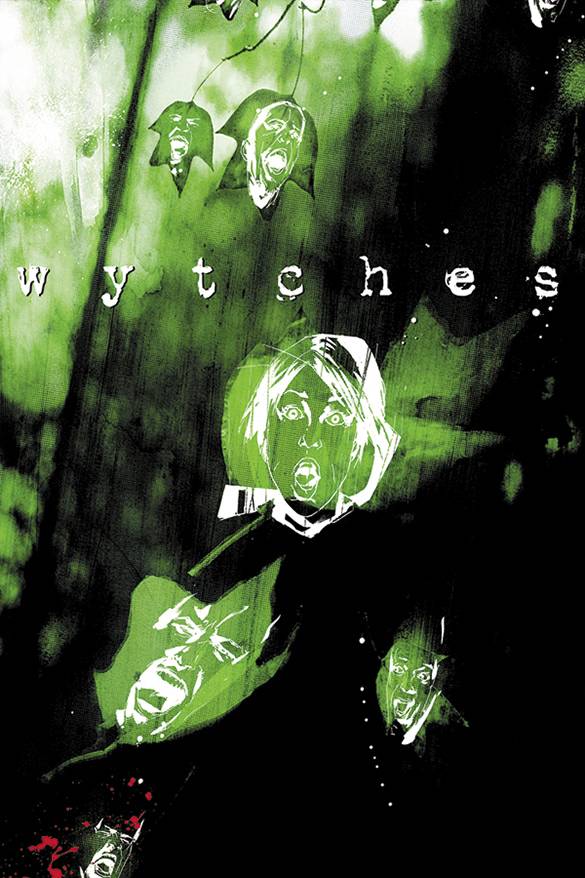 Drew: It’s difficult to accuse a serialized narrative of burying the lede — that the scope of the narrative can’t be summarized in a single installment is exactly the point — but I found myself wondering if Wytches lead with its weakest material. That’s as much praise of this month’s issue as it is an indictment of the previous 5 — this issue found emotional highs and lows in between its thrills and chills — which is especially curious considering just how different the series is poised to be going forward. In a heroic blaze of glory, Charlie Rooks declares his daughter to be “the greatest slayer of mythological beasts of all time,” and it seems that Scott Snyder and Jock have every intention of making good on that claim. To me, that’s a hell of a more interesting logline than the mystery of something in the woods that drove the previous installments. This issue reveals all, but with enough deus ex machina clunkiness to never overcome my disinterest in that mystery, anyway.
Unfortunately, that disinterest extends to Charlie’s faith in his daughter — not because it’s unearned, but because it’s presented as an utterly run-of-the-mill matter of course. That is, it doesn’t reflect anything about these characters other than their familial bond. Dad dies protecting his daughter. It’s not an inherently uninteresting premise, but I’m not sure it’s an inherently interesting one, either. Without more invested in who either of these characters are, they read more as generic “dad” and “daughter,” reducing this issue to some equally generic beats.
The conversation doesn’t stop there, because you certainly read something that we didn’t. What do you wanna talk about from this week?
 Retcon Punch