

Today, Patrick and Shelby are discussing Captain America 1-3, originally released November 21th, December 19th, 2012 and January 16th, 2013.
 Patrick: Captain America is a character defined by his time. Other characters may be products of the time during which their creators were writing them – Superman, Wolverine, Deadpool, Hal Jordan – all of these guys bear the stamps of the decades they were introduced. But that Captain America concept is frozen in time, locked in place by a character-defining opportunity to kick Nazi-ass. So how does one update the intentionally old-fashioned? It’s not even like you can just drop Steve Rogers into a modern American military conflict and watch the action play out: we’re not exactly storming beaches anymore. So where’s an old soldier supposed to feel at home? Why, a dangerous, barren wasteland that ignores the laws of physics, of course!
The series starts with Cap stopping the Eco-Terrorist, Green Skull, from attacking New York City. All in a day’s work for Steve Rogers, I guess – because he doesn’t even wait to see the cops pull the Green Skull out of the plane wreckage before dashing off to the next mission. This mission is infiltrating a subway line mysteriously in service after 80 years of inactivity. Rogers boards the train which unexpectedly whisks him off to Dimension Z. Dimension Z is FUCKING WEIRD.
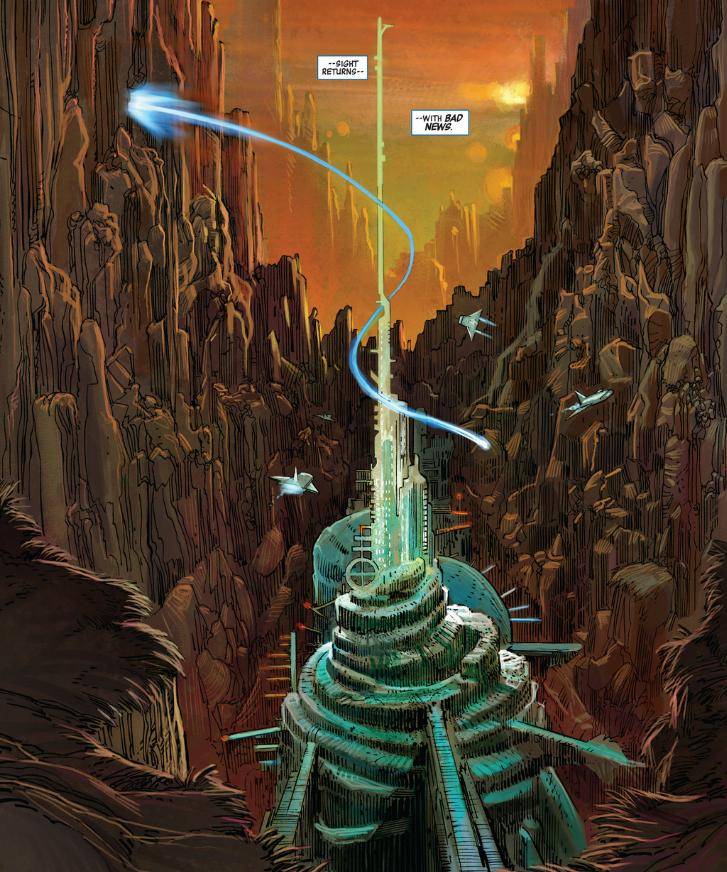
I’d like to throw the breaks on the recap here for just a second, because this is precisely where I threw my hands up and said “WHAT.” It appears to be a hard left turn to drop Captain America in an aggressively strange science fiction universe, but that’s only in the light of the pages that have come before. The rest of the series thus far (which I will get to, I promise) is about Steve’s adventures stranded in this world. It’s the classic Hero’s Journey – except the safe, familiar world of Captain America is one where he fights supervillains and is employed by S.H.I.E.L.D. But at the time I was reading it, I just saw a stark shift in the tone AND genre of the book I was reading and gave it up mid-issue.
Like a month later, Shelby asked me if I was reading Captain America, and I gave that grunt of an asshole who hadn’t put in the effort to read an entire issue but decided I didn’t like it anyway. At my good friend’s insistence, I went back to the series and discovered that I had tapped out precisely when the story was starting in earnest. Herewith, the rest of that story:
Rogers is quickly captured and sedated by his alien overlords. He wakes up hours later, strapped to a medical slab (you know, the kind you see in James Bond movies) and sees human child floating in a tube nearby. Clearly, there’s some nefarious shit going on here. The mastermind of this deception (and this dimesion) is Arnim Zola – former Nazi scientist, current runner-up in a Krang look-a-like contest.
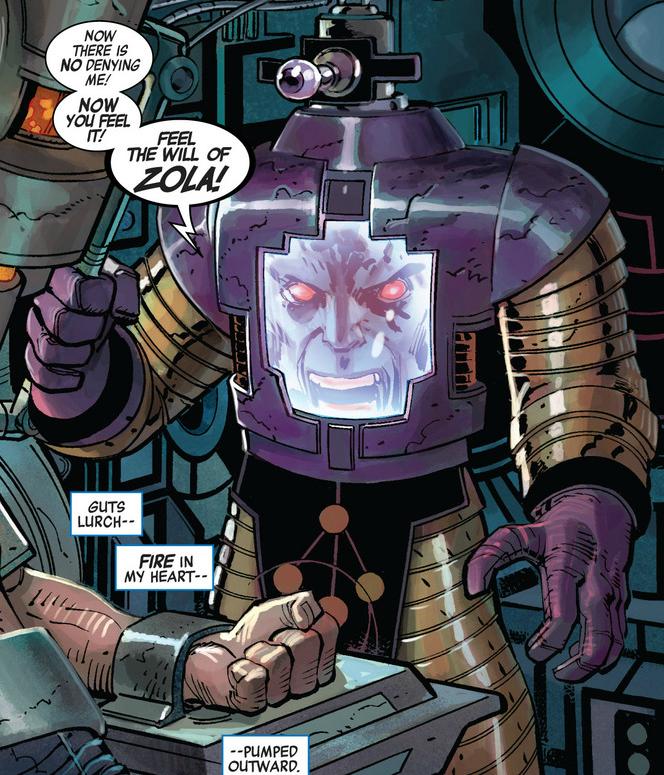
Zola injects something in the Cap’s chest that Hurts Like Hell. So Captain America makes a break for it, gathering his costume, his shield, and that boy in the tube, and venturing out into the wilderness. And then a year passes.
Yup – a year. (Issue two just starts with a black page that reads in giant white letters “One Year Later.” I nearly spit out my gum – and I don’t even chew gum.)
In that time, the only thing Captain America has managed to do is survive and keep the tube-boy alive with him. Rogers names the kid Ian, after his grandfather. The landscape is just full of nightmarish dangers, and even though Cap starts to learn the way things work, he has persistent migraines and body pains from that terrible injection over a year ago. Eventually, our father-son-ish pair fall in with a tribe of rock-men in hiding from their tyrannical overlord. Rock-men not being known for their civility, some of their animosity boils over in to some outright in-fighting. Cap’s a stand-up guy, so he steps in to try and make peace between the rock-men – which he succeeds in doing while also getting this shit kicked out of him. But why isn’t he bleeding more? Oh, I’ll field this one: IT’S BECAUSE ZOLA IS INSIDE YOUR CHEST NOW.
For all the darkness (and weirdness!) jam-packed into these pages, there’s a remarkable amount of heart. Maybe I’m just a sucker for fathers and sons alone against the world. Hell, they don’t even need to be alone against the world. One of the most effective images in the story so far is simple – almost domestic: Cap and Ian making camp for the night.
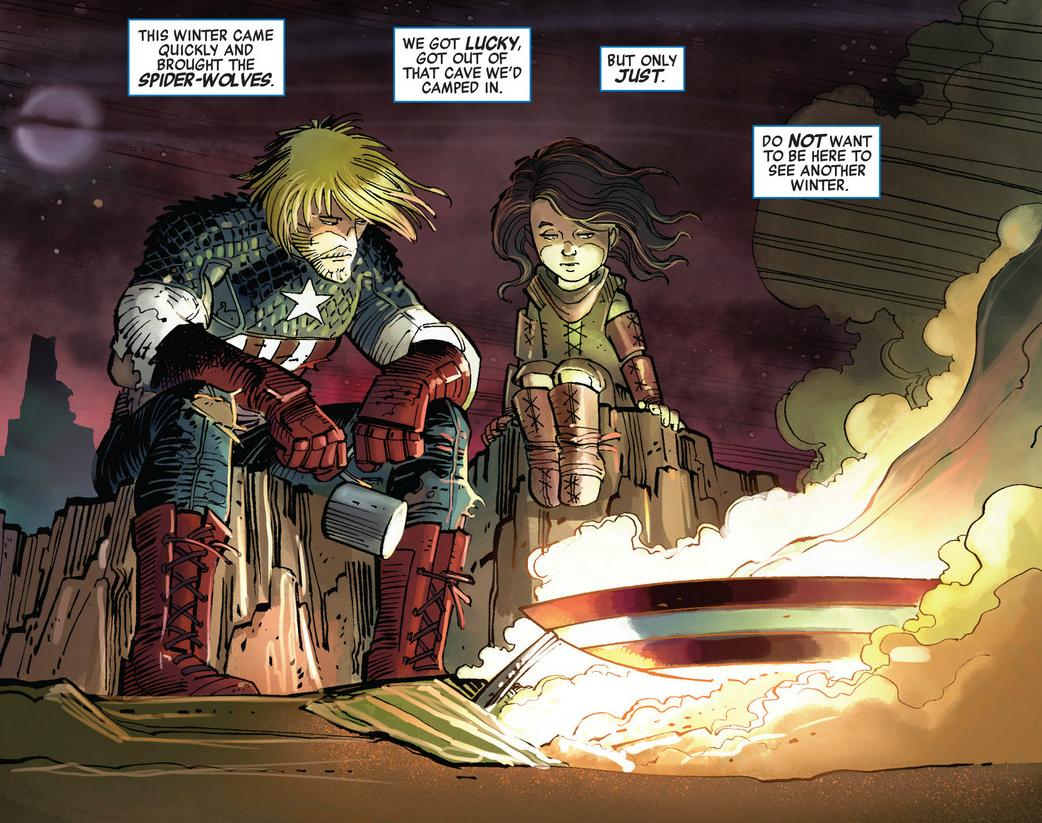
The details here are otherworldly – the craggy landscape, the shield-as-wok – but the sentiment is immediately recognizable. Artist John Romita, Jr. gives both of the characters this distant look of indifference, as though they’re both disappointed to spend another night like this, but too exhausted to do anything about it. Which is just how camping is (if you’re doing it right). As much as this series earns its bread from showing us the unexplainable wilds of Dimension Z, I see an awful lot of my own experience camping with my father here.
Another way the series grounds itself is with regular flashbacks to Steve’s youth – growing up poor in the ’20s in Manhattan. Shelby, what do you make of those flashbacks? They show Steve in a world where he really could have used a father, but they also show him in a position without strength. While he may find himself on the opposite end of both of those equations, it’s not entirely clear what purpose they’re meant to serve. Maybe they’re just there so we remember we’re talking about the Sentinel of Liberty, and not just any muscle bound jerk in sci-fi land?
 Shelby: I think it’s so interesting that what made you originally give up on this title was what made me stick with it. As soon as our Dashing Hero was dumped into crazy sci-fi land, I was instantly hooked. I love science fiction, and I love seeing straight-laced, straight-forward Steve Rogers in this outlandish setting. I’m glad I was able to convince you to quit being such an asshole and pick this up again.
There are a lot of interesting things happening here with identity. In issue 1, Steve is considering marrying his ladylove Sharon. She tells him she won’t make him stop being Captain America, but that she wants to marry Steve Rogers; she’s putting Steve in the position of choosing which of his identities he wants to use. Does he want to “lose himself in the uniform” and be the super-soldier forever? Or does he want a chance to just be Steve? Before he can decide, he’s thrust into a world where the only thing he can do is rely on his super-soldier identity to survive, and he can only just barely do that. He’s applying his soldier’s instinct and tactical skills to an environment that doesn’t follow any sort of logic; his skills are only just applicable. Finally, though, in issue 3, Steve’s identities fall apart completely. His super-solidering fails him when he is unable to defeat the rock-man tyrant. His “Steve Rogers, man who always stands up,” identity fails him when his advice gets the only person to show him any kindness in this world killed. On top of all that, he’s physically got another identity to deal with.
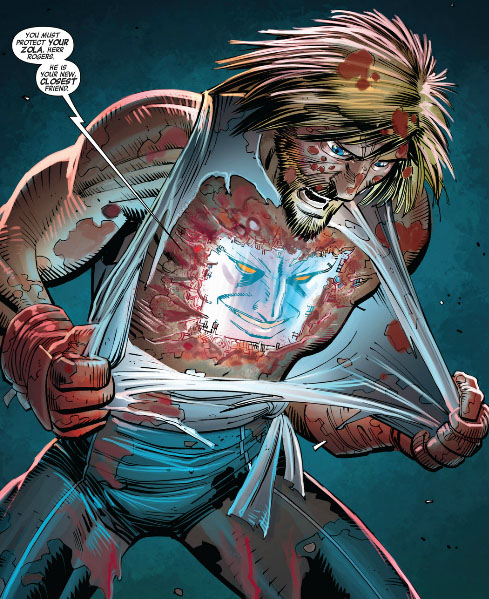
Not only can Steve not rely on everything that’s made him who he is, he literally has got someone else inside if him.
This title is a really unique addition to the Marvel lineup. I feel like it shouldn’t work, for all the reasons Patrick listed in his recap. And yet, I think we’re on to something really special here. Remender is stripping away everything from Cap, boiling him down to just his very essence as a character. We’re going to see what truly makes Steve the man he is, and what kind of man this situation is going to turn him into. I’m loving this breaking down process so far, and I’m looking forward to seeing how Cap is going to be rebuilt. Also, he’s got a Zola TV in his chest now, how the hell is he going to explain THAT once he gets back to Manhattan? For a complete list of what we’re reading, head on over to our Pull List page. Whenever possible, buy your comics from your local mom and pop comic bookstore. If you want to rock digital copies, head on over to Comixology and download issues there. There’s no need to pirate, right?
 Retcon Punch
This series is weird. I wasn’t interested in it because I thought I wouldn’t like the typical Cap stories. Sure enough, I fell in love with that part of the first issue immediately, and kind of had Patrick’s reaction to the weird sci-fi twist. This is definitely NOT what I was expecting, which I guess I should be thrilled about, but now I just really want to read straightforward Captain America stories written by Remender.
It was a serious hurdle for me to pick the book back up after he just disappeared into Dimension Z. I was totally buying into Cap taking down Green Skull and just sorta being a SHIELD dude, and then BAM, the whole setting changed. I maintain that we – as the audience – are supposed to be uncomfortable with this change. The comfortable world for Steve is saving New York City over and over, so throwing him into “another world” is going to mean some radical departure from that. I wonder how many other people gave up on this series in the middle of issue 1.
Issue two really really really made me think of Brian Buccellato’s Foster series. The third kinda wandered back into Steve Rogers flashback territory. I’d like to see this series continue to focus on Rogers’ finding purpose in keeping that kid alive.
We’ve got a lot of layering of relationships going on. Steve is taking care of Zola’s son, Zola’s daughter has presumably been injected with the super-soldier serum from Steve, and of course, the Zola TV Steve has going on.
I am LOVING this book! I dig the idea of taking characters out of their comfort zone, but I can see how that could be off-putting to some readers. I love Cap and his more straight forward missions with SHIELD, but I’m also used to his more out there adventures with the Avengers. Seeing him trapped in a crazy dimension was a bit surprising for me, but I think the fact that he’s now essentially a dad is one of the more interesting aspects of this book and something I would think would take Cap out of his comfort zone. But, from what I’ve read, he’s doing a bang-up job of it so far. His father dying at a young age (but before that being a not-so-good dad) coupled with his mothers inspiring lesson of always standing up is not only fueling the hero that is Captain America, but the new father that is Steve Rogers. Making this a character that is more endearing than ever.
Yeah, it’s amazing how “wanting to be a good father” is infinitely more relatable than “loving everything about America.” I think I can get down with the latter, but bringing his objectives down to a more human level makes him a much more relatable character. Being desperate to survive is just less abstract than anything else I normally associate with Steve Rodgers. I’m still not convinced I like relating to Captain America, but there’s no debating that Remender does that very well here.
That’s interesting. Do you think you want an artificial amount of distance between you and Captain America for a specific reason? I sorta get what you’re saying – emotionally, I’m not sure I intellectually understand.
Rogers is a character that we’re bound to have a hard time relating with: an impossibly patriotic supersoldier from the past. Is there something about that creator-mandated otherness that makes him a more effective hero?
I don’t know if I can really articulate this effectively, but I think it’s his demigod status. Like, a survival story can be super compelling, but I think I expect superhuman feats and unbridled patriotism from Captain America. I can appreciate humanizing moments, but I think what we like about heroes like Cap and Superman is that not human. That’s true to some degree about all Superheroes, but Captain America has a certain extra symbolic quality that makes him more than a man.
I guess you could make the argument that this Dimension Z stuff doesn’t NEED to be a Captain America story – the super-man at the heart of the story doesn’t particular matter. Yes, his relationship with his father colors the relationship with Ian, but whatever. Will Cap be able to take any of the lessons he learns in Dimension Z back to Earth with him? If not – if there’s no connection between this experience and his service with S.H.I.E.L.D., then is it really a Captain America story? And does that matter? Can a comic book series be worthwhile if its not exploring fundamental qualities of the hero?
After liking the first two issues quite a bit, I was pretty disappointed by the third, mainly because the story is moving TOO DARN FAST. Bendis’ uber-decompressed style being the norm now might be part of why this feels so jarring, but man, I just want the story to relax a little bit. It works when it’s supposed to feel jarring (That stunning white-on-black one year later page) but when Generic Underling #35 is introduced, rescues Cap, gives him shelter, goes fishing with him, and is then KILLED OFF DRAMATICALLY, I want to see a little bit of that character. Instead, I get only SEVEN PANELS in which he speaks english, which makes the character feel like a cypher, and makes the whole plot of the issue feel weak. I also think the flashbacks, which were interesting and strong in the first two issues, have started to repeat themselves, with ANOTHER story about how rogers stands up to bullies despite it not doing him any good, and another billion mentions of his dead father. And that flashback takes up six pages of a twenty-page book, a book which still has about a thousand plot twists! It just gets tiring and it makes me feel like I have no investment in the characters.
The third issue actually feels a little like the first in how unfocused it is. Both of them have lengthy flashbacks and cover a ton of different action. I think my generally opinion of the series is so high because #2 was so fucking good. I love the father-son against the world, and maybe I jumped the gun on identifying that as part of the series DNA. Maybe issue 4 will decide that once and for all.
Pingback: Tokyo Ghost 3 | Retcon Punch