
Look, there are a lot of comics out there. Too many. We can never hope to have in-depth conversations about all of them. But, we sure can round up some of the more noteworthy titles we didn’t get around to from the week. Today, Patrick, Drew and Spencer discuss Ms. Marvel 14, Nova 29, Loki: Agent of Asgard 13, Secret Identities 3, and the Kitchen 6.

Patrick: Heading in to Secret Wars means counting down to the endings for a lot of characters and series. This week saw us reaching conclusions for Loki and Nova, but the headstrong Kamala Kahn keeps barreling forward with her teenage / superhero drama like she couldn’t even be bothered with something like Secret Wars. It’s an exciting meta statement of purpose for the Ms. Marvel: she’s got her own shit going and, and isn’t about to let a little thing like the end of the world(s) get in the way of that.
Ms. Marvel 14:
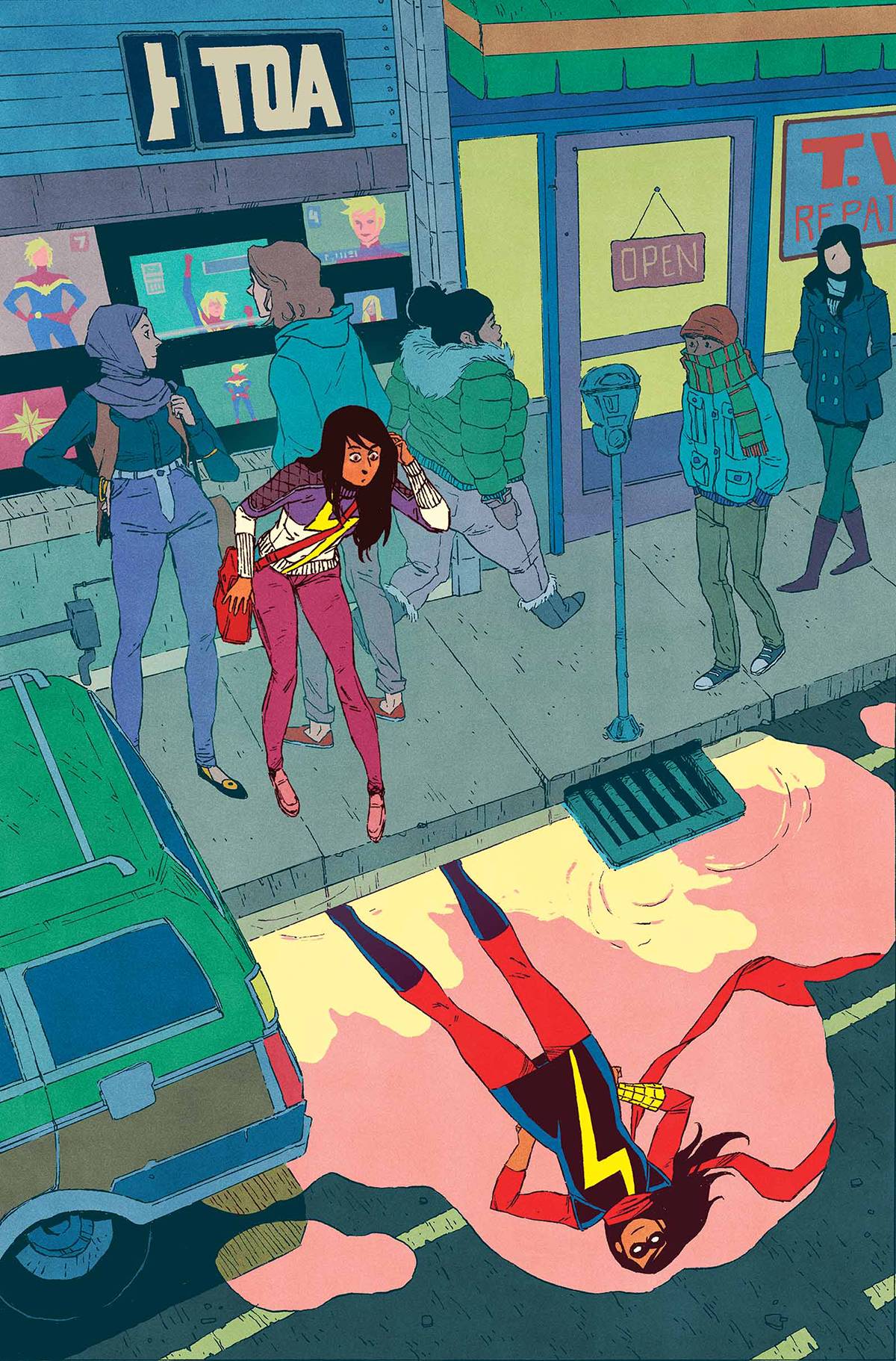 Patrick: Kamala Kahn’s in love! Or, y’know, whatever it’s called when a teenager thinks they’re in love. The boy in question has all the qualities on her list of dream attributes: Pakistani, Muslim, cute, funny, drives a cool car and is a patient listener. Oh, he’s also a secret Inhuman too. Perhaps most-importantly, he’s cool enough to roll with Kamala’s embarrassing turns of phrase.
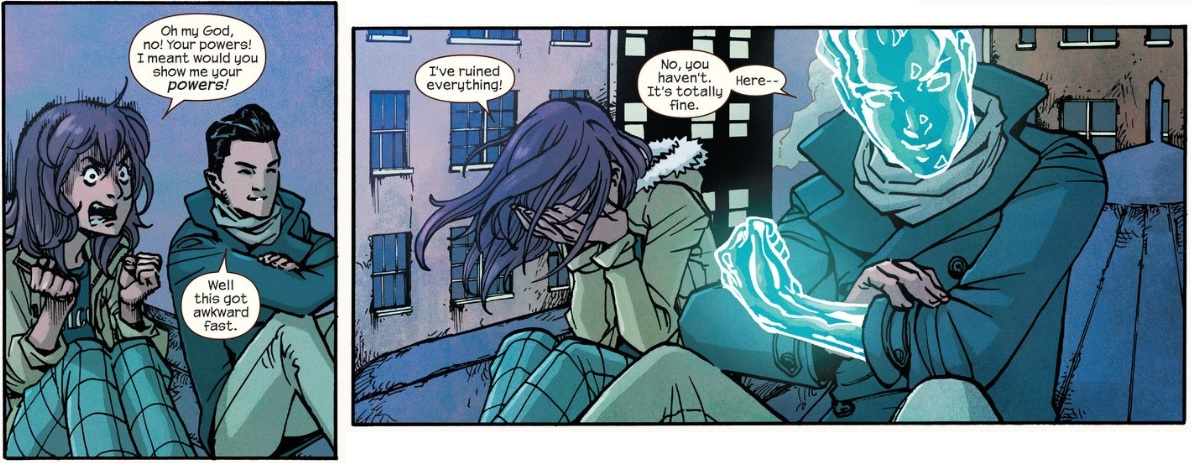
As someone who has grown increasingly anxious about social interaction, this is probably the most attractive quality I see in Kamran — he’s able to look past a silly social faux pas and get right to meaningful interaction. Point is: he’s a dreamboat, I can see why Kamala is powerless to his charms. It’s really interesting this charm ends up grinding against my natural reaction to Aamir’s speech about Kamala needing someone just like her. Naturally, I bristle at the thought of Kamala being restricted to dudes from one country, one religion, and one superhero group. But she finds what appears to be genuine companionship in Kamran. Until, of course, he zaps her in the back of the head and takes her to Lineage (that Inhuman-hunting Inhuman). What’s the moral here: beware who you fall for?
Drew: I think that’s a pretty age-appropriate moral, if the consequences are a bit exaggerated here. Like you said, this isn’t love so much as a teenager thinking she’s in love, which generally leads to some amount of regret. In this case, what’s regrettable is that Kamala feels so strongly without knowing Kamran at all — he really just is a checked-off list of the attributes you mention. The only hint of a personality we get from him in the early scenes is a disregard for authority, and that willingness to look past Kamala’s awkwardness. While you see that as an endearing quality, I think it actually hints at his general disregard for Kamala. She’s also not really a person with a personality to him, just a similar checklist of attributes that he wants. He doesn’t care that she’s awkward, or even that she doesn’t want to skip school, he’s gonna do what he wants. That kind of relationship — where interests in each other are largely superficial, and ultimately toxic — is teen dating in a nutshell, and those kinds of insights are exactly what make this series so charming.
Nova 29:
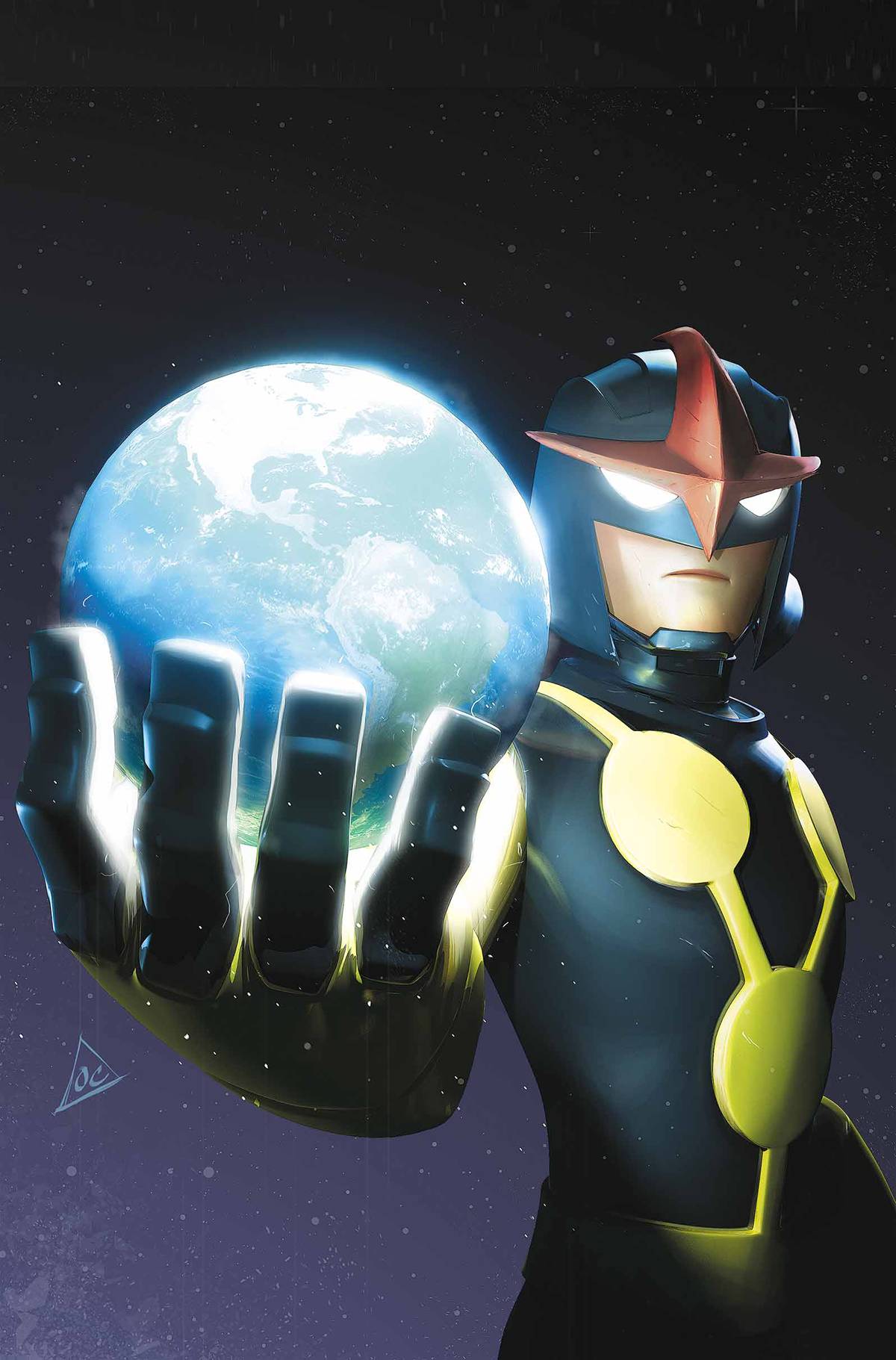 Spencer: There’s an interesting bit of tonal whiplash present in Gerry Duggan and David Baldeon’s Nova 29, but that’s not a complaint — it’s actually a smart way to demonstrate everything this series has done well throughout Duggan’s run. The first half of the issue is concerned Sam’s growth during his time as Nova, which has led to his managing to make it through the school year without being expelled (a miracle!), but has also resulted in Sam having to take on responsibilities he’s far to young to be handling. The issue’s strongest scene is Sam’s breaking the news of (former Nova) Richard Ryder’s death to his parents, and it ably demonstrates the unfair amount of responsibility Sam now carries as the last Nova, but also the maturity that responsibility has brought him.
Surprisingly enough after all that, the second half of the issue is mainly focused on humor, wacky hi-jinks, and the return of much of Duggan’s reoccurring cast. There are some inspired jokes here (particularly Sam’s robbing a Chitauri bank — because they’re the bad guys — and blaming it on Deadpool), but these scenes mainly go to demonstrate that, despite how much he’s grown, Sam’s still rash and naive. That’s a smart place to leave the character as the series draws to a close (Nova is one of the titles cancelled in the wake of Secret War): he’s come a long way, but there’s still room for many more stories with this incarnation of Nova.
Loki: Agent of Asgard 13:
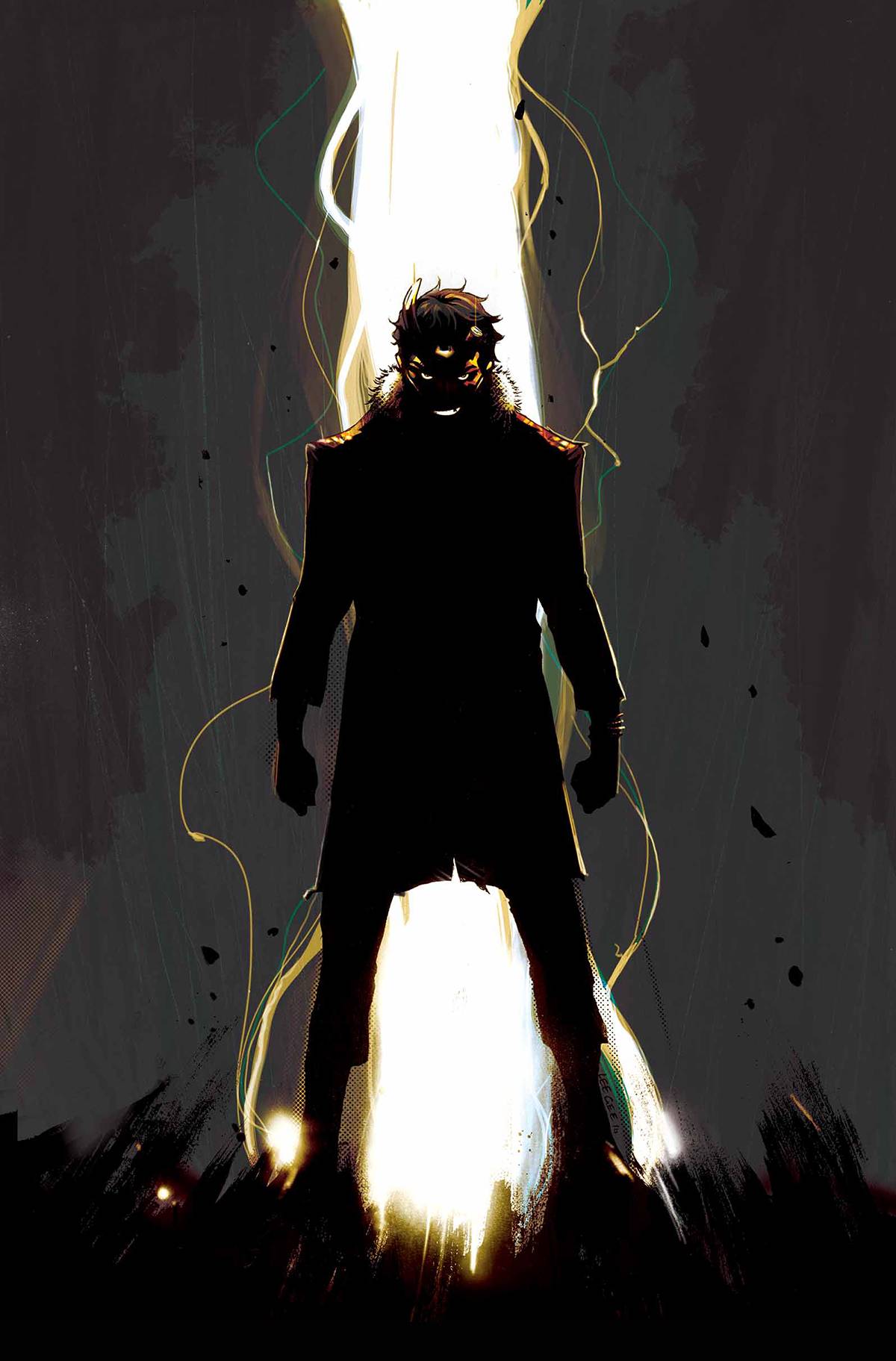 Drew: What does it mean to be the God of Lies? In many ways, this has been the central question of Al Ewing and Lee Garbett’s Loki: Agent of Asgard. While “storyteller” has been hinted at as the answer since issue one, this month finds Loki and the series coming to that conclusion a bit more explicitly. Making the meta-text more explicit, Ewing doesn’t just put Loki up against what his story could become, but also the two previous versions of his story, that is: the original, whose increasingly convoluted machinations couldn’t keep him alive, and “Kid Loki,” the replacement everyone said they wanted, but nobody ultimately did.

That these words work in-narrative AND as a comment on Kid Loki’s fate in the real world is exactly what makes this series so fantastic. Ewing’s struggles with his characters’ pasts are right there on the page, and very much reflect our own as readers. It’s almost too smart.
Patrick: What’s amazing to me is how Ewing is able to do all of that super smart, super header meta shit, but still hinge all of it on the emotionally-driven choices of the character. The setting bounces around from metaphorical-space to the present to “Three Thousand Years Ago” to eight months in the future, but the piece is surprisingly coherent, anchoring itself in the idea that Loki is the master of his own story. I realize it almost doesn’t matter which version of Loki we’re talking about either — they all have the hallmarks of what makes the abstract on the character so appealing (especially under Ewing’s pen). That moment toward the end of the issue when Old Evil Loki sticks his head out of the fresh crater in our Loki’s apartment wall and sees a newly incurred Planet hanging HUGE in the sky made me laugh out loud. “Well, that’s new.” Good point King Loki.
Secret Identities 3:
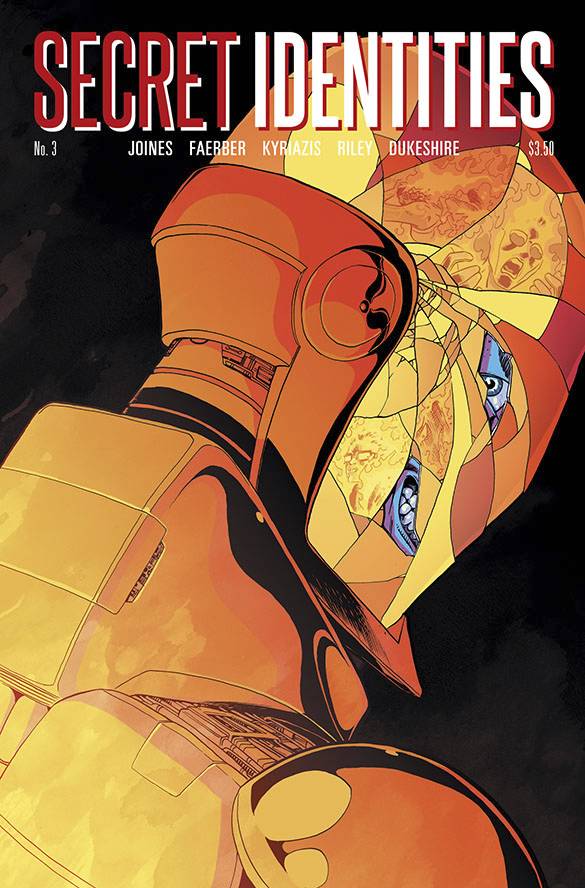 Spencer: The first two issues of Jay Faerber, Brian Joines, and Ilias Kyriazis’ Secret Identities were strongly focused on revealing its protagonists’ deepest secrets, which means that when issue three slows down slightly to instead develop its characters further, it feels like a needed change, but one that saps a bit of the momentum the series had been building up to that point. Fortunately, the character work here is strong — I particularly enjoy the fleshing out of Rundown and the continued peeks at what Crosswind is like when he’s not actively infiltrating the Front Line. Faerber and Joines continue to juggle the large cast about as well as they can, with almost everybody getting a small moment or two to shine; Faerber and Joines’ ability to make even one or two lines of dialogue so insightful is the key to managing a cast this size, but since the creative team clearly doesn’t seem against changing up the format every now and then, I would love an issue focusing on just one or two characters (I think some of the less developed cast members — such as Gaijin and Vesuvius — could use the attention). Secret Identities can feel a bit thematically slight at times, but with so many exciting, dynamically-plotted stuff going down in each issue, it’s never a dull read.
The Kitchen 6:
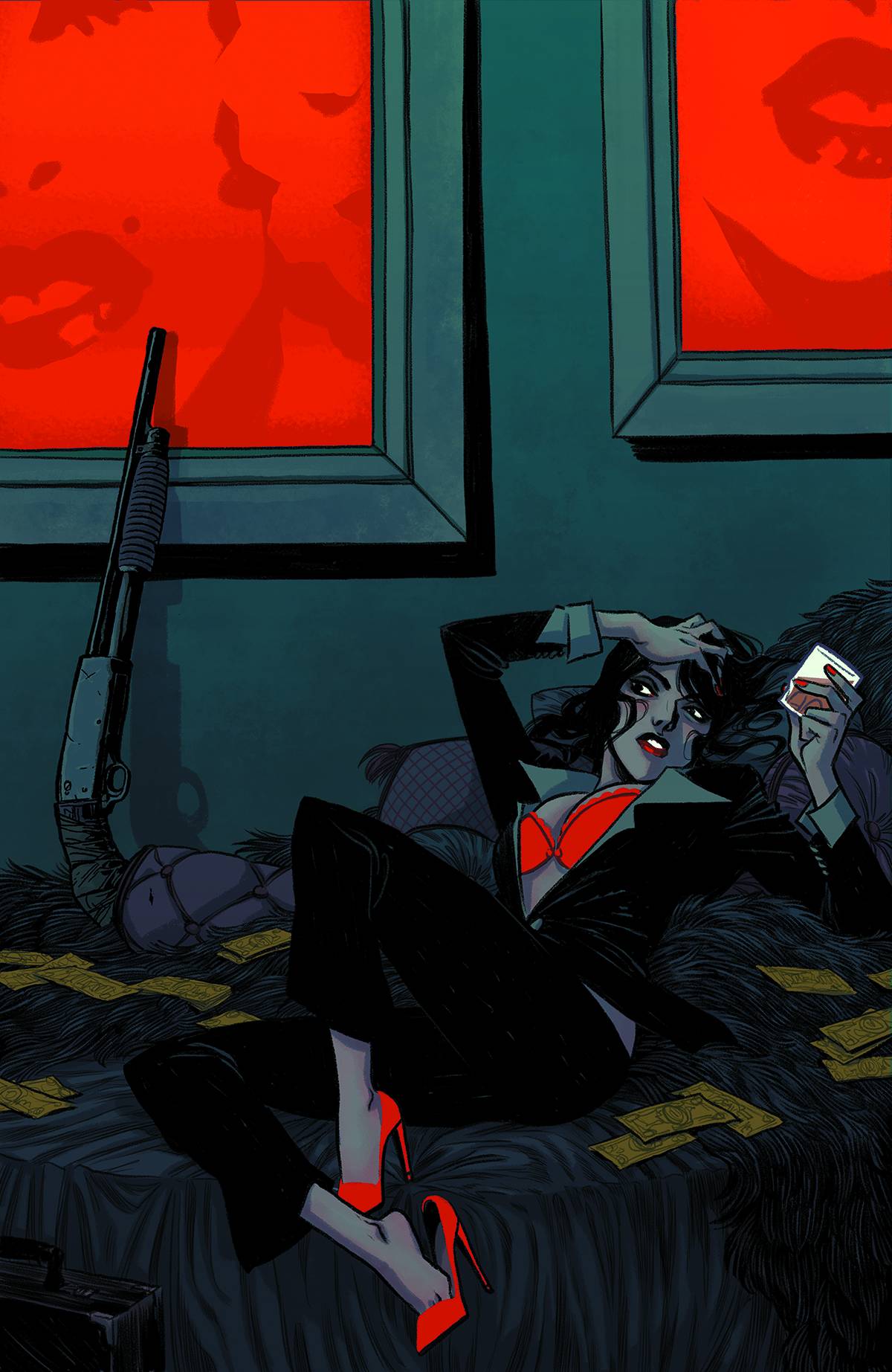 Drew: One of the key elements in evaluating a work of art is applying the right metrics. Stanley Kubrick’s detached affectations work fantastically for something like 2001: A Space Odyssey, but would distance the audience too much when applied to a smaller character study. Every once in a while, though, a work of art will defy our classifications, making it difficult to evaluate on its own terms. I’ve often felt this way about The Kitchen, which acts like a tightly focused crime-drama, but feels an awful lot like a dispassionate morality play. Those elements never quite support each other, so when Raven takes a page and a half to mourn Tony — the second lover she kills in issue 6 — I genuinely don’t know what it means. Or, rather, I’m not sure why we’re given that glimpse into her psyche after the deed is done. This issue finds her casually drinking next to a severed head, killing her husband, and coldly plotting to kill her boyfriend, with each step eroding my ability to relate to her. By the time she actually sheds a tear over any of this, my ability to empathize has completely dried up, flattening the issue into an emotionally flat list of events.
Spencer, I’ve voiced these frustrations with this series in the past, but you were able to find more to relate to back in issue 4. Is that still the case here?
Spencer: I can relate to Raven if we break her motivations down to the most basic level — she’s willing to sacrifice what she loves to keep her business afloat — but it’s hard to empathize with her, or any of the characters in general, when they’re so relentlessly selfish in their pursuit of riches and power. There are no “good guys” in The Kitchen — Kath, Raven and Angie are the protagonists mainly because the story is told from their perspective, and because the narrative loosely supports their actions in a “woman succeeding in a male dominated field” sort of way, but they’re no better morally than any of the other gangs or families featured. I think Raven’s mourning is there to show that she still has emotions and hasn’t become some sort of ice cold crime robot, but her willingness to kill Tony anyway may show that there’s no room for these emotions in Raven’s new trade — or perhaps even in The Kitchen in general — and that’s a lesson Raven seems to be learning well. This is, ultimately, a title about the lengths people will to go to attain power, and it’s at its most interesting when depicting how far these three woman have fallen (not that they were ever saints to begin with) or detailing their intricate web of deals and deception, but if any readers are looking for characters they can root for or even sympathize with, this is probably not place to find them.
The conversation doesn’t stop there, because you certainly read something that we didn’t. What do you wanna talk about from this week?
 Retcon Punch
I was going to use this week’s issue of Kitchen as an excuse to catch up on the whole thing, but never got around to it. Sounds like maybe the series isn’t panning out to be so great?