
Look, there are a lot of comics out there. Too many. We can never hope to have in-depth conversations about all of them. But, we sure can round up some of the more noteworthy titles we didn’t get around to from the week. Today, Patrick, Drew and Spencer discuss Inhuman Special 1, Guardians of the Galaxy 26, Spider-Man 17.1, Black Widow 17, Divinity 3, Infinite Loop 1, Effigy 4, Suiciders 4 and Black Hood 3.

Patrick: This week’s Round-Up has us contemplating a lot of impossible questions: how does legacy determine identity? What does god want? What is love? Is this real? What can we hope for from the future? I mean, don’t worry: we also get to see Spider-Man crack some terrible jokes. Wouldn’t be a week in comics without some blindingly stupid Parkerisms, right?
Inhuman Special 1
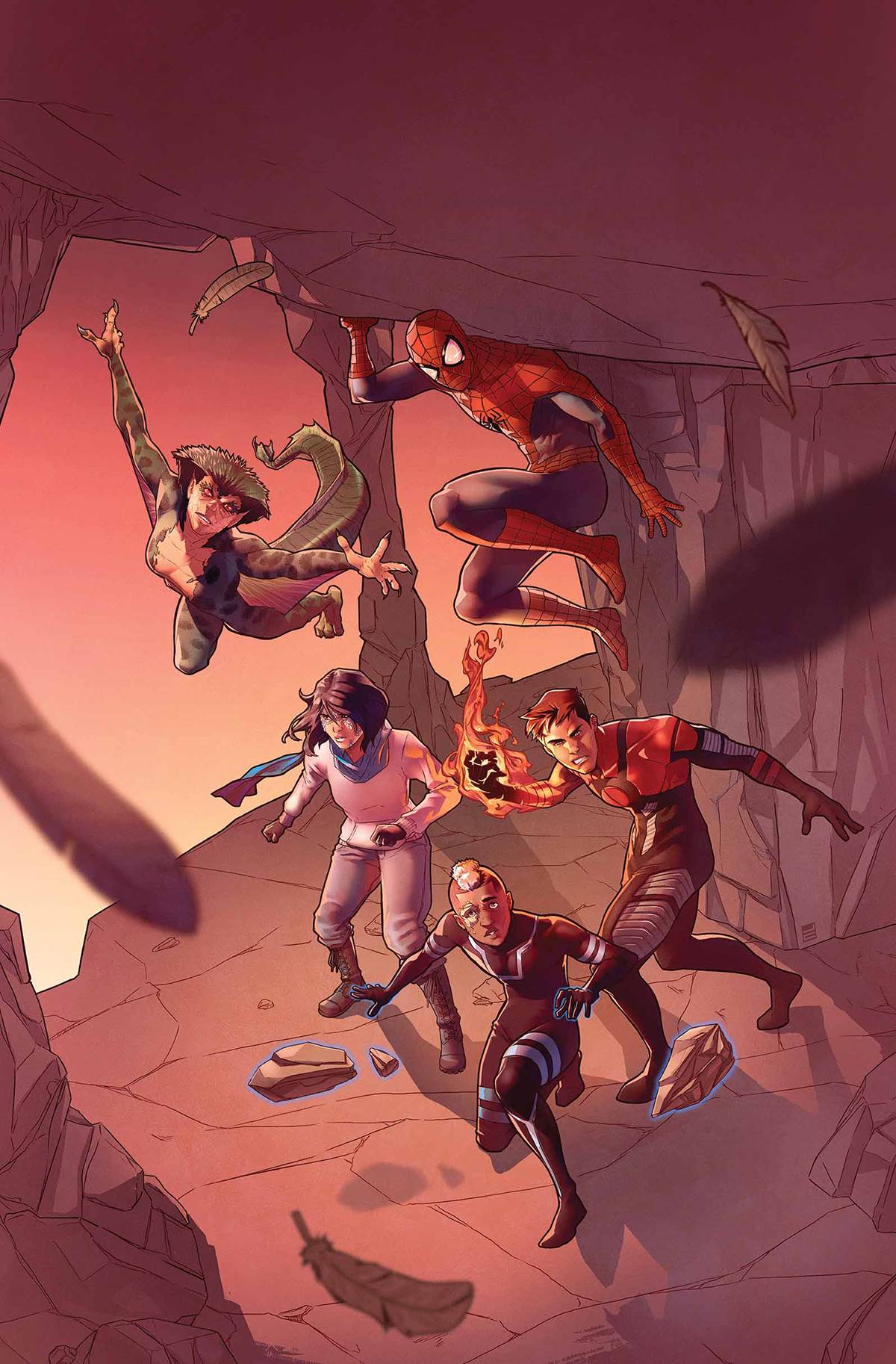 Patrick: I love these Marvel three-issue special stories — they’re not always perfect, but they do have this sort of go-for-broke attitude that enthusiastically mashes up pillars of the Marvel Universe for no other reason than to tell a fun story. Last year’s “Arms of the Octopus” did something similar, playing with the relatively new concepts of the time-displaced original X-Men (from All-New X-Men), Otto in Peter Parker’s body (from Superior Spider-Man) and the “Banner builds; Hulk breaks” philosophy (from Indestructible Hulk). “Arms” didn’t make any bold changes to or statements about any of those concepts, but simply utilized them to tell one fun story. In Part 2 of “Inhuman Error,” writer Jeff Loveness gets around to actually playing with the pieces he introduced in the previous issue, but also digs deep into the Inhuman’s history, providing a new perspective on their persecution. That history is personified in the form of Red Raven, one of the original Defenders (fighting alongside Cap, Bucky, Namor and OG Human Torch).
It’s a wirlwind backstory that changes what we know about terrigen and Red Raven, and it’s all rendered in painstakingly beautiful detail by Ryan Lee. Lee has a Frank Quitely-esque obsession with detail, but also allows for colorist Nolan Woodward to provide his characters with shape and dimension. None of Lee’s lines are wasted — here’s my favorite panel of the bunch:

That’s just such a beautiful marriage of Lee and Woodward’s strengths. Tell you what: if Lee was drawing a Spider-Man and the Inhumans series coming out of Secret Wars, I’d be so there.
Guardians of the Galaxy 26
 Spencer: We’re all drawn to Star-Lord because of his Rogue-ish, Han Solo/Chris Pratt-esque charm, right? We know that Peter Quill’s particular brand of flaky immaturity isn’t supposed to be a positive attribute, but it’s so much fun that we can usually overlook Peter’s flaws. In Guardians of the Galaxy 26, though, Brian Michael Bendis and Valerio Schiti focus a bit on what Star-Lord’s real responsibilities may be, and if his and the Guardians’ free-wheeling, “do what I want” methods are really the right way to fulfill them.

In a world with so much corruption, I find it faulty to automatically condemn an anti-authoritarian agenda as immature, but it does raise the question of whether Peter could do more good working to change the system from within — and, ultimately, if Peter’s lifestyle is less about sticking it to the man and more about just following his whims. I don’t trust Peter’s new advisors, and I can’t imagine him hanging up the ol’ red jacket any time soon, but the weighty questions Bendis raises could easily change the course of his future, and I find it an appealing angle to explore. This incarnation of Guardians of the Galaxy has, at times, felt like a rather slight book, so I’m happy to see it tackling some more complex themes, and combining them with Bendis’ typically fun character work makes for an unusually enjoyable and memorable installment.
Drew: And Schiti sells the ever-loving snot out of that character work. Patrick recently suggested that re-using panels is almost a necessary part of any Bendis series, but Schiti offers a compelling case for tweaking those panels to capture subtler reactions. Bendis stops this issue cold for a sight-gag of an alien throwing up in a bar, but Schiti’s character work makes every panel of that page worth it. That can be a feat with a Bendis script, but Schiti makes it look easy.
Amazing Spider-Man 17.1
 Spencer: In general, I’m a fan of morality tales — as someone who was addicted to Degrassi for five years, I’d have to be — but there’s something about Wraith’s descent into darkness as depicted by Gerry Conway and Carlo Barberi in The Amazing Spider-Man 17.1 that crosses the line from “morality tale” into straight up “preachy.” It’s a shame, because there’s plenty of interesting stuff going on in this issue, from the intricacies of the gang war to the potential hypocrisy of Wraith’s actions to just watching Hammerhead headbutt a guy into submission, but every single time Spider-Man starts lecturing Wraith (and it happens a lot), I can’t help but to roll my eyes.
Black Widow 17
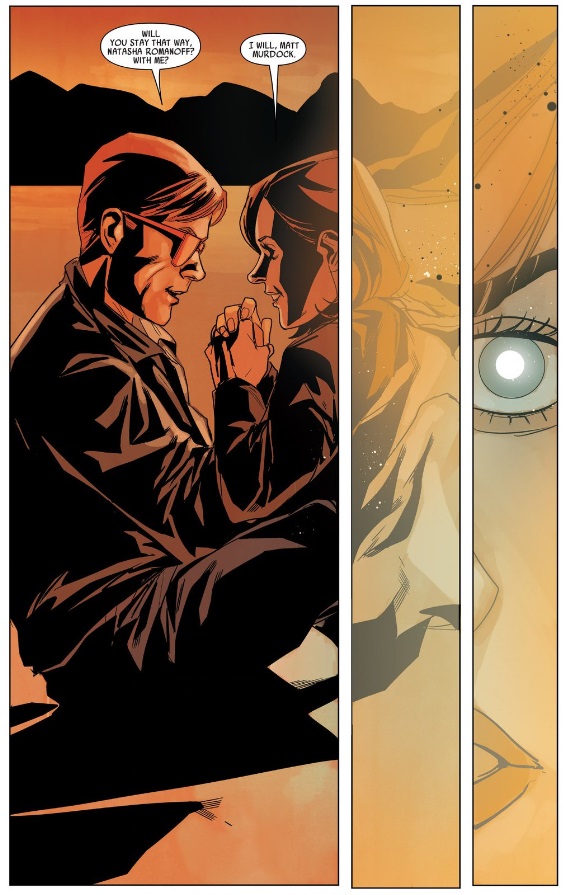
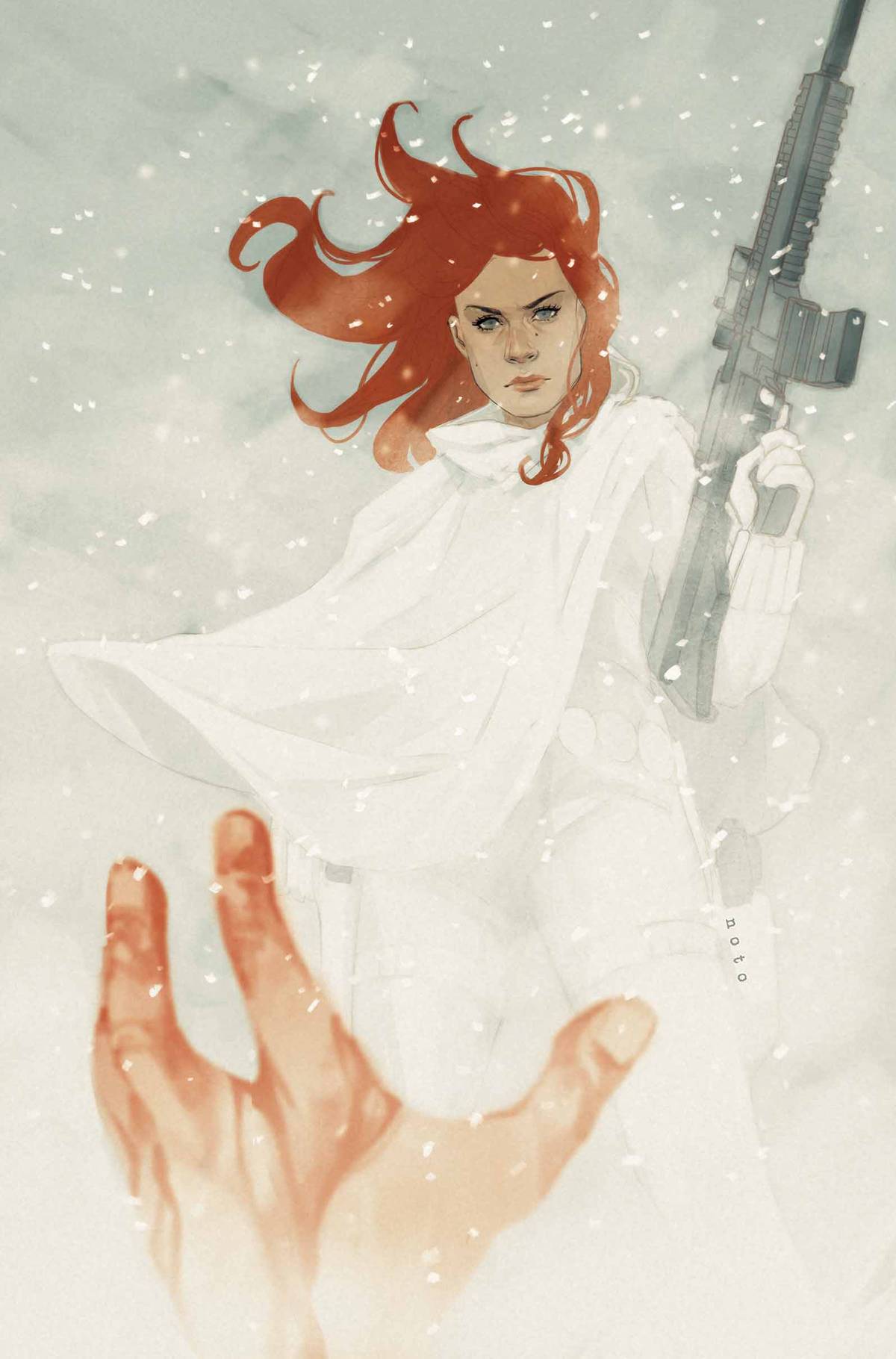 Patrick: The success of the Marvel Studios movies has been an interesting phenomenon to observe on a lot of fronts (my mom knows who Rocket Raccoon is?), but the most fascinating has got to be the way the films affect the comics that spawned them. The core Guardians of the Galaxy team lay dormant until hype started to swirl about James Gunn’s flick. The staggering success of that film led to like a million different Guardians books. The point is, there are starting to be predictable successful waters that a writer can navigate their characters toward. Nathan Edmondson brings that concept into issue 17 of Black Widow, bringing Natasha face to face with the human representative of the organization known as “Chaos.” Chaos is able to see into the future and then position themselves for maximum success, and the issue opens with Natasha sorta trapped in damn-pleasant future. While a boat-filled retirement with Matt Murdock feels peaceful and lovely, it is decidedly not Black Widow, and Natasha shrugs off the fantasy. There are a couple cool things happening there, not least of which is Edmondson acknowledging that we have sexist ideas of how a female superhero’s future should shape up. Granted, Phil Noto makes that fantasy hard to deny. Let’s take a second to admire how smoothly he handles that transition back to reality.
Divinity 3
 Drew: What does God want? It’s a question that has driven cultures since the dawn of society (and probably a good deal before then, as well), but it’s actually an incredibly bizarre question when you think about it: why would an all-powerful being want anything? The ability to create and have anything kind of solves the problem of desire, as Abram Adams kind of discovers in Divinity 3. This issue follows Abram through his conversion into whatever it is he is now, but the bigger story may be Abram’s decision to escape the “present” to meet up with his estranged lover and their daughter. Of course, there’s the question that any of Abram’s miracles are “real,” as Ninjak is able to see through his illusions and rally the rest of Unity. They seem poised to neutralize Abram by the time this mini wraps up next month, but with so much time given over to his psyche, this is very much Abram’s story. That kind of sympathy isn’t easy to come by, but writer Matt Kindt and artist Trevor Hairsine manage to put us in his shoes throughout the issue, even as he’s experiencing the impossible.
The Infinite Loop 1
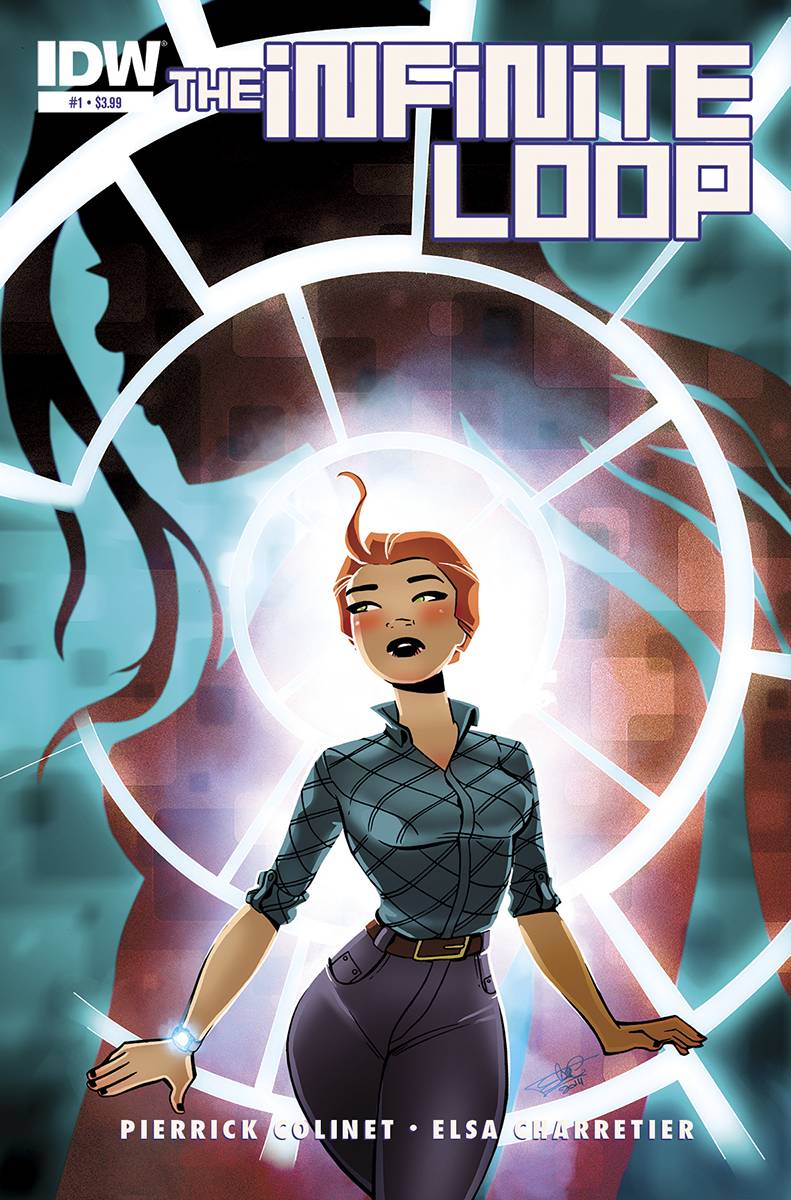 Drew: Speaking of the impossible, Pierrick Colinet and Elsa Charretier’s The Infinite Loop 1 follows Teddy, a kind of time steward, whose day-to-day tasks include cleaning up after “time paradox forgers,” who skip artifacts through time. It’s a clever premise, but the sci-fi elements are simply a backdrop for Teddy’s philosophical journey, as she fights with her co-pilot over the value of love. Teddy’s hardline attitude sets her up for the inevitable fall, and she seems to fall hard in those final images, though I kind of resent the letters page for spoiling the significance of that ending. “Love at first sight” feels like an oddly wrote twist after such a carefully crafted set-up. I’ll be back for sure — Charretier’s stylish character designs and innovative layouts are more that worth the cost of admission — but my optimism about the series has definitely veered into “cautious” territory.
Patrick: Yeah! That letters page did the same thing for me. I wasn’t at all tracking the idea that Teddy’s experience was an allegory for a homosexual relationship, but to read the letter at the end, that’s the whole point of the series. And, don’t get me wrong: I’m all about allegories, homosexuality and relationships — those themes just didn’t appear to be all that present in the issue itself. What the issue does have in spades is an insistence on innovative visual storytelling. Barely a page goes by without Charretier playing with how comics necessarily use space to communicate time.
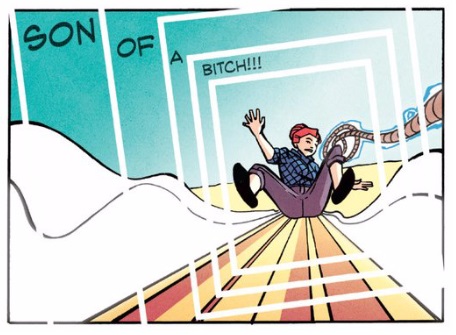
There are a lot of these cool visual ideas — at one point there’s even a flow-chart depicting how to survive a T-rex attack. “More charts in my comics!” That’s what I’m always saying.
Effigy 4
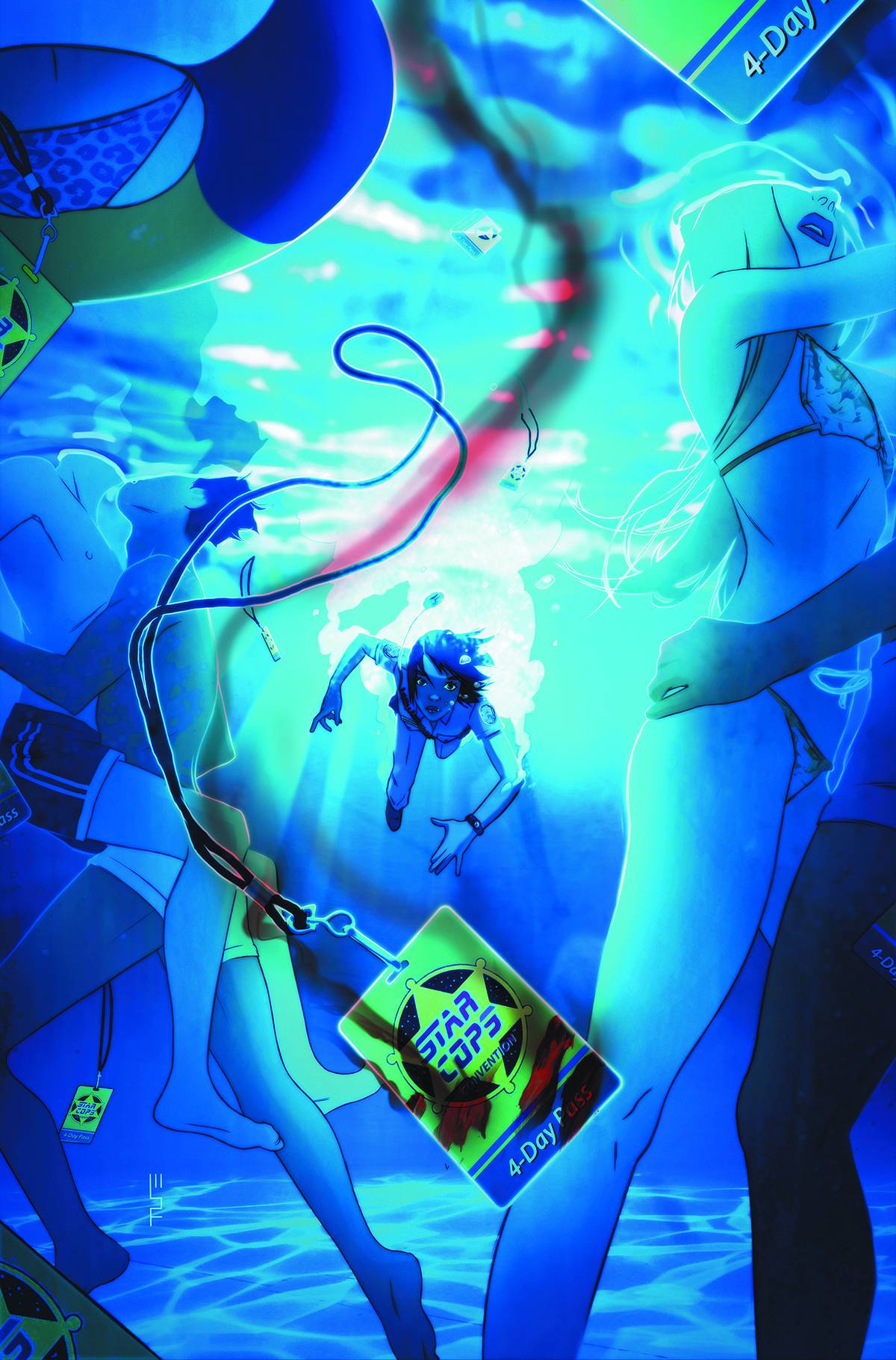 Spencer: I hate to start one of these blurbs off by spoiling the issue’s ending, but I don’t know where else to begin, so, SPOILERS: Tim Seeley and Marley Zarcone’s Effigy 4 closes with Chondra legitimately wondering if her life is scripted, and it’s just the right kind of revelation to start putting Effigy‘s more surreal, mysterious moments into perspective. So far we’ve seen some kind of transdimensional beings judging and controlling people — what if they’re playing God, and using the people of Effigy‘s universe as pawns to tell an entertaining story? In many ways its similar to how Chondra’s mother is using footage from Chondra’s life to pitch a show to networks without Chondra’s permission, and it would certainly work to tie this aspect of the narrative in with the murder mystery, which examines the more adult side of fan culture, and, specifically, somewhat likens fandom to a religion, a concept that contrasts with the idea of Effigy‘s characters being “fictional” in interesting ways. Over the last couple of issues I found the metaphysical aspects of Effigy to be a bit of a distraction, and while the book continued to pull me in thanks to its charming characters, it’s already become a much stronger story now that we’ve got at least even a little bit more of an idea of what’s going on.
Suiciders 3
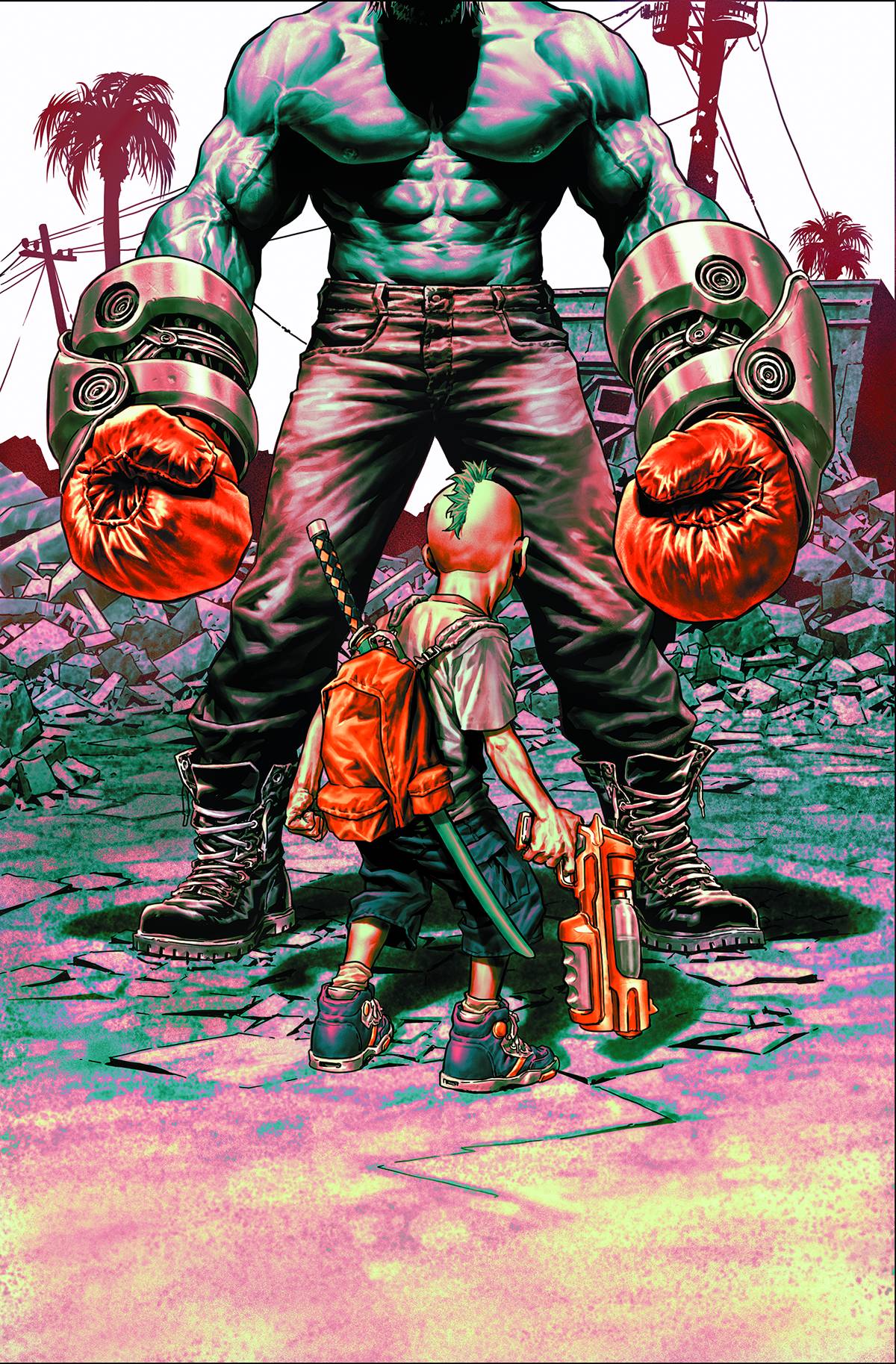 Patrick: Here’s a title I’ve been struggling with for a while. Three issues in and I’m still not entirely sure if Lee Bermejo is a masterful satirist or if he’s turning turning out juvenile-tropes because they’re honestly exciting to him. This issue sees a second female supporting character brutally murdered to further the plot of a male character. The lady paparazzo is at least spared the indignity of having her cold dead tits pushed up against a windshield.
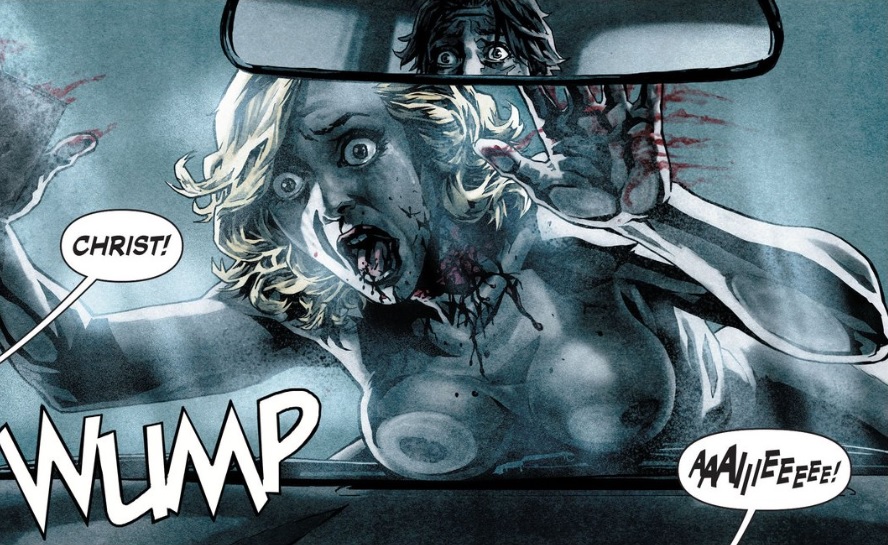
If having that image in the middle of this Round-Up feels unnecessary or superfluous, let me assure you that it’s even more uncomfortable in the context of the narrative. Especially as Bermejo renders this corpse in loving detail in several panels after this one. It’s all very crass and detached, which I suppose does successfully characterize this world as unbearable, but I’m finding a harder time convincing myself that I should spend time in that world. Drew, did you find more to love in this than I did? Maybe you were touched by the Straniero’s interaction with the kid in the Superman shirt?
Drew: Eh, at this point, Superman is drawn with blood dripping from his knuckles so often that Straniero’s second interaction with the kid barely represents a fall from grace. Actually, that scene represents what I see as both the biggest strengths and weaknesses of this series: Bermejo’s slavish devotion to compelling images. That doesn’t sound like a weakness, but those images often come at the cost of narrative coherence. Straniero apparently got to the bar without ever confronting the blood dripping from his hands. It allows him to have a great “out, damned spot” moment, complete with that half-redeeming, half-damning interaction with the kid (and his mom), but requires that we ignore how unimportant that blood was to him that he got back to the bar without ever even thinking about it. I’m willing to give Bermejo the benefit of the doubt — those images really are compelling — but I may need to stick to the surface to get anything out of it.
Black Hood 3
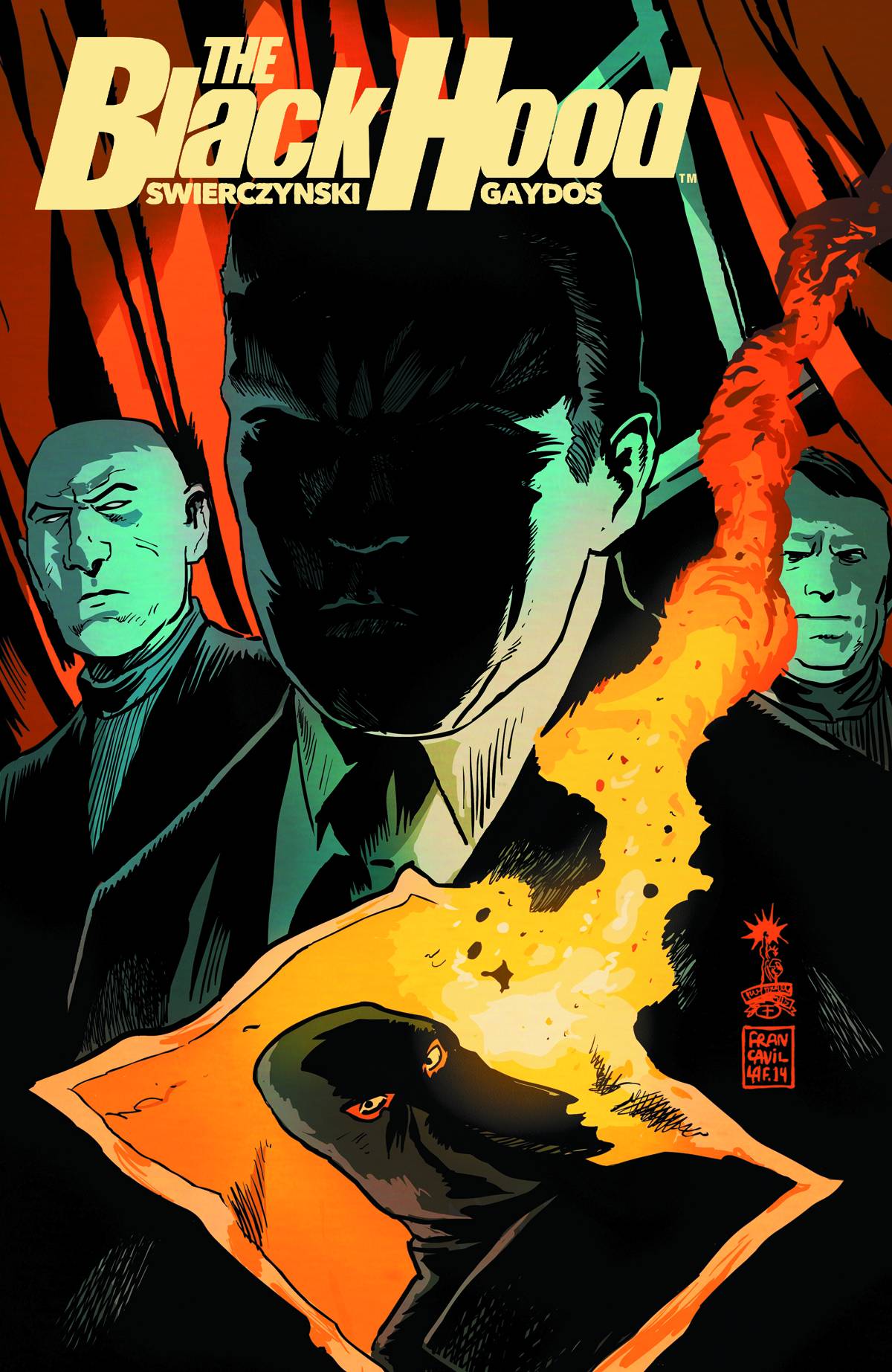 Drew: A gritty procedural cataloguing exactly how a regular guy becomes a masked vigilante sounds like a comic you’ve read a thousand times, but Duane Swierczynski and Michael Gaydos continue to deliver a series that’s somehow grittier than anything you’ve read before. More The Wire than Batman: Year One, The Black Hood 3 gives Hettinger a mission beyond his hapless interloping in the first two issues. That mission gives the series a direction that wasn’t lacking, necessarily, but is certainly welcome. Swierczsynski’s sense of pacing is impeccable, allowing the world to grow each issue, but directing that growth with questions the audience is already asking. The result is imminently readable, enhanced by Gaydos’ loose, almost improvisational line.
The conversation doesn’t stop there, because you certainly read something that we didn’t. What do you wanna talk about from this week?
 Retcon Punch
Is anyone else reading Inhuman Error? Spider-Man might be too obnoxious for me in this thing. I’m sure I’ve been spoiled by Slott’s restraint when it comes to Peter’s joke barrage. Loveness kinda goes nuts and writes him as constantly-joking, even to the point of being rude to his new friends.
I’ve liked the story, but I also thought Spidey was too much. But ti does show how good of a team-up guy he is. He pairs very well with nearly every other super hero or team out there.