

Look, there are a lot of comics out there. Too many. We can never hope to have in-depth conversations about all of them. But, we sure can round up some of the more noteworthy titles we didn’t get around to from the week. Today, Patrick, Drew, and Spencer discuss Afterlife with Archie 8, The Fox 2, Teenage Mutant Ninja Turtles: Mutanimals 3, Descender 3, Jupiter’s Circle 2, Dead Drop 1, Kanan — The Last Padawan 2, Operation S.I.N. 5, All-New Captain America Special 1, Rocket Raccoon 11, Spider-Gwen 4, Spider-Woman 7 and Unbeatable Squirrel Girl 5.

Drew: Comics are filled with outlandish sci-fi conceits. This week alone finds us talking about zombies, mutants, androids, and a number of humans-with-the-powers-of-animals, but this week also demonstrates why comics are so much more than those conceits. Whether dealing with character insights or more profound statements about humanity in general, this week gave us a lot to think about. Plus, there were zombies, mutants, androids, and a number of humans-with-the-powers-of-animals.
Afterlife with Archie 8
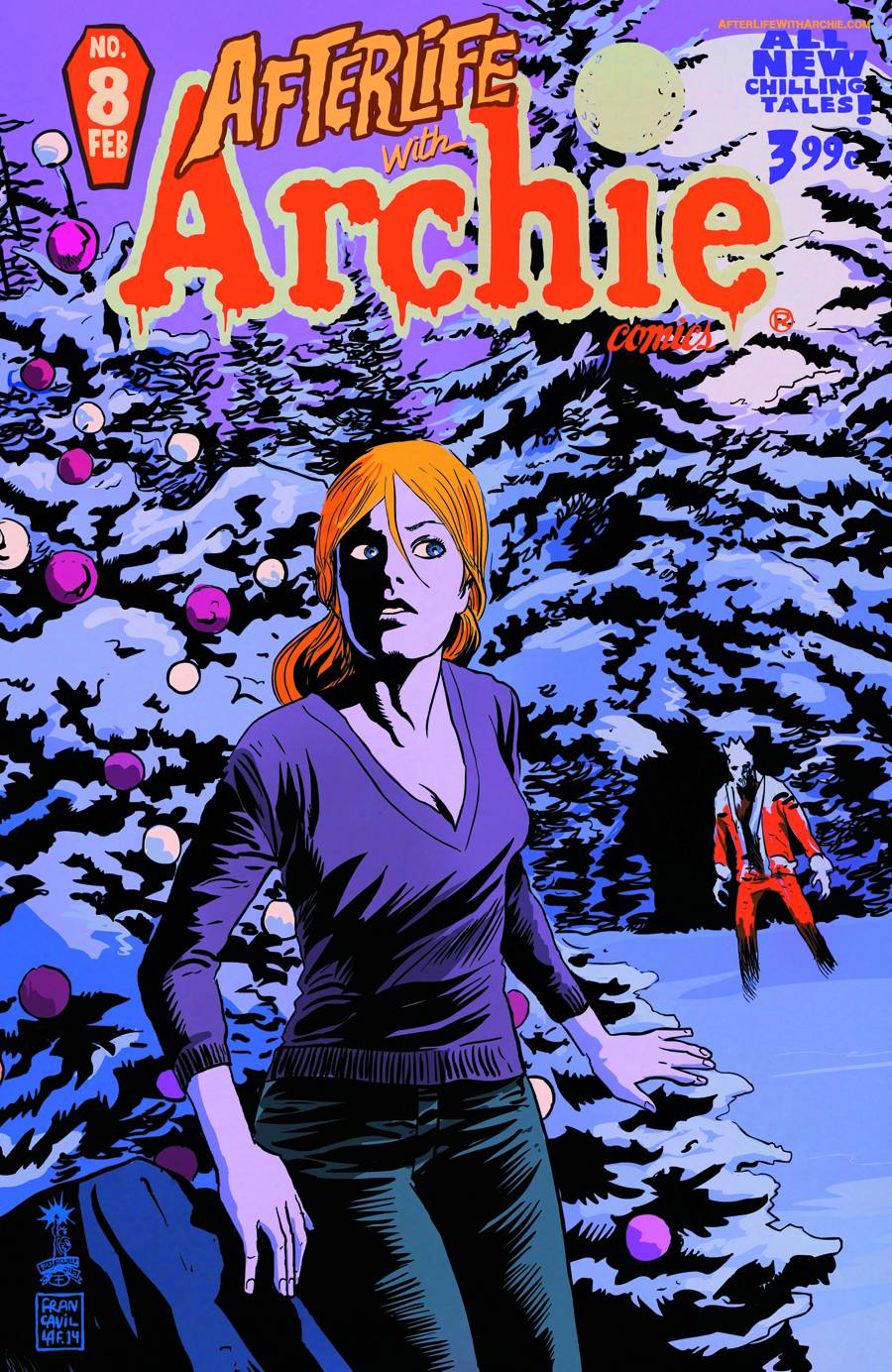 Drew: I recently had the pleasure of describing Afterlife with Archie to a friend who grew up on a mix of Archie and horror comics. He could not have been more tickled at the idea of that kind of genre mash-up, and while I continue to be impressed with how well-crafted this series is beyond its genre trappings, I’m not sure I’ll ever stop smiling at the novelty of it. Of course, I may just be responding to an issue that puts its genre inspirations front-and-center — Roberto Aguirre-Sacasa mentions the filmic inspirations for the issue, from The Shining to The House on Haunted Hill, but the dialogue for this issue also name-checks about a half-dozen more, from I Spit on Your Grave to Apocalypse Now. Those references fly by in Archie’s conversation with ghost-Jughead (who, sure enough, is tending bar at the giant haunted hotel the survivors have set up camp in), but the real magic of this issue is that all of those allusions don’t run away with the narrative.
It would be easy for an issue that opens with such overt homages to simply devolve into an extended parody, but Aguirre-Sacasa quickly asserts this series’ personality, delving into character motivations and unearthing some intriguing mythology that explains why Riverdale has always seemed to exist in a time-bubble. He even carries us to a decidedly UN-Archie moment, when Archie makes a firm decision in the Betty vs. Veronica conundrum. I’m not sure I’m ready to say that this series has outgrown its horror or Archie origins, but this issue makes a strong case for how it holds its own against them.
Patrick: And how it intends to propel itself forward into the future. We’ve got this kind of lingering mystery about what happened with the Blossom siblings, and I’m not convinced we’re going to get a resolution there any time soon. I love the way Aguirre-Sacasa holds that card in his hand a little bit longer, allowing Archie to score the amazing “I believe in good” to Betty’s “do you believe in evil?” question. That ends up mirroring the impossibly grim trial-by-peers we saw in the beginning of the issue. Tying that answer to Archie’s decision of Betty over Veronica also makes a pretty strong statement about what Veronica and the rest of the Lodges represent in this series: evil. Mr. Lodge actually makes some compelling points for leaving Cheryl behind, and the scene plays out in agonizing slow-motion, so the reader is meant to feel that genuine tension between Mr. Lodge and Archie. But with this declaration of marriage, Archie is casting himself (and a handful of others) as good, and the rest, well…do you believe in evil?
The Fox 2
 Patrick: The Fox’s role as the “freak magnet” is one of those things the reader just sort of has to accept. It’s like how we just sort of agree that Batman would be able to somehow be able to prepare so well as to be able to best the entire Justice League: it doesn’t make sense, but it makes for some damn exciting storytelling. Issue 2 of Dark Circle’s The Fox finds Shinji and Paul caught in the crossfire as weirdo supervillains duke it out for the honor of capturing The Fox (and the attendant cash reward). This is writer Mark Waid’s opportunity to play fast and loose with Fox lore — not that anyone’s really going to know which of these characters is hilariously made-up and which are long-running baddies in the franchise. Hell, not even then Fox himself can remember what the name of his own stretchy-villain is: Elasti-Boy? Mr. Elastic? Nope! It’s “The Insidious Elasto!” Even the most menacing and grotesque villain in this issue — the body-snatching Brontosaurus — has the relevance of his name questioned on two separate occasions. And it’s not even like the villains understand the difference between The Fox and The Ghost Fox, which is Shinji’s play at becoming a legacy. All of this confusion plays beautifully into the presumed unfamiliarity the readers are bound to have toward this property, and all of that hand-waving paves the way for some amazingly bombastic (and occasionally very violent) Dean Haspiel drawings.

Weirdly, there’s no credits page in this issue, so I’ve got to assume that the dynamic color work you see above was done by series regular colorist Jose Villarubia and that John Workman inked the piece. That seems like a strange omission, especially as Archie and Dark Circle are banking so much of their identity going forward on the creators they’re working with.
Teenage Mutant Ninja Turtles: Mutanimals 3
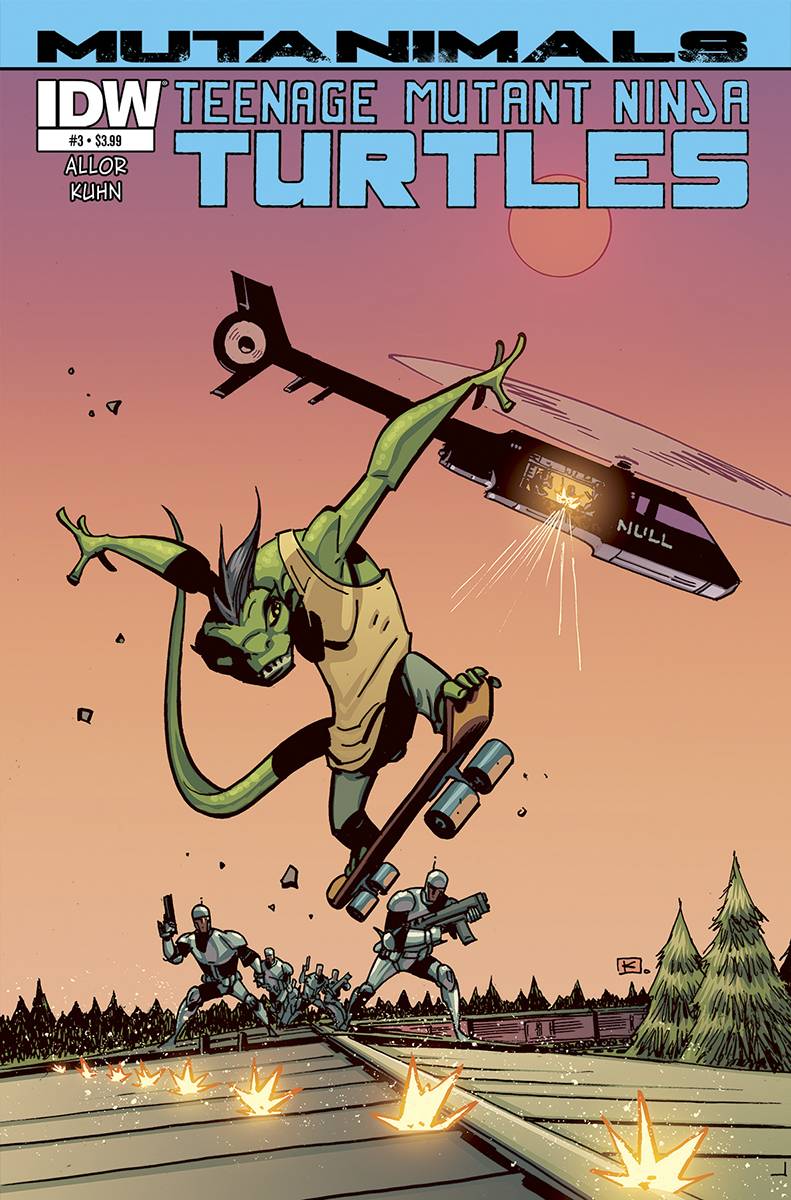 Drew: On the very first page of this issue, Slash asserts that the mutanimals are heroes and they should act like it, but that assertion is quickly called into question. Slash hulks out during the rescue of the mutanimals, saving the day, but doing so much more violently than he would ever consciously condone. There’s still no doubt that the mutanimals are on the right side of morality — Null’s pure evil is illustrated vividly here — but their methods never scream “hero.” This is especially true of Mutagen Man’s kamikaze mission back into the Null Corporation lab — we understand his motivation, but we’ve also seen just enough of the scientists humanized (and manipulated) that we can’t possibly root for blowing them up. That’s a tricky tightrope to walk, but writer Paul Allor is more than up to the task, tuning us into each character’s emotional stakes, even as he’s juggling multiple threads.
Descender 3
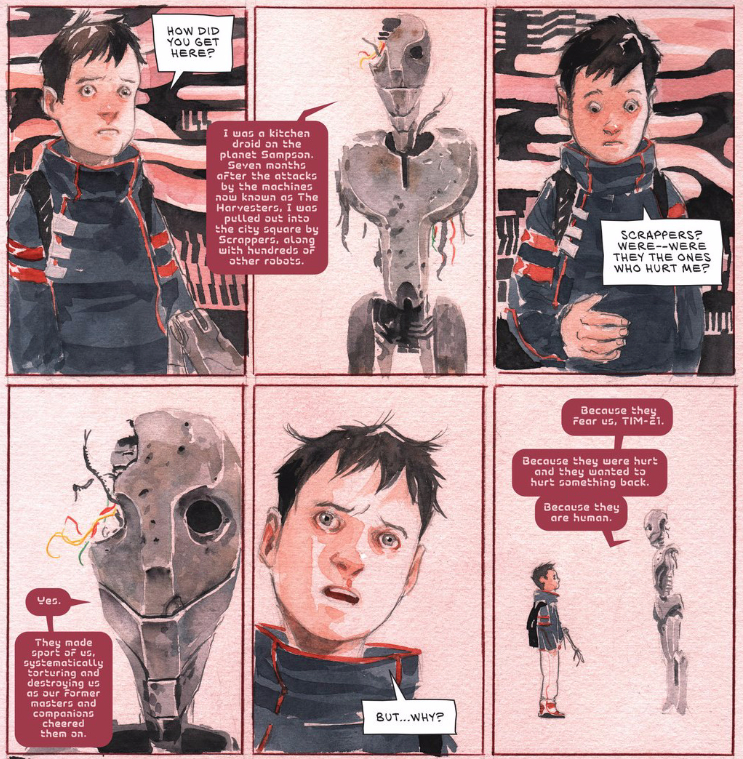
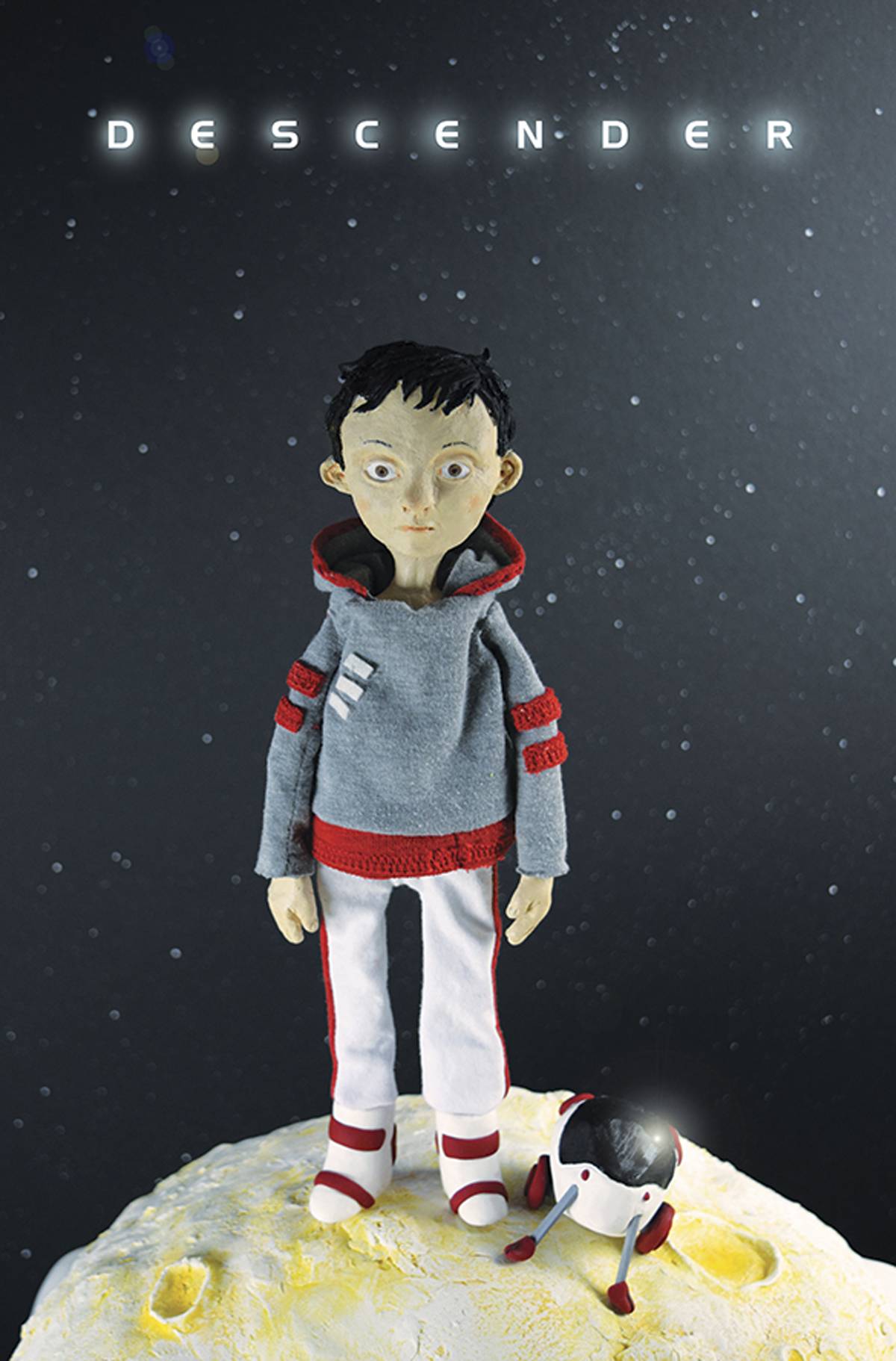 Spencer: At first glance, Descender is simply the story of an adorable boy robot trying to survive in a world out to destroy him, but under its surface lurk some far more complex ideas. It’s hard to see the Galactic Council’s robotic genocide and not think of the Holocaust, or the persecution of Muslims after 9/11, or, really, any situation where entire groups are persecuted for the sins, or perceived sins, of a few. These real life atrocities often rely on the de-humanization of their victims to gain traction, and again, it’s easy to see that reflected in the Council’s cavalier attitude towards robotic life. But Tim-21’s vision when he’s nearly destroyed debunks any ideas of robots not being alive. Either he had a dream — which should be impossible for a robot to have — or he reached some sort of robot afterlife, which not only reaffirms his humanity, but shows a massive robotic uprising being prepared somewhere in the digital beyond. I’m looking forward to seeing how writer Jeff Lemire chooses to handle this uprising, as the robots fighting back against their oppressors already has me thinking of Baltimore and other real-life riots — there’s a lot of rich, complicated territory to cover here.
Dustin Nguyen’s dreamlike art keeps the reader focused on the world he and Lemire have created even as the story veers into these real world parallels. Even more impressively, Nguyen finds a way to make Tim-21’s vision even more dreamlike than his reality — backgrounds come and go on a whim, and there’s this rosy glow that permeates the entire sequence, to the point where it seems to blend in with Tim-21’s very skin.
As always, it’s a sight to behold.
Jupiter’s Circle 2
 Drew: Jupiter’s Legacy has always been wading in familiar territory — a warts-and-all approach to how Superheroes would interact with the real world isn’t exactly new ground (even for writer Mark Millar) — but has exuded more than enough charm to excuse any retreads. Unfortunately, Jupiter’s Circle veers even harder to well-worn territory, centering around the would-be outing of the Blue Bolt, but mostly getting a lot of mileage out of the culture shock of its period setting. Watchmen made similar points three decades ago, and C.O.W.L. is mining the ’60s presently, which doesn’t leave a whole lot of space for a fresh take on “Superheroes in midcentury America.” (Indeed, C.O.W.L. recently did its own “prequel” issue, complete with similarly throwback-y art, which makes this issue feel particularly familiar.)
Which isn’t to say that anything about this issue is poorly done — indeed, it’s a masterfully crafted issue — but many of its charms suffer from that glimmer of recognition. The moments I found most enjoyable occur before the issue delves into its blackmail plot, as Millar relishes paying tribute to the classic Superman stories that are so central to this series’ DNA.

Millar made his name finding the dirt beneath stories like this, but I’ve always found this series most thrilling when it embraces those gee-whiz moments wholeheartedly. This issue will probably work like gangbusters for those who haven’t seen Millar’s schtick before, but for those who have, this feels like a missed opportunity for something different.
Dead Drop 1
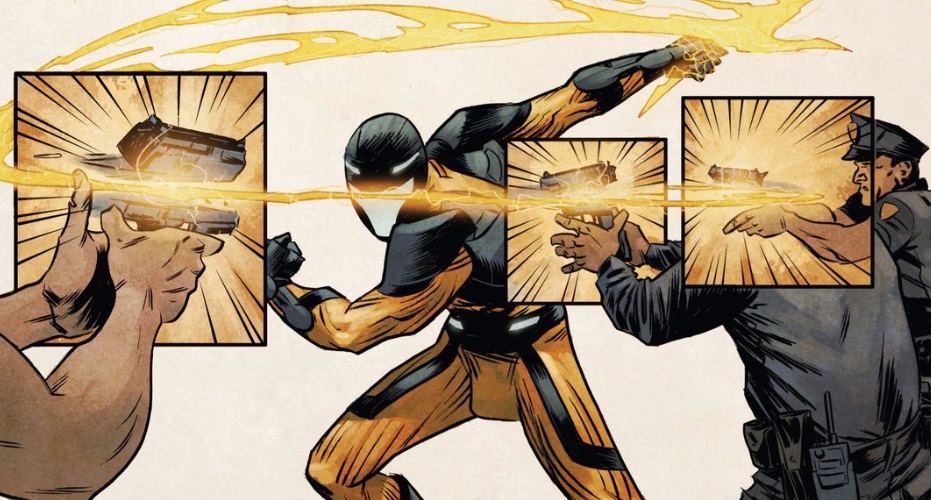
 Patrick: A man falls out of the sky and on to the island of Manhattan, in hot pursuit of a woman transporting a mysterious vile. That’s the premise of issue one of Dead Drop, the newest series by writer Ales Kot and artist Adam Gorham. There’s obviously a lot more to it than that, but the intricacies of what’s going on are not telegraphed very clearly from the outset. In fact, the cover, the credits page and the first actual page of content all seem pretty insistent on the idea that this issue is just about that man falling out of the sky and chasing someone through the streets of Manhattan. The credits page even includes a map with little waypoints bearing specific page numbers next to them, emphasizing that that’s what is important to this issue: the action. Aric (our falling man) is aided by an unidentified voice on the other end of the radio. That voice doesn’t just talk to Aric, the voice appears to be addressing the reader directly. There’s a point where the voice explains what a ‘dead drop’ is, but does so asking “who gave you your security pass?” I don’t believe we’re meant to assume that Aric is unfamiliar with the term, but some omniscient third person observer (i.e., the reader) might. Leave it to Kot to make the reader a participant in this drama.
Whenever I pick up a Valiant book, I’m afraid I’m missing out on some history with these characters or concepts. I thought Aric’s plasma whips (or, whatever the hell they are) were super cool, and I liked seeing him slice three guns in half with one twirl, but maybe that’s just part and parcel for this character. I suppose, even if it is, Gorham has a canny enough handle on motion, and a keen enough high for select moments to highlight, that the move does look rad as fuck.
Drew, I think I would have been content with this simple story, but there’s a lot of other mythology floating around the edges of this issue — does that intrigue you or exhaust you?
Drew: That’s a feeling that I keep getting with valiant — almost suckered in by the simple story, almost daunted by the mythology (or my unfamiliarity with it) — but there’s enough to enjoy here that none of it mattered. I’m familiar enough with the concept of X-O Manowar to get some of those tidbits (it’s possible that Aric really doesn’t know what a “dead drop” is), but not so much that I recognized the character design on the cover. Ultimately, though, that mythology is entirely secondary to the chase here.
Adam Gorham has an uncanny ability to convey motion on the page, paying special attention to the location to show cause and effect, and especially to show how differently Aric interacts with the environment than everyone else. There’s something satisfying about seeing him smash through a window or crumple a lamppost, especially after we see his quarry dodge our bounce off of them harmlessly. It’s a clever distillation of what makes this character intimidating, but is also just a funny visual gag. X-O Manowar SMASH.
Kanan — The Last Padawan 2
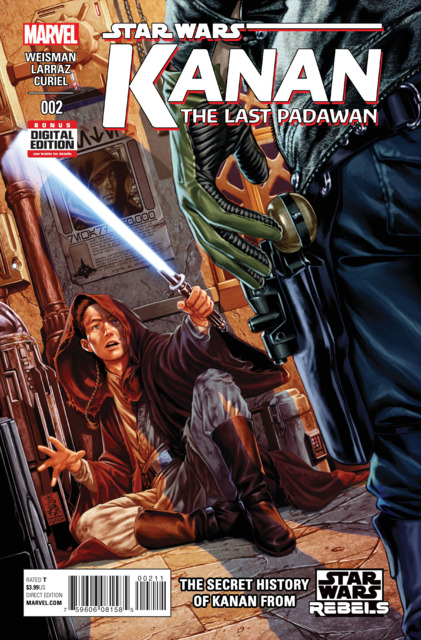 Patrick: Man, I tell you what — these Star Wars comics are so totally working on me. There is so much incident in the core movies that is left emotionally unexplored, and when they’re at their best, the new Marvel series tap rich veins of character and story. The previous issue of Kanan set up the disconnect between the Jedi as both spiritual leaders and generals in the army of the Republic — thematic ground so obvious, I don’t know how it ever escaped me. The second issue asks the reader to witness the moments immediately before, during and after the infamous “execute order 66” moment from the end of Revenge of the Sith. In the film, it was a story beat — a blip indicating the mythology was changing. Through Kanan’s eyes, we’re able to see betrayal, heartache, desperation, and the sum total of these emotions is a much more compelling story that watching Jedi after Jedi gunned down by clone troopers. Artist Pepe Larraz continues to wield even non-iconic characters with a status that lends them the gravity of more established heroes within the Star Wars canon.
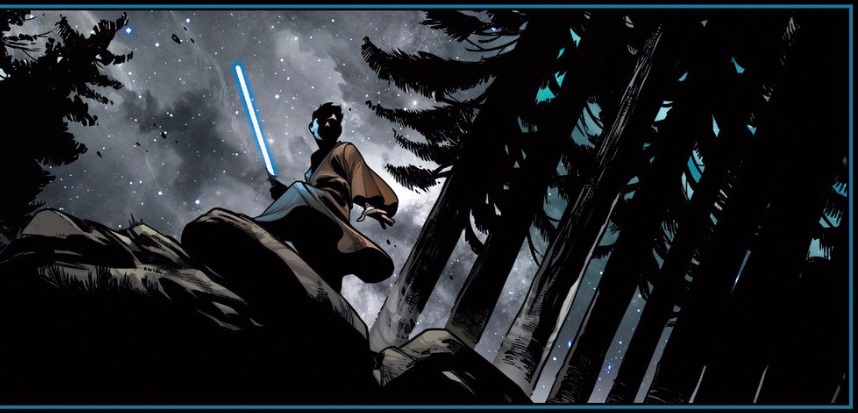
That low angle makes Kanan seem at once hugely important but also intensely alone. Plus the detail in the night sky (whether we can attribute it to Larraz or colorist David Curiel) hints at the vast galaxy that has betrayed the poor kid. The story does finally get him into space, and disastrously close to Coruscant, and I’m eager to see what classic moment writer Greg Weisman dramatizes in that more immediately dangerous environment.
Operation S.I.N. 5
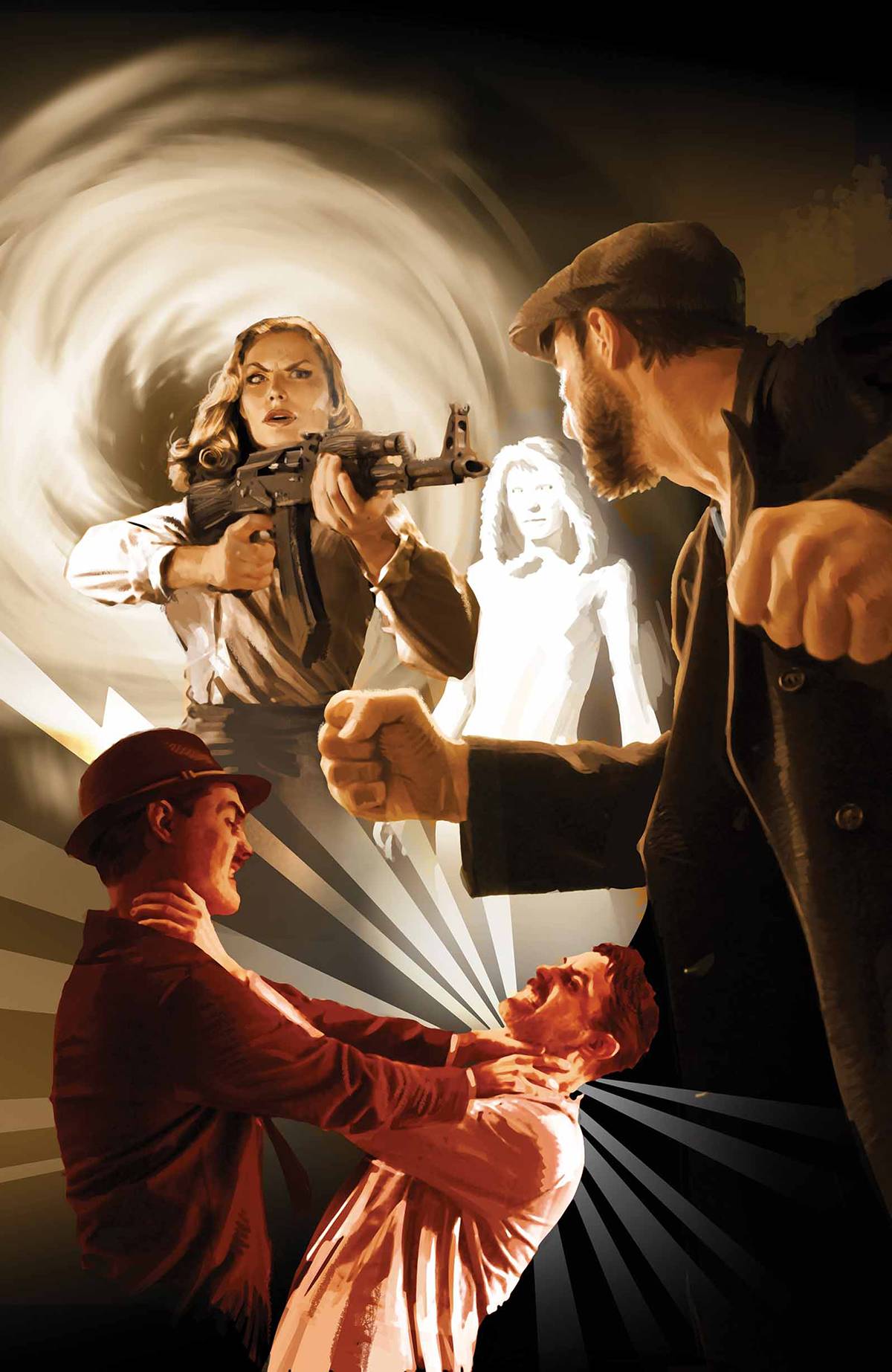 Spencer: Throughout Operation S.I.N.‘s first four issues I often found myself wondering what exactly this miniseries was about. Was it just a chance for Kathryn Immonen and Rich Ellis to take Peggy Carter and the other WWII-era Marvel characters for a run, and for Marvel to promote the Agent Carter TV show? Was it meant to be a spy story, or a zany sci-fi romp, or a character piece, or what? Down to Operation S.I.N.‘s very end Immonen and Ellis sometimes struggled to integrate these various elements into a cohesive story, but while reading the fifth and final issue I finally understood what the creative team was going for — this is a story about the way discrimination and war thwarts progress.
That’s exactly what happens in the conclusion, as Peggy and her troupe just barely manage to save the world despite Stark and Vanko’s political bickering, and despite Woodrow’s constant attempts to eliminate the peaceful extraterrestrial, Shareen. Even with the threat of HYDRA and the black hole alien neutralized, the ending is far from happy, as Soviet officials whisk half of Peggy’s party away to uncertain, but certainly unpleasant, fates. It’s only Peggy, by believing in and cooperating with all her allies no matter where they come from, who keeps things from falling apart entirely, and her message of tolerance is just as vital in 2015 as it was sixty years ago. We can’t progress without it.
All-New Captain America Special 1
 Spencer: Jeff Loveness and Alec Morgan’s “Inhuman Error” storyline — which spans The Amazing Spider-Man Special 1, Inhuman Special 1, and this week’s All-New Captain America Special 1 — is a masterclass in using a shared universe to its fullest potential. Each of these characters inhabit a very different part of the Marvel Universe, and there’s a lot of fun to be found from watching Spider-Man’s everyman nebbishness bounce off Medusa’s regal demeanor, or in seeing the newbie Inhumans learn from Captain America himself, and especially in seeing one generation of Marvel heroes mentor the next. That this story features characters spanning Marvel’s entire history interacting is fantastic enough, but the fact that all are in character and all get a chance to shine is even more impressive. I just had fun with this book — no, this entire crossover — on pretty much every possible level, and I’d love to see Loveness get another crack at any of these characters (but especially Spider-Man) again in the future.
Patrick: I’m still not sure about Loveness’ Spider-Man: he might just be too jokey for my tastes. But I sure did love the sense of history — both “secret” and real — that Loveness is able to play with in this issue. There’s a moment when Sam is fighting Red Raven, and Raven gets to be really shitty about Sam not really being Cap. The moment’s all the better because Sam gets to be just as shitty back to him (“he never mentioned you”). That’s a nice reminder of why we reinvent, reboot, and change things — the old stuff isn’t always the most compelling. For as cool as Medusa and Black Bolt are, it is going to take an infusion of a lot of new, cool characters to make the Inhumans a viable franchise, and this story sees Loveness embracing that idea. Who saves the day in the end? Flint — one of the newbies.
Rocket Raccoon 11
 Drew: When we discussed Rocket Raccoon 10 last month, Spencer and I disagreed over the importance of the Book of Halfworld. I saw it as the important piece of mythology Skottie Young was presenting it as, but Spencer was suspicious of its sudden importance, dismissing it as a MacGuffin. With a second issue centering around the book, I was excited to see…that Spencer was 100% right. Toying with the very idea of “an important piece of mythology,” Young and artist Jake Parker build up the book as the answer to who Rocket is, but as soon as he reads it, he loses interest. “Some stories aren’t meant to be told, some questions aren’t meant to be answered,” he says. And then, to remind us of the kinds of stories this series is really about, Young and Parker end the issue with Rocket back in a jam, finding yet another way for Groot to help him out of it. You want a clarification of who Rocket is? This issue definitely does it, though mostly by assuring us that he is who he’s always been.
Spider-Gwen 4
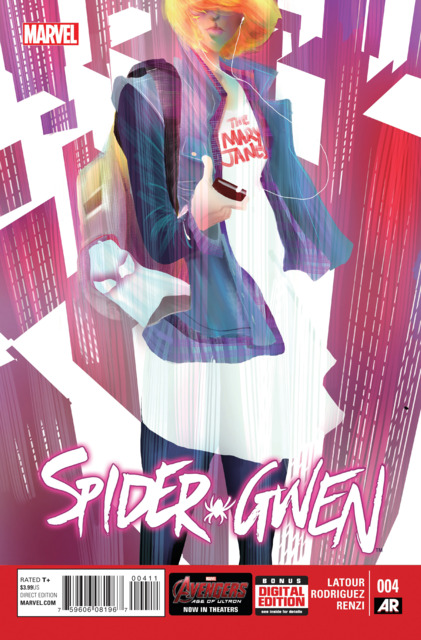 Drew: What would you say defines who you are? Is it how you think and feel about yourself? Is it how others think and feel about you? Is it who you think you are on the outside, or how you present yourself to the outside world? These are questions we all have to grapple with, but they’re particularly important when we’re formulating our identities as teens. It’s a famously treacherous time for most people, and most people don’t have a misunderstood alter-ego to deal with.
Everything about this issue challenges Gwen’s sense of identity. Hobie challenges her. Aunt May challenges her. Glory challenges her. It’s not totally clear where her head is at the end of this issue (if there’s one detail writer Jason Latour ported from Spider-Man more directly than any other, it’s the incremental pacing of the newspaper strip), but all of those confrontations certainly give us something to think about.
Spencer: Absolutely, Drew, and they’re already giving Gwen something to think about as well. What strikes me the most about this issue, though, is how much Gwen needs to challenged, and how desperately she tries to run away from it. Seriously, Gwen practically has a panic attack when Aunt May comes down the stairs — May essentially has to force Gwen back down into her chair to deliver one of her trademark inspirational pep-talks (or, at least, as peppy as a Peter-less Aunt May can be). Sometimes that’s what it takes — someone who knows us well forcing us to listen when we’re too scared to accept their help. Gwen’s been so holed up in her own head that it took somebody forcibly breaking through all her social barriers to make any sort of change, but now that it’s happened, I think Gwen’s in a much better position to figure out what to do next.
Spider-Woman 7
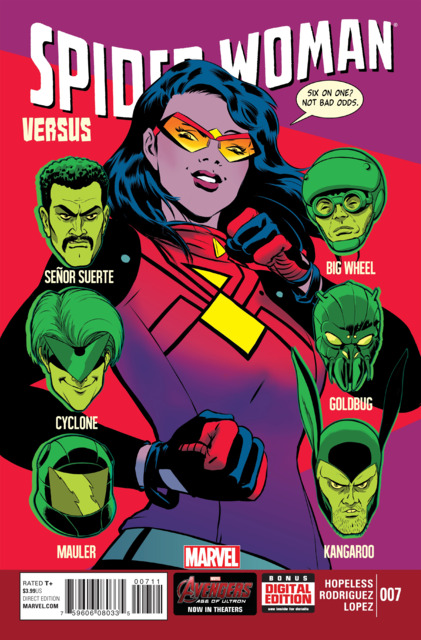 Spencer: Every once in a while I’ll be reading a comic and stumble across an idea that’s so astoundingly clever, yet so simple and elegant, that I can’t help but wonder, “Why hasn’t anybody thought of this before?” That’s exactly what ran through my head while I was reading Dennis Hopeless and Javier Rodriguez’s Spider-Woman 7. Remember all those kidnapped families? Turns out they kidnapped themselves, and have used their “ransom” money to establish a peaceful society far away from their criminal husbands. It’s a crackerjack concept, made all the more smart by how appealing it seems. Sure, these wives are using stolen money to build their utopia, but it’s to escape criminals, and everybody in the town works together so peacefully and easily that even Jess seems just a bit taken by it — that is, until Hopeless and Rodriguez drop the issue’s second big bomb:

Yes, that’s a woman surgically fused to a construction vehicle. I don’t know if my heart can take another twist of the same caliber as these two, but I’ll take my chances — with storytelling this smart, surprising, and compelling, there’s no chance of me not coming back for more.
Unbeatable Squirrel Girl 5
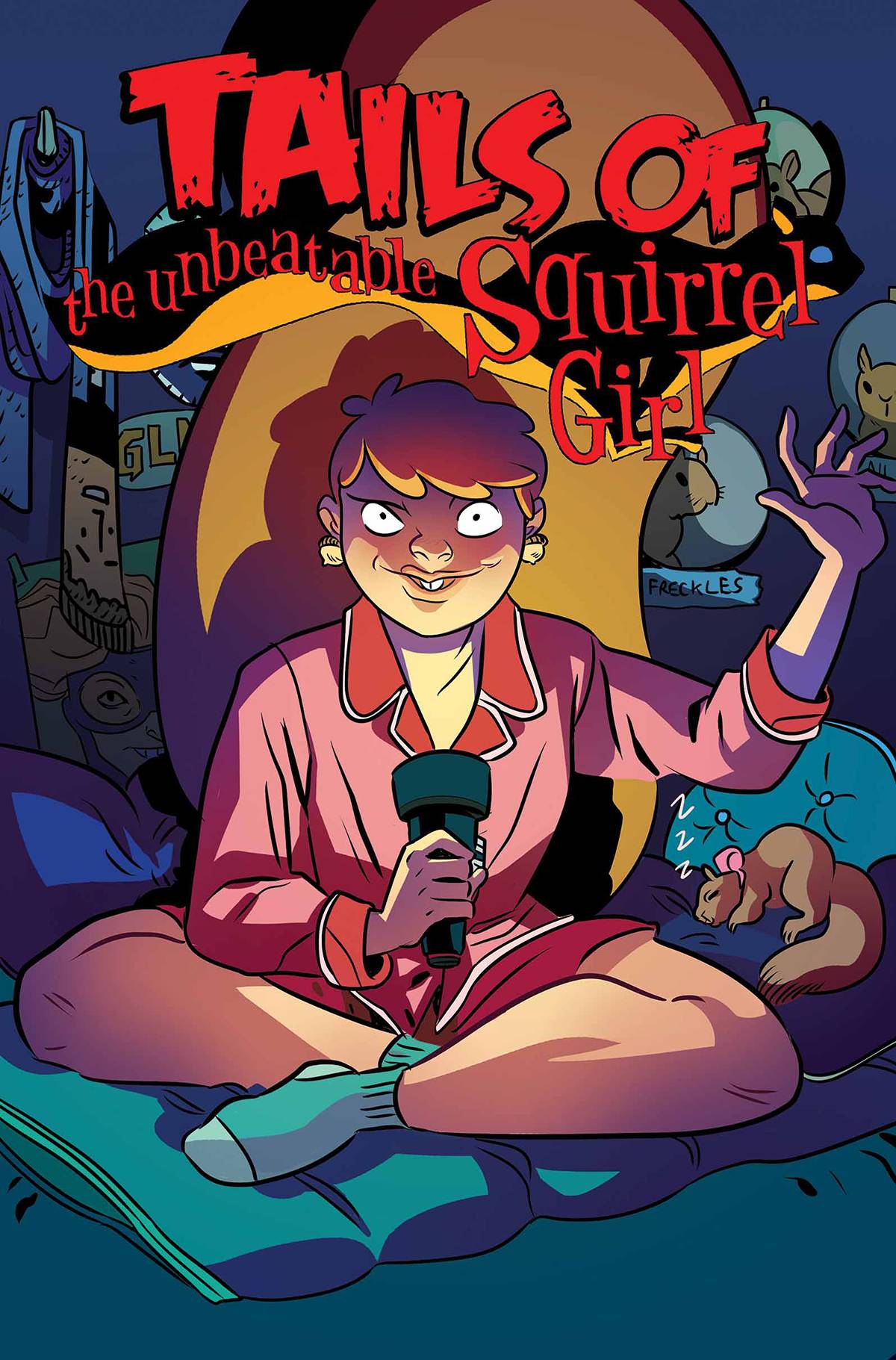 Patrick: Two weeks ago, while writing about Squirrel Girl 4, I made the case that this is probably the most subversive series on the shelves. Writer Ryan North sets up standard superhero stories and then works like hell to find a new angle on them. This issue owes a lot to Gerry Duggan and Brian Posehn’s fake inventory issues of Deadpool, as it re-imagines eras in Doreen’s life through the lens of different eras of comics, including a Silver Age story with Captain America and a 90s-ass story (complete with Squirrel Girl 2099). The storytellers are people awaiting rescue from SG herself, and (perhaps in another nod to Deadpool) have a hard time distinguishing Squirrel Girl from Spider-Man. That actually leads to my favorite set of panels in the issue.

Nancy stomps her foot and demands that everyone recognize all the great stuff Squirrel Girl has actually accomplished, which naturally elicits blank stares from her co-hostages. It’s a clever reminder that there is no Platonic ideal of Squirrel Girl that these half-remembered stories illuminate. In the end, the rescued hostages are really only excited because “she did the nut pun!!” — what else could you possibly expect people to know about Squirrel Girl?
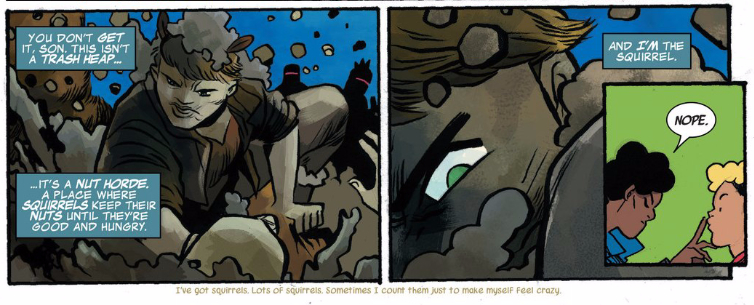
Spencer: That’s she got partially Squirrel blood? Anyway, before we get too far off topic, I want to present my own favorite set of panels from this issue:
Beautiful.
This is a terrifically fun issue (as always), but what I find interesting about it is how different Squirrel Girl’s reaction to these stories are from Nancy’s. Nancy knows what the real Squirrel Girl is like and is offended by all these different interpretations, but Doreen thinks they’re fun and wants to hear all about them. Maybe that’s a lesson for all of us in the audience not to get so caught up in “our” definitive takes on characters and just enjoy all the various stories creators can think of to tell with them. Even if we still don’t like a new take, at least we can say we gave it the good ol’ college try — and at least there will be a nut pun or two along the way.
The conversation doesn’t stop there, because you certainly read something that we didn’t. What do you wanna talk about from this week?
 Retcon Punch
I absolutely love Loveness’ Spider-Man, Patrick. The non-stop jokes really work for me, but I love that Loveness plays him different ways too. Obviously we get to see Peter’s inspirational side pop-up more than once — just because he’s a jokester to the point of being caustic doesn’t mean he’s not heroic — but we also get to see how he uses humor to cover up his other emotions. For example, early in the issue Peter’s joking with Sam about his bird powers. Later, Sam uses his bird powers to take down Red Raven and Peter makes another lame joke about them, but this time casting himself as the butt of the joke (he jokes about how Sam needs to stop copying Steve’s bird powers as well, essentially apologizing and saying that he has no idea of what he’s talking about). I thought it was a clever way to demonstrate how Peter uses his humor to process his emotions, not just annoy friend and foe alike.