
Look, there are a lot of comics out there. Too many. We can never hope to have in-depth conversations about all of them. But, we sure can round up some of the more noteworthy titles we didn’t get around to from the week. Today, Drew, Patrick, and Spencer discuss The Chilling Adventures of Sabrina 3, Infinite Loop 2, Effigy 5, Providence 1, Nova 31, S.H.I.E.L.D. 6, Sons of the Devil 1 and Outcast 9.

Drew: Expectations are a funny thing. They can predispose us to liking or disliking an undeserving work of art, but they can also be exploited by a savvy artist. Exploiting our own expectations to surprise us is one of the most common tricks in genre fiction, but also one of the most satisfying. For evidence, we need look no further than the comics out this week, which play with our expectations in fun, sometimes even shocking ways.
The Chilling Adventures of Sabrina 3
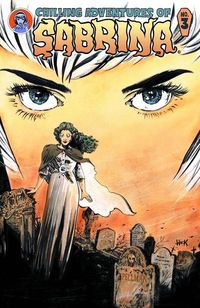 Drew: It might be a stretch to call The Chilling Adventures of Sabrina 3 wholesome — the issue still features a ritual sacrifice and a few references to cannibalism — but tweak those details just a bit, and this could be the story of any teenage girl caught between her family’s religious conservatism and the progressivism of the ’60s. This issue trades in familiar scenes, from the teenage couple struggling over their sexual expression to the parent figure answering a young child’s questions about their religion, but finds a shot of new blood (goat’s blood, that is) in centering it around witchcraft. Things fly back into the realm of horror as Sabrina is asked to kill a goat and literally summon Satan, but until that moment, the issue was largely about the struggle of being a weird teenager during the ’60s. Even Madam Satan’s machinations are a lot more teen drama-y, manipulating Harvey to discover Sabrina’s secret, rather than outright harm either of them. It’s a strange mix of bubblegum drama and horror, but it’s one that continues to be an alluring portrait of a bygone era.
Patrick: Yeah, I guess we should be settling into the idea that this is what Roberto Aaguirre-Sacasa does so well: marrying quaint old-timey Archie-ness with abject horror to make something more effective than either in isolation (as he’s proven repeatedly in Afterlife With Archie). I love how much this story trades in those storytelling quirks of older comics, including an awkwardly intrusive “Interlude” to explain the baptism ceremony, and the panel of the young lovers kissing (complete with heart in the background).
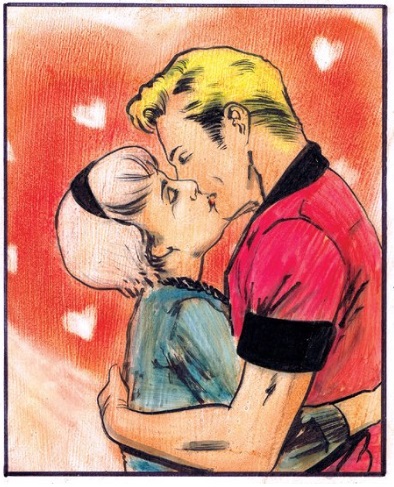
Also, I can’t get over Robert Hack’s coloring in this issue. He’s doing all of the art, and while it’s all clear and evocative and wonderful, there’s a homespun quality to the coloring that makes every moment somehow sweet and unnerving simultaneously — which is basically perfect.
Infinite Loop 2
 Patrick: So this might be a good example of my own un-examined privilege, but I was fascinated that I found the mild and obvious eroticism in the later half of this issue to be liberating rather than juvenile. Teddy gets the hot Anomaly back to her apartment to hideout, and every beat thereafter seems to be something that innocently drives them into each other’s arms. If this were the exact same scene playing out with a man in Teddy’s role, I would easily write the scene off as some kind of pathetic sexual wish fulfillment. I mean, right? Ano takes off her shirt, exposing her breasts, and Teddy responds with a more artfully articulated “humuna-humuna-humuna.” Ano’s not given any depth of character, or any real agency to understand what her body means to Teddy, so it should be sort of repulsive, right? (Asking “right?” a lot in this one.) Given the context, however, and the heightened stakes by Unit 70 hunting the Anomaly down, what should feel regressive actually reads as downright revolutionary. You have to be comfortable and self-assured in your sexuality to express it this bluntly — that’s a privilege straight men have had forever, which is why this scene (or a variation thereof) looks so familiar. Artist Elsa Charrtier plays this scene as straightforwardly as possible, making the sexual tension as plain as day. Oh, and the vibrator in the bathroom (marked with a “x1” to remind us that Teddy’s alone) is another example of privilege I don’t even think about. If that was a dude’s apartment and his Fleshlight was on the counter, I’d decry this thing as vapid and shallow, but again, context is everything.
Spencer: I second a lot of your opinions there, Patrick. In many ways The Infinite Loop is downright transgressive, right down to the worthy messages it chooses to endorse. There’s just a few moments where the message is a bit too blunt for its own good.

I legitimately love the idea of an “Infinite Loop of hate” — it’s a damn elegant way to describe the way hate and closed-mindedness ruins progress. The rest of these sequences, though, could really benefit from a bit more subtlety — again, I agree wholeheartedly with the message, but in both these panels the characters are essentially just mouthpieces, arguing for or against Charretier and writer Pierrick Colinet’s message. As engaging as the plot and especially the art usually are, I still find the sheer inelegance of moments like these rather jarring.
In the end, though, I have to ask myself: what is the purpose of The Infinite Loop? Is it a sci-fi story with an underlying theme supporting social acceptance and social justice, or is it a cry for tolerance made easier to digest via a snazzy sci-fi storyline? If it’s the former, the story still works perfectly fine, but if it’s meant to be the latter, well, it’s a rousing success. In a world still caught up in that damned infinite loop of hate, we need messages of tolerance more than ever — if they end up a little heavy-handed, well, that’s a price worth paying.
Effigy 5
 Spencer: A few issues back, I made a comment that Effigy had established how pretty much its entire cast felt about “Star Cops” except for Chondra herself. Well, in Effigy 5 Tim Seeley and Marley Zarcone quickly and concisely clear up Chondra’s motivations via a blistering tirade directed towards her mother:
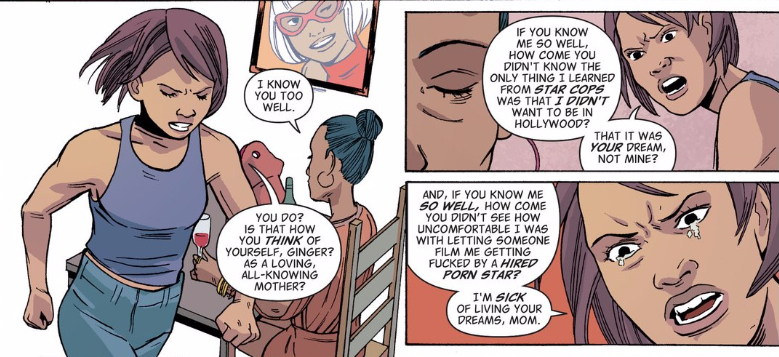
Besides clarifying quite a bit about Chondra’s personality, what I love about this scene is the fact that it establishes her as someone who just wants a normal job in the real world — it’s a fantastic contrast to the “Star Cops” themed, metaphysical cult-involved nature of the murder she’s investigating (not to mention the strange order of mercenary nuns who open the issue). Edie also gets several fantastic scenes this month, and in general there’s just a sense of the cast getting even more fleshed out and coming together in interesting ways (Edie and Detective Moore’s relationship especially continues to take a fascinating path — Edie really opens up to Moore, even if not intentionally, and there’s a lot of potential to her keeping his secrets). Add to that the continuing advancement of the overarching mystery and more charming “confessional” moments from Chondra and you’ve got my favorite issue since the first. There’s been a few bumps along the way, but I like the way Effigy‘s developing.
Providence 1
 Drew: As if the expectations for the latest Alan Moore project weren’t high enough, the solicit for Providence 1 touts the series as “the Watchmen of horror.” It would be impossible for any first issue to live up to that legacy, so maybe the biggest feat of Providence 1 is that I managed to enjoy it in spite of those expectations. Moore introduces us to Jonathan Black, an aspiring writer, whose casual interest in Sous le Monde, a book with the reputation of driving its readers insane, brings him across the path of Dr. Alvarez, a man who had written about the book many years ago. Alvarez is quick to brush off Sous le Monde‘s reputation as a marketing gimmick, and their long, discursive conversation seems to pull the series in another direction, only to have it snap back to the book when we discover that Jonathan’s lover — who had read the book — has just committed suicide.
It’s a tight little premise for a horror story, but it’s clear that Moore’s sights are set on something beyond horror. Alvarez emphasized the importance of love over life, even as he mentioned methods for extending life — and perhaps even reviving corpses — which may all soon come into play. Moore has masterfully drawn us into this world before letting us know how invested we truly were in it. It’s a more cerebral, but effective, surprise than even the most traditional horror comics can muster, which bodes well for this series going forward. That and, you know, the fact that Alan Moore is writing it.
Nova 31
 Spencer: Is it awful of me to wish that Nova had managed to wrap up at an even 30 issues? There’s nothing I particularly dislike about Gerry Duggan and David Baldeon’s Nova 31, but I can’t help but feel like this arc would’ve been a stronger conclusion to the series if it had a little less room to stretch its legs. The homecoming of Sam’s father is heartwarming, and by far the high point of the issue, but some of the power of their reunion is sapped by Sam already reuniting with his father, and then being separated again, only a few issues ago.
Likewise, Sam’s last-ditch effort to stop the asteroid assault aimed towards Earth in last month’s issue felt like a much more thrilling climax than Sam’s final showdown with the Chitauri Warbringer (who’s about as generic as comic villains can get) — and don’t get me started about how weirdly handled Sam’s essentially murdering the Warbringer was handled. Sam plays it off as if he just chose “not to save him” like at the end of Batman Begins, but that logic doesn’t follow, as Sam’s the one who purposely put Warbringer in that situation in the first place. One of my favorite aspects of Nova is how Duggan always calls Sam out when his inexperience or arrogance endangers others, so seeing this glazed over is especially disappointing.
There’s still plenty I like in this issue — especially the special “final issue return” of most of Sam’s allies — but it’s not as powerful of an ending as this series deserved. With 95% of the story’s most interesting and emotional beats playing out in preceding issues, there was little for this issue to do but just cruise to an ending we all saw coming. At its best, Nova was capable of far better.
S.H.I.E.L.D. 6
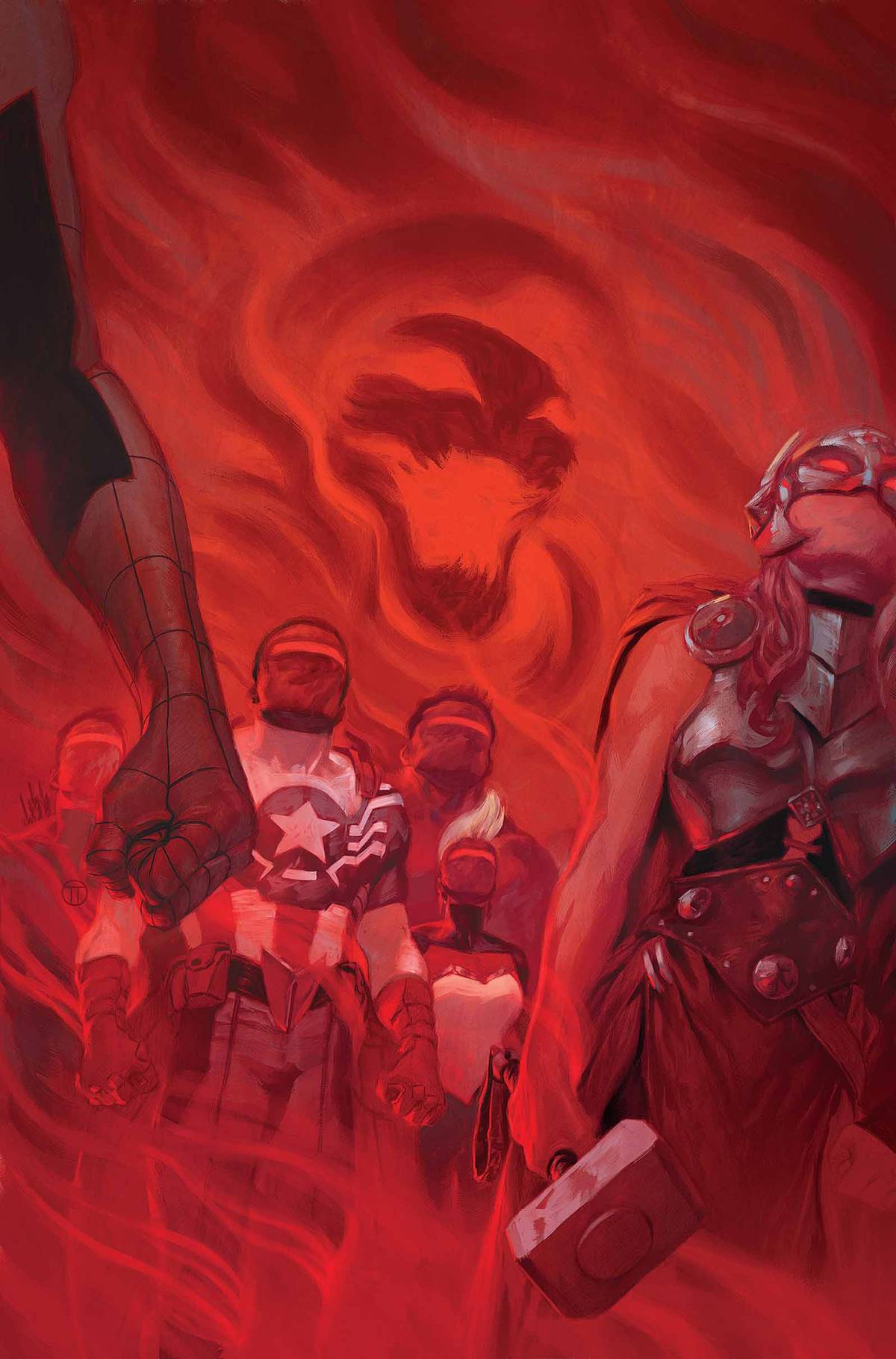 Drew: Even at their most innovative, it’s difficult for our favorite heroes to surprise us with their solutions to problems. It often has to do with their power-set, or at the very least, their personalities, which we’re both duly familiar with. As a series with virtually the entirety of Marvel’s character roll at its disposable, S.H.I.E.L.D. is able to surprise us much more easily with how it solves a problem. I don’t know exactly how Spider-Man would take down Dormammu on his own, but you can bet it would involve quippiness and lots of webbing. But how does S.H.I.E.L.D. do it? By bringing in the Absorbing Man, of all characters, to deliver a fight I never knew that I wanted. It’s a clever solution, and one that takes full advantage of Marvel’s characters, juxtaposing them in ways that are totally novel.
Sons of the Devil 1
 Patrick: Even though the first issue of Brian Buccellato’s Sons of the Devil is bookended with some scenes of disturbing violence and satanic imagery, this is a surprisingly grounded beginning to the series. We meet Travis as a down-on-his-luck, quick-to-temper, but totally well-meaning guy. The first thing we see him do — as an adult that is — is help a lost child find his family. He’s a sweetheart, right? He’s also an orphan who has a huge chip on his shoulder about being an orphan. Just about every development in this issue can be traced back to this fact (including his need to help that kid in the beginning). I wasn’t expecting the series to take such a dark turn when Travis’ foster brother turns up dead — but I’m also equally not sure what to make of his killer’s words to Travis “You’re the chosen one.” I do think some of the storytelling suffers from the lack of clarity in Toni Infante’s art — I find myself frequently flipping back a couple pages to figure out which character’s I’m dealing with. Still, it’s a neat world, so similar to real life Venice, just, y’know, with one more weirdo walking around.
Drew: That lack of clarity may actually be a boon to the series. I, too, was touched at Travis’ selflessness when helping that kid, but I’m a little nervous that we don’t actually see him returned home. Nor do we get Travis’ confirmation that that’s what he did with the kid. It’s not mentioned again, and it seems like an odd twist to reveal that he had done something horrible, but the murkiness kept me on edge for the rest of the issue. That meant I was totally primed to discover Klay’s body (and jump at the perpetrator being right behind Travis). I have faith that answers will come, but honestly, there’s enough atmosphere here to keep me going even if the details aren’t totally clear.
Outcast 9
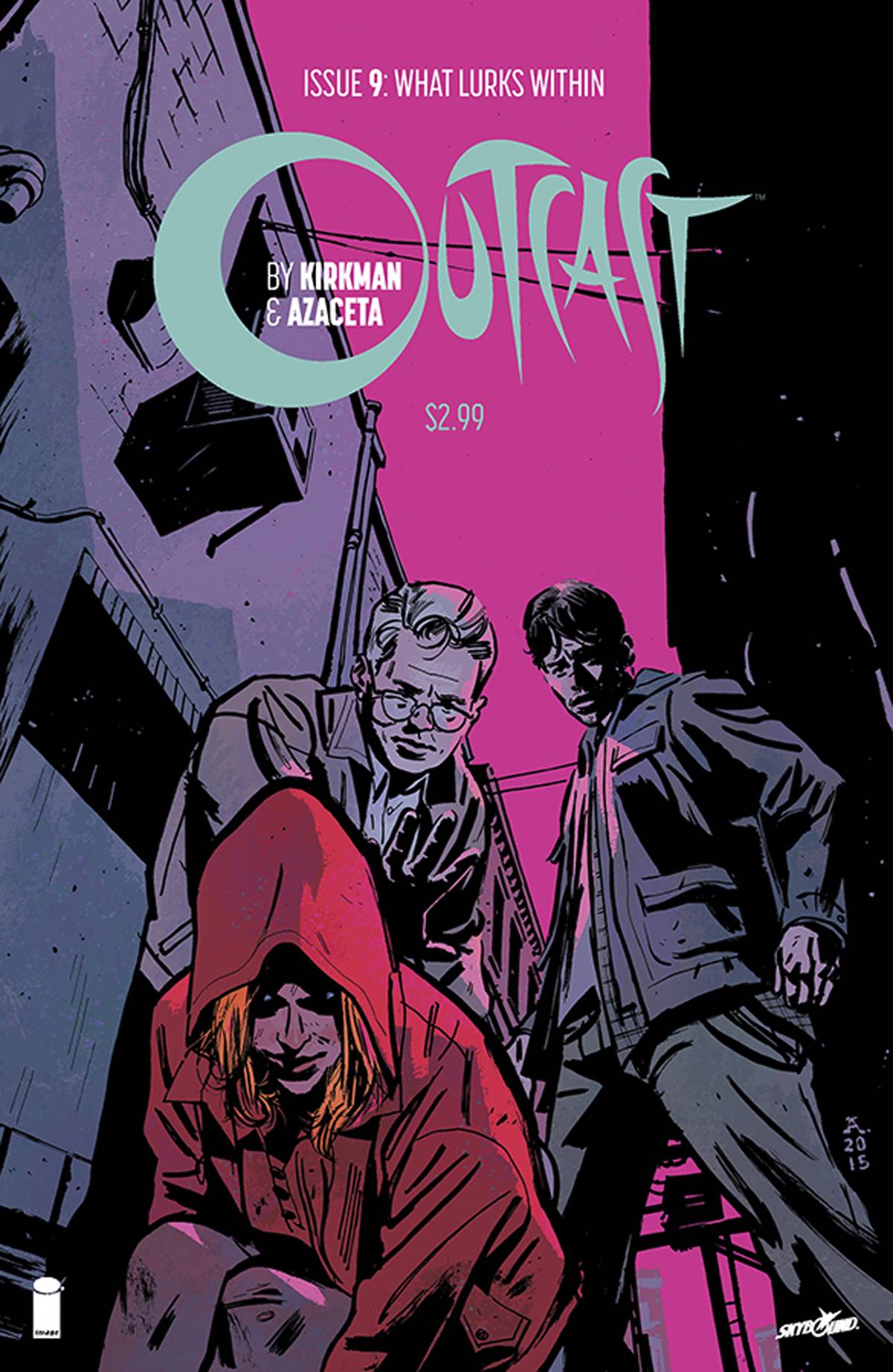 Patrick: Robert Kirkman has been keeping the nature of demonic possession, and Kyle’s unique ability to fight possession, pretty mysterious. As Kyle and the Rev track down a former exocisee, the mystery continues to expand by simultaneously giving the reader more and less information. Take, for instance, Reverend Anderson’s phone call to a detective buddy to track down Sherry.

That’s Detective Luke Masters, and we didn’t need to see this side of the phone call at all. Hell, we don’t even need to see the phone call, but Kirkman and Azaceta are patiently painting a detailed picture of the Rev’s life and his history. This is almost a primer for the effect the end of the issue is intended to have: you’re getting more information that you really know what to do with. When Kyle finally wrestles the demon out of Sherry, they discover that she has not survived the process. Whoa. Does that mean that she was only a demon at that point? Or maybe she was just a troubled kid and Kyle is exorcising the life out of her? So much shocking new information, and absolutely nothing to do with it!
The conversation doesn’t stop there, because you certainly read something that we didn’t. What do you wanna talk about from this week?
 Retcon Punch