
 Today, Drew and Taylor are discussing Zero 14, originally released January 28th, 2015.
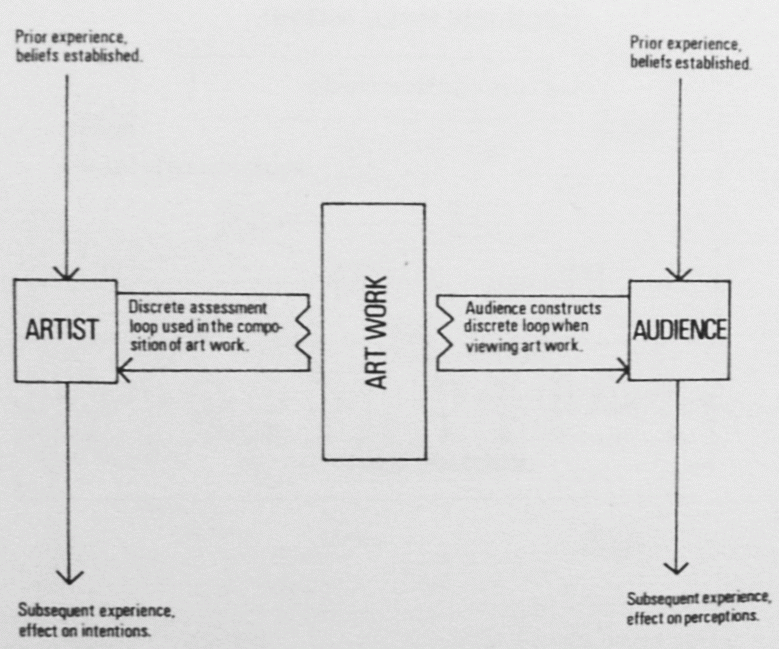
Two fundamental discrete cognate loops are shown, which are isolated from each other by the artwork. There is no form of interaction between the two which could generate mutual understanding as would be the case in a successful conversation. In the absence of such a procedure both the audience and the artists become locked in their own perceptual biases.
Stephen Willats, Art and Social Function
Drew: Where does meaning happen? I was brought up on the postmodern ideals outlined in the epigraph, but it seems that a great deal of modern society still clings to romantic notions of artistic intention. We celebrate and scorn artists based on their intentions, forgetting that the value of their art may not have anything to do with the artist. Indeed, we’re so obsessed with intention that we conflate it with meaning, minimizing the audience’s role — a role I might argue is the whole point of art in the first place. It’s because of this climate that I enjoy art that obscures its artist’s intentions. It’s easy to assume the moral is the “point” of one of Aesop’s fables, but it’s decidedly harder to draw such a clean line in something like Zero 14, where ambiguity and sheer density of ideas makes any meaning we can parse decidedly our own. Continue reading
 Retcon Punch