

Look, there are a lot of comics out there. Too many. We can never hope to have in-depth conversations about all of them. But, we sure can round up some of the more noteworthy titles we didn’t get around to from the week. Today, Patrick, Drew, and Spencer discuss East of West 19, C.O.W.L. 10, Southern Cross 3, Astro City 23, ODY-C 5, Chrononauts 3, Howard the Duck 3, Ms. Marvel 15, and Captain Marvel 15

Drew: There are a ton of (poorly sourced) articles out there claiming poll data that suggests 40% of American adults believe we’re living in the end times. Whether or not that particular statistic is true, it’s no doubt that the end of the world plays a key role in our pop culture. Whether you’re reading The Walking Dead or watching the latest Mad Max movie, the apocalypse is everywhere. That’s particularly true of comics this week. Both of the Big Two universes are fighting for their lives, while the indies on our pull swirl around the notion of the end, whether that’s the world itself, or just our window on it. We’ve exhaustively covered those Big Two events elsewhere, but here’s a look at the smaller apocalypses going around the rest of comicdom.
East of West 19
 Drew: Do you ever worry about how your upbringing shapes your outlook on life? I suppose “worry” is an inelegant way of putting it, but when we think about it, I think we can all see how our idiosyncratic family dynamics have shaped our adult lives. It makes sense — the lessons we learn at an early age affect who we are — but it also puts a lot of pressure on parents to not screw up. Don’t hug your kids enough and they might end up a serial killer, or so my neurotic brain tells me. Where you really have to worry as a kid is if your role models are trying to make you a serial killer, as may or may not be the case with Babylon.
The last time we saw Babylon, he had encountered Orion, who gave Balloon a new goal for his training: let the boy decide whether or not he wants to become the harbinger of the apocalypse. That’s still a loaded choice, but at least the kid has options, right? Well, it turns out Balloon might be kind of fond of the old “make him the beast at all costs” goal — especially when Babylon is going to get cold feet about killing to eat.
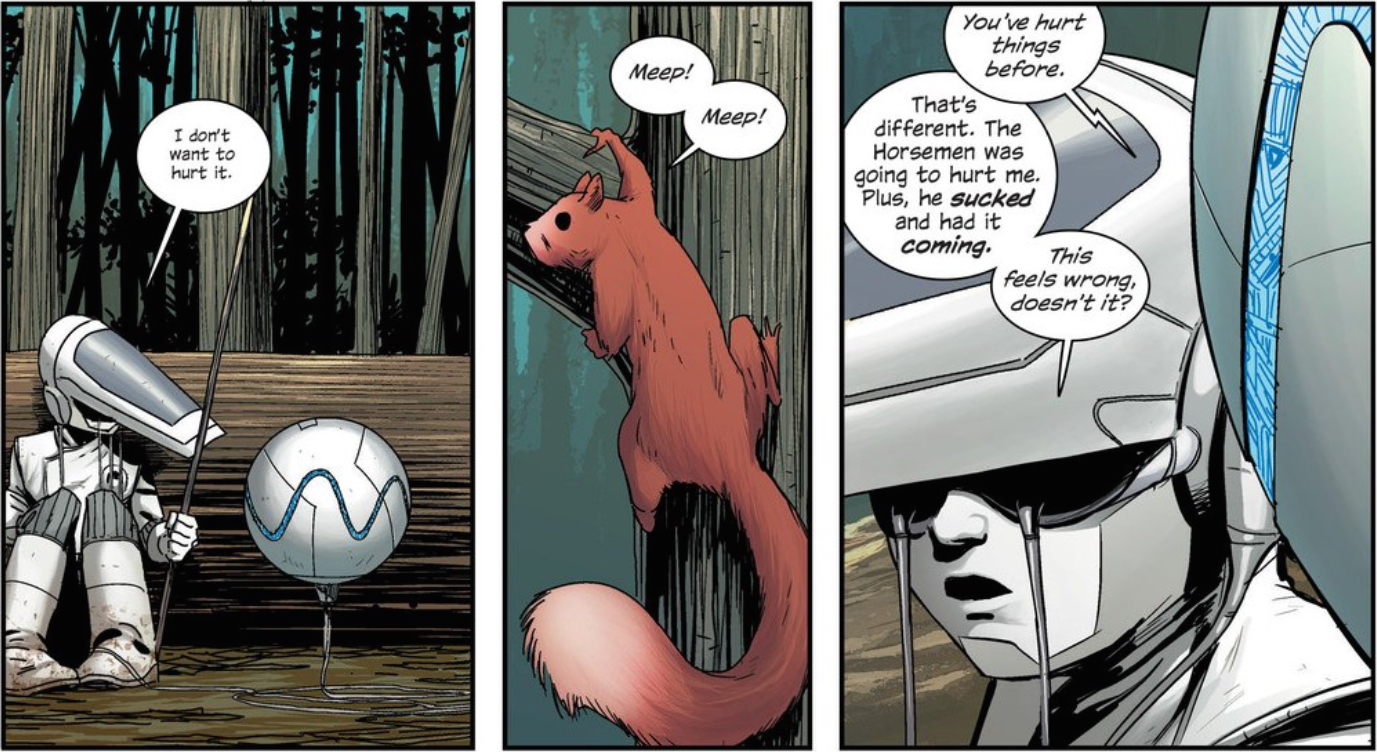
And that’s in spite of Babylon thinking the squirrel is some sort of horrible lizard skeleton thing. He’s just a sweet, empathetic kid, which makes his eventual fall to “cold-blooded piglet-killer” all the more chilling. I’ve really developed a fondness for Babylon over these last few issues — heightened here thanks to the unwavering focus on his story — so I’m starting to get nervous over the battle for his soul.
Patrick: You’re not the only one. I suppose there’s a still quite the gulf between “being able to kill” and “harbinger of the apocalypse,” but it’s hard not to be worried. Still, it’s not as though the Balloon is teaching outright cruelty — the lessons on why a man kills stops after three very practical, empathetic answers. For example, Balloon never suggests that man kills because it is his destiny, or for the sheer pleasure, or whatever. Really, Balloon is teaching Babylon agency, which will make his inevitable decision about who he wants to be all the more meaningful. There are two straight pages of Babylon slashing at boar stomachs, but it’s all tempered with Babylon’s curiosity and sweetness. Even as he’s being airlifted away from animals intent on killing him, Babylon asks about the evolutionary advantages to tentacles on land mammals. That’s what Balloon is showing him: tentacles on the boars. Already, Babylon is questioning the reality he’s presented with. Maybe we don’t have so much to worry about after all.
C.O.W.L. 10
 Drew: The title of C.O.W.L. 10 is “Full Disclosure,” and while there are some great scenes of characters being honest with each other, there are just as many where they’re not getting anywhere close to full disclosure. Obviously, the biggest culprit is Geoffrey, who claims that Radia was working with his blessing, just to avoid admitting that she no longer cares about his blessing. What’s interesting about that particular lie is that we don’t know what his true motivation is. Is he just trying to save face, or is he really interested in protecting her from reprisals for crossing the picket line? In the end, it may not matter — he admits the truth to Camden Stone, who wants Radia’s head — but it does make me wonder exactly where his convictions lie.
For virtually every other character here, those convictions are crystal clear: Radia wants her independence, Evelyn wants justice for John, and Karl doesn’t want to be threatened. Those make for some compelling character moments, but I’m struck at how the conflict all centers around Geoffrey’s lack of convictions, or at least the compromises he’s willing to make in service of dubious convictions. That simple morality play is the stuff superhero comics are made of, and I’m thrilled that it’s shining through all the ambiguity as this series winds to a (hopefully temporary) close.
Spencer: I’m not sure if Geoffrey himself even knows what his convictions are anymore, Drew. At first he was supposedly doing a bad thing for a good reason, but now he’s stuck in the deal, forced to follow Stone’s commands if he’s going to save his business and his reputation. I’m sure it’s far from how Geoffrey saw this playing out, but I’m curious myself to see if he thinks everything he’s doing is worth it to keep C.O.W.L. running. Geoffrey’s feelings and motivations will undoubtedly be an essential component of the finale, but issue 10 raises two other questions that need be answered. The first: who is the mysterious figure who forces Arthur to confess about witnessing John’s murder?
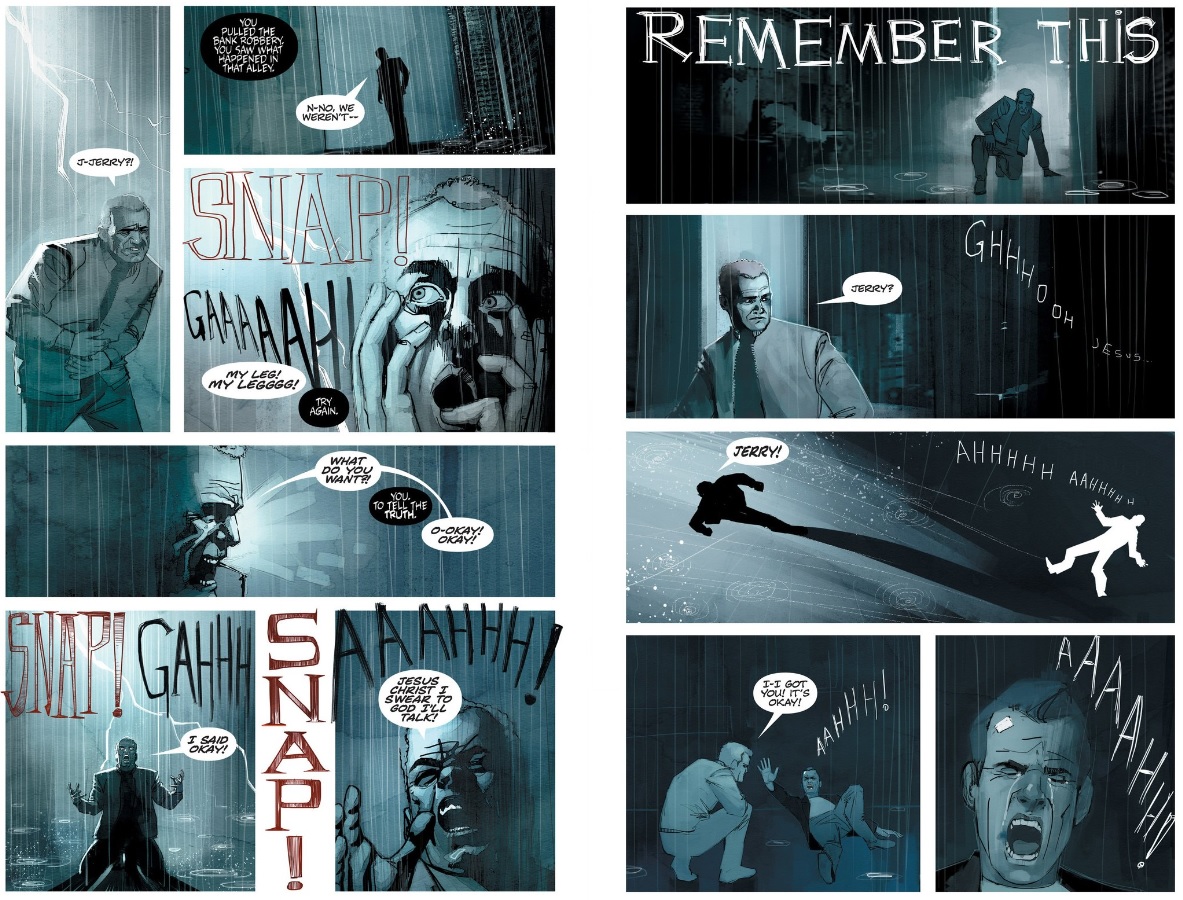
Rod Reis puts out some of his most compelling and chilling work yet, shrouding the figure in mystery but making sure we know how terrifying and dangerous they are. Who could they possibly be? Who has this kind of power, knows about John’s murder and who witnessed it, and has something to gain from bringing it to light?
The other question is a bit more out there: what exactly is up with the strange Nosferatu gang that robs the Pharmacy near the issue’s end? As it is, they seem completely removed from the story at hand. Do they have some kind of role to play in Geoffrey and Stone’s plan, or are they simply the next wave of super criminals, debuting to give C.O.W.L. — or perhaps any new agency that may rise to replace them — a reason to continue existing? There’s still a lot for Kyle Higgins, Alec Siegel, and Reis to resolve, and I’m more psyched than ever to see how they wrap things up.
Southern Cross 3
 Patrick: I’d been lagging way behind on Southern Cross, so I actually shotgun read all three issues in one sitting, so please forgive me if some of my observations are more applicable to this series in general than this issue in particular. The series is bulky and awkward, especially when it comes to the dialogue. But so much of the way each page is used is commanded by lumbering behemoth that is the Southern Cross, that I can’t help but feel that some of that clunkier exposition is intentional. Becky Cloonan’s script does deftly dole out fresh mysteries, each one diverting attention away from the previous, until the reader is left wandering the empty galleys of this narrative. Andy Belanger’s clean geometry — especially when it comes to the ship — only serves to emphasize the labyrinthine qualities of the story. Alex is just running through that maze, hopelessly hitting weird dead ends from a cast of increasingly esoteric crew members and passengers. But the most haunting and effective images are always of Alex alone on this enormous ship.
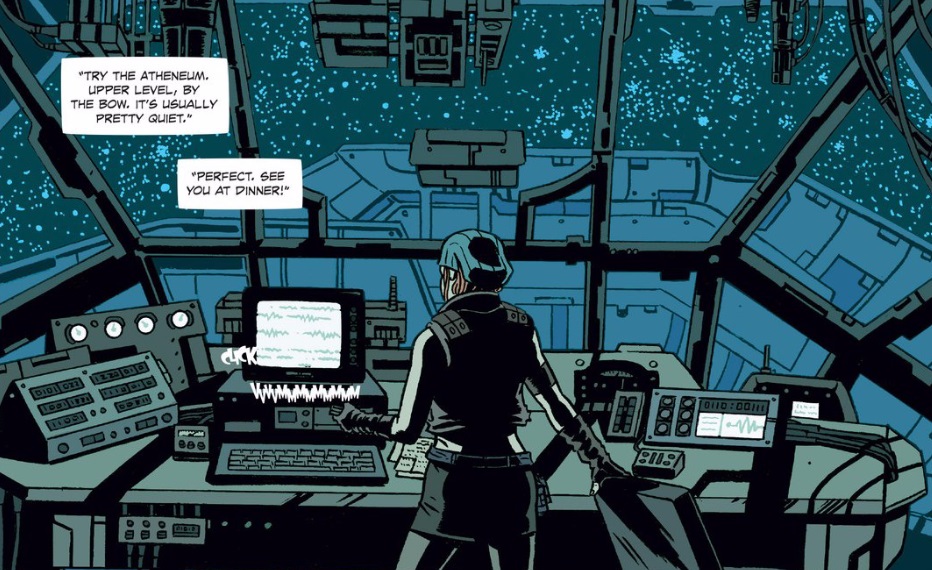
Alex is about to watch a video tape that sheds some light on the horrible corpse vision she saw the night before, but this wide shot of Alex alone in the media bay, with a cold distant star field in the background, says so much more about the series. It’s atmospheric and creepy, like Alien or Sunshine or Event Horizon, and I almost wish that less could happen in a given issue. Not that it’s isn’t cool as fuck to see Erin turn up in the gravity drive — ‘cuz it totally is.
Astro City 23
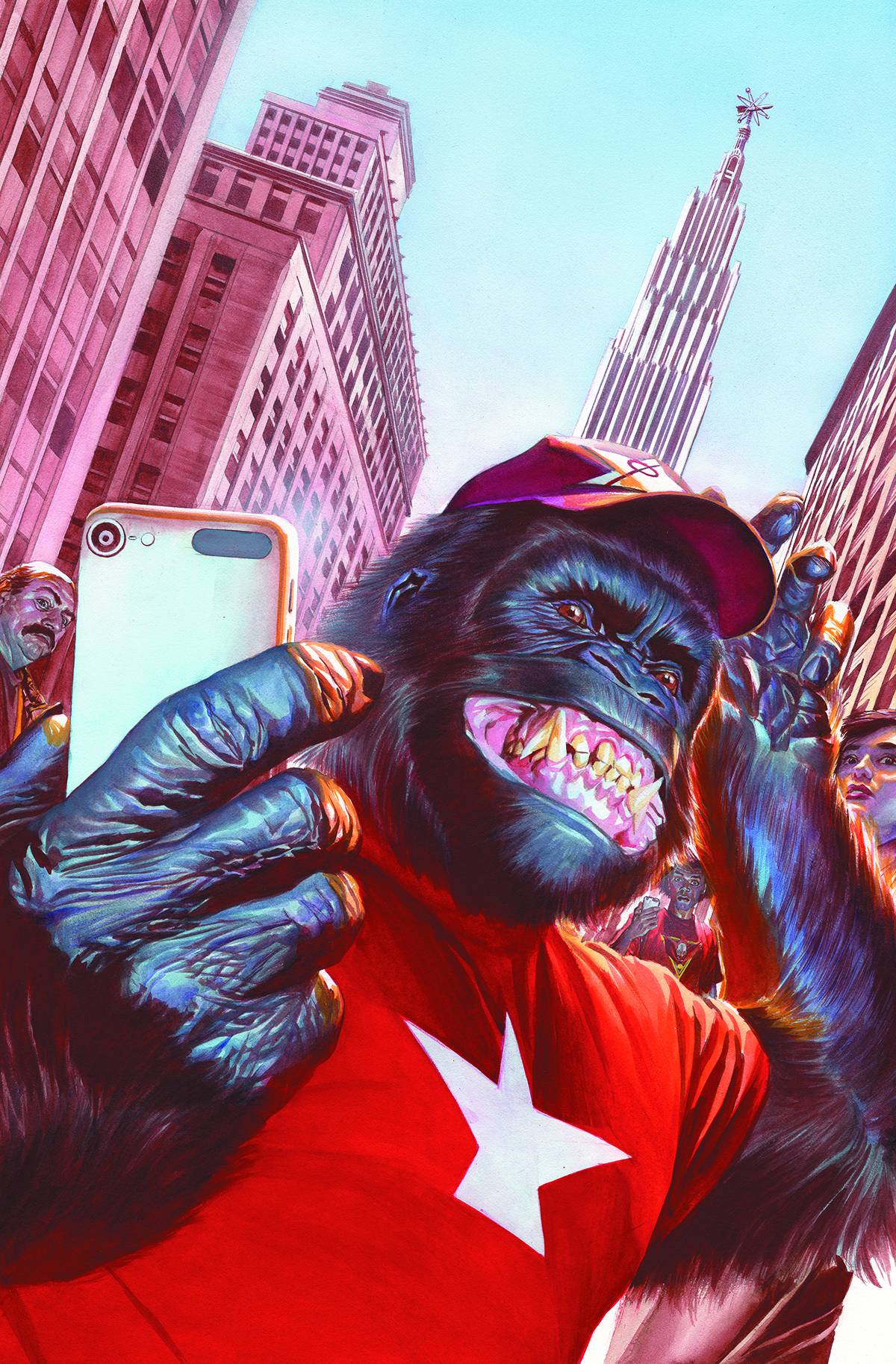 Spencer: Without villains to fight, superheroes have nothing to do. Constant crime, chaos, and evil is a prerequisite for any superhero universe, and while it keeps the heroes employed and keeps the audience entertained, it’s got to be a pain for any Average Joe living in a comic universe to deal with. That’s the concept Kurt Busiek and Brent Anderson play with in Astro City 23, which features Sticks, a gorilla who’s traveled to Astro City with the dream of being a drummer. The only problem? Every attempt to audition is interrupted by a supervillain attack — and considering Sticks’ physical prowess, it consistently falls on him to save the day! Sticks doesn’t want to be a superhero, but, living in a universe that constantly sends threat after threat his way, does he have a choice? Like all the best issues of Astro City, this story toys with one of the most fundamental concepts of superhero comics (actually, several of them, if we count the classic DC trope of talking gorillas here) in a new, exciting way. These are the kinds of stories you can only find in Astro City, and despite the common tropes being examined here, I’ve got no idea how it’s gonna work out. How exciting is that?!
ODY-C 5
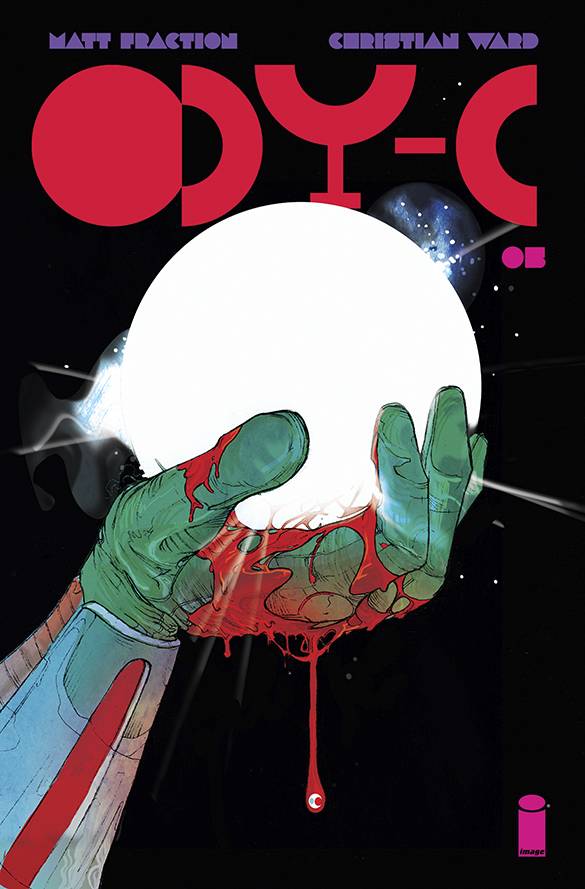 Drew: I never took ancient Greek, and I’m only casually familiar with epics like The Iliad and The Odyssey, but I’ve always been fascinated by their episodic structure. The Odyssey in particular often feels like a series of largely interchangeable scrapes, showcases for crazy monsters and Odysseus’ MacGyver-like ability to survive whatever the gods could throw at him. Indeed, The Odyssey is so episodic, that it holds together as a larger narrative is almost inconsequential. Or, at least it would if modern audiences weren’t raised on serialized mega-narratives. Which I guess is my way of saying ODY-C 5 feels particularly shaggy, though I don’t doubt its fidelity to its source material’s structure. There’s some planet-of-the-month action on Aeolia, but also some jazz about how Hera conspired to end the Trojan war, and the fallout within the Pantheon. Those two threads don’t share much thematic overlap, but they do put Odyssia and her crew in an ever more tenuous spot in the minds of the gods. True to the source material, this felt at least partially about showcasing crazy monster (this time, it’s figurative) and Odysseus’ MacGyver-like ability to survive whatever the gods throw at him. It’s not bad, by any means, but it’s starting to feel a little familiar.
Chrononauts 3
 Patrick: After two issues establishing the premise of Chrononauts, issue three can get down to the very series business of turning the series into Duke of Hazard In Time. The centerpiece of this story is a a high speed chase — our “heroes” in a badass red Camero — as they bop through time, hitting as many historically significant moment as Mark Millar and Sean Murphy can imagine. The series always kind of has a devil may care attitude toward causality and the seriousness of timetravel, but this chase (and the entirely of the issue, to be honest) cranks that quality up to eleven. In the opening scene, Danny is about to usurp Morrisey’s role as lead singer (and songwriter) in the Smiths. But his credits in that moment get even weirder: he also wrote all the Beatles songs, created Harry Potter and made Breaking Bad. I love the idea that Danny just gets so excite about stealing all these ideas and bringing them back to before they were invented that he introduces Harry Potter two decades too early (and three decades for Breaking Bad). That perfectly sets the tone for Danny and Corbin to get into a heap of trouble outrunnin’ the law in their sexy car. Millar and Murphy know to play every single new time period for laughs, my favorite being the botched JFK assassination that actually buys our bros some time.

Between Lee Harvey Oswald’s “crap!” exclamation and his “gee, shucks” arm motion, this panel is just campy enough to really get to me.
Howard the Duck 3
 Patrick: At the risk of taking Howard the Duck too seriously: I’m not convinced that this series has a strong enough hold on the reality of the character, or his world, to make joke at the expense of either. Issue three concludes Howard’s quest to return a MacGuffin to his client, and veers off into some zany-ass tangents, perhaps the zaniest tangent being Howard going undercover as a regular duck to infiltrate a gang of senior citizens. It’s sort of worth the chuckle to see a naked anthropomorphic duck on his hands and knees, but the logic is just too weird to actually serve as an actual plot point. A lot of the jokes are like that — too expensive in terms of losing reality and not really worth the laughs we get in return. There’s a “bread makes you fat” joke borrowed from Scott Pilgrim in that Undercover Duck scene that does little more than acknowledge a joke Bryan Lee O’Malley made ten years ago. The issue ends with Zdarksy recycling a Wikipedia joke from the previous issue. I don’t know, Spencer: very little about this series seems even remotely “real” to me. Did you have a similarly hard time getting into this one, or am I being a grump?
Spencer: I can’t disagree with you that there isn’t much “reality” to this series, but with all due respect towards the creative team, I never expected a Zdarsky-penned Howard the Duck ongoing to have any basis in reality in the first place. I expected an off-the-wall comedic experience, and that’s exactly what this book delivers, especially this issue, which may be my favorite of the three thus far. Both stories explore clever concepts, and barely a panel goes by without a joke of some sort. Not every joke’s a winner (I got a hearty chuckle out of both the Scott Pilgrim reference and the Hans Moleman cameo, but neither’s the most original gag), but the jokes are coming so rapid-fire that if one doesn’t land, there will be better one in the next panel to distract from it (it’s much like Airplane! in this regard). Sure, a stronger basis in reality might make the character work a bit more impactful, but it doesn’t stop Zdarsky and Quinones from delivering exactly what they promised: 20 pages a month of unreal, non-stop riffing on the Marvel Universe.
Ms. Marvel 15
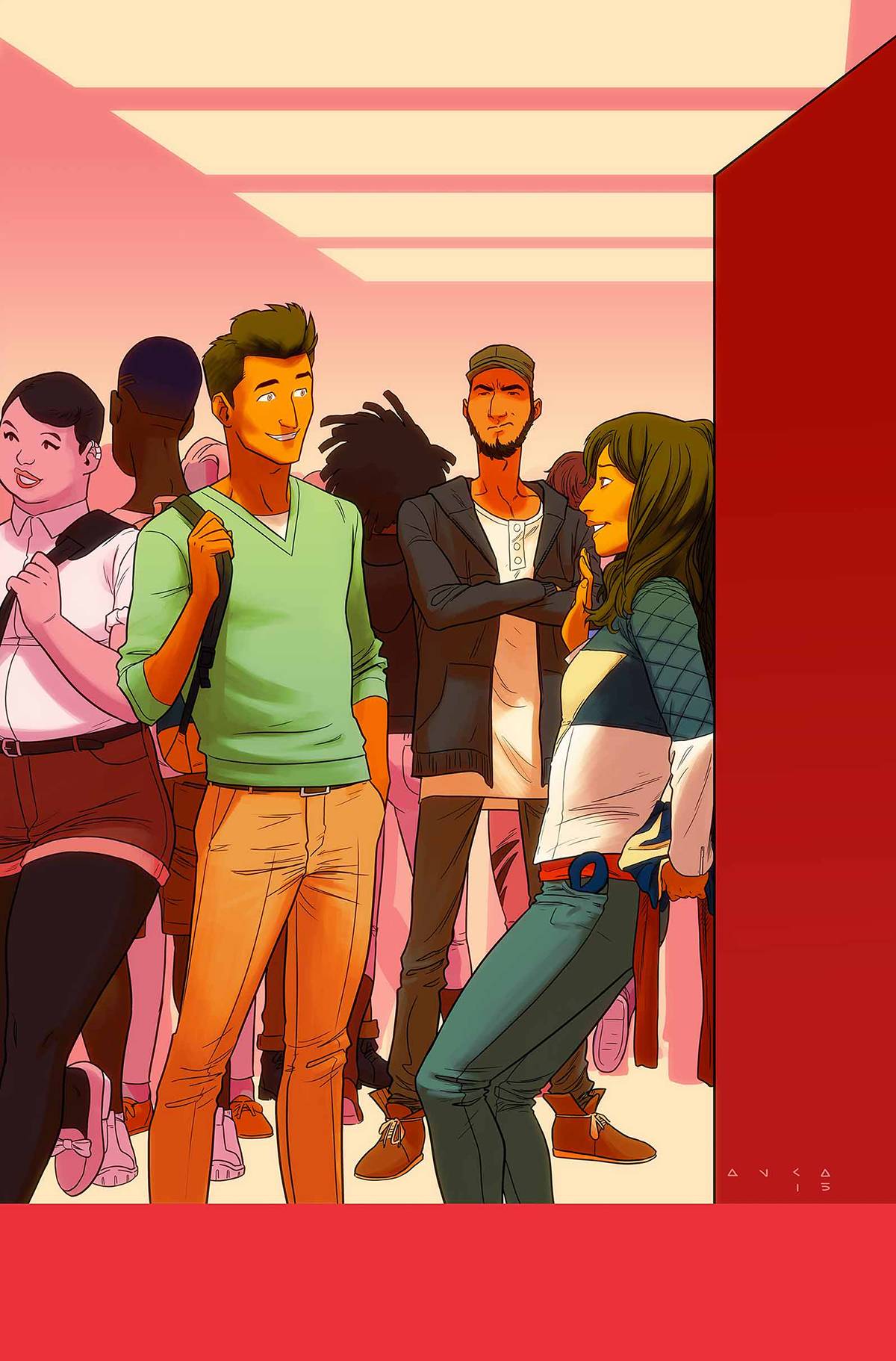 Spencer: Real quick — does this remind you of anything?:
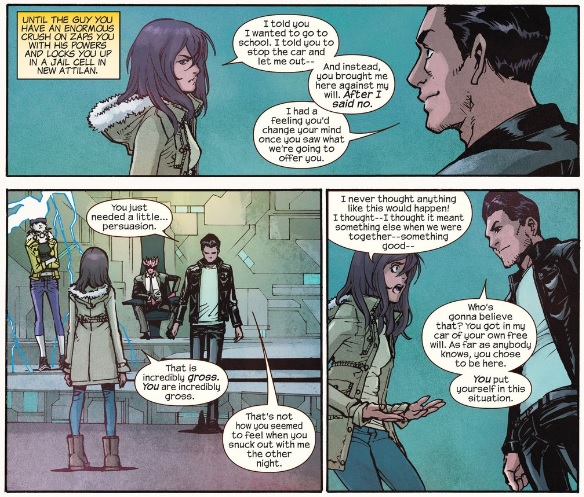
Yeah — it’s hard not to see the similarities between Kamala’s predicament and that of many rape victims who are blamed for their attack. Thankfully, writer G. Willow Wilson not only allows Kamala to escape unscathed (barring a possible broken heart), but helps her find the courage to realize that she is not to blame for Kamran’s actions. This is what makes Kamala Khan such a fantastic character — she’s far from perfect, she makes mistakes, but she’s also confident enough to understand what is and isn’t her fault and to stand up to anyone who tries to tell her otherwise. Likewise, I’m impressed by Wilson’s handling of Kamran, because the type of men who attack or exploit women often aren’t going to be complete megalomaniacal monsters like Lineage, but seemingly nice guys, smooth talkers who may shine up nice but inside are just “total buttwipes” like Kamran.
Ms. Marvel 15 is a fantastic lesson for young people (and probably many of its adult readers as well, come to think of it), but fortunately, it’s also just an outrageously entertaining comic in general, thanks to some truly cathartic, cheer-worthy character moments, tons of clever action, and the expressive, lively artwork of Takeshi Miyazawa (who is welcome back on this book any time). I’m also surprisingly invested in the Inhuman politics at hand here and what Kamala’s place in their future will be, but before we can address that, we have to get through “The Last days of Kamala Kahn.” That’s not exactly the kind of story I look for from Ms. Marvel, but with the pedigree this title’s built up, I’m sure the tale will be as well-crafted and emotionally affecting as ever.
Captain Marvel 15
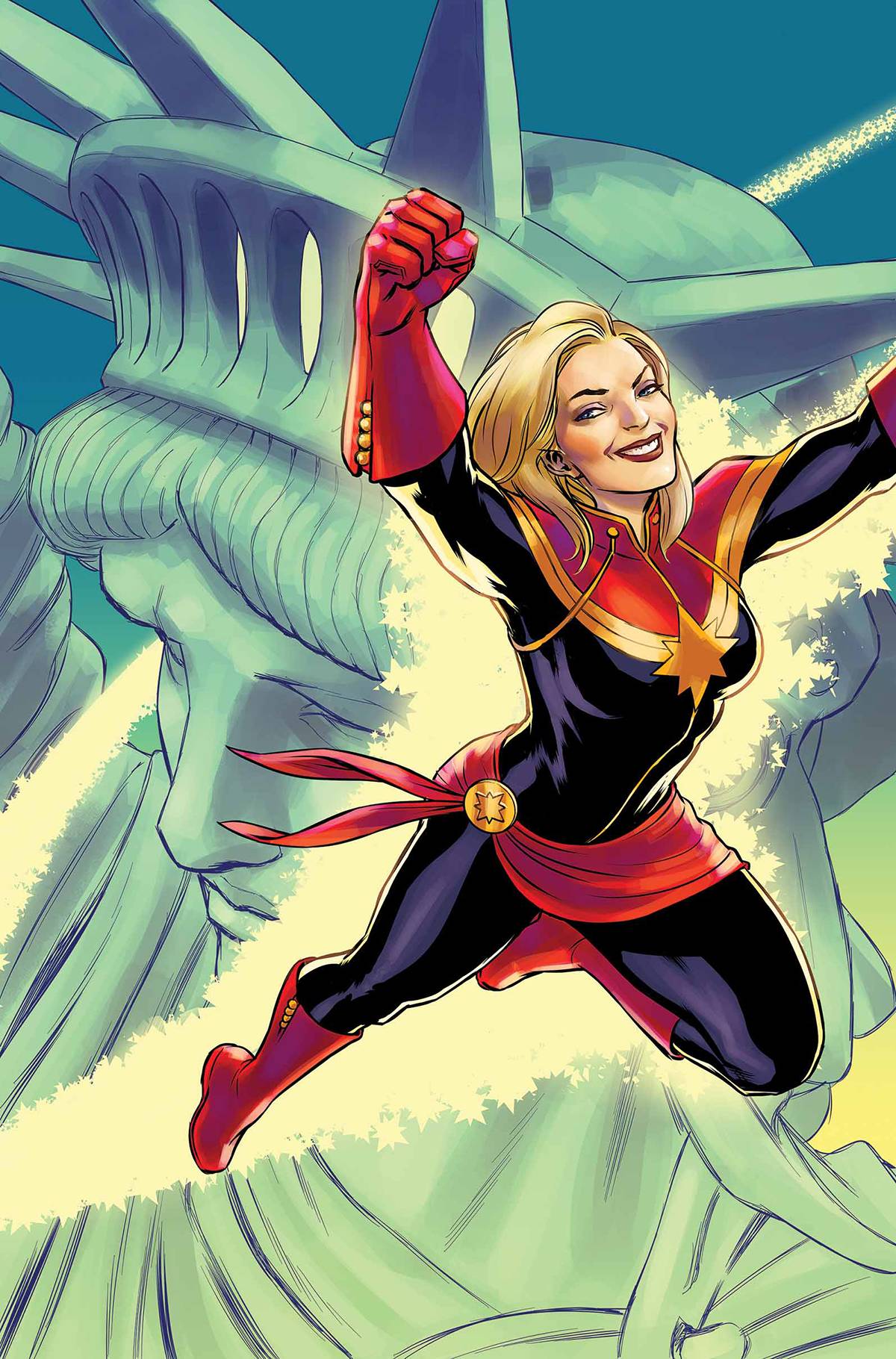 Spencer: How do you deal with the death of someone you love? That’s the question at the center of Kelly Sue DeConnick and David Lopez’s Captain Marvel 15, which finds Carol back from her mission in space only to discover that her friend and mentor, Tracy, has passed away. So how does she deal with this death? By turning to things? Tracy does bequeath Carol some important items from her past, each rich with meaning and memories that will help even the amnesiac Carol to always remember her friend, but in this case the memories are more significant than the stuff itself. And even in death Tracy seems to realize that memories will only go so far. Carol needs to keep moving forward — to “find the next right thing” — and to do so, she’ll need her friends. So, via her will, Tracy tricks Carol into spending a day at the beach with her friends, thus showing us the real answer to the question I posed a few sentences ago. How do you deal with the death of someone you love? With lots and lots of help from the people who love you. Carol once similarly helped Tracy through the loss of her partner, and Tracy bringing that kindness full circle is a poignant ending to the relationship between her and Captain Marvel. If you didn’t get a little choked up with this one, Drew, then you’re a much stronger man than I.
Drew: It’s a very sweet choked up, though, isn’t it? Bittersweet, for sure, but the loss is far offset by the love radiating off of every page. DeConnick and Lopez manage this in a number of ways, but I’m most impressed at how present their sense of humor is, without ever feeling disrespectful of the themes of the issue. DeConnick gets some solid back-and-forth in the dialogue (Tracy is fiery as ever), but I’m particularly enamored of how Lopez’s cinematic eye helps him pace jokes perfectly.
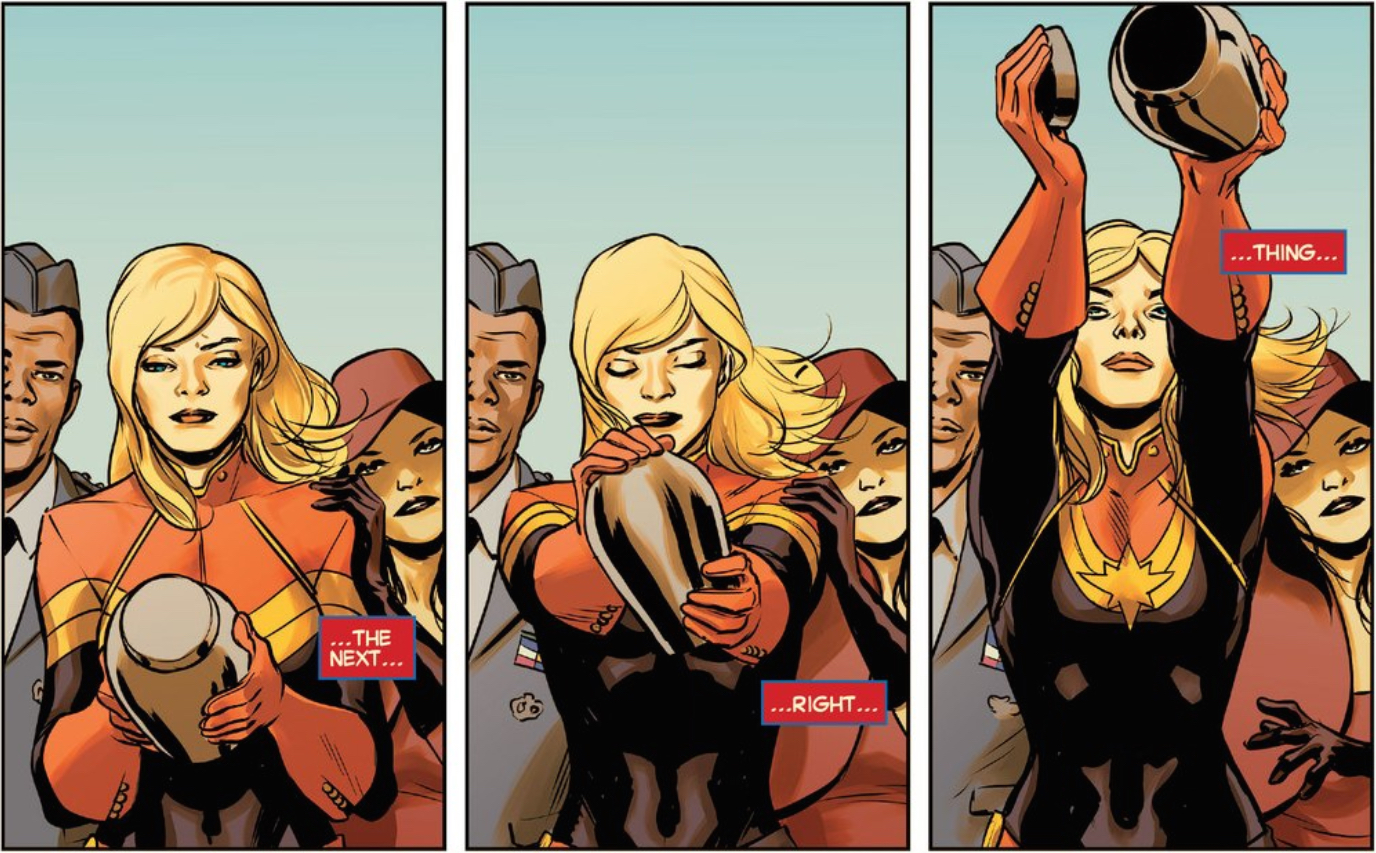
It’s the “are they stuck?” on the next page that’s really the punchline, but Lopez plays it so straight here, mirroring the passage two pages earlier as Tracy released Teddy’s ashes. That page turn revealed a breathtaking full page sunset scene, where this one reveals more of a double-take. It’s a smart way to build audience expectations, only to thwart them at the last minute, supporting Tracy’s final surprise.
The conversation doesn’t stop there, because you certainly read something that we didn’t. What do you wanna talk about from this week?
 Retcon Punch
Boy, do I find Babylon’s to be a much more approachable perspective on this world. I think year one featured some key worldbuilding (and I suspect familiarity with the geopolitics of the seven nations will be extra important going forward), but these last few issues have connected with me emotionally in a way that this series otherwise hadn’t. Point is: I really like that kid.
100% this. I like EoW, but I generally have a hard time sifting through the post-apocalyptic politics. Babylon boils the drama down to a personal level.
Plus, he’s just a thoughtful, interested and interesting kid! I just like spending time with him.