

Look, there are a lot of comics out there. Too many. We can never hope to have in-depth conversations about all of them. But, we sure can round up some of the more noteworthy titles we didn’t get around to from the week. Today, Spencer, Patrick, Drew and Michael discuss Spider-Woman 8, The Amazing Spider-Man 18.1, Groot 1, Archie 666, Jupiter’s Circle 3, The Autumnlands: Tooth and Claw 6, Action Comics 41, Batman Beyond 1, Bat-Mite 1, Bizarro 1, Green Lantern 41, Omega Men 1, Dead Drop 2, and The Woods 13.

Spencer: Convergence is over — as is the New 52, technically — and DC is eager to trot out their new, more diverse roster of titles. Do these books succeed at being a breath of fresh air for DC? We’ll give you our takes soon enough, but first, we’re catching up with some of the last remaining Marvel titles that have yet to get tied up in Secret Wars, celebrating the end of an era over at Archie, and, believe it or not, even discussing a few books that aren’t somehow affected by line-wide changes! We’ve got a lot on our plate this week, so let’s dive right in, shall we?
Spider-Woman 8
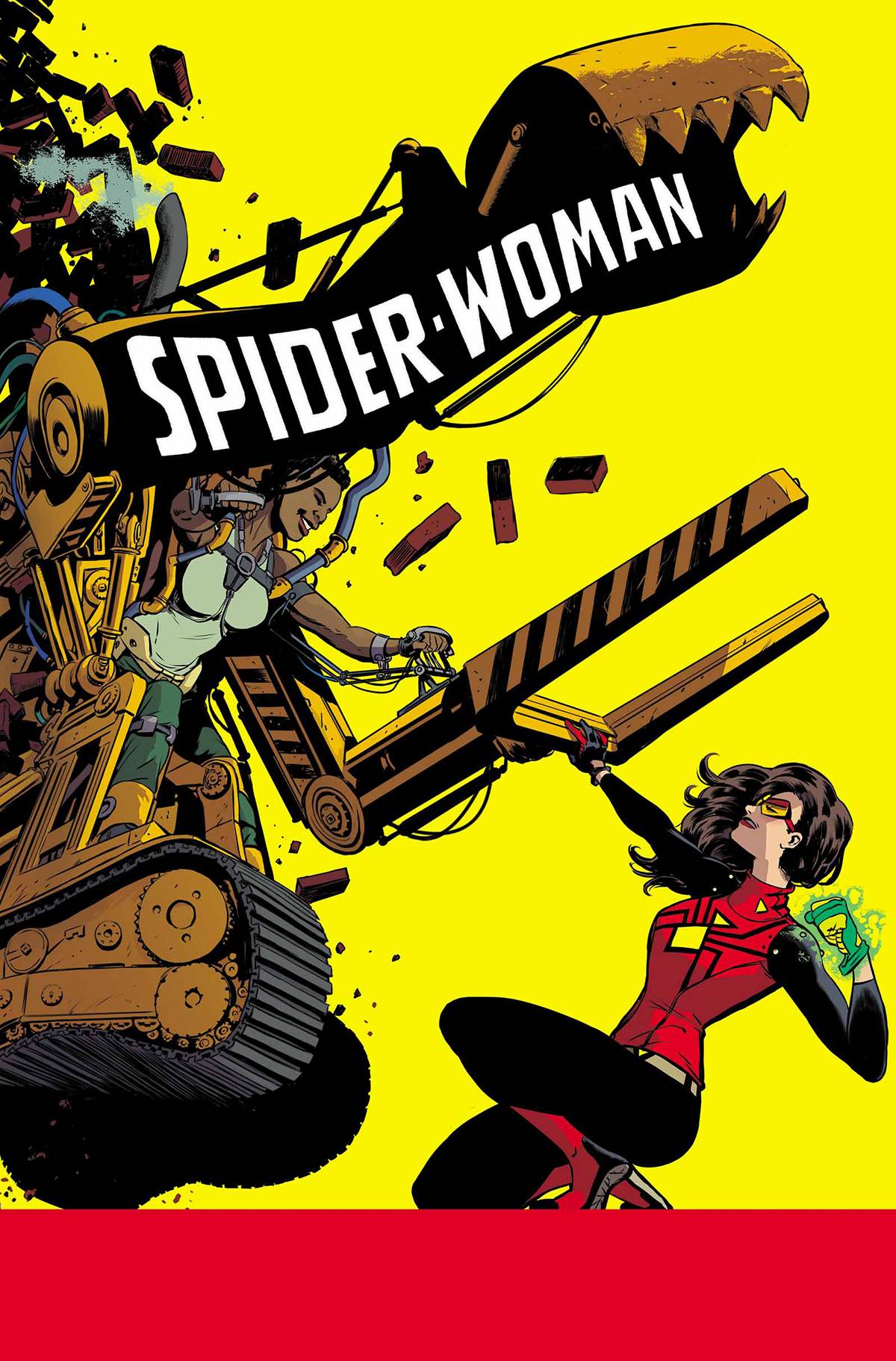 Spencer: What do you think of when somebody calls a hero or a story “street-level?” If you’re anything like me, your first impression is probably something dark and gritty, a story mired in organized crime and gory violence. That’s why it’s so impressive to me that Dennis Hopeless and Javier Rodriguez have managed to focus Spider-Woman on street-level crime without losing its sense of humor, optimism, or color. The fact that the superpowered Spider-Woman takes a twenty minute beating at the hand of a woman in a homemade mech is almost laughably street-level (her ex’s luck has clearly rubbed off on her), but the plight of the battered women who have started their own city — while amped up a bit for a comic universe — is still a problem people face every day in the real world, and Jessica’s response is a sight to behold. Many times when writers take a character off the Avengers to focus more on their personal life they just go from saving the world as a team to saving the world on their own, but Hopeless — much like dear ol’ Ben Urich — is clearly committed to telling stories that matter, stories different from everything else on the stands, and the fact that he does so without abandoning the more fantastic or fun elements of the Marvel universe makes this one helluva issue.
The Amazing Spider-Man 18.1
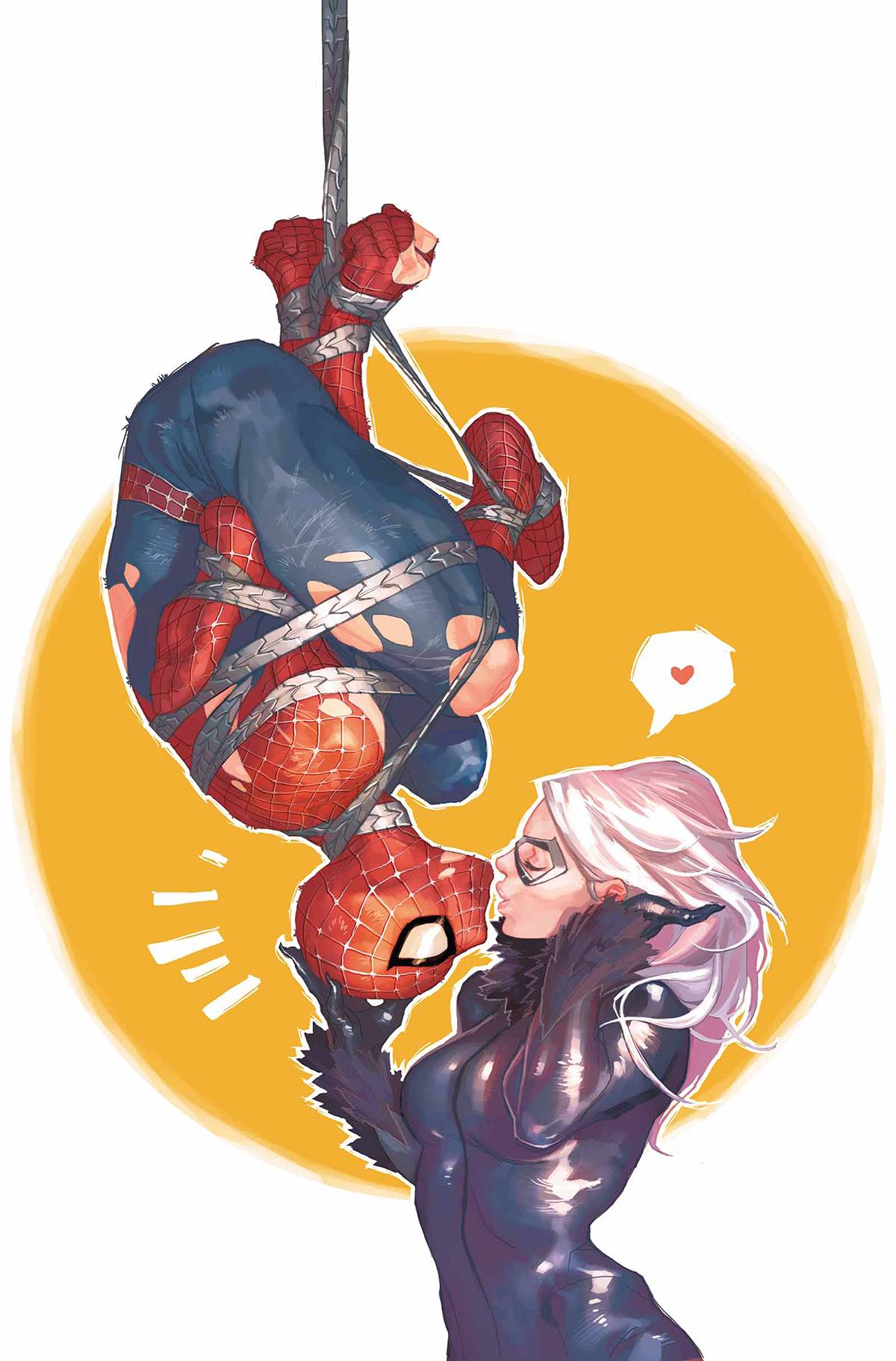 Spencer: Last month I criticized Gerry Conway and Carlo Barberi’s “Spiral” story for being a bit preachy and morally simplistic, but this month’s installment acquits itself of much of that criticism rather nicely. Conway brings to mind a slew of recent tragedies when he explains how cops’ need to be confident can easily become corrupted, and with that in mind it’s easy to see the dark path Yuri Watanabe is now taking. By the end of the issue Yuri has clearly crossed a line, yet other areas of the story still go out of the way to point out how morality is rarely that black-and-white. Otto Octavius and Black Cat are both trotted out as examples of good people doing bad things or bad people doing good things (which is which? Do we even know?), and the admission of that kind of moral ambiguity is exactly what this story needed. Actually, while I don’t really buy the unprepared Black Cat who tries to recruit a gang without a plan early in the issue (there’s no way the recent, ruthless Black Cat’d be that unprepared), I love how Conway uses her as a contrast to Yuri. Felicia is becoming worse and worse by the day, but she still has some good in her — on the other hand, while Yuri still seeks justice, her hunt for it is only leading her to make worse and worse decisions. It’s starting to look like our best-case scenario here might be the Wraith becoming a Punisher-level vigilante, and I’m curious to see if Spider-Man will allow that to happen — or if he’ll even be able to stop it.
Groot 1
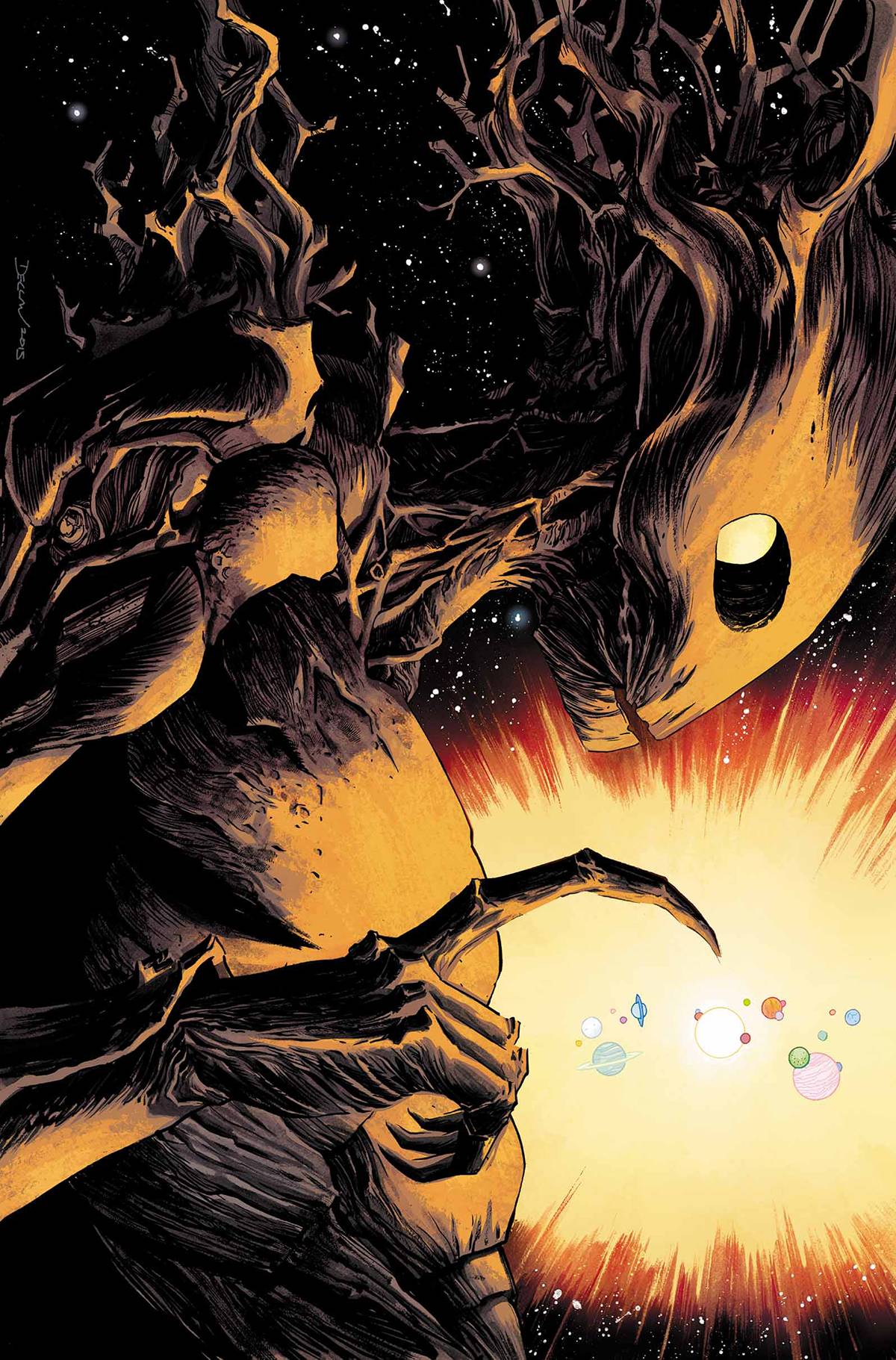 Drew: Channeling all of the sweetness and madcap zaniness of Rocket Raccoon, Groot 1 feels like a logical extension of that series. That may sound like a criticism, but I mean it as high praise — I’ve seen most of Marvel’s biggest writers write for Rocket and Groot, but Jeff Loveness is the first to successfully recreate that mix of heart and cartoonish absurdity that so distinguishes Skottie Young’s take on these characters. The two are headed to Earth to satisfy Groot’s insatiable desire to truly experience the planet (in spite of Rocket’s insistence that they’ve been there plenty), but their trip is fraught with trouble from the start. It’s a classic road story, even putting the two in the back of a chicken truck, mining a ton of humor out of the friction between Groot’s cheery optimism and Rocket’s itinerant pessimism. Indeed, the issue is such an even split between their personalities, it could easily pass as a Rocket Raccoon issue. It makes sense — Groot’s inability to express himself wouldn’t make for the most effective exposition — but by the issue’s end, he’s set adrift though space on his own. I have no idea what he’ll get up to next month, but you can be sure that I’ll be back to see what it is.
Archie 666
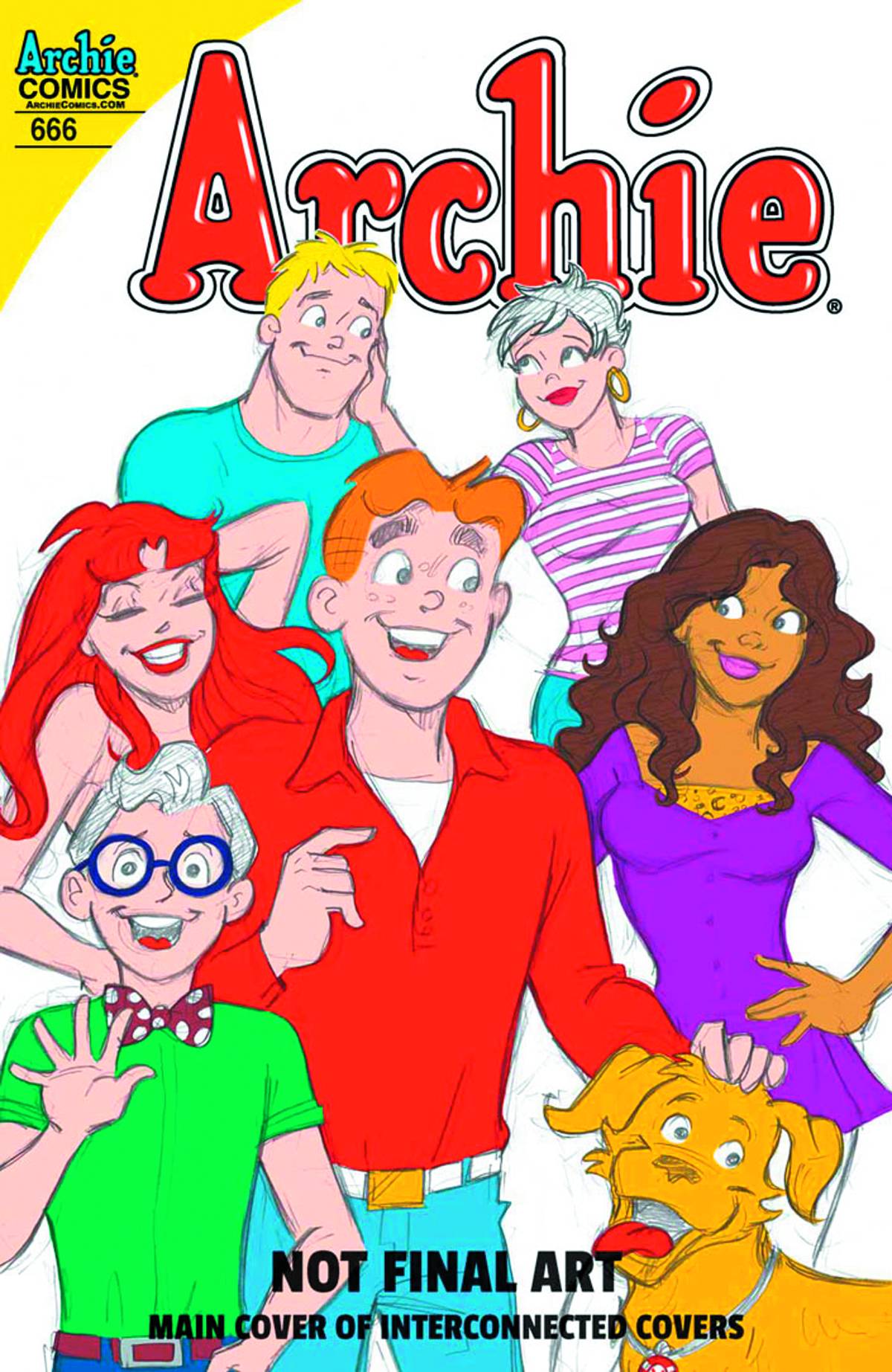 Patrick: For as much as I like the creative direction(s) coming out of Archie comics at this specific moment in history, I can’t say that I’ve ever really understood Archie itself. Issue 666 acts as a grand finale to the Archie of old, but does so with an incredibly modest story about Archie getting detention for the 666th time. (Incidentally, the average American public school has 180 days in a calendar year, which means that if Archie gets detention once a day for his entire highschool career, this couldn’t be any earlier than March of his senior year.) As a result, Archie is on the verge of being kicked out of school. The vast Archie supporting cast recalls his various acts of clumsiness and valor until they all decide to help him clean up the school. It’s a cute story, with cheesy nods to both Life With Archie (Kevin Keller saying that Archie would take a bullet for one of his friends — he does: Archie dies saving Kevin) and Afterlife With Archie. I guess where the story gets kinda icky for me is where Archie always get icky for me: the gender and sexual dynamics at play just feel weirdly regressive. Veronica actually says that Archie — as a teenage boy — “isn’t capable of acting rationally” and then goes on to assert that the women in his life “should have exercised more control over him!” For my money, that blows way past quaint and old-timey to myopic, sexist and gross.
Drew: I dunno — as someone who was largely incapable of acting rationally as a teenage boy, I feel like a lot of women in my life, from my mother to my female friends to my girlfriends to the female friends of my girlfriends, all felt like they needed to exercise control over me. They probably wouldn’t have expressed it in quite the same way, but none of them are Veronica Lodge. And I do think that Veronica’s personality is the most important thing to keep in mind there — she may be expressing an opinion about how women should treat teenage boys, but I don’t think that means the issue shares that opinion. Ultimately, it’s everyone in Archie’s life that ends up looking out for him — his parents, his friends, even Mr. Weatherbee all pitch in to help satisfy the terms of his 666th detention. The end of the issue assures us that the cycle will continue (though it also genuinely looks forward to something new), which I suppose is only comforting if you found this issue charming. I did, so it worked like gangbusters for me, but I suppose your mileage will vary.
Jupiter’s Circle 3:
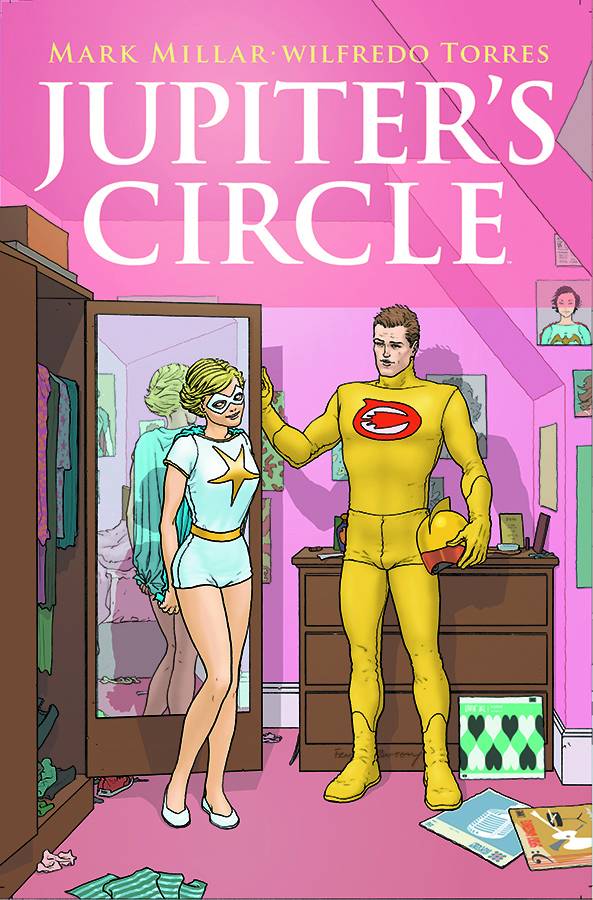 Drew: Last month, I dismissed the “what if a golden age hero was gay” premise of Jupiter’s Circle 2 as well-worn territory, but the Mad Men-esque look into the secret lives of its mid-century heroes pays off big time in issue 3. Chronicling an affair between the Flare and small-town girl-with-a-dream April Kelly, this issue advances naturally from a one-off tryst to a too-public acknowledgement of their relationship, to the eventual dissolution of the Flare’s marriage (and proposal to April). They’re familiar beats — indeed, swap “superheroing” out for “advertising,” and we’ve basically got a character arc for Mad Men — but they’re given new life by their unlikely setting. The comicbookiness of it all gives the issue a killer ending; one that promises to have repercussions in future issues (or perhaps even the main series, whenever we catch up with the present day).
The Autumnlands: Tooth and Claw 6
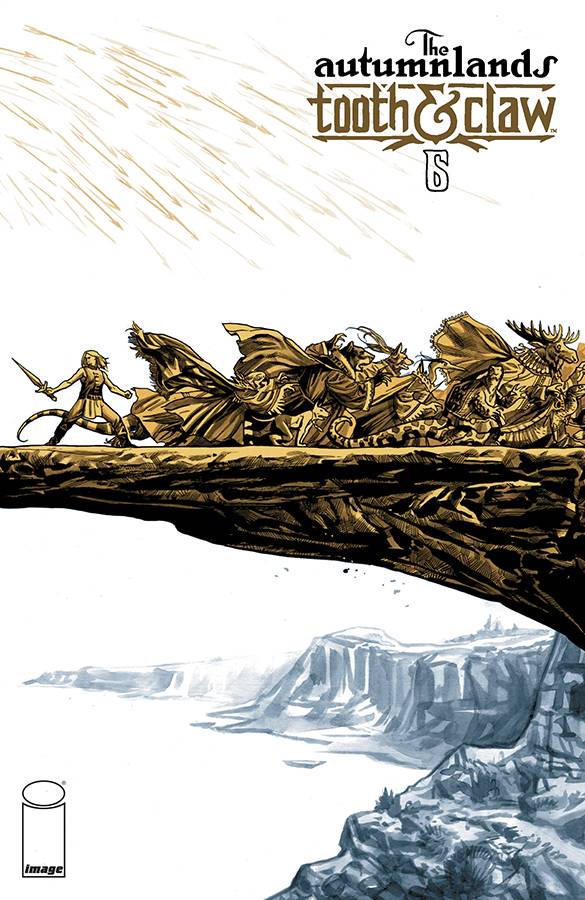 Patrick: Writer Kurt Busiek and artist Benjamin Dewey slow the action of Autumnlands to a crawl in this issue, effectively showing the horror and smarminess of a single act of war between our animal friends and Seven-Scar’s tribe. Since just about all of our heroes are adorable pacifists, everyone’s mortified that the Champion detonates an explosive, killing the troops Seven-Scars had lying in wait. Busiek is careful to not make the Champion’s actions too alien, however, as it seems like he is effectively fighting the fight he needs to in order to secure the survival of the animals. He’s even pragmatic and rational when discussing his goals with Seven-Scars. This is my favorite scene in the issue.
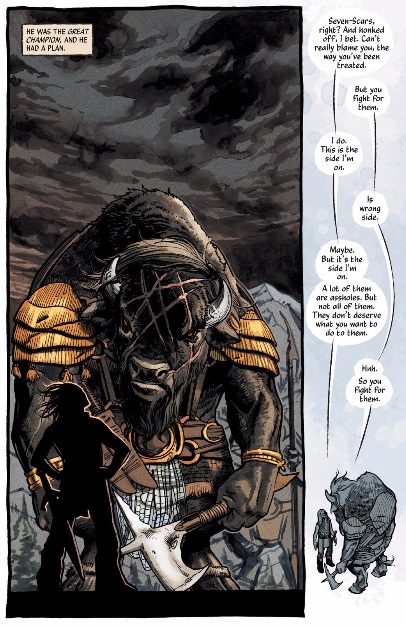 Seven-Scars is so huge an imposing on that page, but the Champion doesn’t seem to care at all. He’s not even particularly enamored with the people he’s protecting, calling “a lot of them” “assholes.” I love that he continues to be this mysteriously motivated, oddly modern, frighteningly competent agent.
Spencer: Honestly, at this point I wouldn’t be surprised if the Champion is fighting just to protect Dusty.
But I love the various reactions to the Champion’s attack on the Bison. Seven-Scars is offended by an act he sees as dishonorable, while the animals are just so pampered that they’re shocked to witness any sort of brute force, even when taken to protect them — as magicians and aristocrats, violence is “below” them. It’s easy to see why Seven-Scars and his tribe hold such a grudge against the animals from the sky city, but it’s just as clear that these animals would die almost instantly without the Champion on their side. More than Dusty, more than the fact that they’re the ones who summoned him, maybe that’s why the Champion protects them. It should be interesting to see how his allegiances fall wherever he and Dusty wash up next.
Action Comics 41
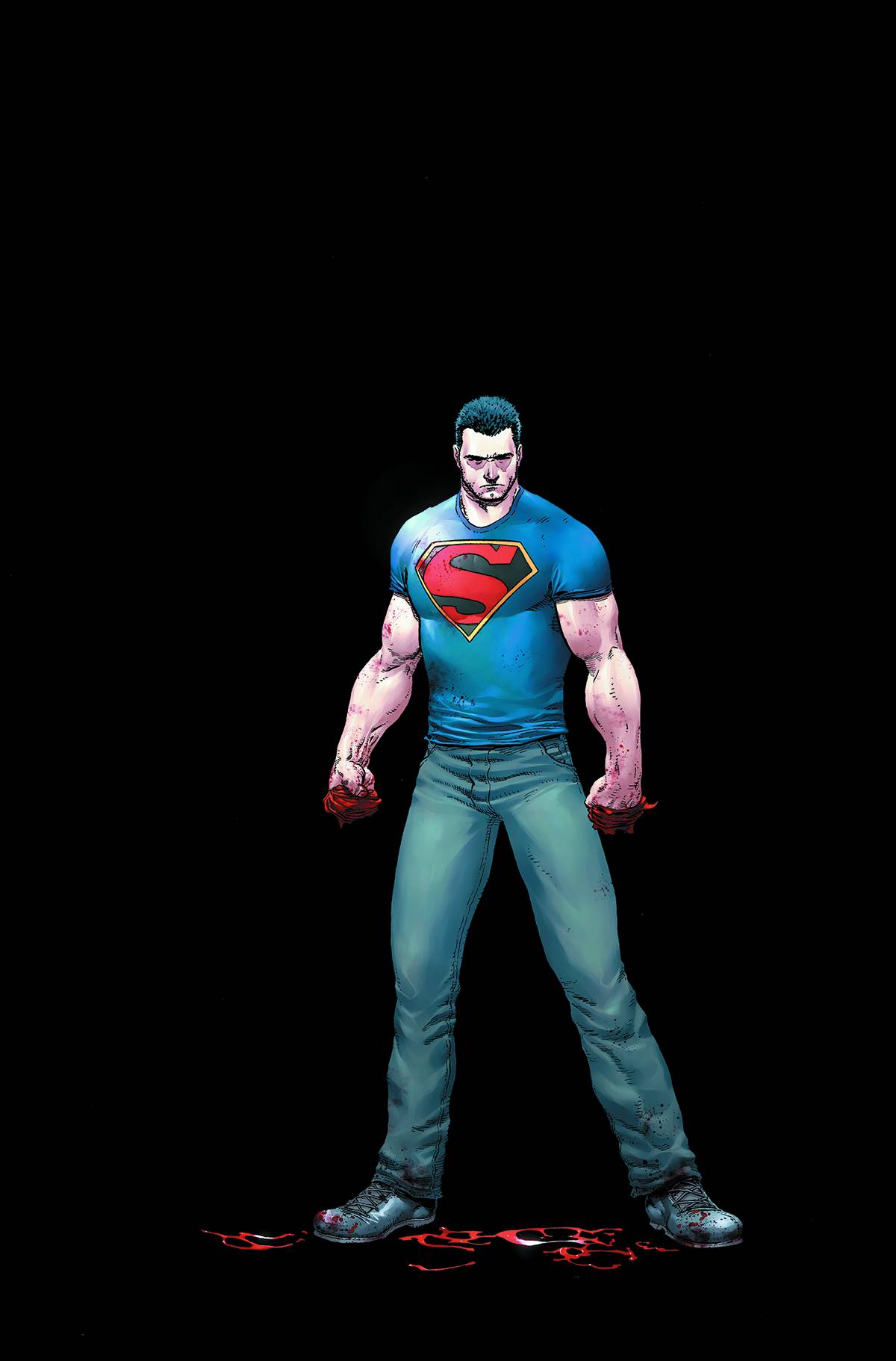 Drew: Action Comics 41 is a bit of an oddity, serving as our first taste of a Superman so different, we can’t help but wonder what happened. I suppose that makes for an effective advertisement for Superman 41 and 42 — both of which are referenced here, though neither has come out yet — but it leaves this issue with some big questions hanging over those proceedings. Those questions are distracting, but its a testament to this issue that they don’t derail it entirely. I may not understand what it is that Clark is recovering from, but once his condition is established, Greg Pak and Aaron Kuder able to get down to the business of what makes these changes so interesting.
Superficially, the changes resemble the Superman of Grant Morrison’s Action Comics run, where a less-powerful Clark Kent bounded around Metropolis in a t-shirt, and Pak and Kuder seem to revel in that street-level focus. When he can’t be confused for a bird or a plane, Superman can be confused for a regular guy, chatting up his neighbors, snarfing gas station burritos, and getting in at least one street fight. It’s almost a shame, then, when he more or less snaps out of “local strongman” mode and back into full-on superhero action. There’s nothing inherently wrong with the shadow creature Clark faces at the end of the issue (the reference to next month’s Superman 42 notwithstanding), but it feels like familiar territory for this creative team. Maybe that’s an assurance for fans of their run — and again, it’s not bad — but I can’t help but see it as a missed opportunity to fully embrace this new direction they’ve been handed.
Spencer: I’ll admit, Drew, that I’m still trying to work out my thoughts on this new direction. The idea of Lois Lane revealing Superman’s identity to the world just rubs me the wrong way — especially considering how underserved she’s been as a character in the New 52. Still, I want to wait to see how Superman 41 plays out before passing judgment — in the meantime, though, I’m fond of how this issue handles the new status quo. Drew, you’re right that Pak and Kuder are reveling in this new direction — Kuder lovingly renders Superman’s leaps across the Metropolis rooftops, capturing a kind of wonder behind his movements that we haven’t seen with his flight in quite a while.
Still, by far the most compelling element of Action Comics 41 is Clark’s struggle to hold true to what Superman stands for even under these trying circumstances.
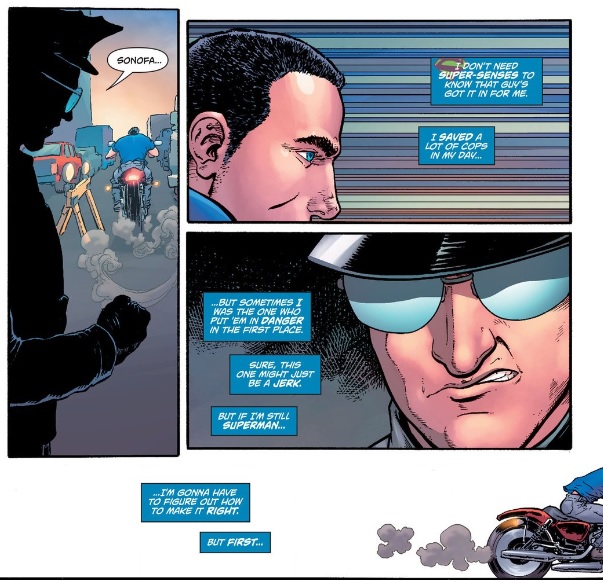
It’s hard to see so many people turning against Superman, to see Clark stripped of his identity and most of his powers, but he sticks to his morals despite it all. If this storyline is going to be an exploration of how Superman can remain a pure, aspirational figure in a rapidly changing society, then that alone is worth the new status quo.
Batman Beyond 1
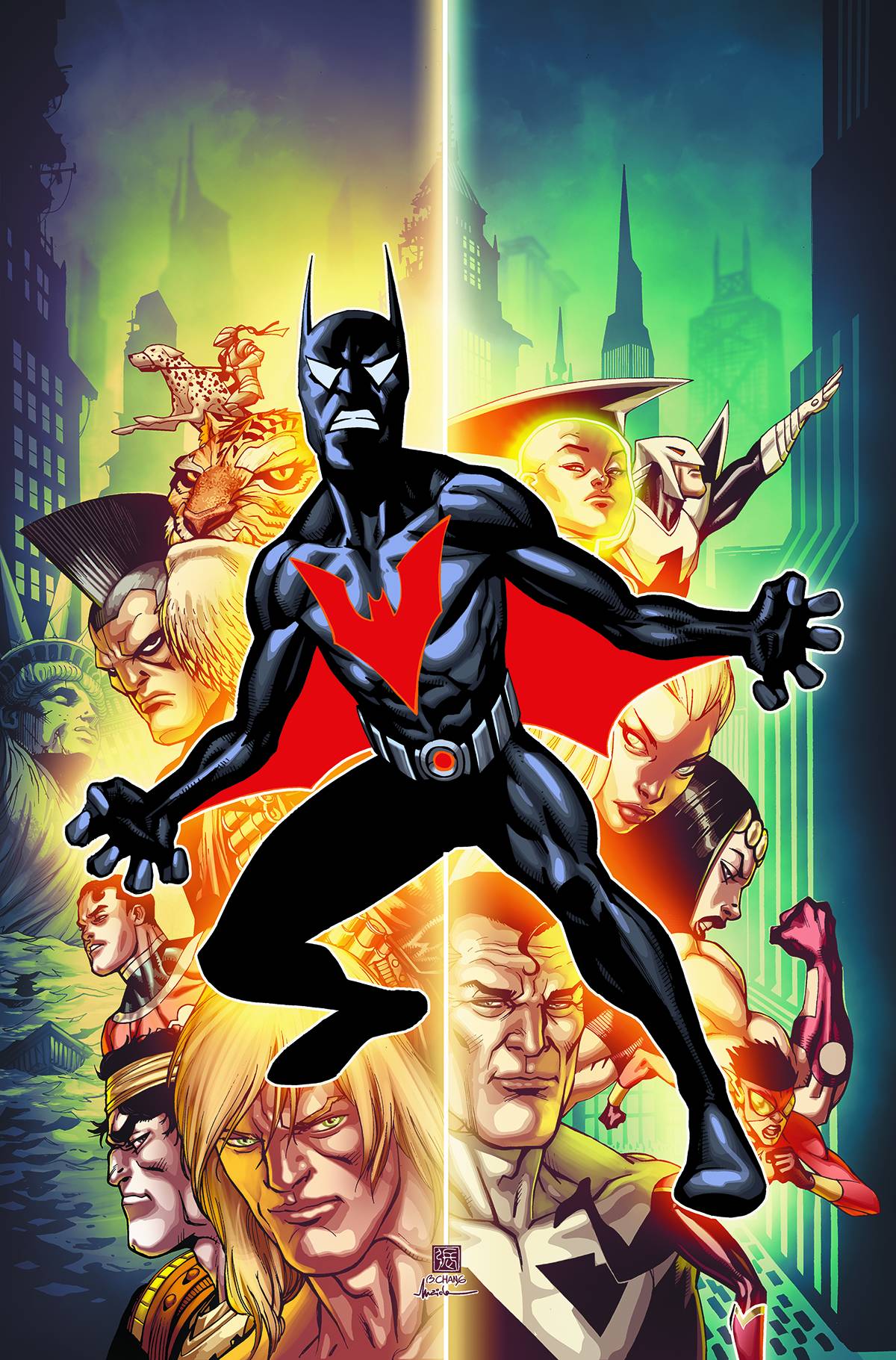 Spencer: If you picked up Dan Jurgens and Bernard Chang’s Batman Beyond 1 looking for the continued adventures of Terry McGuiness, well, you came to the wrong place. Instead of matching the tone and/or continuity of the animated series (or even the recent comics set in that universe), this issue picks up where Futures End left off — which, apparently, was with Terry dying and passing the suit onto Tim Drake. This story is instantly more readable than anything that came out of Futures End, and Chang’s artwork is quite dynamic (especially when paired with the colors of Marcelo Maiolo, who sticks with the techniques that made his work on Green Arrow so visually memorable), but I still have a lot of reservations about this direction. Aside from the growing tension between Tim and Terry’s brother, Matt, there isn’t much to differentiate Tim from Terry, so why bother with the switch at all? (Really, Jurgens fails to find a unique voice for Tim in general, but that’s been an issue with Tim since the beginning of the New 52, so that isn’t all his fault.) I hate to be the guy to argue against a new direction, but I’m still having a hard time figuring out why, when DC finally decides to integrate Batman Beyond in to their regular continuity, they’d do so by dropping almost everything that made the series so beloved to begin with. I’m still invested enough in the remaining Beyond characters, such as Max and Matt, to contemplate checking out the next issue, but I really don’t know if I’m up to spending time in the bleak Futures End timeline every month. If that storyline’s your bag, then this book may just be for you, but I think it may end up alienating more fans than it brings in.
Bat-Mite 1
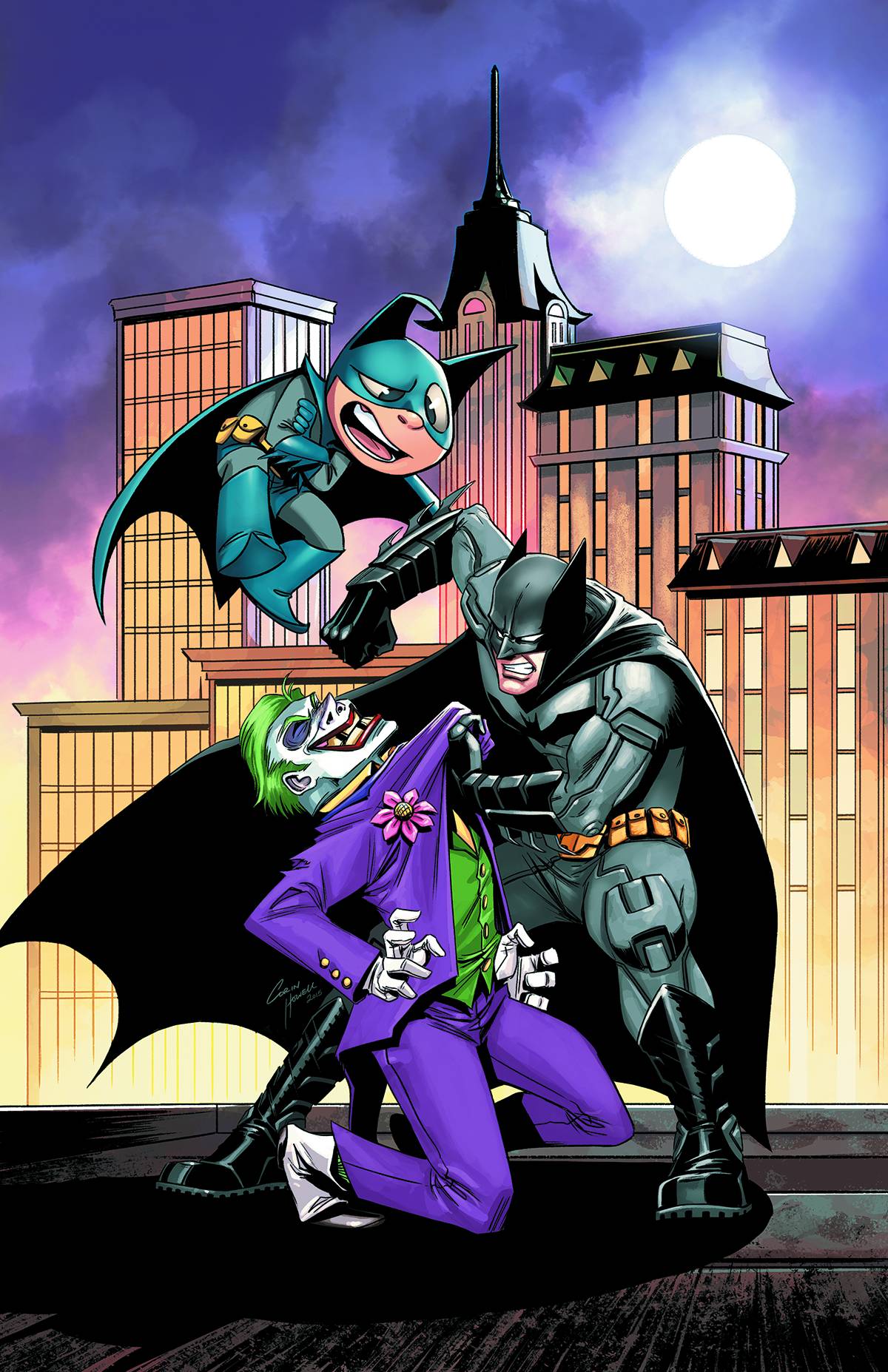 Michael: Bat-Mite 1 was a book that I was cautiously optimistic about when it was announced. In Batman: The Brave and the Bold, Paul Reubens had a delightful portrayal of Bat-Mite as the ultimate Batman fanboy. I think this colored my read of Bat-Mite 1, hoping that Dan Jurgens might deliver a similar depiction of the imp. What Jurgens gives us is a tale about Bat-Mite getting banished from his dimension, trying to help Batman but predictably making things worse and stumbling upon an evil group of brain swappers. Countless times I kept thinking “Man, Bat-Mite is kind of a dick,” which made him a hard protagonist to root for. Bat-Mite spends the majority of the issue telling people why they suck at their job and how he would improve it. Yay…my hero… If Jurgens is indeed viewing Bat-Mite as a fanboy, it’s the negative image of the fanboy that we talked about in books like The Multiversity. There are some exceptions, but comics creators using their art to criticize their critics is never a particularly interesting device. Maybe that’s not Jurgens’ intention here however — Bat-Mite is the “hero” of the book after all; can you write six issues about fandom’s ugly side? I suppose.
Fanboy theories aside, Bat-Mite’s humor is cruel and often oddly dated. I guess the joke is the combination of Bat-Mite’s superiority complex and his cartoonish design by Corin Howell. So…ha? One such juxtaposition of “kid wearing big boy pants” was Bat-Mite pulling out his “bat-laser,” an image that I found oddly disturbing.
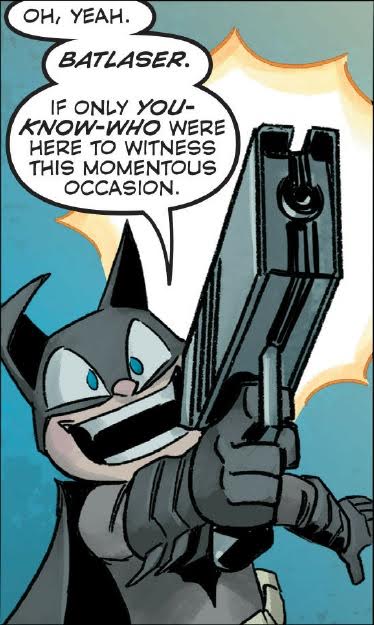
Visually what we have is essentially a little boy in a Batman costume taking immense pleasure from holding a gun. That image is what is wrong with this issue in a nutshell for me. A lot of the new DC titles are trying to veer away from the serious New 52. You could argue that Jurgens and Howell are attempting the same thing with a cartoony-looking book about Bat-Mite, but honestly, the issue left me feeling pretty sad. I don’t want Bat-Mite to be an asshole, you guys.
Bizarro 1
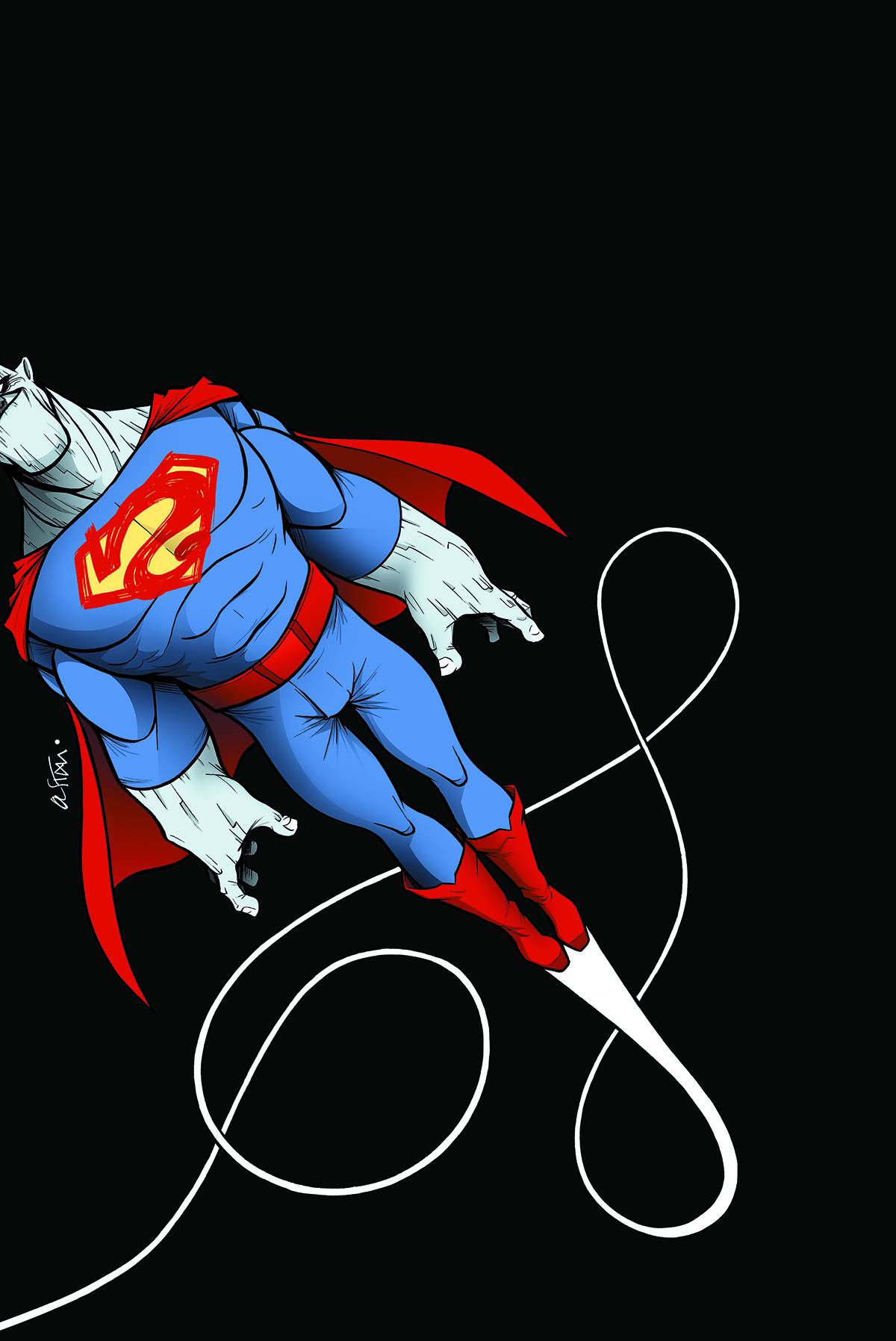 Drew: Another manifestation of DC’s push into comedy, Bizarro 1 finds uneven success recreating the madcap tone of Animaniacs. There’s a lot of good going on here, from the odd couple dynamic between Jimmy and Bizarro to the idea of an alien-enhanced used car salesman, but many of the gags left me cold. It could just be that I’m not particularly amused by Bizarro speak (at least, not in high volumes — I love it when used sparingly), but too many jokes fell flat to call this issue an unqualified success. I suspect a big part of my reservations hinge on the lumpy pacing — I would have loved to spend more time with Bizarro and Jimmy in the car, but we speed through that to set up a conflict that this issue doesn’t resolve — which leaves the issue feeling both too light and overstuffed. There’s enough charm here to keep me coming back (the inviting art from Gustavo Duarte and Bill Sienkiewicz is a big plus), but I can’t help but wish this series was just a little quicker with its jokes.
Michael: Drew, I hate to disagree with you, but I found Bizarro 1 to be a breath of fresh air from DC Comics. Bizarro is a character that lends himself to situations and interactions that are absolutely absurd and as a reader I’m prepared to submit to the wacky. I think that Heath Corson’s pairing of Jimmy and Bizarro is brilliant and allows each character to elevate the other. Jimmy is a character with comically bad luck; put him next to Superman and he’s kind of pathetic. Put him next to Bizarro and he becomes a more relatable everyman — Jimmy Olson gets to be the straight man instead of an outright punchline. Bizarro-speak is something that is always going to be jarring. However, if you abandoned that very silly (yet distinguishable) concept, I’d argue that you’d fundamentally change the character. Also I think that the narrative conflict with the car salesman is so extremely low stakes — making it perfect for a Bizarro book.
Gustavo Duarte taps into the fun of the script and forgoes comics “realism” to emphasize the funny in a visible way. Jimmy’s a stick figure with hair and big ears; King Tut is a dwarf that somehow spawned a (disappointingly stereotypical) bottle-shaped daughter, and Bizarro is a top-heavy ogre with trunks for wrists. I like how Duarte employs cartoonish visual captions like King Tut and Jimmy’s negotiating battle represented by an arm wrestle. Bizarro’s comedy is slapstick, so Duarte plays the visuals ironically for laughs. Just look at the cover of Bizarro 1: it’s an understated cover that plays on the simple joke that the title character’s face is out of frame. Dammit Bizarro, you can’t even do a cover pose right! Carson and Duarte give Bizarro 1 the aesthetic of a comic strip like Calvin and Hobbes but the wit of a Muppet movie. Needless to say, I’m on board.
Green Lantern 41
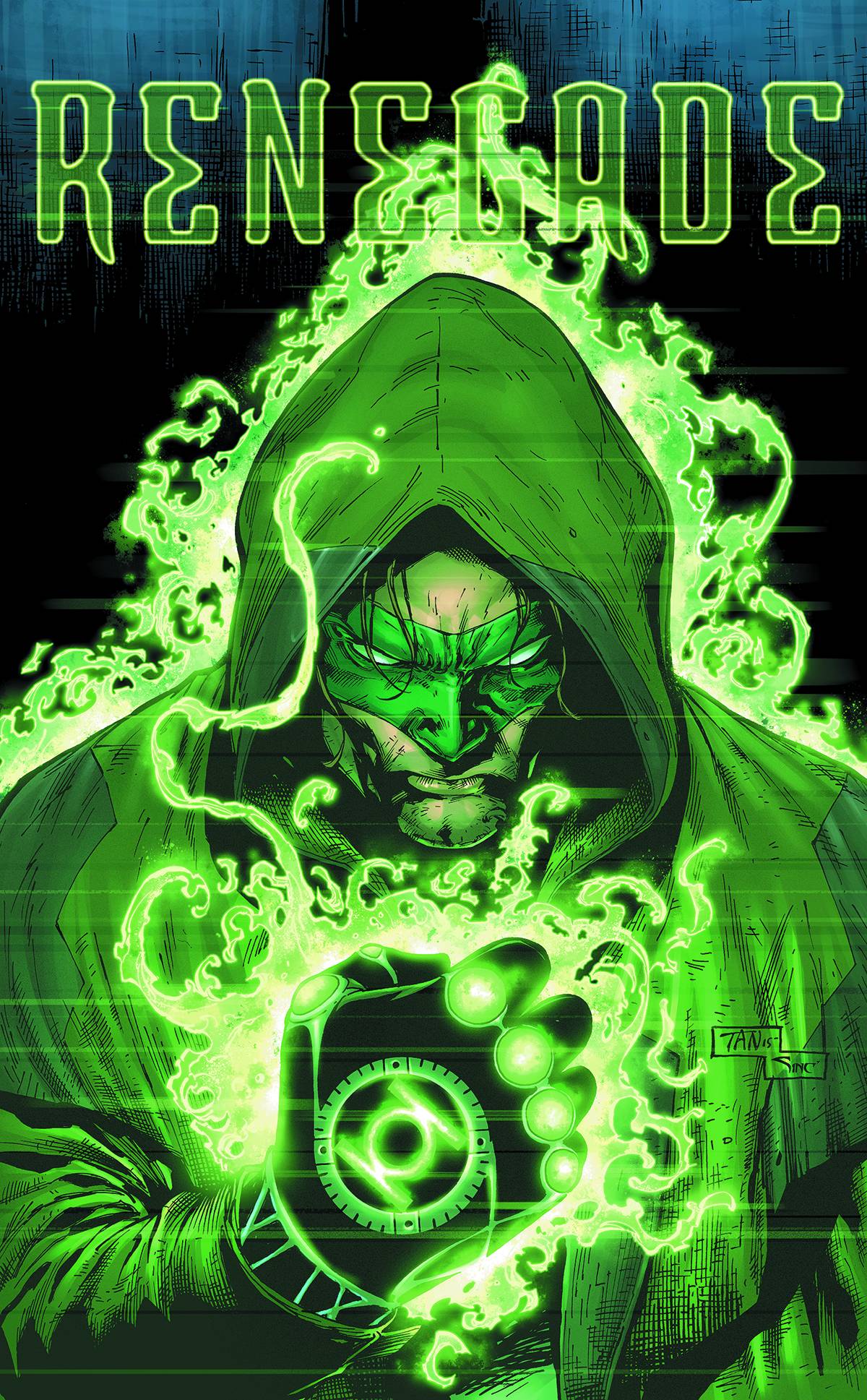 Michael: Green Lantern 41 is the beginning of Hal Jordan’s current “renegade” status under series writer Robert Venditti. Hal is laying the rebel stuff on pretty thick with his broody hoodie trench coat, stolen ride and rock ‘n roll hairdo — because when you’re trying to lay low there’s very little opportunity to get a proper haircut. I’m not entirely against this whole “saving face for the Green Lantern Corps by becoming the Corps black sheep-poster boy” plan but it’s not something entirely new. Hal’s new style reminds me a lot of Guy Gardner’s shaggy hair/porn stache look when he got all rage-emo in Red Lanterns a few months ago; not to mention a bunch of other examples of Hal-as-Corps- scapegoat throughout his publishing history. Here’s what I liked about this issue: Hal’s freedom from being in charge of the Corps coupled with his self-imposed outlaw exile gives him unique new options. If the Green Lantern Corps is the universal police department then Hal can be the ex-cop turned private eye who investigates “the cases that slip through the cracks.” The central conflict of Green Lantern 41 is Hal rescuing a young alien boy named Virgo who was kidnapped from his royal family and forced to fight in an underground death match. A problem that the more “super” of superheroes face is being forced to look at the bigger picture of the planet/universe and focus less on individual conflicts. That’s always been Hal Jordan’s biggest problem (ok, he’s got a LOT of problems): he can’t ignore the smaller, more personal fights — most of his major struggles inevitably end up taking place back on Earth. So it’s cool that Hal can go swash-buckling across the universe, helping the helpless while answering to no one.
What I found irritating about Green Lantern 41 is that this is the first issue where we see Hal Jordan: Renegade and what’s the first thing he does? He goes back to check on the Corps. After Virgo’s captor Trapper whispers something inaudible into Hal’s ear: that Mogo and the Corps has disappeared, Hal is on a mad dash to prove him wrong. Unfortunately Hal’s ship Darlene (who makes me miss Aya and Green Lantern: The Animated Series) arrives to find that all that’s left of the Corps is fragments of asteroids. I’m assuming that this all ties into whatever the plan for Green Lantern: The Lost Army is, but it seems a bit regressive for Venditti to have the runaway Hal Jordan run back home at the first sign of trouble. Give him some room to stretch his legs out, like the man said!
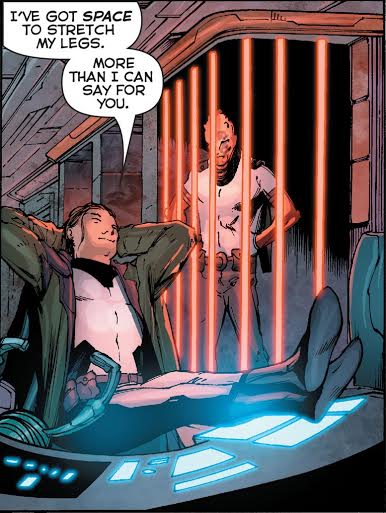
Right now Hal should be doing some soul searching and self-discovery. Because if anyone could benefit from self-discovery, it’s Hal Jordan.
Omega Men 1
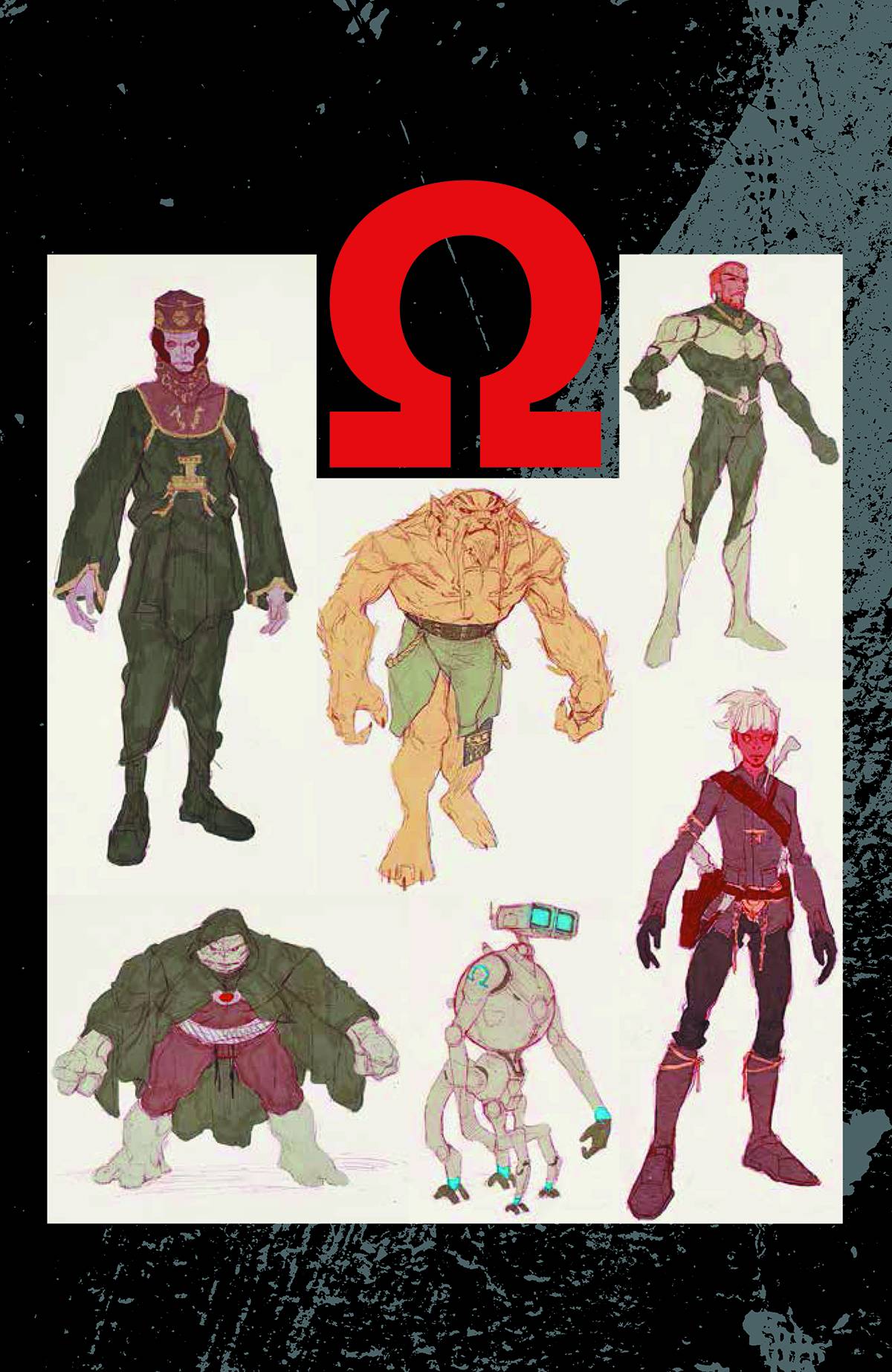 Spencer: During the last month of Convergence, DC released previews of all their upcoming new titles. The preview for Omega Men featured the team preparing to execute Kyle Rayner on live television as if they were ISIS or something. It’s one of the most appalling premises I can remember in recent history, but I guess it did its job, because I checked out the first issue of Tom King and Barnaby Bagenda’s Omega Men just to check up on poor Kyle. Deep down I was also hoping that King could find a way to win me over, just as he did with Grayson (a series whose premise I wasn’t wild about initially, but which quickly became one of my favorites), but while I’m relieved to see that Kyle’s fine for now, I found nothing else in this issue to like. It’s a grim, dreary, drag of a book, much of it mired in confusion, such as the alien dialogue King leaves almost entirely untranslated.
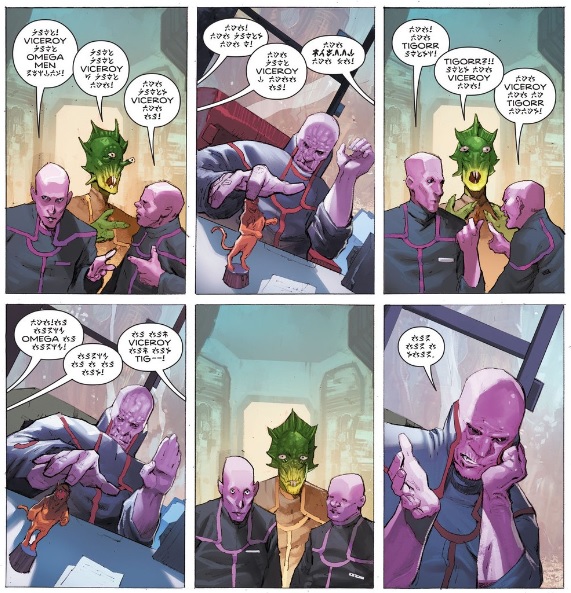
Now there’s nothing wrong with having to work to get meaning out of a comic, but there’s little meaning to find beneath Omega Men‘s surface. King introduces the Citadel as outrageously evil if only to establish the Omega Men as being in the right for opposing them, but the Omega Men are just as bad — at one point they echo the Citadel’s hypocritical rhetoric at a man they plan to detonate like a bomb, just to drive the comparison home. Considering current events, a story about how far is too far when it comes to protesting and fighting oppression could be quite timely, but Omega Men so far just isn’t up to the task of tackling such a sensitive topic. They may be holding Kyle Rayner hostage, but I’m not going to give into their demands — I don’t plan on checking back on Omega Men.
Dead Drop 2
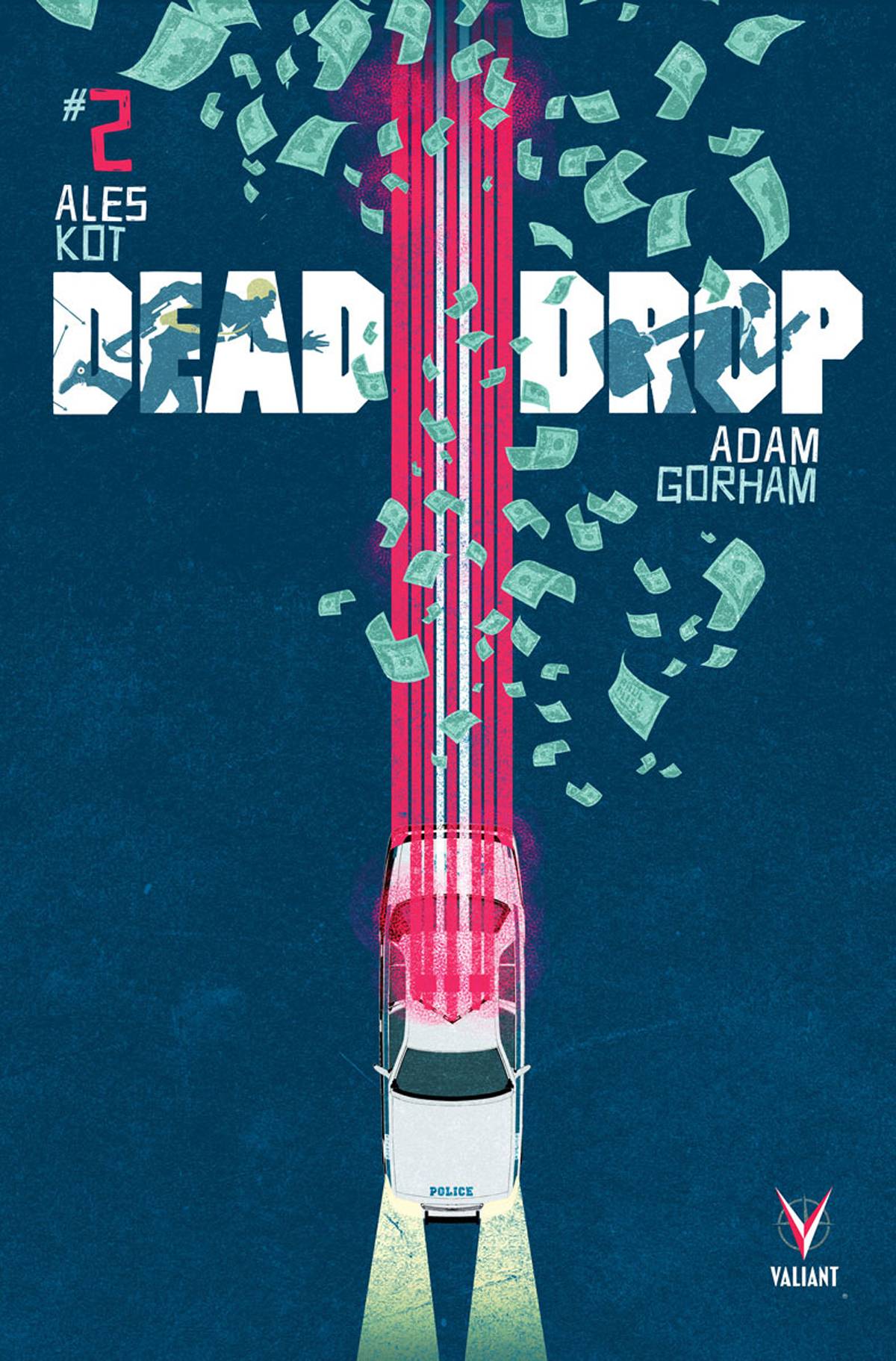 Patrick: Switching perspectives from issue 1, Dead Drop 2 follows Archer as he chases the same “terrorist” around Manhattan. Archer is much less put together than X-O Manowar — so much less put together that he’s not even wearing pants for the entirety of the issue. There’s no way to separate this lovable loser version of Archer from his obvious inspiration in Hawkeye, and we’ve weirdly seen writer Ales Kot write Hawkeye in much the same way during Secret Avengers. But, what the hell: it was fun then and it’s fun now.
There’s a wonky chronology to this issue, and I’m not really sure why we’re being presented with the events out of order. Seemingly, Kot was so excited about this scene of Archer in the kiddie pool that it had to be the first image we see in the issue. It’s a sorta cute in medias res opening, but it’s not exactly a thrilling point to work back towards. In fact, it’s not even any more goofy than anything else Archer does in the issue, so maybe Kot is poking fun at the convention itself. That first page could have been anything: Archer clinging to the side of the subway car, Archer diving into a moving vehicle — but the tease is just this hero being kind of a putz.
He’s still a lovable putz, but I’ll be damned if I didn’t want him to say “okay, this looks bad” at several points throughout the issue.
Drew: And things do look bad for him basically the entire time. You’re not wrong to suggest this issue is packed full of moments that would work as a “okay, this looks bad” cold-open, but I think the most logical would have been on the subway. Maybe die-hard Valiant fans recognized Archer on page one, but that moment was so out-of-context for me, I found myself wondering if I had picked up the right issue. Opening on our “villain” would have lent the beginning some continuity, while the sudden arrival of a dork with a crossbow (in his underwear, no less) would have offered a similar level of amused confusion. Then we only need to rewind the clock once, and only to explain his involvement in all of this (and the fate of his missing pants).
My notes on the chronology aside, the intrigue here is clearly bigger than any one hero. It’s definitely a bummer not to see X-O Manowar in the mix here — I had a ton of fun with last month’s issue — but Kot makes us incrementally more aware of Neville Alcott’s role in all of this. Perhaps more importantly, Kot allows Archer a moment of rebellion, collecting the virus as ordered, but letting the girl and her driver to escape. I’m honestly not sure who’s behind the carful of ninjas that shows up at the end of the issue, but that’s exactly why I’ll be back next month.
The Woods 13
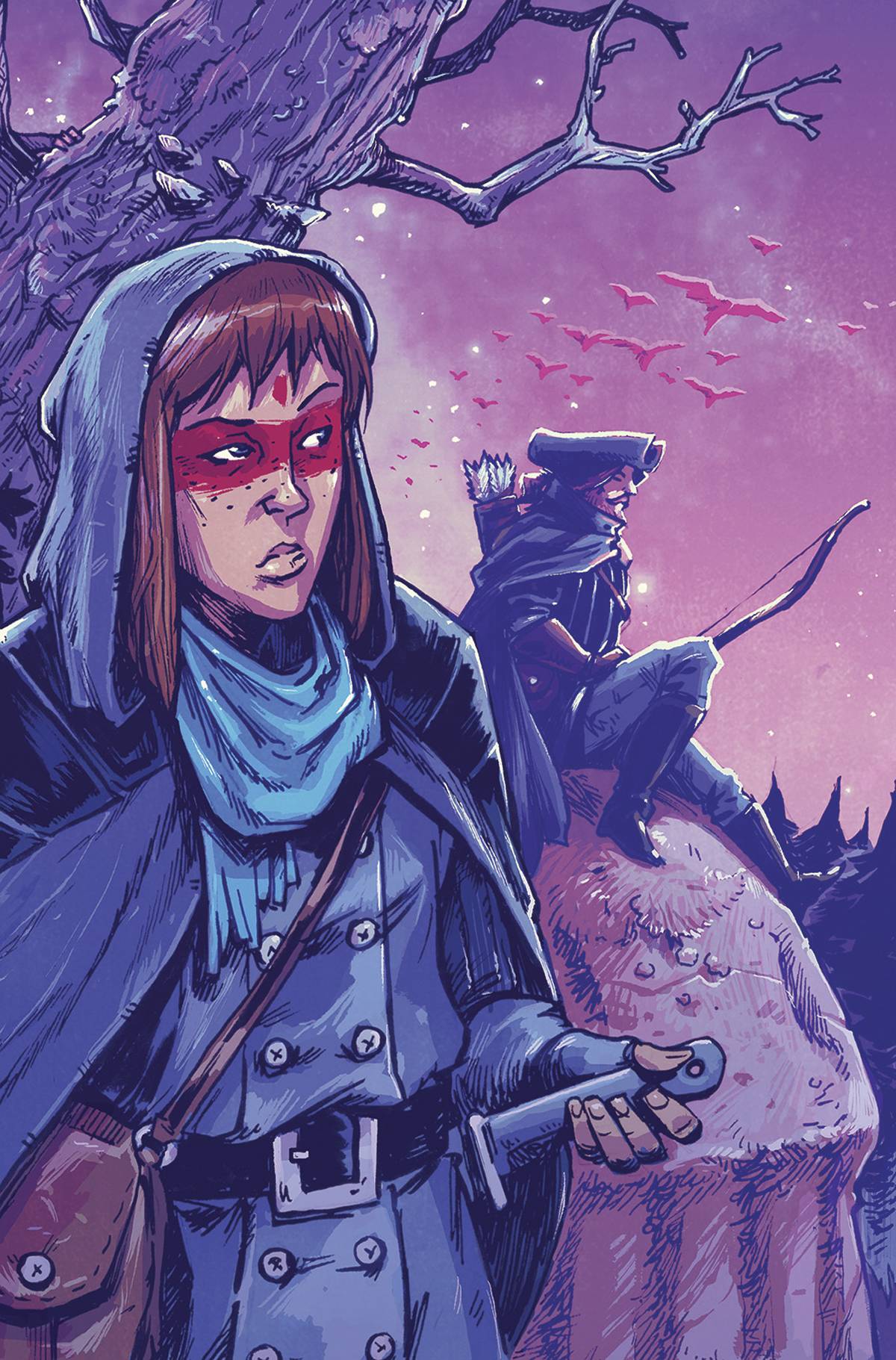 Patrick: The last time we had a jump forward in time, I remember asking Spencer “hey, did I miss a couple of issues?” That sense — that I missed something exciting — permeates issue 13, which catches up with the school encampment a full year after appearing in the woods. The school has fields of vegetables growing behind it, and a well constructed fence to guard against intruders. But the most intriguing change comes from Karen, who has become as feral and badass as you could possibly hope for.
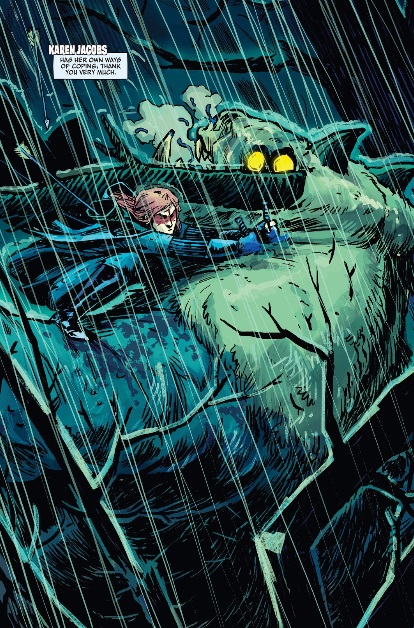
That description next to her name actually speaks volumes about James Tynion’s new direction for the series. Each arc in this story tackles fresh themes, and the oft-repeated theme of this issue is SURVIVAL. Karen “has her own ways of coping,” but there’s a judgment associated with all the coping mechanisms on display. Even Isaac and Ben have to pick apart the construction of the school’s theatre — a project they are no doubt passionate about — because it only facilitates survival in the most abstract sense. Evidently, they’re not comfortable with their own coping mechanisms.
We also get to see one hell of a freaky dude in a cloak lurking around the forest. He looks like a cross between the Wheelers from Return to Oz and The Mouth Of Sauron from Return of the King. My guess is that’s what happened do Adrian — no wonder everyone, even the subtitles, think he’s “deceased.”
The conversation doesn’t stop there, because you certainly read something that we didn’t. What do you wanna talk about from this week?
 Retcon Punch
Man, this was a good week for Superman comics.
First, Action Comics introduced us to a new Superman that’s actually quite a lot like the old–either Morrison’s AC or his inspiration thereof, the Golden Age Supes from 1938. I don’t know what it is about the “street-level” approach to the character, but I can’t help but feel that he certainly earns the title “Action Comics” for the book. There’s something about the vicarious nature of boots on the ground (and leaping across rooftops) that gives me a sense of action and fluid dynamic movement that even Kuder coudln’t fully translate while Clark was full-powered. In addition, now that he’s an “everyman,” Clark can participate in a street fight and hold an earnest meaning to it since he can be hurt by an average Joe. I think it speaks more to an honesty of the character that the ideal of Superman encapsulates–no longer does he need to hide his identity or powers from anyone else; they’re out there in the open and Clark can finally (?) be honest with those around him.
As for Bizarro, that title’s funny as heck.
A couple things (sorry I’m late, just finished the school year and, by the way, “Fuck yeah!”):
The Amazing Spider-Man: Black Cat has been inconsistently characterized since Superior Spider-Man. It doesn’t ruin the story for me (I like it quite a bit, I think Conway is a master of ‘street level/gangster’ type stories for Spider-Man, but I do think this book and the lack of her appearance in any Secret Wars books show a lack of vision for what her character might be.
Midnighter: I need to reread this. I see that it has its own article that is coming out some time soon – I can see why reviewing this might take time. I had several strong and very contradictory feelings about reading this, so I look forward to reading your opinions (and finding out that I missed that it’s an allegory for the power of the people of the Southern States post Civil War, where the Gardner was the South’s reliance on cotton and plantation economics and Midnighter is the future, with his enhanced technology representing the industrial revolution to come).
I haven’t had time to read Tooth and Claw or X-Men 41 yet. So darned busy.
I may now have to find issues 1 and 2 of Dead Drop, as the comment, “while the sudden arrival of a dork with a crossbow,” reminds me of something. Oh, and reading, “There’s a wonky chronology to this issue, and I’m not really sure why we’re being presented with the events out of order,” the answer is, That’s How Ales Kot Rolls. It must be terrible being his waiter while he’s out at Applebee’s. “Just give me your drink order!”
That comment about Kot just slayed me, Kaif. Kudos.
Dead Drop really is a ton of fun. It’s my first Valient book but I’d love to read an ongoing about either of those characters. Especially Archer. Besides the positive attributes he shares with Hawkguy, there’s also some interesting stuff going on with him that seems to hint that he was raised in a super strict conservative, perhaps religiously fundamental household that didn’t let him go into the world much, and there’s something really fun (and really endearingly awkward) about his approach to interacting with the world.
But it really is an atypical Kot book — I generally like Kot, but it’s far less heady and much more fun than his typical work. It’s an action story more than anything, and that’s fun to see from Kot.
And as for Midnighter — I don’t know how the second half is coming along, but I’ll guarantee you there’s nothing quite that deep in my lead haha. I understand your feelings — I didn’t quite know how I felt about the issue myself until I finished writing about it. It’s definitely an issue that requires some real thought and a close, patient approach to reading.
“Dork with a bow” is totally our preferred nomenclature around the non-existent Retcon Punch offices. That’s one of your magical turns of phrase, Kaif.
Hey, I was just slowly making my way through the Daredevil Netflix series, and I got to that Fisk-heavy episode and was stuck by how similar the ending of that episode is to the end of Spider-Woman this month. Both end with Ben Urich deciding whether or not to save an article he’s working on before he closes it. Anyone else see that connection?