The Flash 13

Alternating Currents: Flash 13, Drew and PatrickToday, Drew and Patrick are discussing the Flash 13, originally released October 24th, 2012.

Drew: I like The Flash. It’s a crisp, fun, dense comic, full of endearing characters and incredible art. Reading it over the past year has been an extremely rewarding experience as a fan of comics. I also like liking The Flash. The fan community around this title, from commenters to bloggers to the creators themselves have been as open and inviting as anywhere in comics. Writers Francis Manapul and Brian Buccellato have been incredibly approachable, and willing to discuss all of the things that make me love this title so much. In many ways, liking this title has been as rewarding as reading this title, thanks to all the wonderful discussions we’ve had about it. For that reason, issues that fail to meet my (admittedly high) expectations for this title are especially disappointing, to such a degree that I lose any objective sense of how good the issue actually is; is it the issue, or is it me? Let that be the grain of salt you take when I say that The Flash 13 is one of those issues.

Continue reading

The Flash Annual 1

Alternating Currents: Flash Annual, Patrick and DrewToday, Drew and Patrick are discussing the Flash Annual 1, originally released August 29th, 2012.

Drew: When I interviewed Francis Manapul back in April, he expressed that he reveled at the unique expectations mandated by the New 52. Specifically, he expressed that “the best thing about knowing what people are expecting is when I change something, it seems shocking.” Subverting expectations is such a simple concept — and one so central to genre fiction in general — that you’d think it would start to lose its spark; but then again, with Manapul and Brian Buccellato on writing duties, nothing ever is that simple.

Continue reading

The Flash 12

Alternating Currents: Flash 12, Drew and Patrick

Today, Patrick and Drew are discussing the Flash 12, originally released August 22nd, 2012.

Patrick: Bad guys don’t make for the best teams.  Hell, superheroes seldom make functional teams. 90% of team stories center around just how hard it is to put individual egos on hold and actually work as a team. Sometimes the group gels to confront a common, insurmountable enemy; sometimes they’re extorted into working together; and sometimes they seem to be the only people in the whole universe going through the same trials. But bad guys only get together for one reason: take down the hero. Right? Well, The Flash #12 has something to say about that. Continue reading

The Flash 11

Today, Patrick and Drew are discussing the Flash 11, originally released July 25th, 2012.

Patrick:  Flash 11 (and 10, for that matter) is a bit of a place-setting issue. Francis Manapul and Brian Buccaletto are smart enough to fill these issues with self-contained stories, but it’s becoming increasingly clear that this series is currently in the business of establishing a new breed of Rogues. And they’re not just new to the audience, they’re new to the world of the Flash and — more distressing — new to each other. Thankfully, this is done without the slightest hint of an origin story: these bigger, better Rogues have a history together that’s half what-you-already-know-about-The-Rogues and half total mystery. And all of this villain business unfolds gracefully without ever losing sight of Barry Allen. Continue reading

The Flash 10

Today, Drew and Patrick are discussing the Flash 10, originally released June 27th, 2012.

Drew: Patrick and I like The FlashLike like. I guess I shouldn’t speak for Patrick, but The Flash is perpetually on my list of top 3 comics. I love the writing, I love the art, and I especially love the synergy of the two. It’s hard for me to imagine it improving, so I’m generally wary of any changes. This is the first time we’ve seen a guest artist on The Flash, and while guest penciler Marcus To delivers a crisp, clean issue, it’s hard to compete with the Francis Manapul’s painterly style that has so defined this title for me. Continue reading

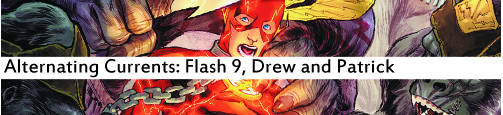
The Flash 9

Today, Drew and Patrick are discussing the Flash 9, originally released May 23rd, 2012.

Drew: Since the reboot, The Flash (the title) has had an interesting relationship with its own history. In returning to Barry before any crises, before any sidekicks, heck, before any marriages, we get a sense that we know his future — even if it isn’t written in stone that this story will play out like the one we know. Writers Francis Manapul and Brian Buccellato have addressed this relationship to history in the very pages of the title in question, rediscovering, challenging, and subverting elements from Barry’s own past. This month, they address the notion of destiny quite directly, offering an ingenious solution that frees them up creatively, while still honoring the memories of long-time readers.

Continue reading

The Flash 8

Today, Drew and Patrick are discussing the Flash 8, originally released April 25th, 2012.

Check out Drew’s exclusive interview with Francis Manapul here!

Drew: Last month, Patrick voiced some concerns about objectively judging this title. Maybe we want to like it too much to say whether we actually do. After putting this issue down a little disappointed, but deciding that it was brilliant before starting this write-up, one could conclude I’ve already crossed the line of objectivity. However, I’d like to make the case for why this seemingly eventless and exposition-heavy issue actually carries the torch of thematic unity that has made this title so fantastic.

Continue reading

The Flash 7

Today, Drew and Patrick are discussing the Flash 7, originally released March 28th, 2012.

Drew: When we wrote about the Flash 6 last month, we couldn’t get over the thematic richness of that issue as it explored concepts of cause and effect through time and space. One of the reasons that issue is so satisfying is because it speaks to our own experience of events — we can arrange them chronologically, but they often have connections to distant moments in time. This is the Flash as the mortals around him (or, perhaps more importantly, comics fans) experience him; sometimes out-of-order chronologically, but never emotionally. With the Flash 7, Francis Manapul and Brian Buccellato set out to do something much more ambitious, as they put the burden of cause on our hero without any real understanding of the effect. Continue reading