Normalcy in Days of Hate 2

by Patrick Ehlers

This article contains SPOILERS. If you haven’t read the issue yet, proceed at your own risk!

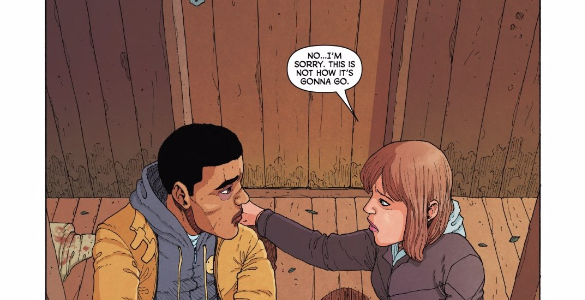
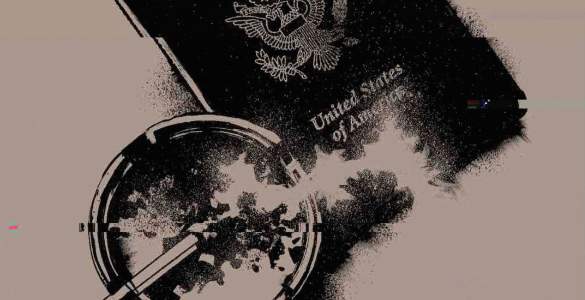
Patrick: After a first issue that went out of its way to show how drastically the world has changed in the not-too-distant future, Days of Hate 2 slows way down to emphasize just how normal the lives of its main characters are. This is every bit as terrifying as a country openly at war with itself. Issue 2 is also much more illustrative of the times in which we currently live. We don’t recognize ourselves as “in-crisis” because we can still call our parents and make plans to go to that lobster place with them on Wednesday. Writer Ales Kot and artist Danijel Zezelj double down on normalcy, shortening the narrative distance between “what if I was in this situation” and “I am in this situation.” Continue reading
Days of Hate 1: Discussion

by Ryan Desaulniers and Patrick Ehlers

This article contains SPOILERS. If you haven’t read the issue yet, proceed at your own risk!

Fom ancient grudge break to new mutiny,
Where civil blood makes civil hands unclean.

William Shakespeare, Romeo and Juliet

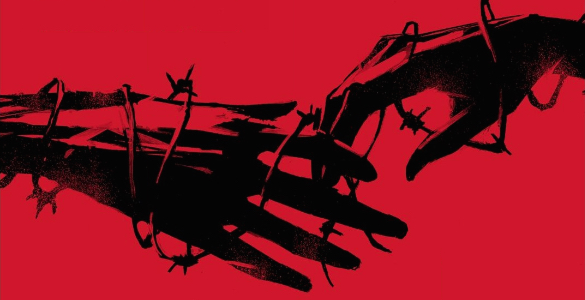
Ryan D:  The Capulets and Montagues. The Hatfields and the McCoys. The Shiite and the Sunni. These famous rivalries span generations, with their common point being that the reason which the fighting began has long since ceased to matter. The conflict now revolves around the most recent slight or atrocity perpetrated by the other side. In the aptly named Days of Hate, writer Ales Kot and artist Danijel Zezelj bring us a speculative world where our current political divide is seen played out to one natural conclusion in which the catalyst has been lost in four long years of partisan turmoil and war. Continue reading

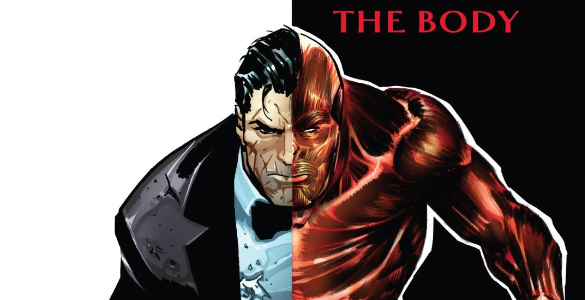
Testing 007’s Limits in James Bond: The Body 1

by Drew Baumgartner

James Bond The Body 1

This article contains SPOILERS. If you haven’t read the issue yet, proceed at your own risk!

Hey, is James Bond actually a good spy? I mean, sure, he always manages to escape from the villain’s compound, but he also (almost) always fails to evade capture in the first place. Indeed, I might argue that his very capacity to think quick and get out of tight jams is a bit of a crutch that he uses to make up for his utter inability to preplan and avoid those tight jams altogether. Maybe international espionage is just that hard to plan for — it never seems to go the way M says it will — but it’s hard not to feel that Bond’s reliance on improvisation might also leave his preparation skills underdeveloped. He knows he can figure it out in the moment, so why bother with anything else? It’s an attitude that makes the assignment in James Bond: The Body 1 kind of perfect — MI6 doesn’t have much intel beyond that an assassination attempt will happen, so who better to send in? Continue reading

A New Path Emerges in Generation Gone 5

by Drew Baumgartner

Generation Gone 5

This article contains SPOILERS. If you haven’t read the issue yet, proceed at your own risk!

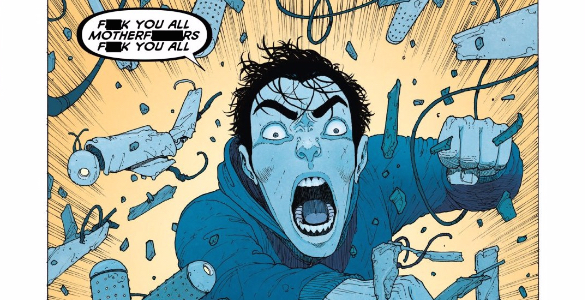
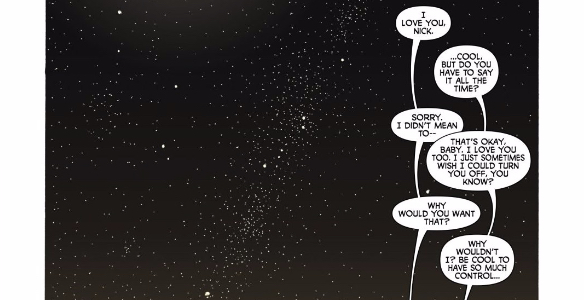
Generation Gone, Aleš Kot and André Lima Araújo have consistently set up competing ideologies — Akio vs. General West, People vs. Government, Idealism vs. Realism, Generation vs. Generation — but the most important (and most nuanced) has probably been those of Elena and Nick. She’s a put-upon optimist, willing and able to take on the abuse of the world in order to Get Shit Done, while he’s a self-pitying, privileged nihilist who sees no future beyond destroying what little of the world he can before he dies. In many ways, they represent the poles we might set for the spectrum of attitudes of Millenials: either cooperate with a system designed to exploit you (and potentially make incremental changes from the inside), or try to blow it to pieces. Those are the extremes, but in increasingly divided times, it’s important to bear in mind that neither one is necessarily “correct.” Indeed, as Elena (and Generation Gone) rejects Nick’s “fuck the world” strategy, Baldwin seems to emerge with another. Continue reading

Generation Gone 4: Discussion

by Ryan Desaulniers and Mark Mitchell

This article contains SPOILERS. If you haven’t read the issue yet, proceed at your own risk!

Ryan D: In the premiere issue of this series, Mr. Akio uses the image of the ouroboros as the symbol for his Project Utopia during his pitch to General West. While this motif appears without much fanfare, it hasn’t been until issue four of Generation Gone that the significance of the serpent eating its own tail begins to fulfill its own inherent meanings. Originally seen as iconography from an ancient Egyptian Book of the Dead, the ouroboros survived through medieval mysticism until finding its home in Renaissance alchemical texts and beyond. Throughout its tenure, it’s represented many things, with the common denominator being duality, and Ales Kot infuses this issue with a multitude of cyclicality and layered recurring through-lines. Continue reading

A Generation Defined in Generation Gone 1

by Patrick Ehlers

This article contains SPOILERS. If you haven’t read the issue yet, proceed at your own risk!

Aleš Kot and André Lima Araújo’s Generation Gone is arrestingly open about its central theme: the existential peril of disaffected youth. Hell, the name of the series gives it away. Kot is seemingly not content with even that level of obviousness, as he starts to reveal the stunted social lives of his main characters right on the cover of the issue, before we know who they are or even what they look like. Comics are a visual medium, and 999 times out of a thousand, the first thing we know about a character is what they look like. These kids are hackers — their skills, personalities, values and identities most likely forged online where text invariably acts as the vanguard for a digital persona. We’re meeting these people the same way you would in a forum: expressing something deeply vulnerable and hurtful, with no faces to associate with their comments. Continue reading

Wolf 8

wolf 8

Today, Drew and Patrick are discussing Wolf 8, originally released June 8th, 2016.

Man is a symbol-making and -using animal. Language itself is a symbolic form of communication. The great writers all used symbols as a means of controlling the form of their fiction. Some place it there subconsciously, discovered it and then developed it. Others started out consciously aware and in some instances shaped the fiction to the symbols.

Ralph Ellison

Drew: I distinctly remember asking my high-school English teacher if she really thought writers consciously employ symbolism. In 1963, Bruce MacAllister had a similar question, but rather than pose it to his teacher, he sent a survey to 150 of the most famous living writers asking them about their use of symbolism. I’m less enamored with the emphasis on authorial intent, but I’m absolutely in love with the audaciousness of that move. Or, rather, I’m in love with the fact that so many writers responded — including Ralph Ellison, whose own use of symbolism so frustrated me when I was in high school. Ellison’s comments stood out to me particularly for the allowance he makes for the symbols to take primacy over other elements, turning a literary device into the very point of the work in question. In short, turning prose into poetry. Ales Kot often attains a similar poetic quality, weaving symbols deep into the fabric of his comics. Wolf 8 finds both new and old symbols once again taking the center stage. Continue reading

Best of 2015: Best Writers

best writer 2015

In such a collaborative medium as comics, it can be difficult to say where a writer’s influence on the story ends, but there’s no question on where it begins: words on the page. Whether they thrill, elate, chill, or deflate, the best writers create characters, settings, and situations we want to return to, again and again. These are our top 10 writers of 2015. Continue reading

Material 4

material 4

Today, Patrick and Michael are discussing Material 4, originally released September 2nd, 2015

Patrick: I have very vivid memories of working on a project in elementary school. It was a vocabulary project, and we just had to find a creative way to use all these vocab words. I was being an ambitious little idiot, so I had decided to put on a radio program using all the words. I don’t know why I chose audio-only — I had been making movies in the basement for years at that point — but I suspect that I just wanted to get it done quickly, and radio sounded easier than video. The trick was that we didn’t have a good working tape recorder in the house, so I went from Fisher-Price Tape Deck to Sony Boom Box to 3M Mini-Cassette Recorder trying to get something that worked. At one point, I was shouting into a plastic microphone “I hope you can hear me because my grade is counting on this!” I hit the stop button, and then, rather than try to play back the tape, I realized I’d be so fixated on one solution that I was making myself crazy. I mean, come on Kid-Patrick, you could just as easily make up flashcards with drawings that represent the words – there’s no reason to freak out on your own equipment. Material 4 calls into question the solutions its characters try to apply to their societal and psychological problems in much the same way, only it’s clear that much more than some 10 year-old’s grade is counting on this. Continue reading

Dead Drop 4

Alternating Currents: Dead Drop 4, Drew and Patrick

Today, Drew and Patrick are discussing Dead Drop 4, originally released August 26th, 2015.

Drew: Endings always take a bit of finesse, but Ales Kot set his ending to hard mode in Dead Drop 4. He had to do all of the regular ending things — wrapping up the plot, landing on a resonant theme, giving every character a satisfying final beat — but he also had to introduce a new agent to do it; not only to maintain the pattern established in the first three issues, but because all of his other agents had been incapacitated. That’s no easy task, but Kot cleverly uses that need to his advantage, bringing in a character that is as much about tying up loose ends as this issue needed to be. Continue reading