Best of 2015: Best Writers

best writer 2015

In such a collaborative medium as comics, it can be difficult to say where a writer’s influence on the story ends, but there’s no question on where it begins: words on the page. Whether they thrill, elate, chill, or deflate, the best writers create characters, settings, and situations we want to return to, again and again. These are our top 10 writers of 2015. Continue reading

Best of 2015: Best Issues

best issues 2015
Episodic storytelling is the name of the game in monthly comics. Month- or even multi-year-long arcs are fine, but a series lives and dies by its individual chapters. From self-contained one-offs to issues that recontextualize their respective series, this year had a ton of great issues. Whittling down those issues to a list was no easy task (and we look forward to hearing how your lists differ in the comments), but we would gladly recommend any (and all) of these issues without hesitation. These are our top 10 issues of 2015. Continue reading

Batman: Europa 3

Batman europa 3

Today, Drew and Michael are discussing Batman: Europa 3 originally released December 30th, 2015.

Joel: There is another character that was just as important as the two of us: New York City.
Karen: So New York City is like another character?
Molly: Yeah.

They Came Together

Drew: Everyone has heard the old “setting as a character” cliche from some exhausted press tour interview, but filmmakers rarely acknowledge that cities aren’t fully fictional. That is, calling Chicago a character in The Fugitive is a bit like calling John F. Kennedy a character in Forrest Gump — these are real things (albeit fictionalized versions of them) that our fictional characters just happen to be interacting with. Moreover, if we accept the “setting as a character” cliche, it only ever reveals the setting to be a supremely boring character, undergoing no change over the course of the story. Indeed, because stories that tend to feature “settings as a character” tend to stay in just one city (I’m looking at you, New York), it’s impossible to separate the “character” of the setting from the general tone and mood of the narrative. Batman: Europa sets out to do the opposite, a kind of city character study — or perhaps “travel guide” is more accurate — by way of a superhero adventure. Continue reading

Starbrand and Nightmask 1

Alternating Currengs: Starbrand and Nightmask, Drew and Patrick

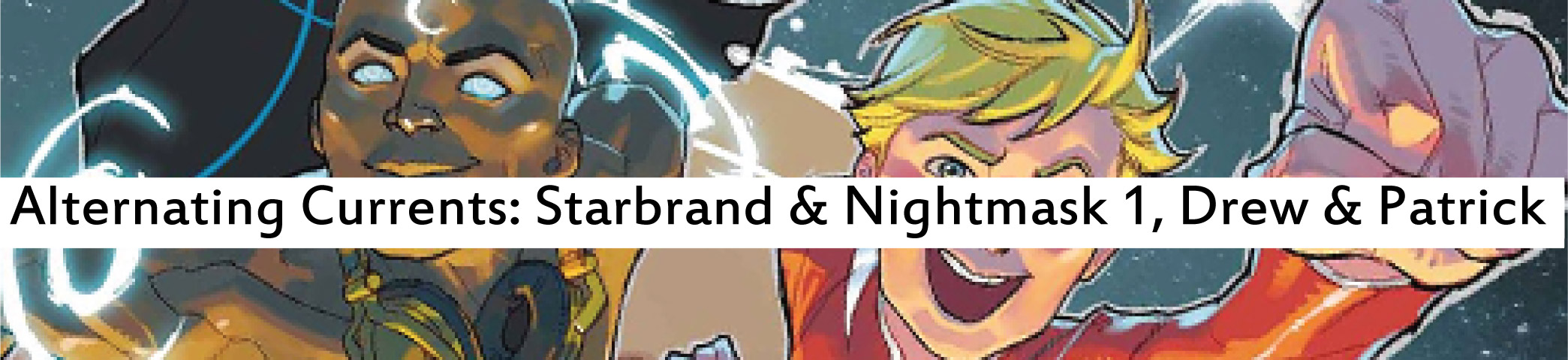
Today, Drew and Patrick are discussing Starbrand and Nightmask 1, originally released December 16th, 2015.

Drew: You’ll often hear comic book fans complain about superheroes being overpowered — that they’re simply too powerful for a villain to pose a credible threat. I’d actually argue that it isn’t a problem with the actual power-levels of the characters, but rather with the precedents set by the threats they face. There’s no reason Superman can’t get a kitten out of a tree, but when he’s otherwise occupied with fighting off planetary invasions, his street-level attentions seem like small potatoes. Unlike Superman, Starbrand and Nightmask were designed (or revived, as the case may be) specifically to fend off those planet-wide threats, putting the street-level conundrum at the center of their character descriptions, which makes the “Starbrand and Nightmask go to college” premise of Starbrand and Nightmask 1 particularly head-scratching. Continue reading

Commentary Track – Charles Soule Discusses Daredevil 1

commentary daredevil 1

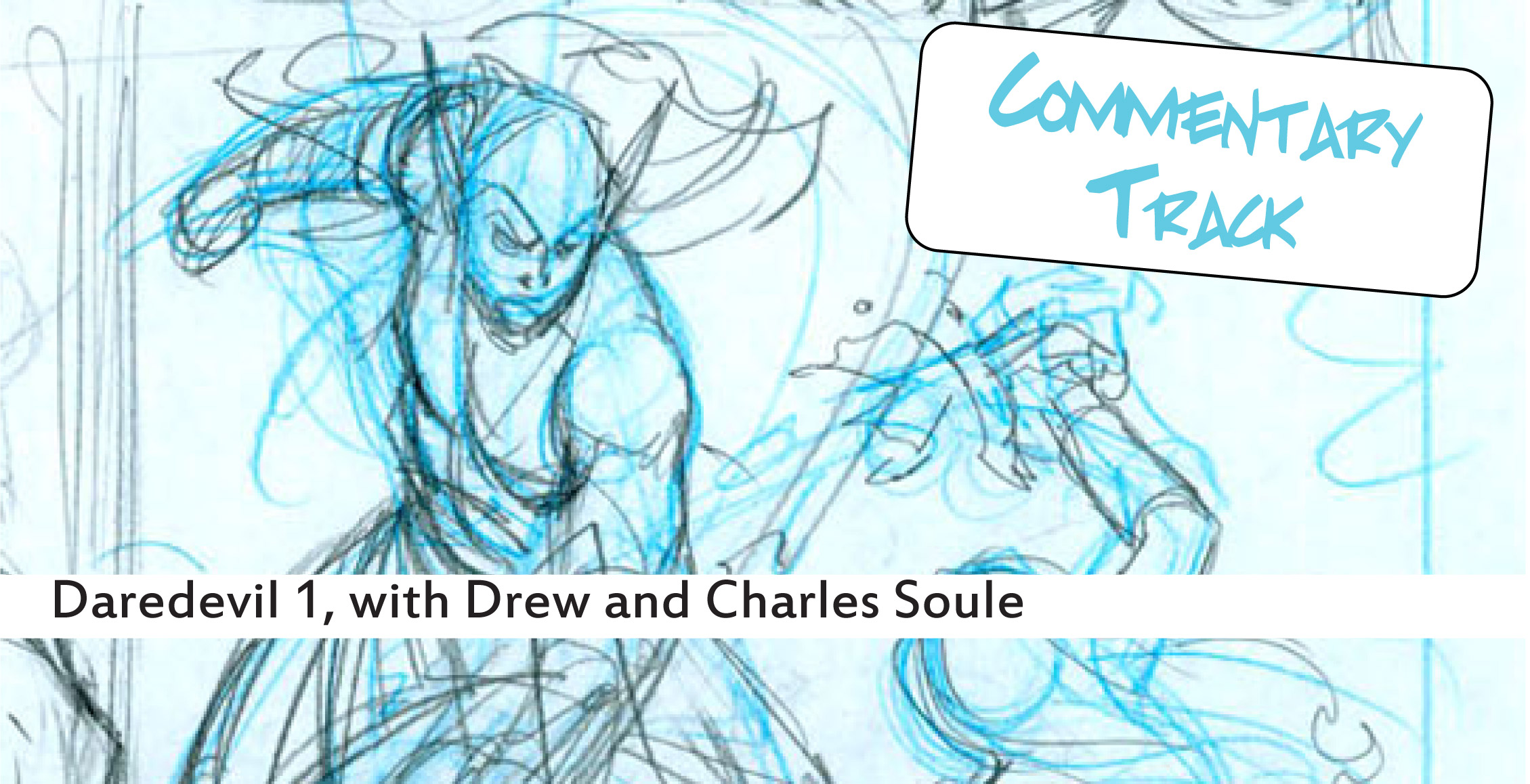
Charles Soule was a virtual unknown when he started on Swamp Thing in 2013. Since then, he’s written some of comics biggest characters, from Superman and Wonder Woman to Deadpool and Wolverine. December saw him tackle the man without fear with the launch of a new volume of Daredevil. Drew sat down with Soule to go through issue 1 page by page, so get your copy handy and join us on the Commentary Track. Continue reading

Batman 47

batman 47

Today, Drew and Mark are discussing Batman 47 originally released December 9th, 2015.

Drew: I’ve complained before about the prescriptive nature of Chekhov’s Gun — that our awareness of Chekhov’s “rule” necessarily gives away elements of the ending. A great example of this is the first season of The Killing — I enjoyed it quite a bit, but Chekhov’s gun dictated that something must tie the mayoral campaign that features so heavily to the titular crime. The specifics can still surprise us, but we know we’re not being shown that stuff just for fun. Of course, the predictability of Chekhov’s rule loses its stranglehold on narratives that aren’t driven by plotting — say, a character study or a situational comedy. In those cases, we might actually be shown things just for fun (or nuance, or detail, etc). We tend to think of superhero comics as plot-driven narratives, but B-stories can often take on less plotty structures, as we learn more about a character, or are amused by their situation. It can be difficult, then, to know if a given element of a B-story represents a gun that will eventually go off, or just a portrait of someone who has a gun. These are the questions in my mind as Bruce grapples with his own obscured history in Batman 47. Continue reading

Weekly Round-Up: Comics Released 12/2/15

round up

Look, there are a lot of comics out there. Too many. We can never hope to have in-depth conversations about all of them. But, we sure can round up some of the more noteworthy titles we didn’t get around to from the week. Today, we discuss Barrier 1, Citizen Jack 2, Miracle Man 5, Plutona 3, Star Wars 13, Unfollow 2, and Woods 18.
Continue reading

Commentary Track – Dan Watters and Caspar Wijngaard Discuss Limbo 1

commentary limbo 1

With so many varied series coming out of Image, it can sometimes be hard to know which new ones to check out. Limbo distinguished itself from the masses in its first issue with deft storytelling, a wry sense of humor, and plenty of intrigue. Just before issue 2 lands this week, Drew sat down with creators Dan Watters and Caspar Wijngaard to go through issue 1 page by page, so get your copy handy and join us on the Commentary Track. Continue reading

Daredevil 1

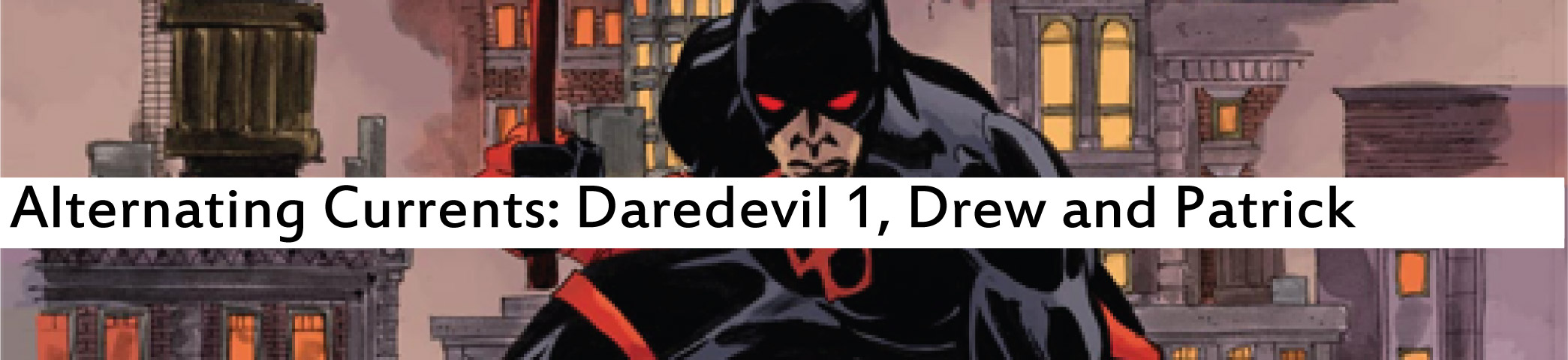
Alternating Currents: Daredevil 1, Drew and Patrick

Today, Drew and Patrick are discussing Daredevil 1, originally released December 2nd, 2015.

You might know me as Matt Murdock, defence attorney, here to help. That guy’s gone.

Matt Murdock, Daredevil 1

Drew: We’re living in the age of the comics auteur. We may not have yet settled exactly who the auteur is in a work that is written, drawn, colored, lettered, and edited by five (or more) different people, but so long as they work together in largely uninterrupted runs, we don’t really need to. That is to say, we may not be able to assign auteurship to one individual on, say, Mark Waid and Chris Samnee’s run on Daredevil, but we can appreciate that they brought a distinct set of sensibilities to the character that are unique to their collaboration. On the whole, I think this is a good thing — it allows creators to play to their own strengths and follow their own interests — but it makes the prospect of following a beloved run particularly daunting. What works for one creative team might not work for another, which means that anything from costumes and character designs to theme and overall tone might be subject to change. Indeed, with the freedom (and perhaps pressure) for each team to bring their own take on the character, those changes are unavoidable. Daredevil 1 features plenty of changes from its previous volume, but writer Charles Soule and artist Ron Garney quickly set about showing why those changes are going to work. Continue reading

The Fade Out 11

Alternating Currents: The Fade Out 11, Drew and Patrick

Today, Drew and Patrick are discussing The Fade Out 11, originally released November 25th, 2015.

Scientia potentia est (knowledge is power).

Francis Bacon

Drew: Anyone who’s ever seen a Schoolhouse Rock short will be familiar with the power of knowledge (or at least the sentiment), but another idiom reminds us that “the more you know, the more you know you don’t know.” In that case, knowledge isn’t power, is just the self-awareness of not having power. That’s exactly the kind of knowledge Charlie and Gil are grappling with in The Fade Out 11 — enough to know they’re out of their depth, but that realization may come a little too late for their own good. Continue reading