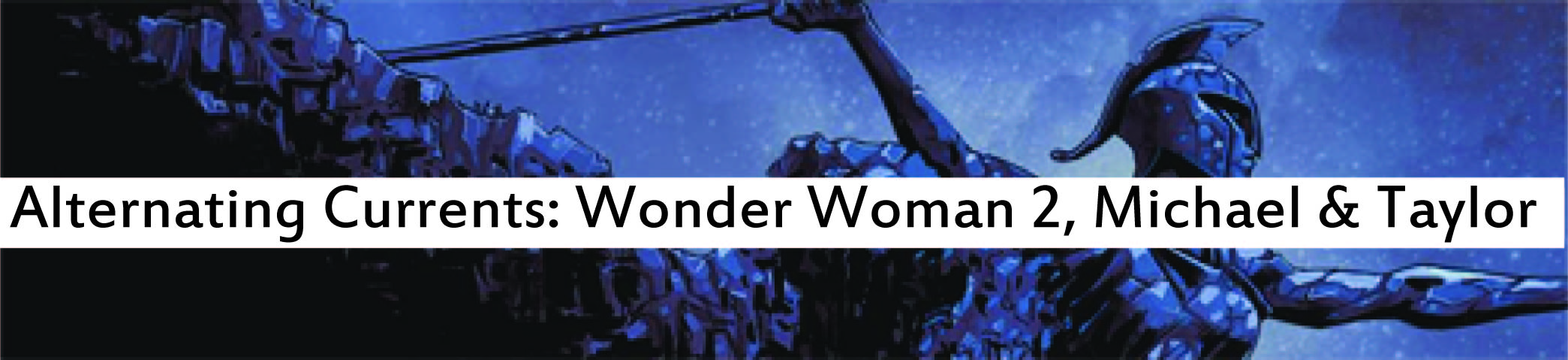
Wonder Woman 2

wonder woman 2

Today, Michael and Taylor are discussing Wonder Woman 2, originally released July 13, 2016 

slim-banner

Michael: Wonder Woman was a unique entry of The New 52 and the same can be said of the Wonder Woman of DC Rebirth. After a “bad breakup” Greg Rucka returns to DC fueled by his passion for everyone’s favorite Amazon. In a lot of ways, Rucka is having his cake and eating it too. Continue reading

Wonder Woman: Rebirth 1

wonder woman rebirth 1

Today, Mark and Taylor are discussing Wonder Woman: Rebirth 1, originally released June 8th, 2016.

Mark: Who is Wonder Woman? What defines her?

Of DC’s key Trinity, Wonder Woman is the character most in need of a Rebirth. The New 52 Batman was able to essentially cruise along same as he ever was (which, of course he did – he’s Batman), and while some of us yearned for New 52 Superman to be more like his pre-Flashpoint counterpart there’s no argument either icon suffered as hard or as long at the hands of ineffectual creative decisions as Wonder Woman. This isn’t dismissing Brian Azzarello and Cliff Chiang’s run on the book, but Meredith and David Finch’s Wonder Woman was, frankly, awful – almost immediately and so poisoned the water that DC needed to dig a whole new well. Like so many New 52 books, Wonder Woman went out of this world with a sad, wet fart. Continue reading

Captain America: Sam Wilson 7

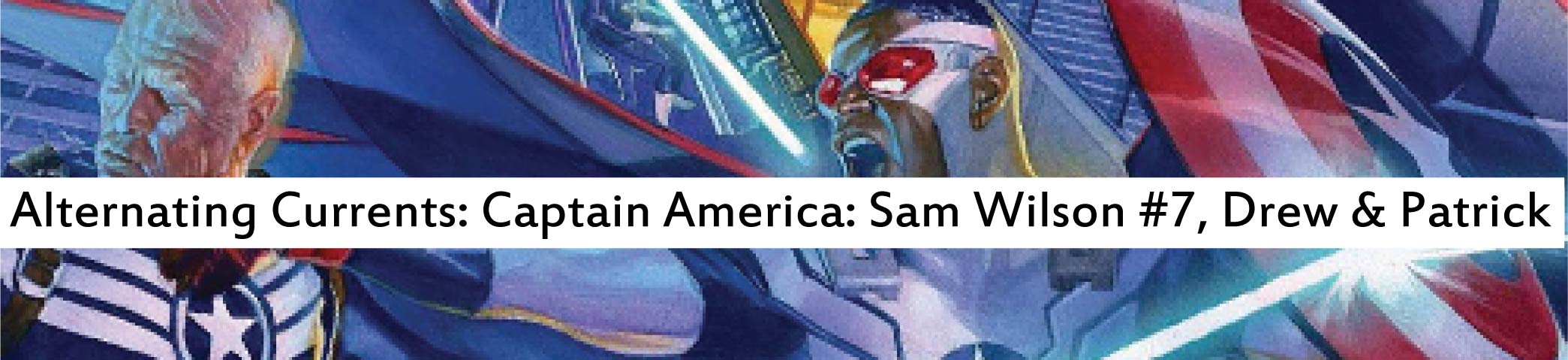
Alternating Currents: Captain America: Sam Wilson 7, Drew and Patrick

Today, Drew and Patrick are discussing Captain America: Sam Wilson 7, originally released March 30th, 2016.

Those who cannot remember the past are condemned to repeat it.

George Santayana

Drew: Perhaps its ironic that I never knew the origin of the oft-paraphrased quote above, but it actually comes from the first volume of Santayana’s The Life of Reason, published in 1905. In its original context, the quote seeks to balance progressivism with retention of the past. Of course, it’s possible to take that too far, and some might argue that superhero comics are too obsessed with their own history to make any meaningful progress. It’s a difficult balance that I certainly don’t envy trying to strike — fans want new stories, even as they want their favorite stories and characters celebrated — but its one that Captain America 7 aims for. Marvel assembles one hell of a creative lineup for this celebration of Captain America’s 75 year history, but circumstances may have put them all in a no-win situation. Continue reading

Black Magick 4

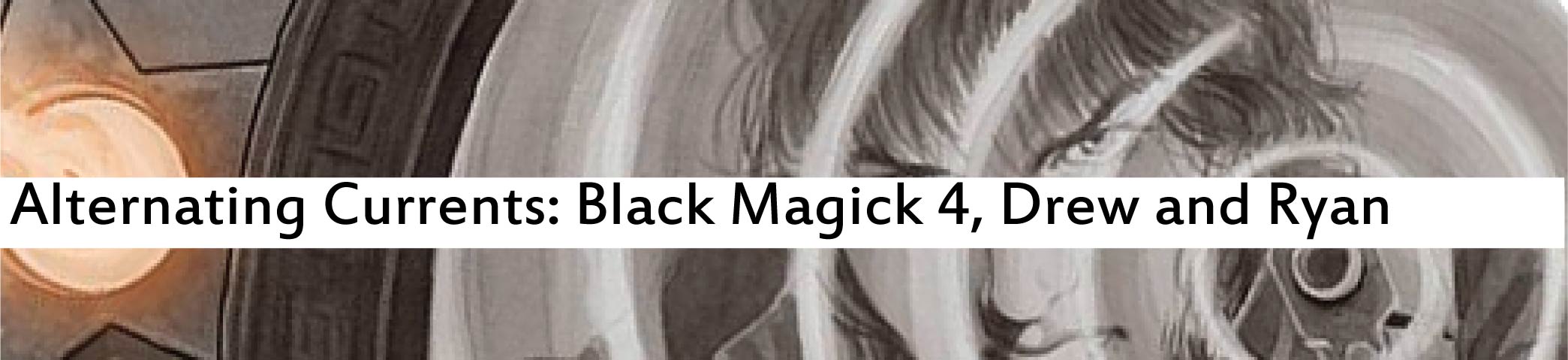
Alternating Currents: Black Magick 4, Drew and Ryan

Today, Drew and Ryan D. are discussing Black Magick 4, originally released January 27th, 2016.

Drew: I’ve been thinking a lot about genre lately. Specifically, how we might define genre as a concept. I tend to think of genre as a checklist of conventions; guns and horses? That’s a western. Period costumes and overly-earnest impressions? That’s a biopic. But every convention you can think of has numerous exceptions, and writers love deconstructing genres, which means there’s no one trait that would actually be true of an entire genre. Instead, “genre” is more of a cloud of possibilities, and any given story’s placement within that genre is a negotiation of the conventions that fit within that cloud and the subversions of those conventions. Why use those conventions at all? There are a number of reasons, but one of the most practical is that those conventions work as a shorthand — we don’t need the concepts of interrogation rooms or fortresses of solitude explained to us, even though we’ve never experienced them ourselves. This allows writers to skip ahead to the subversions, showing us what’s unique about this particular genre story. We all know what’s unique about Greg Rucka and Nicola Scott’s Black Magick (it’s right there in the name), but issue 4 is the first to hint at just how different that might make this story. Continue reading

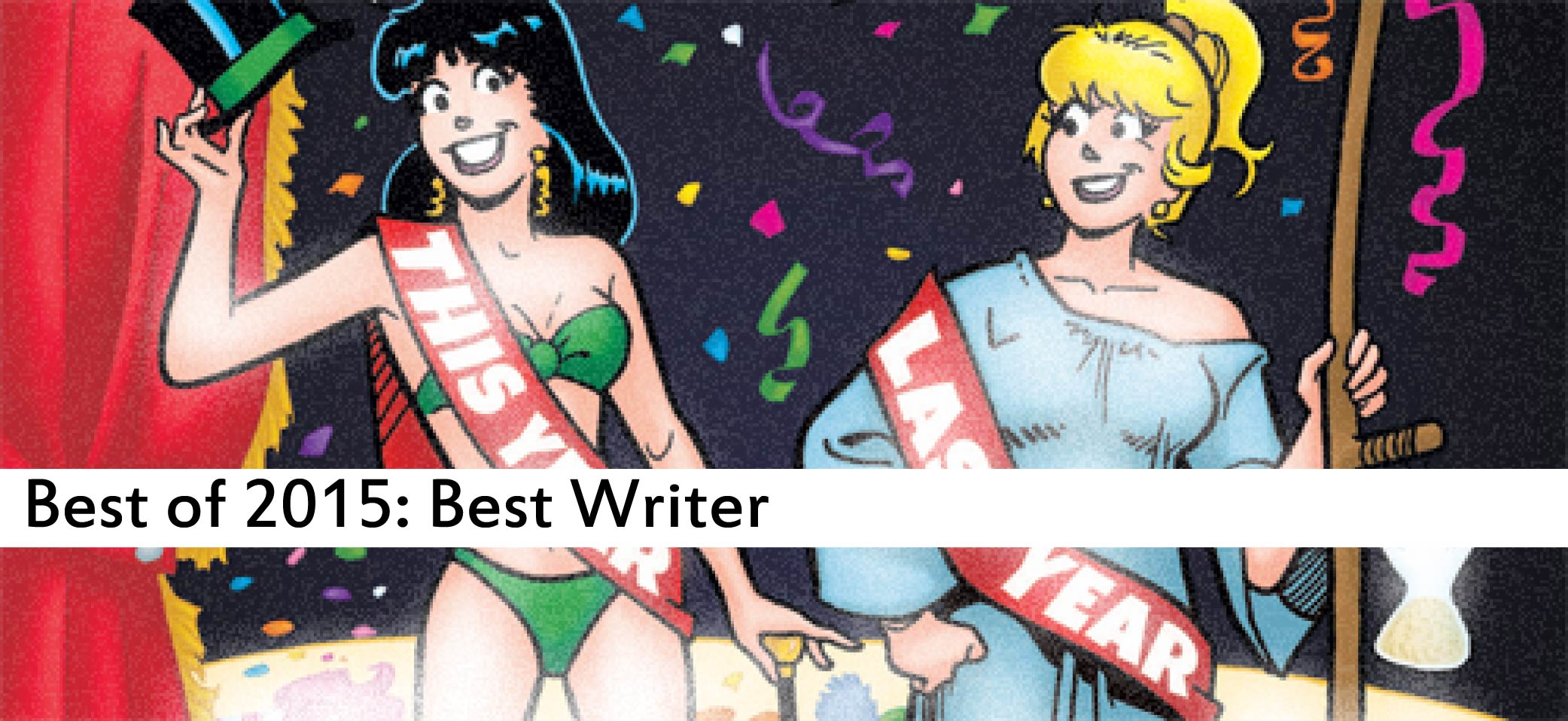
Best of 2015: Best Writers

best writer 2015

In such a collaborative medium as comics, it can be difficult to say where a writer’s influence on the story ends, but there’s no question on where it begins: words on the page. Whether they thrill, elate, chill, or deflate, the best writers create characters, settings, and situations we want to return to, again and again. These are our top 10 writers of 2015. Continue reading

Black Magick 1

Alternating Currents: Black Magick 1, Drew and Michael

Today, Drew and Michael are discussing Black Magick 1, originally released October 28th, 2015.

Drew: Police stories tend to be more about cases than about characters. Law and Order is a prime example — the detectives and ADAs mostly serve as charismatic cogs in a machine, only hinting at “character” insofar as they have different manners of speech and dress. Sure, every once in a while you’d be asked to care about someone’s home life, but the fact that it always felt awkward and forced illustrates my point — we only cared that they got the bad guy, not that they were driven into police work by an overbearing father or whatever.

But then there are police stories that manage to make their characters’ psychology a key element of the narrative — The Wire springs immediately to mind, making the wants and habits and vices of its detectives as important to understanding the story as any piece of evidence they might find. Greg Rucka and Ed Brubaker struck a similar balance in their Gotham Central, where the romantic and familial relationships of the characters played key roles. It’s no surprise, then, that Black Magick 1, Rucka’s latest police story, features a detective who is every bit as intriguing as the case she’s called to. Of course, as was often the case with Gotham Central, it may be difficult to separate the character from a case that seems so personal. Continue reading

Journey to Star Wars: The Force Awakens – Shattered Empire 1

Shattered empire 1

Today, Patrick and Andy are discussing Journey to Star Wars: The Force Awakens – Shattered Empire 1, originally released September 9th, 2015

star wars div

“Star Wars is the saga of good vs. evil, divided into nine parts.”

-George Lucas, 1994

“It’s now time for me to pass Star Wars on to a new generation of filmmakers. I’ve always believed that Star Wars could live beyond me, and I thought it was important to set up the transition during my lifetime.”

-George Lucas, 2012

Patrick: George Lucas’ original Star Wars trilogy is heavily influenced by just about every archetype-establishing institution in the book: westerns, serials, samurai stories, myths. They are clear stories of good vs. evil, strictly adhering to tenants of Joseph Campbell’s Hero With A Thousand Faces. In 1977, that made those films the sum total of popular fiction to that point – a perfect distillation of the hero triumphing over forces of darkness. That’s an over simplification, of course: Taxi Driver came out the year before A New Hope, after all. But what Lucas did so well in his original film was channeling the simple, clear morality of popular fiction. Almost 40 years later and morality in popular fiction isn’t so clear – neither is the morality of war. Breaking Bad, The Sopranos, Mad Men, Christopher Nolan’s Dark Knight trilogy, two different Gulf Wars – today’s storytellers have a different responsibility to their audience than Lucas did. Greg Rucka and Marco Checchetto’s Shattered Empire embraces this shift, focusing more on the insane fog of war surrounding the bit-players that supported the main heroes of the original trilogy. Continue reading

Lazarus 18

lazarus 18Today, Spencer and Ryan are discussing Lazarus 18, originally released July 29th, 2015.

Spencer: There’s a certain rush that comes with new stories, with watching a whole world full of new characters and relationships being established right before your eyes, but it’s a rush that by definition can’t last forever, and late-series attempts to keep things fresh often misfire. The answer isn’t continually adding new characters and concepts, which can often leave a story feeling bloated and distract from its core themes; the best storytellers know the power that comes from mixing up established relationships, throwing together characters who have never really interacted before, and finding new perspectives to view their cast through. Greg Rucka and Michael Lark’s Lazarus is well into its second year and fourth storyline, and it’s exactly these kind of techniques that keeps issue 18 feeling as compelling as ever. Continue reading

Lazarus 17

Alternating Currents: Lazarus 17, Drew and Spencer

Today, Drew and Spencer are discussing Lazarus 17, originally released June 17th, 2015.

Narrative art must be clear, but it must also be mysterious. Something should remain unsaid, something just beyond our understanding, a secret. If it’s only clear, it’s kitsch; if it’s only mysterious (a much easier path), it’s condescending and pretentious and soon monotonous.

Stephen Sondheim

Drew: I’m fascinated by the relationship Lazarus has with clarity. It’s actually one of the most clear comics I’ve ever read — I’ve often remarked upon both Greg Rucka’s deceptively organic exposition and Michael Lark’s ability to keep track of every character in a scene — but it also leaves a great deal unsaid. The most obvious piece is the world-building — our focus has remained relatively tight on a small handful of characters, but every detail implies a much larger, more complex world beyond the edge of the page — but I’m much more interested in the things literally left unsaid; the subtle glances and body language that permeate the artwork, leaving the audience to interpret how characters are feeling. This all but forces us to project our own feelings onto the characters, drawing us further into the narrative. Issue 17 opens with what amounts to reversal of this trick, forcing the characters’ subjectivity onto us, and it is incredibly effective. Continue reading

Convergence: The Question 2

Alternating Currents: The Question 2, Michael and Shane

Today, Michael and Shane are discussing Convergence: The Question 2 originally released May 6th, 2015. This issue is part of Convergence. For our conversations about the rest of Convergence last week, click here.

convergence div

Michael: Gotham is a terrible place and everyone knows it — real and fictional. It’s a city full of human heroes whose days will all come to an end eventually; lending itself to tales about struggling for what’s right no matter what. Despite that, Greg Rucka has put Renee Montoya through high-stakes, supernatural apocalypses before. Convergence: The Question 2 is not an “end of the world” story in that sense, however, but the stakes and the message make it feel just as important. Continue reading