The Narrative Meanders in The Wild Storm 10

by Ryan Desaulniers

The Wild Storm 10

This article contains SPOILERS. If you haven’t read the issue yet, proceed at your own risk!

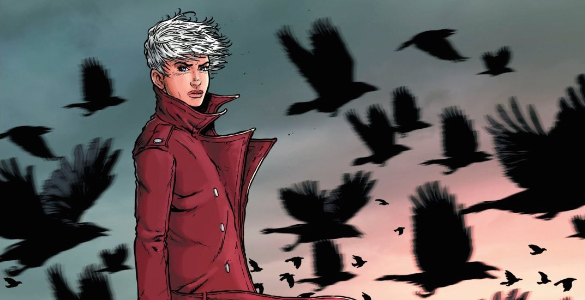
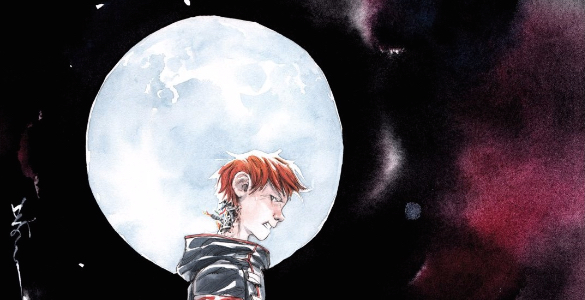
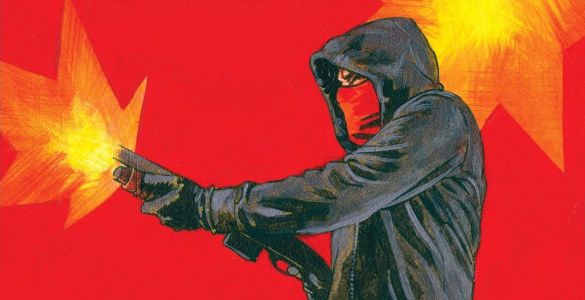
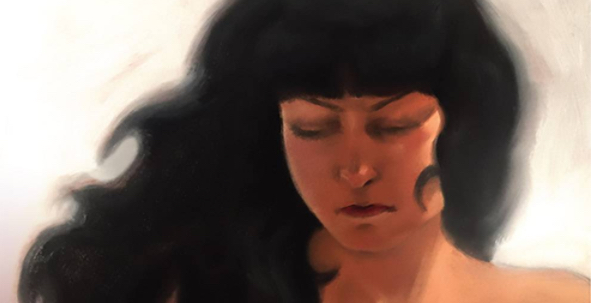
The opening panel of issue ten of The Wild Storm by Warren Ellis and artist Jon Davis-Hunt is a half-page shot showcasing a new table upon which coffee should not be be placed. Continue reading

Kill or be Killed 14: Discussion

By Drew Baumgartner and Ryan Desaulniers
Kill or be Killed 14

This article contains SPOILERS. If you haven’t read the issue yet, proceed at your own risk!

Remove everything that has no relevance to the story. If you say in the first chapter that there is a rifle hanging on the wall, in the second or third chapter it absolutely must go off. If it’s not going to be fired, it shouldn’t be hanging there.

Anton Chekhov

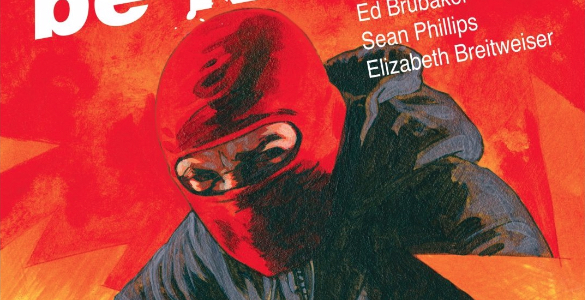
Drew: I feel like we tend to talk about Chekhov’s Gun backwards: we often frame it as “a gun introduced in the first chapter must go off in the third,” but that “must” kind of scrambles the causality — guns don’t go off in narratives because they’ve been introduced; they’re introduced because they need to go off. If the gun doesn’t go off, it’s as irrelevant to the narrative as the rings of Saturn. It’s an essential concept for narrative efficiency, but my awareness of it undoubtedly influences my own understanding of what a story is. While a child may think of a story as “everything that happens to the characters between the beginning and the end” (I know I did), anyone familiar with Chekov’s Gun must recognize that a good story is, at the very least least, pared down to only the relevant events transpiring between the beginning and the end. It’s a notion that assures us that whatever we’re reading is important, which in turn provides some clues about what the narrative finds important. 14 issues in, one might think that we’d already have a great handle on what Kill or be Killed finds important, but this issue managed to surprise me with the details it chose to focus on. Continue reading

Influence Become Explicit in The Wild Storm 9

by Ryan Desaulniers

This article contains SPOILERS. If you haven’t read the issue yet, proceed at your own risk!

One of the first things I do when I’m in a budding relationship, the second I have the opportunity, is to scrutinize my potential partner’s bookcase. Admit it: you’ve done this is as well. The idea is that we can glean something about someone’s character based upon the literature or media they consume because a good book, for example, informs a person’s worldview. Also, since art itself is inherently tied to other art, what we’ve seen or read changes the way we encounter or create art. In The Wild Storm 9, Chief Jackie King of IO reports to the big boss, Miles Craven, only to catch him reading a novel, and my brain has yet to stop whirring about what this choice of literature tells us about not only Miles, but writer Warren Ellis as well. Continue reading

Generation Gone 4: Discussion

by Ryan Desaulniers and Mark Mitchell

This article contains SPOILERS. If you haven’t read the issue yet, proceed at your own risk!

Ryan D: In the premiere issue of this series, Mr. Akio uses the image of the ouroboros as the symbol for his Project Utopia during his pitch to General West. While this motif appears without much fanfare, it hasn’t been until issue four of Generation Gone that the significance of the serpent eating its own tail begins to fulfill its own inherent meanings. Originally seen as iconography from an ancient Egyptian Book of the Dead, the ouroboros survived through medieval mysticism until finding its home in Renaissance alchemical texts and beyond. Throughout its tenure, it’s represented many things, with the common denominator being duality, and Ales Kot infuses this issue with a multitude of cyclicality and layered recurring through-lines. Continue reading

Batman: White Knight 1

by Ryan Desaulniers and Mark Mitchell

This article contains SPOILERS. If you haven’t read the issue yet, proceed at your own risk!

 He’s the hero Gotham deserves, but not the one it needs right now.

Jim Gordon, The Dark Knight

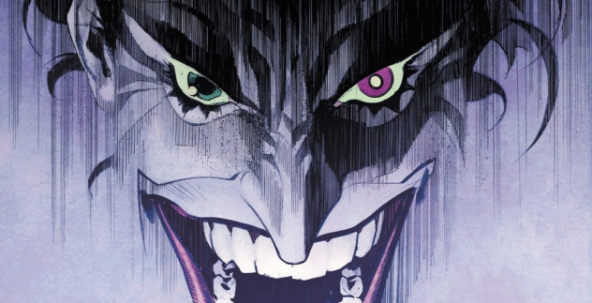
Ryan: Since that line was uttered in lamentation of Gotham’s corruption, I feel as if it’s almost become a canonical outlook on the Caped Crusader. The thing about that line, though, is that it’s purely subjective on Gordon’s part, and particular unto the circumstances of that Batman story in that film. And almost every statement can be used against the point for which it was originally made, right? Even scientists with objective data sets can use the same numbers to support the opposite side of an argument, or the same verse of scripture used to prove opposing points. In Batman: White Knight 1, Sean Murphy takes Jim Gordon’s iconic statement and uses it to sow the seeds of a Gotham wherein the Joker justifies his action with that logic, both as a villain and a hero. Continue reading

Nightwing: The New Order 1: Discussion

by Mark Mitchell and Ryan Desaulniers 

This article contains SPOILERS. If you haven’t read the issue yet, proceed at your own risk!

slim-banner

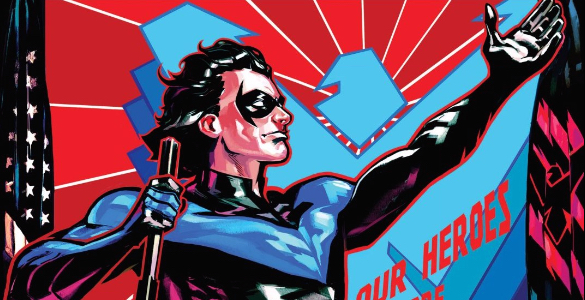
Mark: Dick Grayson is know for his perfection; the best ass in comics, the most suave personality, the most kickass combatant — generally the coolest guy in the universe. It’s an impressive feat, then, that writer Kyle Higgins and artist Trevor McCarthy (with colors by Dean White) are able to so thoroughly undermine Nightwing’s image of perfection in Nightwing: The New Order 1 without making us completely turn on the character. Continue reading

Descender 23: Discussion

by Ryan Desaulniers and Spencer Irwin

This article contains SPOILERS. If you haven’t read the issue yet, proceed at your own risk!

Ryan D: After last issue‘s cliffhanger, the audience wondered whether or not the self-serving Quon would risk his neck by leaving the relative safety of the ship into the deep waters in which Captain Telsa currently languished, lifelessly. Well, he did, and the sequence of Quon retrieving Telsa looks beautiful. Continue reading

When the Threats Get Personal, So Does The Violence in Kill Or Be Killed 11

By Ryan Desaulniers

This article contains SPOILERS. If you haven’t read the issue yet, proceed at your own risk!

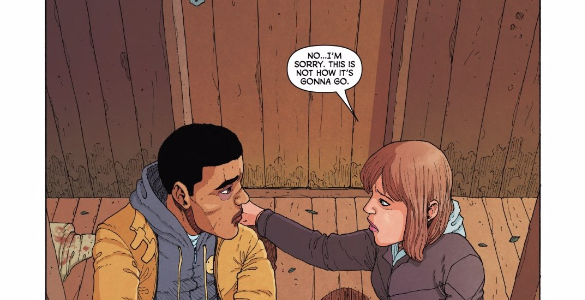
There are different levels of violence in murder, right? I mean, there’s a different intensity to pressing a button and a bomb dropping on a target versus bayonetting someone in the ribs. The first allows one to remain detached, while the other forces the attacker to be up close and personal. While the result is effectively the same — the death of another human being — the latter’s level of “personal” really makes a difference. In Kill or be Killed, we’ve seen Dylan murder, but it’s been clumsy, almost accidental, in spite his intentions; however, we see in issue eleven a new level to Dylan’s commitment to violence, one which honestly took me aback. Continue reading

Elsewhere 1: Discussion

by Mark Mitchell and Ryan Desaulniers 

This article contains SPOILERS. If you haven’t read the issue yet, proceed at your own risk!

Mark: I’m unsure how exactly to begin unpacking Jay Faerber and Sumeyye Kesgin’s Elsewhere 1. It’s an issue that’s pregnant with ideas, yet surprisingly without depth. It moves incredibly fast, but when it ends there’s the feeling that nothing has happened. Like buying cotton candy at a carnival, it looks like there’s a lot of substance, but once you’ve consumed it all, you’re still left feeling unsatisfied. But if Elsewhere 1’s ideas are interesting, how come the issue never really takes off? Continue reading

Silence at the Crossroads in Sex Criminals 20

by Ryan Desaulniers

Sex Criminals 20

This article contains SPOILERS. If you haven’t read the issue yet, proceed at your own risk!

At the risk of sounding dramatic, cliche, or platitudinous: sometimes love is not enough to save a relationship. So many things go into successfully balancing the scale of a happy, healthy long-term romantic relationship, and while love is certainly important, it is certainly not the only factor. This is were we see Jon and Suzie in Sex Criminals 20 — at a crossroads, loving each other dearly, but unable to continue as a couple. Continue reading