Empathy Overpowered by Patriarchal Vengeance in Green Lanterns 31

by Patrick Ehlers

This article contains SPOILERS. If you haven’t read the issue yet, proceed at your own risk!

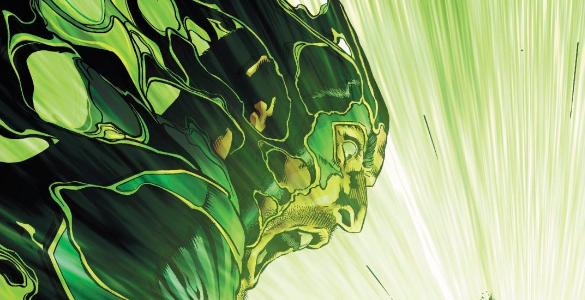
Jessica Cruz and Simon Baz travel ten billion years into the past are integrated into the foundational Green Lantern myth. They are “important” in every conceivable sense of the word. And while they achieve that import through battle and victory and all the usual superhero hullabaloo, it’s Jessica Cruz’ skills coping with overwhelming emotions and mental illness that earn them a place in the Green Lantern history books… or, it would if her empathy weren’t so easily overwritten by a history that refuses to change. Continue reading

Blowing Off Mythology to Focus on Hal in Hal Jordan and the Green Lantern Corps 28

by Patrick Ehlers

This article contains SPOILERS. If you haven’t read the issue yet, proceed at your own risk!

I want to start this piece with a pretty fundamental question: what is compelling about Green Lantern? It’s a tough elevator pitch, right? Part of that is because the great mythological expanse of the franchise is part of the appeal. How do you articulate the emotional spectrum with about babbling like a rabid fanboy for 20 minutes? Or how about trying to explain the always-in-flux state of the Corps, and their shifting relationship with the Guardians of the Universe? In the “Fall of the Gods” story arc, Robert Venditti and Rafa Sandoval are folding even more complex mythology into the dough, twisting their own narrative into a Kirby-ian pretzel. Issue 28, however, slows down just long enough to pitch the reader a different answer to the question I posed up top: Hal Jordan’s relationship to his dead father. Ingredients don’t get much more fundamental than that. Continue reading

Loneliness Kills in Deadpool 36

by Patrick Ehlers

This article contains SPOILERS. If you haven’t read the issue yet, proceed at your own risk!

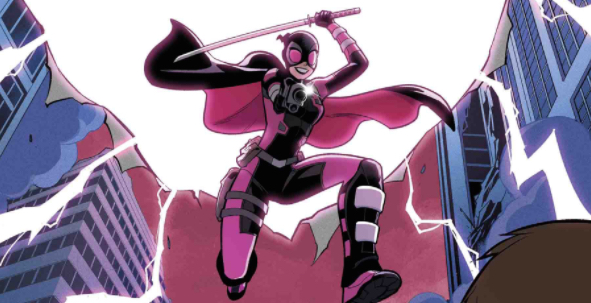
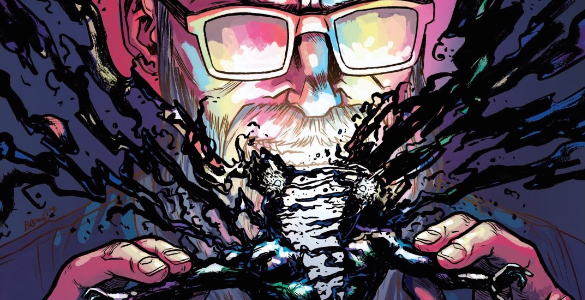
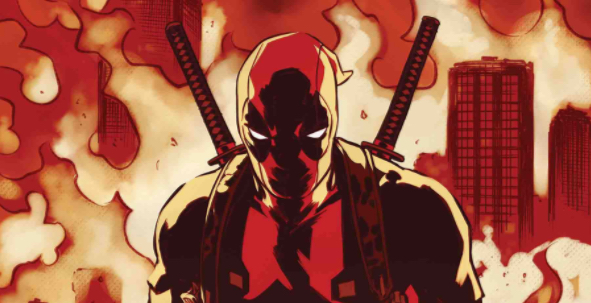
Despite writer Gerry Duggan’s insistence on filling out the supporting cast of Deadpool over the last five years, Wade Winston Wilson is a solitary creature. He’s his own worst enemy and his own best friend. Issue 36 shows a Deadpool at the end of his rope, pushed to an unfathomable level of isolation. This is where artist Matteo Lolli truly shines, showing Deadpool as a man apart from those he once called friend and family. Continue reading

Gwenpool 20 Stays Sincere in a Landscape of Cynicism

by Patrick Ehlers

Unbelievable Gwenpool 20

This article contains SPOILERS. If you haven’t read the issue yet, proceed at your own risk!

This arc of Gwenpool appears to be taking a lot of its cues from the recently concluded Secret Empire. While not retreading any of the same thematic ideas, the narrative structure of one moral-extreme version of a character over-writing the history of the opposite-moral-extreme version of that same character features in both. For Captain America, this is a battle over the national zeitgeist, a startling reflection of the persistence of racism and white nationalism, but for Gwenpool, the stakes are more personal. Secret Empire Omega 1 just chillingly illustrated how definitive, national change is virtually impossible, but Gwenpool 20 offers a more hopeful path for the individual and — more importantly — for the comic fan. Continue reading

Jagged Panelling Cues Evil in Curse Words 8

by Patrick Ehlers

This article contains SPOILERS. If you haven’t read the issue yet, proceed at your own risk!

Charles Soule and Ryan Browne haven’t been shy about Wizord’s twisted morality. The very first issue of Curse Words tells the tale of an interdimensional wizard sent to destroy the Earth, but who is charmed by New York City. Lest we think Wizord a pure soul, we’re quickly reminded of his origins when he shrinks a packed baseball stadium and exiles hundreds of thousands of people to a hell dimension, just to sweep his misdeeds under the rug. That’s a weirdly easy thing to forget — out of sight, out of mind, right? Wizord’s a monster, and while Soule’s script may insist on making him relatable, Browne’s paneling has an agenda of its own. Those cool chevron panels don’t just say “Wizord,” they say “evil.” Continue reading

Reversing Normalness in Cloudia & Rex 3

by Patrick Ehlers

This article contains SPOILERS. If you haven’t read the issue yet, proceed at your own risk!

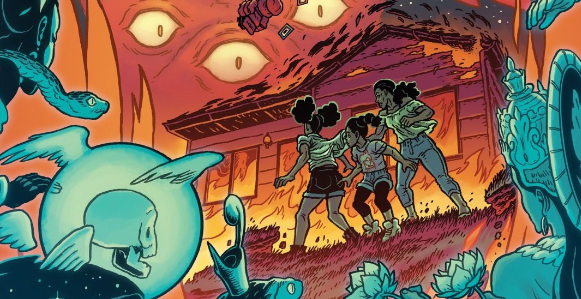
It’s amazing how quickly the concept of normalness can completely reverse itself. When we first meet Cloudia, Rex and their mother, it is during a painfully mundane car trip. The little sister is chattering away in the front seat, while the teenager trades texts with a boy and is generally angsty. That is our base-normal: reflective of a real world we immediately recognize. There’s a touch of narrative whiplash as writers Ulises Farinas and Erick Freitas and artist Daniel Irazzari drop us into a realm of forgotten gods under siege. Eventually, that becomes our normal: reflective of the bombastic medium of comic books. Issue three of Cloudia & Rex concludes the miniseries by interrupting that fantastical reality with grounded, human elements, proving there’s no limit to how many times you can turn a narrative on its side. Continue reading

Blowing Up the Page in Green Lanterns 30

by Patrick Ehlers

This article contains SPOILERS. If you haven’t read the issue yet, proceed at your own risk!

Halfway through Green Lantern 30, Simon Baz praises Jessica Cruz’ plan to fight Volthoom. His narration says “A power ring requires incredible concentration. Volthoom has no ideas what he’s doing. Keep him off balance. All hands on deck. Never let up.” Her plan, like so many Green Lantern plans, boils down to “everyone punch him at the same time.” The dramatic subversion is that the plan doesn’t appear to be working. Artist Carlo Barberi elevates the drama by blowing up the format, only reining in it once our heroes are back in control. Continue reading

Generations Iron Man and Ironheart 1: Discussion

by Taylor Anderson and Patrick Ehlers 

This article contains SPOILERS. If you haven’t read the issue yet, proceed at your own risk!

Taylor: The future is going to be weird, man. How do I know? Every day I stand before 25 middle schoolers and attempt to teach them important stuff about books. Frequently, I’ll make analogies that are too out of date for them to get or, more embarrassingly, I’ll pull a “back in my day” story out of the playbook. Thinking about the difference from when I was in middle school to the kids I teach today is a lesson in how fast things change. These kids (see, I’m already so old I can’t help it!) have never known a world without cell phones, the internet, and Justin Bieber. Generations: Iron Man and Ironheart 1 understands that change happens quickly, just as I do, but the world that the issue imagines is beyond anything I thought imaginable. Continue reading

Subverting Dickens in Jean Grey 6

by Patrick Ehlers

This article contains SPOILERS. If you haven’t read the issue yet, proceed at your own risk!

“Before I draw nearer to that stone to which you point,” said Scrooge, “answer me one question. Are these the shadows of the things that Will be, or are they shadows of things that May be, only.”

Still the Ghost pointed downward to the grave by which it stood.

“Men’s courses will foreshadow certain ends, to which, if persevered in, they must lead,” said Scrooge. “But if the courses be departed from, the ends will change. Say it is thus with what you show me.”

The Spirit was immovable as ever.

Charles Dickens, A Christmas Carol

The point of A Christmas Carol is that Ebenezer Scrooge could — and should — abandon his avarice, and become a better man. The moral about the dangers of greed have aged remarkably well, but there’s something about the message “change who you are” that feels a little less virtuous in 2017. In Jean Grey 6, the titular X-Man has to come to nearly the opposite conclusion: there is no changing who you are, so you’d better find a way to accept yourself. Continue reading

[Obscuring] Place in All-Star Batman 13

by Patrick Ehlers

This article contains SPOILERS. If you haven’t read the issue yet, proceed at your own risk!

When I was a kid, my family used to spend parts of our summer vacation at a cabin in the woods outside of Hayward, Wisconsin with our good family friends, the Pfarrs. The Cabin — which was all we ever called it — had a kind of romantic mythology about it, slowly crafted by years upon years of family bonding. There was a ill-used road into town that we had nicknamed “sneak path,” and which carried a (probably bogus) story about a young couple driving too fast along it and slipping in raccoon guts and driving off the road. We were all told that the Cabin itself was drunkenly constructed backwards, so that delightful front porch was meant to be in back, overlooking the lake. I have no idea if that last one is true, but to this day it feels right. I close my eyes and I see this space – it’s a comfort, a complete flash-memory, and the most common setting for my dreams. It’s a place of subconscious and unconditional love. In All-Star Batman 13, writer Scott Snyder and artist Rafael Albuquerque tap into the connection between place and relationships. Continue reading