The Mercenary Gamers of Leviathan 2

by Michael DeLaney

Leviathan 2

This article contains SPOILERS. If you haven’t read the issue yet, proceed at your own risk!

There is a not-so-subtle “might makes right” mentality that is associated with America. Our overprotectiveness of the Second Amendment, the immense firepower of our military, and just the general “America Fuck Yeah” of it all often makes us look arrogant and overconfident. In John Layman and Nick Pitarra’s Leviathan 2, we see that arrogance and overconfidence of the American military-industrial complex in action. Continue reading

Time Travel is a Threat, Not a Savior in Paper Girls 24

By Spencer Irwin

Paper Girls 24

This article contains SPOILERS. If you haven’t read the issue yet, proceed at your own risk!

The cast of Paper Girls continually look to time travel for salvation, as a cure-all to whatever ails them. The problem is that time travel caused almost all of their problems in the first place, and only threatens to cause more in the future. Brian K. Vaughan, Cliff Chiang, and Matthew Wilson make this clearer than ever in Paper Girls 24, an issue that paints time travel as something that’s actively destructive and malicious. Continue reading

The Ruin of Structure of Days of Hate 7

by Patrick Ehlers

This article contains SPOILERS. If you haven’t read the issue yet, proceed at your own risk!

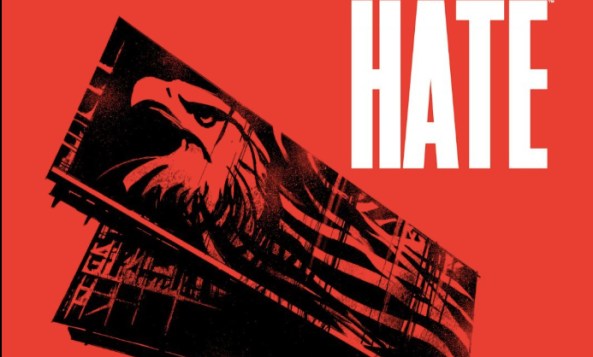
The very first image in Days of Hate 7 is New York City at at night from a distance with the text “Seven Weeks Later.” While the apocalypse-in-motion setting for this series will sometimes lean in to ruined urban landscapes–and there is plenty of that later in the issue–for the this introductory moment, the city skyline seems relatively intact. This skyline is the exception; the sterling faux-beacon for civilization in a world where all other structures, be they physical, societal, social or psychological, have collapsed. Continue reading

The “How” of the Reveal in The Wicked + The Divine 38

by Spencer Irwin

This article contains SPOILERS. If you haven’t read the issue yet, proceed at your own risk!

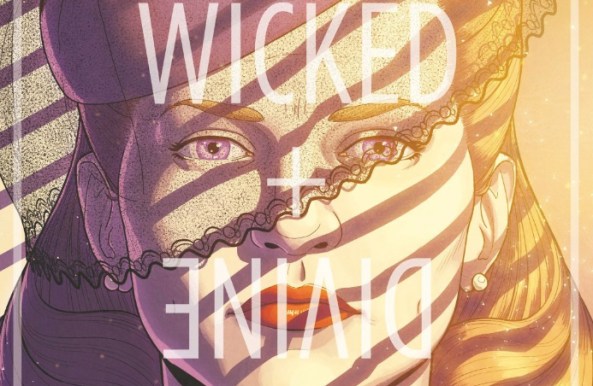
One of the things I appreciate the most about Kieron Gillen and Jamie McKelvie’s collaborations is the way they handle big twists and reveals. Gillen and McKelvie rarely trade in big showy twists (and when they do — such as in the “I Am Ananke” moment — they tend to raise more questions than they answer); instead, major pieces of information are revealed with such subtlety that one could almost miss them, and usually have plenty of evidence pointing their way long before the theories are finally confirmed, rewarding loyal, eagle-eyed readers. The Wicked + The Divine 38 clarifies several major pieces of information this way, furthering the plot, deepening its characters, and taking advantage of this arc’s unique structure in the process. Continue reading

Surprising Shifts in Perspective in Saga 54

by Spencer Irwin

This article contains SPOILERS. If you haven’t read the issue yet, proceed at your own risk!

As its title would suggest, Saga is a series with an ambitious scope and a sprawling cast, one where the perspective often shifts between various groups of characters, even though we can count on Marko and Alana’s family to be at the center of events at any given time. It’s also a series where nothing stays the same for long, allowing for any number of shocking betrayals, alliances, deaths, and shifts in the status quo. This all comes heavily into play in Saga 54, an issue that upends the series’ world in ways we’ve never seen before, ways most of us probably were not prepared for. Continue reading

Moonshine 12: Discussion

by Drew Baumgartner and Patrick Ehlers

Moonshine 12

This article contains SPOILERS. If you haven’t read the issue yet, proceed at your own risk!

The moment. Be in it.

Lou Pirlo

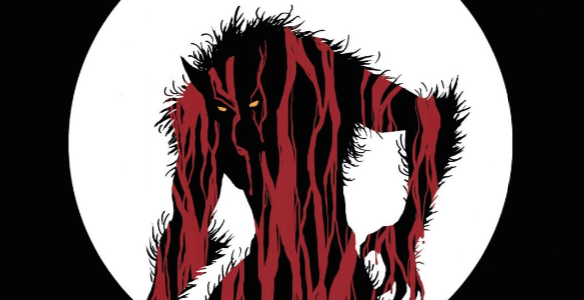
Drew: I have a theory that teens are such popular subjects of drama because they are so famously terrible at anticipating the repercussions of their actions. We accept impulsive behavior from Romeo and Juliet because they’re basically kids, but that same impulsivity needs explanation for adult characters. Maybe they’re prideful or hubristic or jealous or afraid; whatever it is, the drama is driven by a flaw in the characters that keeps them from acting rationally. Lou Pirlo has plenty of flaws that might explain his impulsivity — he’s both an alcoholic and a werewolf, after all — but with Moonshine 12, Brian Azzarello and Eduardo Risso suggest that impulsivity might be baked into his very core. The result is refreshingly free of the dramatic irony that characterizes other drama; we might recognize the decisions here as impulsive or ill-thought-through, but we have no idea what their repercussions might be. Continue reading

Love Doesn’t Conquer All in Descender 32

by Spencer Irwin

This article contains SPOILERS. If you haven’t read the issue yet, proceed at your own risk!

Much like our own, the world of Descender is full of prejudice, hatred, and war. These various traits all fuel each other in some sort of endless, infinite loop — the only way to break the cycle is to come together, to learn from each other, to empathize with each other, to love instead of hate. Like in so many stories — and, again, perhaps like our own world as well — love is the answer, but it’s not a solution that comes easily. In Descender 32, the final issue of Jeff Lemire and Dustin Nguyen’s saga, love may be the answer, but love doesn’t conquer all. Continue reading

Parallels, Dramatic Irony, and Time in The New World 1

by Drew Baumgartner

New World 1

This article contains SPOILERS. If you haven’t read the issue yet, proceed at your own risk!

My wife is itinerantly averse to spoilers, to the point that she refuses to watch trailers for movies. It’s an attitude I can sympathize with (many trailers seem more like hyper-condensed edits of the entire film than teasers), but can’t fully understand — how could she possibly know if a movie appeals to her if she doesn’t know anything about it? To me, some foreknowledge of the genre and basic premise of a narrative is essential to my interest in it. Of course, in serialized media — especially ones with particularly high-concept premises — the first chapter might just cover the “basic premise,” effectively spoiling its own plot. But the thing I’ve always resented about “spoiler” talk is the way it privileges plotting (and especially surprise twists in plotting) over every other narrative element. There are real, unique pleasures to be mined from having more perspective than the characters within the narrative, and a well-told story will use those tools as effectively as any narrative twist. Aleš Kot and Tradd Moore demonstrate the value of those tools on both the micro and macro level in The New World 1. Continue reading

What Parents Want in East of West 38

by Taylor Anderson

This article contains SPOILERS. If you haven’t read the issue yet, read on at your own risk!

It’s generally assumed that parents always have the best interest of their children at heart. However, as is often the case in our world there is a difference between what is assumed and what is reality. In my job as a teacher it’s sometimes my sad duty to witness parents putting their own interests before their kid’s. Such was the case of one student who was forced by his mother to be in student council when he had no interest in it whatsoever. He hated all the meetings and eventually started to skip them which led to him breaking down in tears in front of me when his mom wanted to call a meeting about the ordeal. No one was happy then and I am reminded of this when I read East of West 37, where parents put their needs and wants before the kid’s resulting in sorrow for all.

Continue reading

Contemporary Fears in the Near Future of Analog 4

by Mark Mitchell

This article contains SPOILERS. If you haven’t read the issue yet, proceed at your own risk!

Science fiction stories are often set in the future, but they reflect the contemporary anxieties of the societies in which they’re created. The Los Angeles of Ridley Scott’s 1982 film Blade Runner was heavily inspired by the modern landscape of Tokyo — it’s bustle and aesthetics cranked way up to sinister levels. As Sarah Emerson notes in a 2017 piece for Motherboard regarding cultural fetishization in the franchise, Blade Runner was a product of its time; in the 1980’s the West was still feeling the effects of an economic downturn just as Japan’s economy began to kick into high gear. Couple that with already high fear of cultural invasion thanks to the ever-present Cold War, and the futuristic dystopia of Blade Runner where, as Emerson writes, “communities are ghettoized beneath Asian-branded skyscrapers” comes into focus.

Unlike Blade Runner, which consciously or unconsciously stoked audiences’ fears for mere atmosphere, Gerry Duggan and David O’Sullivan use Analog to actively exercise their fears about the present. That’s exercise — not exorcise. The internet run amok, neo-Nazis, greed and corruption in the systems meant to protect us, Duggan and O’Sullivan are writing a noir story of the meanest kind, where the rot in society is too deep to be cured and the best one can hope for is making it out alive. There are no solutions to be found in Analog. Jack McGinnis managed to shut down the internet and it wasn’t enough to make things right.

But like any good noir, just because Analog is bleak it doesn’t mean it’s joyless. As someone who spends most of their time tied up with anxiety about the state of the world, I’ve found there’s catharsis in Analog’s pessimism. Have a few thoughtless internet billionaires seemingly fucked everything up for the rest of us? Hell yes they have! Doesn’t it suck how the world continues to get hotter and hotter? Absolutely! Can you believe that we have to regularly talk about white supremecists — like on an almost day to day basis? No, I can’t! Reading an issue of Analog is like going to Angry Liberal Church on a regular basis and I love it. Amen!

For a complete list of what we’re reading, head on over to our Pull List page. Whenever possible, buy your comics from your local mom and pop comic bookstore. If you want to rock digital copies, head on over to Comixology and download issues there. There’s no need to pirate, right?