Civil War II: The Oath 1

civil-war-2-oath-1
Today, Spencer and Drew are discussing Civil War II: The Oath 1, originally released January 25th, 2017. As always, this article contains SPOILERS.

Spencer: Why is Steve Rogers being transformed into a Nazi such a terrifying idea? It’s because we all trust Steve Rogers, both in universe and out. Not only can he use that to gain influence that should never, under any circumstances, be given a Nazi, but that trust means that we’re probably inclined to think the best of him — out of sheer habit, if nothing else — even though he’s never deserved it less. Well, no more. Civil War II: The Oath drives home that this altered Steve’s heart is as black as they come. If only the rest of the Marvel universe was privy to that fact as well. Continue reading

Avengers 1.1

avengers-1-1

Today, Spencer and Ryan M. are discussing Avengers 1.1, originally released November 9th, 2016. As always, this article contains SPOILERS.

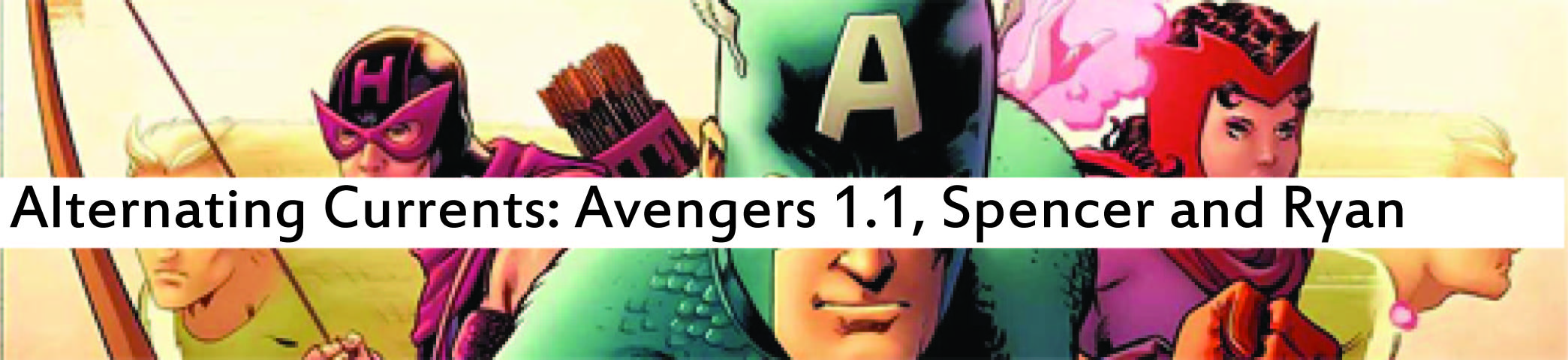
Spencer: Take 2014’s Amazing Spider-Man 1.1-1.6 (which told a previously untold story set in Peter Parker’s first few months as a hero) and mix it together with Mark Waid and Barry Kitson’s JLA Year One (which retold the Justice League’s post-Crisis origin in a modern setting) and you’ll get something resembling The Avengers 1.1. Waid and Kitson take their trademark stylistic combination of classic storytelling set in the modern day (which Waid has also been employing in his modern-day Avengers stories) and use it to tell an “untold” tale of the Avengers’ past. If you have any experience with the aforementioned stories or creative teams, then the result is probably exactly what you were expecting. Continue reading

Captain America: Steve Rogers 6

capt-america-steve-rogers-6

Today, Spencer and Michael are discussing Steve Rogers Captain America 6, originally released October 26th, 2016. As always, this article contains SPOILERS.

Spencer: Civil War II has killed the momentum of a lot of books, but its Steve Rogers Captain America tie-ins are an especially interesting case of this because the title never really had a chance to establish its momentum in the first place — writer Nick Spencer was still in expository mode, exploring how Steve’s new Hydra backstory changed him, when the title was dragged into a major event. Thankfully, Spencer and artist Javier Pina have been able to continue that exploration even throughout these event issues, but the moments tying directly into Civil War II feel unmoored in comparison. Continue reading

Sam Wilson: Captain America 10

capt america sam wilson 10Today, Spencer and Michael are discussing Sam Wilson: Captain America 10, originally released June 22nd, 2016.

Spencer: People have certain aspects of themselves that bind them together into larger groups. Some of those qualities we choose for ourselves — our hobbies, religion, who we marry — but others we have no choice in. Our family, race and nationality, and sexuality bind us to like individuals. That doesn’t mean every member of, say, the same religion or race are alike, nor that they’re all friends, nor that they’ll even agree on anything. What it does mean is that they’ve all got one thing in common that no other group understands, and that makes them part of a community. In Sam Wilson: Captain America 10, writer Nick Spencer explores Sam Wilson and James Rhodes’ community, mining unexpected riches from the concept.

Continue reading

Steve Rogers Captain America 1

capt america steve rogers 1

Today, Patrick and Spencer are discussing Steve Rogers Captain America 1, originally released May 25, 2016.

Patrick: The most troubling thing about any inspirational figure is that they are necessarily mutable. Human beings are never only one thing, but we often reduce them to a single trait or value so that we may incorporate that into our own view of the world. John Lennon believed in peace, Martin Luther King Jr. believed in equality, Steve Jobs believed in innovation. Those are all trite reductions of fantastically complicated people, but it is useful to have avatars of these qualities and principals. Nick Spencer and Jesus Saiz’ Steve Rogers Captain America 1 sets out to complicate one of the most inspirational figures in comics — which I feel is a necessary exploration of the Greatest Generation — but the issue is almost more interested in the concepts of inspiration and legacy than the specific twist deployed on the final splash page. Continue reading

Captain America: Sam Wilson 7

Alternating Currents: Captain America: Sam Wilson 7, Drew and Patrick

Today, Drew and Patrick are discussing Captain America: Sam Wilson 7, originally released March 30th, 2016.

Those who cannot remember the past are condemned to repeat it.

George Santayana

Drew: Perhaps its ironic that I never knew the origin of the oft-paraphrased quote above, but it actually comes from the first volume of Santayana’s The Life of Reason, published in 1905. In its original context, the quote seeks to balance progressivism with retention of the past. Of course, it’s possible to take that too far, and some might argue that superhero comics are too obsessed with their own history to make any meaningful progress. It’s a difficult balance that I certainly don’t envy trying to strike — fans want new stories, even as they want their favorite stories and characters celebrated — but its one that Captain America 7 aims for. Marvel assembles one hell of a creative lineup for this celebration of Captain America’s 75 year history, but circumstances may have put them all in a no-win situation. Continue reading

Daredevil 4

daredevil 4

Today, Ryan D. and Spencer are discussing Daredevil 4, originally released February 24th, 2016.

Ryan D.: Sometimes, as a lover of comics, I feel like I need to make even my objective voice take a step back. A friend asked who my favorite superhero is. I answered with Daredevil. I love DD for the fact that he is very mortal in a multiverse of gods and supermen. His human story of a boy who grew up blind and parentless while still having the temerity to finish law school and start his own practice is just as compelling as his mask. I related to the Irish-Catholic-American guilt with which the character often struggles, and I love that, unlike many characters who guard the earth from cosmic threats such as Galactus, Daredevil just wants to keep his neighborhood safe. The noir-rich Brubaker and Bendis runs on the series opened my eyes to places I did not know superheroes could go, and the Mark Waid return to the swashbuckler proved to be a delight.

But we have a “new and improved” Daredevil now, one who has One More Day‘d away his previously very public identity, who now sits on the side of prosecution instead of defense and even totes a sidekick. Taking my step back and knowing that this run has no intentions of being the DD of yore, I have been interested in seeing when the character, plot, and art might all fall into their respective, complimentary rhythms, and I am unsure as to whether issue number four takes any steps forward or backward in this regard. Continue reading

Deadpool 3

deadpool 3

Today, Patrick and Spencer are discussing Deadpool 3, originally released December 9th, 2015. 

slim-banner

Patrick: The book responsible for shaping most modern improvised comedy is titled, simply Truth in Comedy. The title comes from the idea that the most honest reactions to unusual stimulus are going to be the funniest – essentially espousing that the truth is the ultimate punchline. That’s surprisingly poignant in a medium that could so easily be — and so frequently is — desperate performers mugging for a laugh. Real, sustainably funny scenes can only come from emotionally honest performances. But the title of the book actually implies something else: that the greatest truths can be found through the vehicle of comedy. I have yet to really come to a meaningful conclusion about why that is, but laughing with a character for long enough makes me sympathetic to them, and forges a connection between them and the audience. Deadpool is a fine case study of this phenomenon – through thousands of gags, and a handful of vulnerable turns, the audience is trained to trust and love him in a way we simply cannot extend to his facsimiles in the Mercs for Money. Continue reading

Sam Wilson: Captain America 1

sam wilson 1Today, Patrick and Spencer are discussing Sam Wilson: Captain America 1, originally released October 14th, 2015.

I pledge allegiance to the flag of the United States of America
And to the republic for which it stands:
One nation, under God, indivisible, with liberty and justice for all.

-The Pledge of Allegiance of the United States of America.

Patrick: Have you ever considered how weird it is that the Pledge of Allegiance is a common fixture at the beginning of the school day? From my first day of kindergarten, until the last day of my senior year of high school, I either recited this thing, or stood silently with my hand on my heart while hundreds of other kids recited this thing in unison. Even without that “under God” jammed in there by Eisenhower, the pledge feels more like prayer than anything else — offering oneself up in the service of a singular benevolent entity. Of course, it’s not quite that simple: liberty and justice are pretty nebulous terms, and what they mean can vary hugely depending on your perspective. I think when I was a kid, I would have just as easily swapped out “liberty and justice” for “law and order” and not given it a second thought. But that’s not the country is really about: we’re founded on revolution, on challenging the status quo, on fighting for what we believe in. In Nick Spencer and Daniel Acuña’s Sam Wilson: Captain America, Captain America embraces the more revolutionary aspects of his mantle, and while he’s certainly fighting for liberty and justice, he is decidedly anti-establishment. Continue reading

Captain America: White 2

captain america white 2

Today, Taylor and Drew are discussing Captain America: White 2, originally released September 30th, 2015.

slim-banner4

Taylor: For some reason, when I think about World War II, it doesn’t seem like it happened all that long ago. Maybe this is because the war shares many of the same things we see in warfare today like airplanes and tanks and machine guns. Or perhaps the reason it seems fresh is that WWII was a substantially photographed and filmed war, making it an frequent topic of documentaries. Still more, WWII has been the backdrop for much of the pop-culture that has pervaded the 20th and 21st centuries, and with each new story set between the years 1939 and 1945 the war comes alive once again. But WWII ended 70 years ago and few still live who actually saw or took part in its events. It’s a weird dichotomy, this difference between perceived and actual length of time, and if nothing else, Captain America: White 2 has me considering this subject deeply.

Continue reading