Overcoming the Refusal of the Call in Green Lanterns 29

by Drew Baumgartner

Green Lanterns 29

This article contains SPOILERS. If you haven’t read the issue yet, proceed at your own risk!

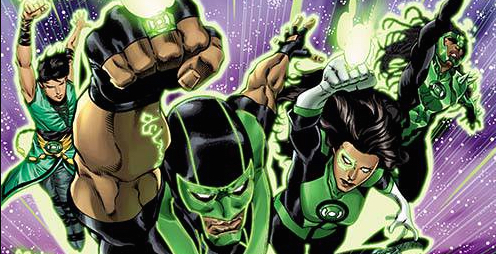
Superheroes are locked in a permanent state of adventure, so their stories never really end. For that reason, it might seem absurd to apply narrative structures like Joseph Campbell’s “Hero’s Journey” to superhero narratives, as there is little hope of “return,” and notions of “known” and “unknown” start to break down once the hero has been around for a while. But I’ll be damned if the first few beats of any Superhero origin doesn’t more or less follow the first few beats of the Hero’s Journey — especially if the “hero” undergoing the journey happens to be a supporting character. Such is the case in Sam Humphries and Eduardo Pansica’s Green Lanterns 29, which finds all of the original Green Lanterns (OGLs) refusing the call to adventure before ultimately deciding that they have no choice. Continue reading
Heroism and Revenge in All-New Guardians of the Galaxy 8

by Michael DeLaney

This article contains SPOILERS! If you haven’t read the issue, proceed at your own risk.

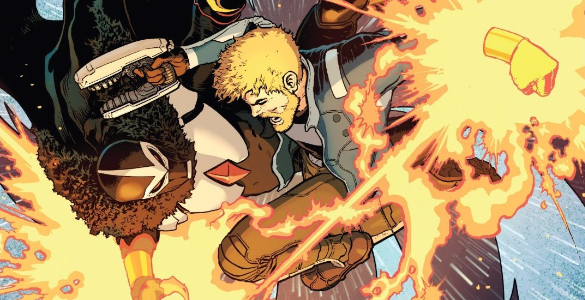
A ship in peril! A hero on a quest to save his friend! A space raccoon who is dying of an alien disease! All-New Guardians of the Galaxy 8 is a heroic race against time as Star-Lord tracks down The Raptors, who have infected Rocket with a deadly pathogen. Continue reading

Descender 23: Discussion

by Ryan Desaulniers and Spencer Irwin

This article contains SPOILERS. If you haven’t read the issue yet, proceed at your own risk!

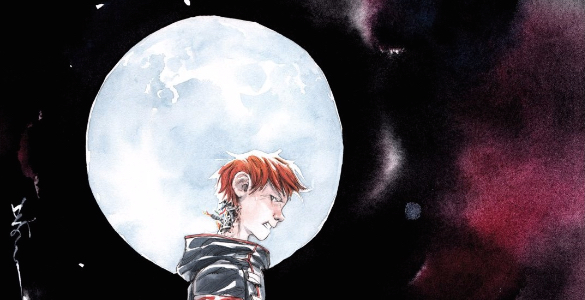
Ryan D: After last issue‘s cliffhanger, the audience wondered whether or not the self-serving Quon would risk his neck by leaving the relative safety of the ship into the deep waters in which Captain Telsa currently languished, lifelessly. Well, he did, and the sequence of Quon retrieving Telsa looks beautiful. Continue reading

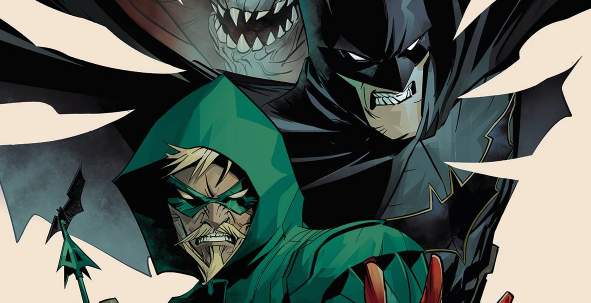
Green Arrow Stands Apart from Batman in Green Arrow 29

by Michael DeLaney

This article contains SPOILERS! If you haven’t read the issue, proceed at your own risk.

I like to think of Benjamin Percy’s “Hard-Travelling Hero” arc of Green Arrow as “The Oliver Queen Apology Tour” — as Green Arrow travels across the country and ends up proving his worth to the heavy hitters of the Justice League. This time around Green Arrow is teamed up with fellow billionaire playboy/non-powered vigilante Batman. Continue reading

Accepting or Rejecting our Personal Identities in Godshaper 5

by Spencer Irwin

This article will contain SPOILERS. If you haven’t read the issue yet, proceed at your own risk!

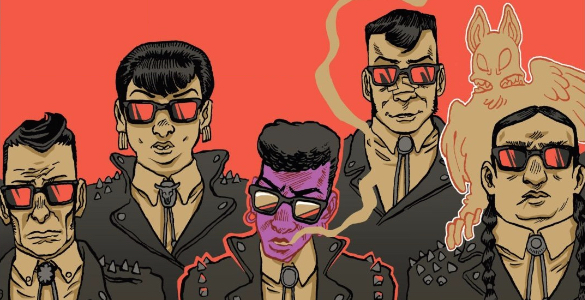
Our race, sexuality, or gender are usually major parts of our personal identities, but because of the prejudiced society we live in, they can also end up as impediments in life if we’re non-white, queer, or non-cis/non-male — essentially, if we don’t meet the status quo. In Simon Spurrier and Jonas Goonface’s Godshaper, being a shaper has always worked as a metaphor for all these “other” identities, which makes Ennay’s reaction to an offer of a god of his own — which would free him from the stigma of being a shaper — all the more interesting. Continue reading

Hacking a Path to Character in Secret Weapons 3

by Patrick Ehlers

This article contains SPOILERS! If you haven’t read the issue, proceed at your own risk.

Short form and episodic storytelling often relies on character tropes – this is doubly true in genre stories, where the character types are so well established. Eric Heisserer, in an incredibly tight three issues (of four total), refuses such predictability, finding exciting, engaging and innovative ways to insist on the very real nature of his characters. Heisserer seemingly has shortcuts into the human psyche, hacking his way in through seldom-used sociological and emotional channels. The whole series premise is about not taking even the dumbest superpowers for granted, but this issue starts to turn to a much more simple mantra: don’t take these people for granted. Continue reading

Dark Nights: Metal 1: Discussion

by Patrick Ehlers and Mark Mitchell 

This article contains SPOILERS. If you haven’t read the issue yet, proceed at your own risk!

slim-banner

Patrick: Throughout Scott Snyder and Greg Capullo’s run on Batman, the creative team valued invention over archeology. The character of Batman has been around for so long that deconstruction of the character is practically in his DNA, and while Snyder and Capullo found ways to riff on Batman’s history, their stories were always new. New threats, new allies, new secret identity. With Metal, the latest DC event, Snyder and Capullo turn inward, to explore, refine, and recontextualize the mythology and iconography that is already part of their multiverse. There’s a premium on re-arranging existing pieces into an entirely new whole. Continue reading

Gwen Tries Her Hand at Creating Stories in The Unbelievable Gwenpool 19

by Spencer Irwin

This article will contain SPOILERS. If you haven’t read the issue yet, proceed at your own risk!

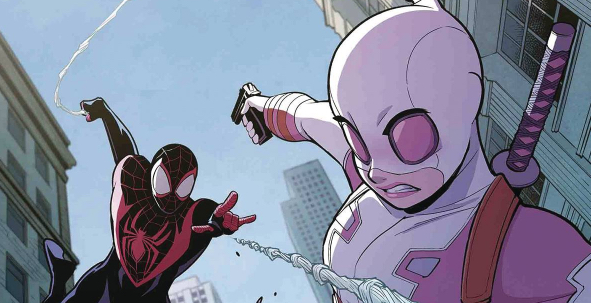
Last month I theorized that Gwenpool’s newfound cosmic awareness essentially made her a god, but within the world of comics, is there really that much of a difference between a god and a writer or artist? (After all, when the Fantastic Four met their god, he was Jack Kirby). That’s something I couldn’t help but wonder about throughout Christopher Hastings and Gurihiru’s The Unbelievable Gwenpool 19, especially once Miles finally reveals Gwen’s dark future. The hell she puts Miles through should feel familiar to anyone who’s ever read a comic before. Continue reading

Full Page Problems in Wonder Woman 28

by Taylor Anderson

This article contains SPOILERS. If you haven’t read the issue yet, proceed at your own risk!

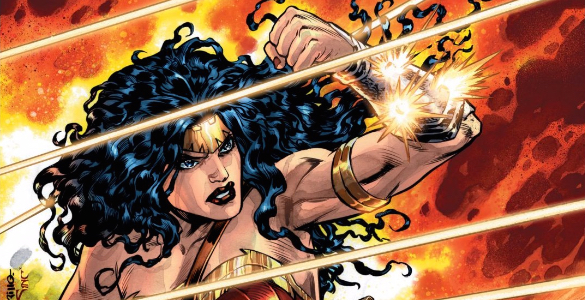
When I think about it, the very idea of a full page spread seems pretty audacious. Given that a creative team has only twenty pages to tell their story, the act of devoting two full pages to single panel means that image better be damn impressive. More than that, it needs to convey emotion, theme, and character to really give the image the emotional impact its two pages demand. But what happens if a full page spread doesn’t do these things – what does that look like?

Continue reading

The Chilling Adventures of Sabrina 8 Highlights “Teenage” and “Witch” in Equal Measure

by Drew Baumgartner

Chilling Adventures of Sabrina 8

This article contains SPOILERS. If you haven’t read the issue yet, proceed at your own risk!

Teenagers are exhausting to argue with. The reasons for this are both biological (an underdeveloped prefrontal cortex soaking in teenage hormones isn’t the best recipe for critical reasoning) and psychological (the complex mix of rebellion and conformity that makes up the teenage psyche makes acquiescing to even the most persuasive argument difficult), but anyone who has ever had to tell a teen “no” will have a much more practical understanding. Lacking the perspective of a longer, more worldly life, teens tend to be over-invested in everything from romantic relationships to whether or not they can borrow the family car, so everything feels like the end of the world. That means teens don’t have a lot of headroom for when something is actually a big deal, so can come off as almost blasé on matters of life and death even as they might throw a tantrum about having to mow the lawn. This is exactly the situation in which Hilda and Zelda find themselves in this issue as they try (and fail) to make a love-drunk Sabrina see just how reckless she’s being. Continue reading