Star Wars 45: Discussion

By Taylor Anderson and Mark Mitchell

This article contains SPOILERS. If you haven’t read the issue yet, proceed at your own risk!

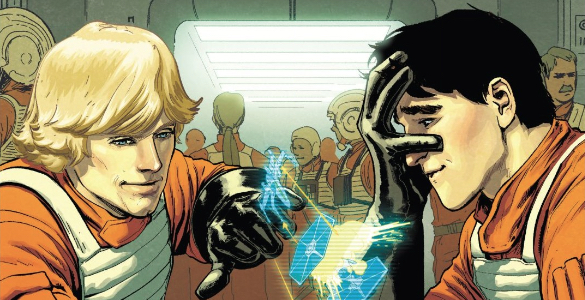
Taylor: Being a Star Wars fan who grew up with, and only with, the original trilogy, I would consider myself fairly protective of the movies which have spawned a pop-culture empire. This being the case, you might expect that I would hold the new movies to a high standard of excellence since I wouldn’t want their history besmirched. It turns out that the opposite is true. I’ve come to accept that nothing’s going to replicate my love of the original trilogy and that’s OK. That being said, as long as a Star Wars story is decent, I’m pretty happy just to get to spend more time in a galaxy far, far away. Sadly, this can’t be said for all Star Wars stories, which is the case in Star Wars 45.

Continue reading

New Super-Man and the Justice League of China 21

by Mark Mitchell

This article contains SPOILERS. If you haven’t read the issue yet, proceed at your own risk!

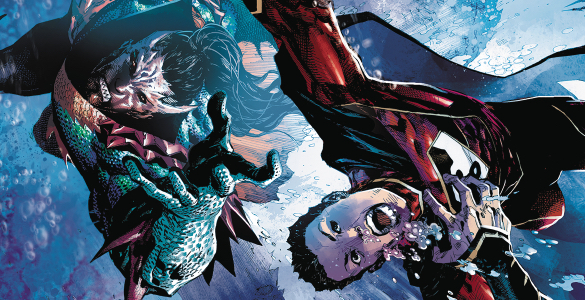
Political commentary is not New Super-Man and the Justice League of China 21’s forte. It’s mostly informative in the sense that characters are literally declaring information, like when Bat-Man flatly proclaims that, “North Korea is an asylum inmate that only listens to China…” But while the political message of the book lacks nuance, that writer Gene Luen Yang bothers to go there at all is commendable. If every comic book is someone’s first comic books, than every fleeting discussion of Sino-North Korean politics is someone’s first fleeting discussion of Sino-North Korean politics — and that’s worth celebrating. (Information is power!) Continue reading

It’s Manga’s Greatest Hits in Betrothed 1

By Mark Mitchell

This article contains SPOILERS. If you haven’t read the issue yet, proceed at your own risk!

If you like reading manga you will probably enjoy Betrothed 1, and if you like Betrothed 1 you will probably enjoy reading manga.

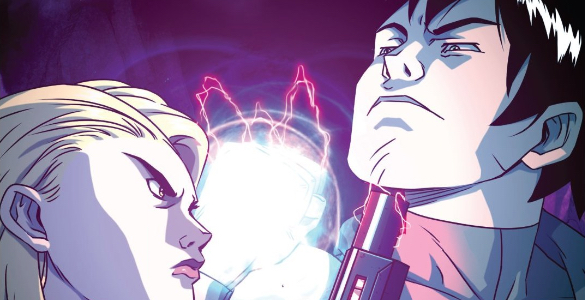
That’s obviously a broad generalization, since manga is a medium, not a genre, and there are many different stories told within that medium, but as a lapsed Weekly Shonen Jump subscriber, I’ve read enough breezy meet-cutes and hastily staged fight sequences to comfortably state that Sean Lewis and Steve Uy’s Betrothed 1 is a solid effort at a Manga Tropes Greatest Hits Collection. Continue reading

Eternity Girl 1: Discussion

by Mark Mitchell and Spencer Irwin


This article contains SPOILERS. If you haven’t read the issue yet, proceed at your own risk!

Mark: People who suffer from chronic depression are often very good at putting up facades of happiness; it’s part of why suicide can be surprising to the friends and family of the person who took their life. These facades are a coping mechanism for a depression sufferer in a number of ways, including stopping people from inquiring about their happiness. If you look happy — if you act “normal” — then people are more apt to leave you alone. But keeping up appearances for the benefit of others is exhausting, and sometimes the facade breaks down at inopportune moments — at a friend’s wedding, the night before a big paper is due, in front of your co-workers at the office.

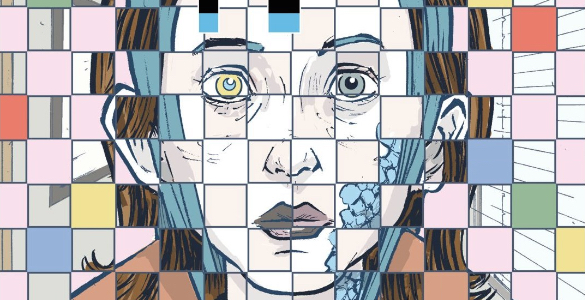
The performative aspect of keeping up appearances is made literal in Magdalene Visaggio and Sonny Liew’s Eternity Girl 1, a new title in DC’s Young Animal line. Continue reading

Gideon Falls 1: Discussion

by Ryan Desaulniers and Mark Mitchell

This article contains SPOILERS. If you haven’t read the issue yet, proceed at your own risk!

…nothing is so alien to the human mind as the idea of randomness.

John Cohen

Ryan D: Pattern recognition plays an integral role in the human cognitive process, with comic books being a particular medium which simply wouldn’t work without that ability to see and recognize patterns in visual symbols, icons, and shapes, as our brains wrestle a slew of static visual images into a narrative. The images are coherent because they are created together purposefully to be consumed in relation to each other. However, the human brain can still find patterns where there is no direct correlation. In 1958, the term “apophenia” came into being to describe that ability to take unrelated things and tie them together with connections which might not exist. We can observe this phenomenon every day in the form of confirmation bias, or, in more extreme cases, the claims of paranoid schizophrenics who may find the most benign details to be irrefutable proof of a grandiose conspiracy. So what happens if two seemingly unrelated people in different parts of the world — one embroiled in this hunt for clues in an outlandish pattern, the other just trying to adjust to a new life — both find the horrifying answer to what seems to be delusion? Herein lies the crux of Gideon Falls 1 by Jeff Lemire and Andrea Sorrentino, backed by a decorated team on colors and lettering of Dave Stewart and Steve “SWANDS” Wands. Continue reading

The Wilds 1: Discussion

by Drew Baumgartner and Mark Mitchell
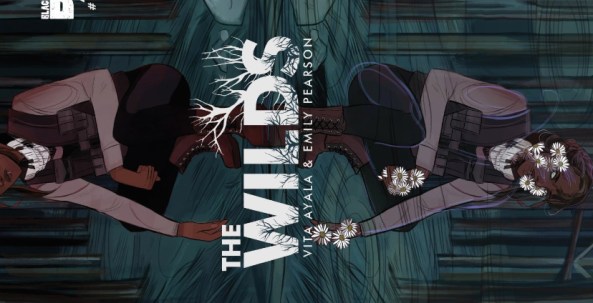
Wilds 1

This article contains SPOILERS. If you haven’t read the issue yet, proceed at your own risk!

They might not have done so with elaborate ritual, since there has never been solid evidence that they included symbolic objects in graves, but it is clear that they did not just dump their dead with the rest of the trash to be picked over by hyenas and other scavengers.

Francesco d’Errico

Drew: What makes us human? As with any attempt to draw hard lines around a vague concept, there seem to be exceptions to every feature we might describe as human, forcing us to consider that other species might just qualify for whatever working definition we land on. Such is the case with Neanderthals — the “they” in the quote at the top of this piece — which display enough of what we understand as culture and morality for me to be satisfied with their humanity. But were their contemporary Homo sapiens? The trouble with that nebulous definition of humanity is that our gut tends to default to speciesism, especially in the moment. It’s easy for me to rule Neanderthals in now, but what about chimpanzees or dolphins? They have irrefutably human-like use of tools and language, but they just don’t feel human — they inspire a kind of visceral “this is an animal” feeling that requires a great deal of rational thought to overcome. That confusing, blurry line between human and non-human has long been a point of fascination for sci-fi writers, whether the non-human is a robot, alien, or some kind of mutated human, literalizing the struggle Homo sapiens seem to have in even recognizing the humanity of one another. This is far from the only intriguing theme in Vita Ayala and Emily Pearson’s The Wilds 1, but it might be the most unexpected. Continue reading

Suffocating Ugliness in The Beef 1

by Mark Mitchell

This article contains SPOILERS. If you haven’t read the issue yet, proceed at your own risk!

I’m overwhelmed by the relentless ugliness on display in Richard Starkings, Tyler Shainline, and Shaky Kane’s The Beef 1. The issue closes with the image of a man transforming into a skinless, muscle-bound freak, and it’s a welcome respite from the grotesqueries that come before. Continue reading

Mata Hari 1: Discussion

by Mark Mitchell and Patrick Ehlers

This article contains SPOILERS. If you haven’t read the issue yet, proceed at your own risk!

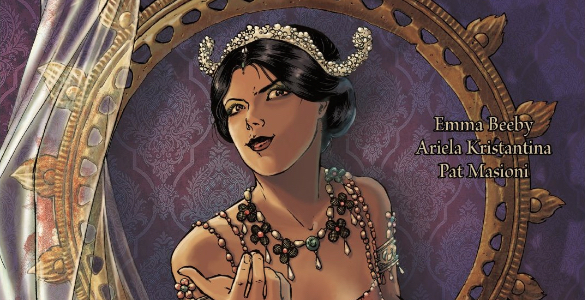
Mark: One of the corollaries to the Harvey Weinstein revelations and the #METOO and #TIMESUP movements is the healthy reexamination of other women in history who were victims, in one way or another, of systemic misogyny. Though they were produced before the movements began, last year’s Oscar nominated film I, Tonya makes the case for re-examining the way the media portrayed Tonya Harding — regardless of her guilt — and FX’s 2016 American Crime Story: The People vs OJ Simpson television series was a notably empathetic portrayal of lead prosecutor Marcia Clark. The point of these and other reexaminations isn’t to canonize these women, but to consider that the truth of their stories is more complicated than the convenient daytime talk show-like narratives that surround them.

Writer Emma Beeby calls out Harvey Weinstein by name in her author’s note at the end of Mata Hari 1, noting specifically that “now is the perfect moment to tell the story of what happens when women are without power.” Continue reading

A Minor Retcon Changes the Tone of Green Lanterns 41

by Mark Mitchell


This article contains SPOILERS. If you haven’t read the issue yet, proceed at your own risk!

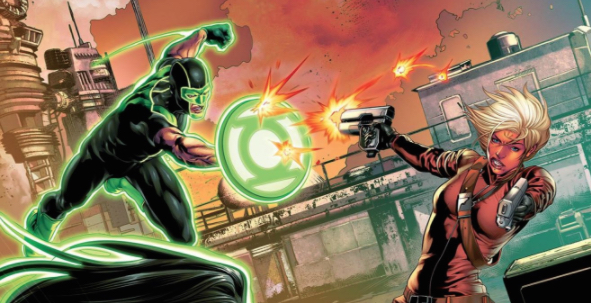
Mark: Comic book fans and, of course, readers of this site will be familiar with the idea of a “retcon” in comics — basically, a piece of new information that updates (often by contradicting) previous information. Usually retcons happen with shifts in creative teams, character relaunches, or when reaching back deep into a line’s history to incorporate some historical element that doesn’t quite fit in the modern landscape. Much more rare is the retcon-ing of information from a mere six issues in the past — an issue written by the same author, no less — but that’s the case in Tim Seeley, Barnaby Bagenda, and Tom Derenick’s Green Lanterns 41. The issue opens with a depiction of Simon Baz and Night Pilot’s date, the aftermath of which seeded the “Superhuman Trafficking” arc back in Green Lanterns 35.

Continue reading

The Hunter Becomes The Hunted In Star Wars: Darth Vader 11

by Mark Mitchell

This article contains SPOILERS! If you haven’t read the issue, proceed at your own risk.

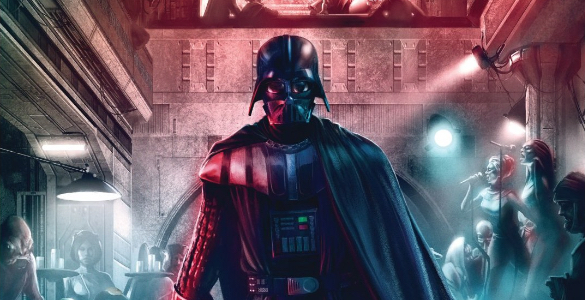
In the modern Star Wars era, Darth Vader is like the Freddy Krueger of the greater universe — ostensibly a villain, but really the one everyone is rooting for. Charles Soule and Giuseppe Camuncoli’s Darth Vader 11 leans into Vader’s anti-hero persona by reversing the usual Vader story and turning him into the prey.

Continue reading