Secret Empire 10: Discussion

by Drew Baumgartner and Patrick Ehlers 
Secret Empire 10

This article contains SPOILERS. If you haven’t read the issue yet, proceed at your own risk!

Truth is stranger than fiction, but it is because Fiction is obliged to stick to possibilities; Truth isn’t.

Mark Twain

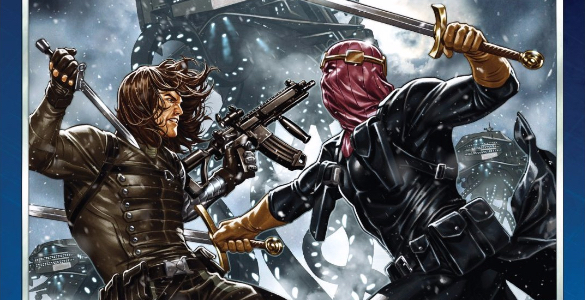
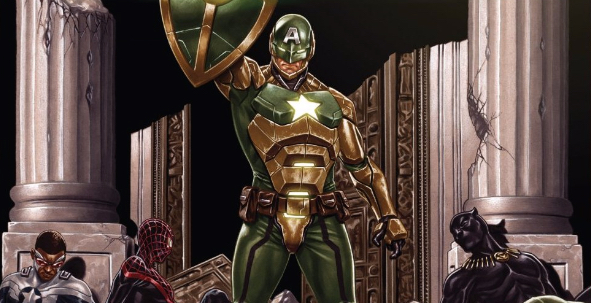
Drew: This may seem like an odd quote to kick off a discussion about a comic featuring superpowered heroes battling over bits of a cube that can rewrite reality, but I think it’s safe to say Secret Empire has really never been about superpowers or cosmic cubes. Those are the trappings of a big summer event series, sure, but the story was actually about how seemingly good people can be corrupted by toxic ideologies. That’s immediately recognizable as Steve Roger’s arc through Steve Rogers: Captain America and Secret Empire, but it’s also an arc that has been running in the background of Hydra’s America throughout this series, one that is far more unsettling than seeing Steve hail Hydra ever could be. Continue reading

More is Too Much in Teenage Mutant Ninja Turtles Dimension X 4

by Patrick Ehlers

This article contains SPOILERS. If you haven’t read the issue yet, proceed at your own risk!

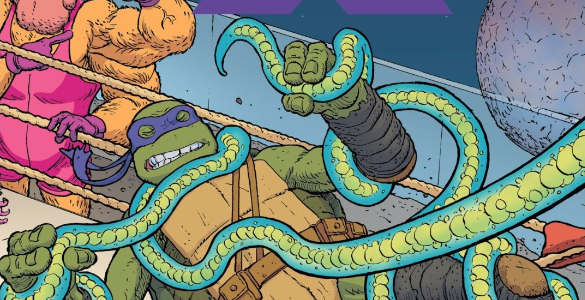
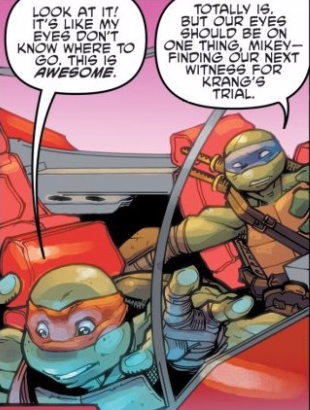
Before the Turtles land in Palmadise City (presumably where the grass is green and the girls are pretty), Michelangelo and Leonardo share their first impressions of the all-city planet:

The city is an overwhelming stimulant — there’s so much to see and to do, that our heroes just might end up losing sight of their goal. This almost ends up being a thesis statement for the creative team of Ryan Ferrier and Chris Johnson, who arguably have more narrative toys than they know what to do with. Continue reading

Secret Empire 9: Discussion

by Michael DeLaney and Patrick Ehlers 

This article contains SPOILERS. If you haven’t read the issue yet, proceed at your own risk!

“All good things must come to an end”

Geoffrey Chaucer, Troilus and Criseyde 

Michael: Secret Empire is racing towards its conclusion: previously trapped heroes have been freed, once broken spirits have been re-emboldened, and the bad guys themselves are starting to realize that the odds might not be in their favor. After all, all “good” things come to an end — especially evil empires. Unfortunately, that repurposed Chaucer maxim can also apply to the quality of an ongoing Marvel event, as Secret Empire 9 loses a little bit of the title’s oomph. Continue reading

Driving Toward the Single Arresting Moment in Hal Jordan and the Green Lantern Corps 27

by Patrick Ehlers

This article contains SPOILERS. If you haven’t read the issue yet, proceed at your own risk!

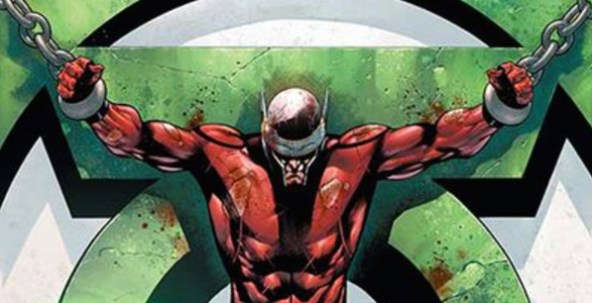
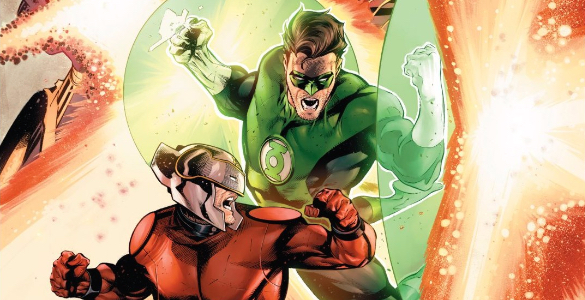
Y’know that scene in Raging Bull  where Jake LoMatta (DeNiro) is in the ring and takes that slow-motion jab right to the nose? Sure you do — even if you haven’t seen the movie, it’s one of those moments that’s been parodied and emulated hundreds of times in the four decades since the film’s release. The punch slowly ripples across Jake’s face, breaking his nose and forcing a geyser of blood to erupt from his head. Its a explosive moment of physical horror which comes after nearly two whole hours of slowly unspooling emotional horror — effectively, it is thematic material of self-destruction made literal and permanent. There’s something about the violence of that choice that shakes the audience awake, casting everything that happened before it, however gradually, in to sharp, sudden relief. In Hal Jordan and the Green Lantern Corps 27, writer Robert Venditti and artist Rafa Sandoval drive towards a similarly gross moment, and while they steer into the silliness of it, the inherent gore in cutting out Orion’s heart serves the shake the reader awake. Continue reading

Hacking a Path to Character in Secret Weapons 3

by Patrick Ehlers

This article contains SPOILERS! If you haven’t read the issue, proceed at your own risk.

Short form and episodic storytelling often relies on character tropes – this is doubly true in genre stories, where the character types are so well established. Eric Heisserer, in an incredibly tight three issues (of four total), refuses such predictability, finding exciting, engaging and innovative ways to insist on the very real nature of his characters. Heisserer seemingly has shortcuts into the human psyche, hacking his way in through seldom-used sociological and emotional channels. The whole series premise is about not taking even the dumbest superpowers for granted, but this issue starts to turn to a much more simple mantra: don’t take these people for granted. Continue reading

Dark Nights: Metal 1: Discussion

by Patrick Ehlers and Mark Mitchell 

This article contains SPOILERS. If you haven’t read the issue yet, proceed at your own risk!

slim-banner

Patrick: Throughout Scott Snyder and Greg Capullo’s run on Batman, the creative team valued invention over archeology. The character of Batman has been around for so long that deconstruction of the character is practically in his DNA, and while Snyder and Capullo found ways to riff on Batman’s history, their stories were always new. New threats, new allies, new secret identity. With Metal, the latest DC event, Snyder and Capullo turn inward, to explore, refine, and recontextualize the mythology and iconography that is already part of their multiverse. There’s a premium on re-arranging existing pieces into an entirely new whole. Continue reading

Accepting Happiness in Silver Surfer 13

by Patrick Ehlers

This article contains SPOILERS. If you haven’t read the issue yet, proceed at your own risk!

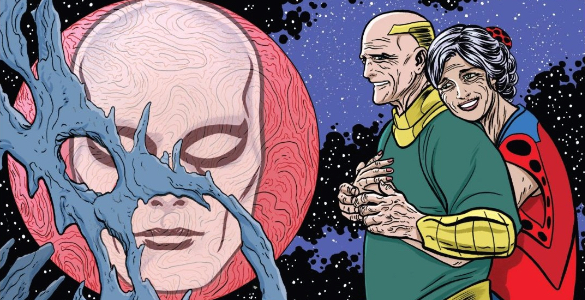
Sometimes I think I ask too much of comic books. I always want them to be grand statements about morality or the price of heroism or contain some other largely unknowable truth about the world. Silver Surfer is one of those series that sets this expectation for me, and the creative team of Dan Slott, Michael Allred, and Laura Allred obviously have a lot to say about life, love, and adventure. The penultimate issue of this series slows that all down by speeding up time, allowing the reader to bask in the simple sweetness of a life lived together. It is a rarity among comics — something nice just for the purpose of experiencing something nice. Continue reading

No Funny in the Prose Gutters of Rocket 4

by Patrick Ehlers

This article contains SPOILERS! If you haven’t read the issue, proceed at your own risk.

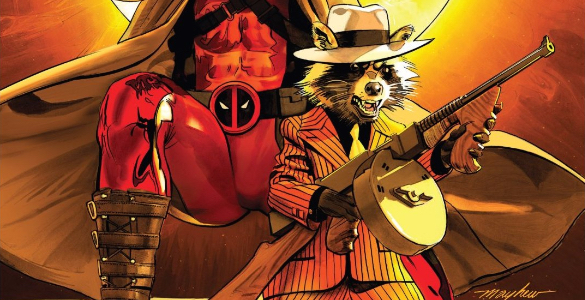
The strength of Deadpool’s joke-telling is directly proportional to his awareness of the medium he’s in. He’s a fourthwall-breaking stinker, and love ’em or hate ’em — Deadpool’s shtick is is built on being knee-slappingly self-aware. But not every Deadpool story is a bucket o’ laughs, and Gerry Duggan’s run with the character has explored Wade’s darkness as effectively as his jovial irreverence. Writer Al Ewing taps into that same darkness in Rocket 4, leveraging the one thing Deadpool will always have reverence for — the form of the medium. Continue reading

Mister Miracle 1: Discussion

by Michael DeLaney and Patrick Ehlers


This article containers SPOILERS. If you haven’t read the issue yet, proceed at your own risk!

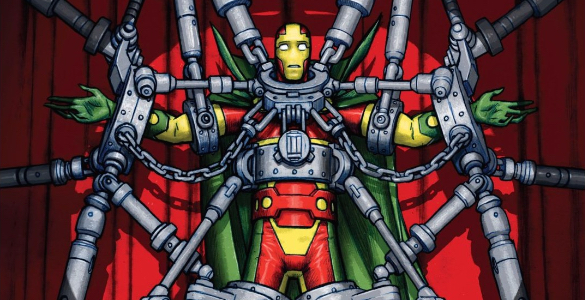
Michael: Jack Kirby’s Fourth World tales were weird, wild, and ultimately short-lived. In spite of this they have left a lasting impression on the DCU, inspiring later generations of writers to try to emulate the spirit of Kirby’s original saga. Jim Starlin, Grant Morrison and more recently Robert Venditti have shown us their take on The New Gods and now Tom King and Mitch Gerards add to the mythos in Mister Miracle 1. Continue reading

Mythological and Emotional Mystery in Hal Jordan and the Green Lantern Corps 26

by Patrick Ehlers

This article contains SPOILERS. If you haven’t read the issue yet, proceed at your own risk!

John Stewart, Guy Gardner, Kyle Rayner and Hal Jordan are interesting characters. They’re all men with tremendous baggage, and perhaps the decades of dragging around said baggage have trained them to just blurt out their feelings with the blunt force of a green-light mallet. All of them are reeling from Soranik Natu Sinestro’s heel turn, and the defection of the Yellow Corps, and maybe they’re all a touch too eager to yell about their feelings. That emotional transparency is at odds with the opaque plotting of issue 26. The inherent mystery in “what is Orion doing here again?” makes the reader double back on those seemingly clear emotional statements. Continue reading