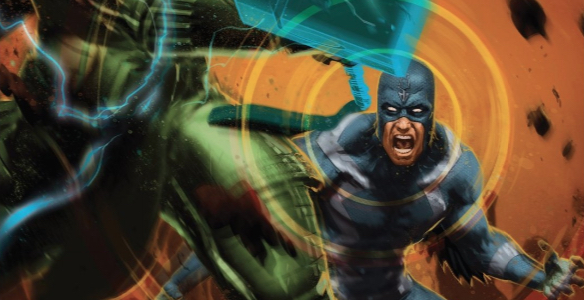
How Layouts Drive Tension in Death of the Inhumans 3

by Drew Baumgartner

Death of the Inhumans 3

This article containers SPOILERS. If you have not read the issue yet, proceed at your own risk!

Deep, thoughtful analysis is a rarity in the world of comics criticism. While it’s easy enough to dismiss itinerant continuity policing or grumbling about plot-holes as braindead drivel, there’s a much more insidious kind of shallow analysis that suggests that there are simple aesthetic rules that govern the medium. It may be possible to identify trends that are true for even a very large sample of comics, but there are just as many exceptions to those “rules.” Truly deep analysis, on the other hand, can introduce us to new analytical tools that can be applied to many other comics, even if the conclusions we draw from those applications have no universal trend. Such is the case with Matt Fraction’s “cover version: daredevil 230 and cutting techniques,” one of my favorite comics analyses of all time. I highly recommend taking the time to read that piece, but the short explanation for why I love it so much is that it introduced me to ideas I had never encountered before. Most important was the thought that the invisible structures that guide our reading experience might be only just invisible, and that we can unearth them by paying close attention to things like panel counts and layouts. Fraction identifies a triangle motif in Daredevil 230 that is obvious enough on some pages, but on others just loosely describes the areas of the layouts we might most pay attention to. Using those same techniques, I recognize a similar pattern on some pages of Death of the Inhumans 3, though they elicit a decidedly different effect. Continue reading
The Designs Define the Characters in Exiles 7

by Spencer Irwin

This article contains SPOILERS. If you haven’t read the issue yet, proceed at your own risk!

slim-banner

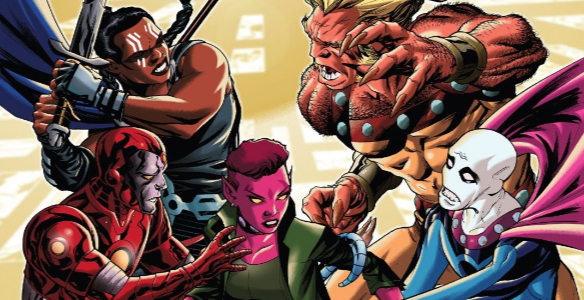
Exiles has been extremely lucky to have a regular artist as talented as Javier Rodriguez, but the series is just as lucky to have found a guest artist like Rod Reis, one who’s just as talented, even if his style is entirely different. I could probably spend a month just gushing about Reis’ work throughout Exiles 6 and 7, but today I want to specifically talk about his character designs and how they inform so much about each character’s role and personality without a single word. Continue reading

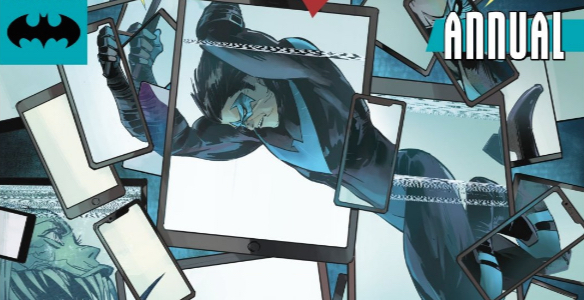
Nightwing Annual 1 Takes on Fake News

By Michael DeLaney

This article contains SPOILERS. If you haven’t read the issue yet, proceed at your own risk!

We’ve all heard the sayings “Knowledge is power” or “The truth will set you free”, but what good is that when that knowledge is so easily weaponized and the truth is blatantly denied? Nightwing Annual 1 continues Benjamin Percy’s “Dark Web” arc with Nightwing taking on the literal embodiment of fake news. And while a certain president might use that term to mean “bad press”, what I’m referring to – and what Percy is focusing on – is the targeted online disinformation that swayed many Americans to vote for that president in the first place. Continue reading

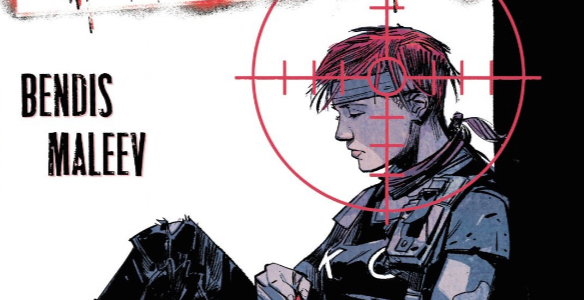
Scarlet 1 Bridges the Narrative Gap

By Michael DeLaney


This article contains SPOILERS. If you haven’t read the issue yet, proceed at your own risk!

The medium of comic books isn’t an ancient indecipherable text, but it does have its own language that is learned and acquired by readers over time. Along with the significant portions of sequential art, readers must become accustomed to multiple forms of word-based storytelling. In Scarlet 1, writer Brian Michael Bendis, artist Alex Maleev, and letterer Joshua Reed showcase an additional storytelling device not often seen in comic books. Continue reading

Intimacy, Friendship, and Romance in Runaways 12

By Spencer Irwin

This article contains SPOILERS. If you haven’t read the issue yet, proceed at your own risk!

Runaways 12 focuses in on two different pairings, which both eventually blossom into romance. In both cases, though, those romances are born of a deep friendship, of a deep intimacy which has been developed throughout several volumes of adventures together. Rainbow Rowell, Kris Anka, and Matthew Wilson spend most of this issue digging deep into their intimacy in all its forms, be it emotional intimacy or physical. Continue reading