The Amazing Spider-Man 17

amazing spider-man 17

Today, Drew and Patrick are discussing The Amazing Spider-Man 17, originally released April 1st, 2015.

O, I am fortune’s fool!

William Shakespeare, Romeo and Juliet

Drew: Of all the heroes in Marvel’s pantheon, Peter Parker might be the most defined by his passivity. I don’t mean to say that he never takes decisive action, just that it’s almost always reactionary. Heck, he doesn’t even play a key role in his own origin — the spider bites him, then Peter lets the robber get away instead of doing something. This manifests itself in his perpetual bad luck, that is, outside forces that always make his life harder. It makes for great drama, but after a while, it also starts to paint Peter as kind of incompetent. Why is he always stammering for a cover story? Why is he always facing off against the same bad guys? Why is he always running out of web-fluid? The smartest part about The Superior Spider-Man was pointing out these obvious areas for improvement, shaking up the formula of Spider-Man as we know him. It was an exciting development, but Peter’s return to his body was also a return to form, failing to capitalize on many of Otto’s inarguably superior developments. Amazing Spider-Man 17 finds Peter coming up against some of those age-old problems, but this time, Anna Maria doesn’t have the patience to watch him keep bumbling through them. Continue reading

The Black Hood 2

Alternating Currents: The Black Hood 2, Drew and Mark

Today, Drew and Mark are discussing The Black Hood 2, originally released March 25th, 2015.

Drew: Means, motive, and opportunity. We’re familiar with how these play in a criminal case — a prosecutor must convince the jury of these three elements in order to convict — but I’d argue that they’re just as important in crafting a compelling superhero origin story. “Means” would be the superpowers (or lack thereof): the radioactive spider-bite, the alien DNA, the years of martial arts training; “motive” is their reason for fighting: the death of a loved one, the morals of a father-figure, some huanting mystery from their past; and “opportunity” is the wealth of villains: bankrobbers, intergalactic warlords, or even the corruption of their hometown. As with a criminal case, means and opportunity are pretty open-and-shut — the basic whos and whats of the story — but motive is much more subtle. An audience will dismiss a far-fetched or unbelievable motive just as quickly as a jury will. Of course, that also often makes motive the most elusive of these elements — a feature Duane Swierczynski and Michael Gaydos highlight in The Black Hood 2. Continue reading

Batman and Robin 40

batman and robin 40

Today, Drew and Spencer are discussing Batman and Robin 40, originally released March 25th, 2015.

Drew: Bruce Wayne’s back was broken. Otto Octavius took over Peter Parker’s body. Superman had a mullet. Steve Rogers was dead. We often talk derisively of these kinds of easily-reversed changes in superhero comics because they seem gimmicky and cheap — what better way to boost sales than to trumpet the death of Superman? — but I’d actually argue that these stories offer a clever way of exploring what makes these heroes great. Moreover, they remind us not to take what we like about these characters for granted. Fewer characters have been put through quite so many changes recently as Damian Wayne, who has both died and gained superpowers, so while Batman and Robin 40 ends with him back in his non-dead, non-superpowered state, it’s actually kind of refreshing. Continue reading

The Private Eye 10

private eye 10

Today, Drew and Spencer are discussing The Private Eye 10, originally released March 19th, 2015.

Drew: One of the best pieces of writing advice I ever got was from my older brother as I was preparing an essay for my college applications. I don’t remember his exact words, but he advised me to ease off a bit on my conclusion, which he pointed out was trying way too hard to wrap my essay up with a grand statment of purpose. It’s a common tendency, but it’s easy to understand why: the end is your last chance to leave an impression on your audience — better make your big point now, whether you’ve earned it or not. That tendency becomes even more treacherous when the work in question is meant as a kind of critique of modern society, where the very idea of an ending might feel forced, and any kind of grand statement would feel particularly heavy-handed. It should be no surprise that the sly-as-ever The Private Eye 10 avoids this pitfall altogether, offering an ending so subtle, it might actually be too ambiguous. Continue reading

C.O.W.L. 9

Alternating Currents: C.O.W.L. 9, Drew and Spencer

Today, Drew and Spencer are discussing C.O.W.L. 9, originally released March 18th, 2015.

Drew: I once saw a Q&A session with The Wire creator Dan Simon where he had to defend a moment that one audience member saw as a crack in the realism of the show. I don’t remember Simon’s exact words, but his answer boiled down to the fact that the show isn’t real — sometimes, the creators would knowingly break from absolute fidelity in order to elicit the appropriate emotional response from us. Everything we saw on that show, just like any number of less realistic narratives, was there for our benefit, not because it’s 100% true to life. What’s funny to me is that the fan’s complaint wasn’t with the credulity-straining Hamsterdam or serial killer plotlines, but with the body language of an uncredited, unnamed character. I suspect the reason those bigger pieces of fiction get a pass is because we want them to happen. The Wire does such a good job of detailing how the system is broken, we can’t help but cheer when a character attempts to buck it. It’s cathartic, so we overlook that it’s also kind of batshit. I found myself thinking the same thing about Radia’s catharsis in C.O.W.L. 9, which is so necessary, it really doesn’t matter how unlikely it is. Continue reading

Silk 2

Alternating Currents: Silk 2, Drew and Spencer

Today, Drew and Spencer are discussing Silk 2, originally released March 18th, 2015.

That’s gonna be a…you know, a…fascinating transition.

Walter Bankston, Unbreakable Kimmy Schmidt

Drew: And just like that, Silk‘s story of a girl trying to make it in New York after spending several years in a bunker has entered the zeitgeist…as the logline of Unbreakable Kimmy Schmidt. Two narratives having similar premises and release dates is a common phenomenon in Hollywood, from A Bug’s Life and Antz to The Prestige and The Illusionist, and while the similarities are often superficial, the perceived sameness can rob both narratives of their sense of originality. Silk has the benefit of being released first (with its title character’s origin introduced back in Amazing Spider-Man 4), but Unbreakable Kimmy Schmidt has managed to get more of its story out quicker. I’m not ashamed to admit that I’ve already watched every episode of Kimmy Schmidt (which may explain why I’m picking up on the similarities so strongly), so I’m decidedly biased in terms of who owns the narrative, but the overlap actually lends Silk 2 the familiar charm of a series that has been around much, much longer. Continue reading

The Surface 1

Alternating Currents: The Surface 1, Drew and Spencer

Today, Drew and Spencer are discussing The Surface 1, originally released March 11th, 2015.

Writing becomes not easier, but more difficult for me. Every word is like an unnecessary stain on silence and nothingness.

Samuel Beckett

Drew: It’s not often that we scrutinize whether a work of art “justifies its own existence.” Indeed, it’s a focus we tend to reserve for sequels, re-masterings, new editions, or other works that might be accused of returning to a specific well, but it’s curious that we’re not equally dubious of ALL art. I suspect it’s because we don’t actually care. Why a work of art exists may be an easy target when we dislike it, but ultimately, the only thing that matters is how it exists. There may be creator-side issues that explain why the nuts and bolts of a work of art are the way we are, but on the audience side, we can really only evaluate whether or not those nuts and bolts work. As a guiding principle, that philosophy has kept me happy, allowing me to both separate art from the artists that make it and remain blissfully ignorant of whatever business considerations might go on behind the scenes. But with that happiness came a kind of complacency, forgetting that there might be works of art that might actually be about their own existence. The Surface 1 is one such work, focusing so self-consciously on its own existence that I can’t help but feel a little insecure about justifying a written discussion of it — not because it’s bad, but because that self-consciousness is kind of infectious. Continue reading

Star Wars 3

Alternating Currents: Star Wars 3, Drew and Patrick

Today, Drew and Patrick are discussing Star Wars 3, originally released March 11th, 2015.

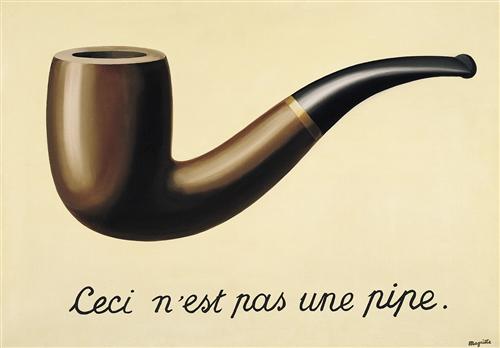
the treachery of images

Drew: Ah, The Treachery of Images. I remember chuckling mildly at Magritte’s pedanthood when he insisted that it really isn’t a pipe — it’s a picture of a pipe — but I think the painting is actually much more clever than it initially seems. That anyone would be given pause by a painting of a pipe insisting it is not a pipe speaks to some of our most basic assumptions about art. Indeed, that we’re confronted with the fact that a picture of a pipe is not a pipe forces us to question what it means for something to be a pipe. Clearly, it’s not just a matter of looking like a pipe, so some element of pipe-iness is lost in the translation. As Marvel’s new Star Wars series marches on, I find myself wondering if some piece of what makes Star Wars Star Wars isn’t also lost in the translation to comics. Continue reading

Weekly Round-Up: Comics Released 3/4/15

round up

Look, there are a lot of comics out there. Too many. We can never hope to have in-depth conversations about all of them. But, we sure can round up some of the more noteworthy titles we didn’t get around to from the week. Today, Drew, Patrick, and Spencer discuss Saga 26, Universe 2, The Woods 11, Batman Eternal 48, Operation S.I.N. 3, Spider-Woman 5, Guardians Team-Up 1, Rocket Raccoon 9, and X-Men 25.

slim-banner4

Well, I’ve been afraid of changin’
‘Cause I built my life around you
But time makes you bolder
Children get older
I’m getting older, too

Stevie Nicks, “Landslide”

Drew: In 1972, Niles Eldredge and Stephen Jay Gould coined the phrase “punctuated equilibria” to describe systems where short burst of change punctuate otherwise stable conditions. They were working in evolutionary biology, but they might as well have been referring to highly episodic narratives like sitcoms and comics. Or, at least as long as there aren’t kids involved. I’m not sure exactly what was the first series to acknowledge that its child stars were aging in real-time (though that would be a fun research project), but everything from For Better or For Worse to Full House benefitted from that precedent. In those situations, the series must evolve along with those characters as they mature, gain independence, and grow into (and out of) age-appropriate storylines. Saga has long been driven by “big” ideas — family, love, war — but as issue 26 reveals, the specific relationship to those ideas will change along with its child characters. Continue reading

Nameless 2

Alternating Currents: Nameless 2, Drew and MichaelToday, Drew and Michael are discussing Nameless 2, originally released March 4th, 2015.

Dave Bowman: Open the pod bay doors, HAL.
HAL 9000: I’m sorry, Dave. I’m afraid I can’t do that

2001: A Space Odyssey

Drew: Arthur Miller called betrayal “the only truth that sticks,” and it’s hard to deny the visceral power of a betrayal. Betrayals are at the center of every great tragedy, from Euripides to Shakespeare, and are still very much a driver of drama today. In it’s simplest form, a betrayal is simply someone acting differently than we expect, but “acting differently” can have dire consequences in a life-or-death situation. That’s what makes HAL 9000’s turn in 2001 so compelling — a computer with a sense of self-preservation is shocking enough, but because the story is set in outer space, there’s a lot more at stake than when your laptop decides to auto-update. Grant Morrison and Chris Burnham’s Nameless 2 clearly draws a lot of inspiration from that betrayal, as the crew remains unaware of a mutiny brewing back at the base. Continue reading