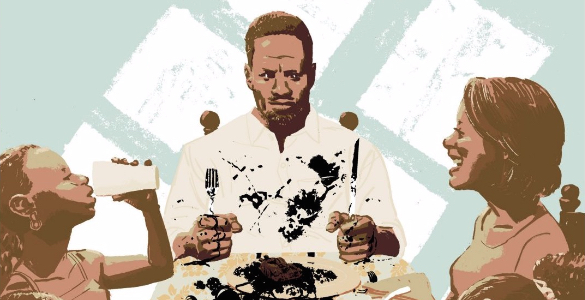
(Almost) Normalizing the Enemy in Outcast 31

by Drew Baumgartner

Outcast 31

This article contains SPOILERS. If you haven’t read the issue yet, proceed at your own risk!

Get back to work.

Gus Fring, “Box Cutter”

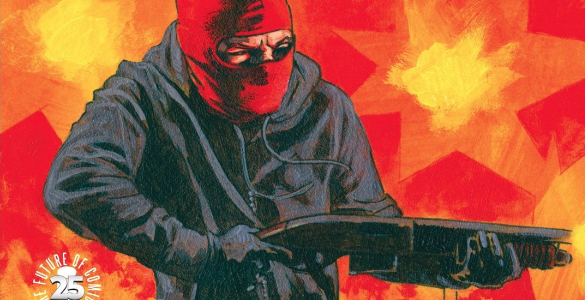
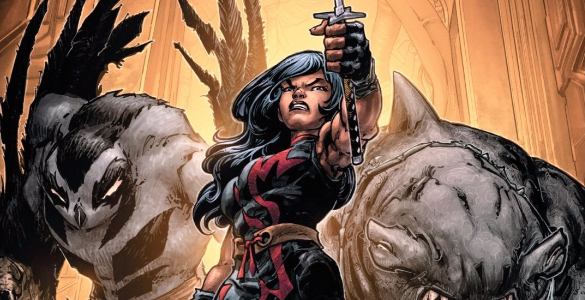
Is there any scene in modern television more gripping than Gus Fring slowly changing out of his street clothes, unexpectedly slashing the throat of one of his loyalest employees, then changing back, as calmly as before? It’s a shocking show of force from a character that had mostly distinguished himself for his almost quaint professional decorum. He was a drug lord, sure, but he treated it as a kind of regular day job, fully compartmentalized from his familiarly domestic home life. In many ways, Rowland Tusk feels cast in that same mold, separating his home life from his more sinister occupation, and largely keeping his hands clean until — suddenly — he needs to get his hands dirty. Continue reading

Silver Surfer 14: Discussion

by Spencer Irwin and Drew Baumgartner

This article containers SPOILERS. If you haven’t read the issue yet, proceed at your own risk!

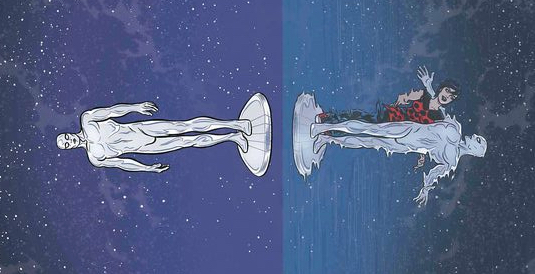
Spencer: When it comes to weaving together long-term plots and storylines spanning years and years, Dan Slott might just be the best there is right now — if not in all of comics, then almost certainly in mainstream superhero books. Silver Surfer 14 is Slott (and Michael and Laura Allred) firing on all cylinders, bringing two volumes’ worth of stories to an immensely satisfying ending. It not only resolves and honors everything that’s come before, but continues to put all the qualities that have made Silver Surfer such a quality read on full display: wonder, adventure, joy, love, and pure emotion — oh, and some metatextual fun, too. Continue reading

The (Re)Introduction of Klaw in Black Panther 166

By Drew Baumgartner

Black Panther 166

This article contains SPOILERS. If you haven’t read the issue yet, proceed at your own risk!

There’s a lot to be excited by in Ta-Nehisi Coates’s Black Panther run, but one we rarely comment on is that it’s bringing in new readers. As an already popular author and journalist, Coates has an established audience that is much, much larger than the typical comics creator. For evidence, we need look no further than his twitter followers, which number 1-3 orders of magnitude more than most comics creators — heck, he has more followers than most comics publishers. And, importantly, the vast majority of those followers (and Atlantic and Between the World and Me readers) aren’t comics readers. I’ve covered plenty of comics in our 7 years as a site, but tweets about Coates’s Black Panther represent the only times I’ve been asked “where can I buy this comic?” And that’s happened multiple times. Coates is bringing new people to the medium, and that’s something special.

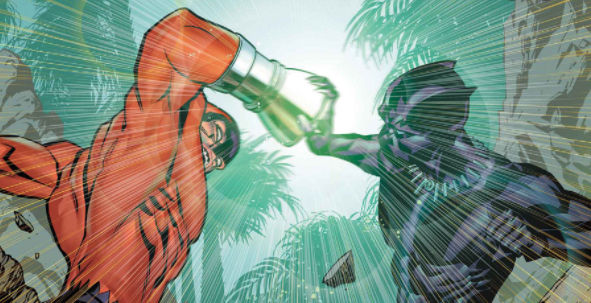
Of course, it also puts him in a bit of an unusual place as a writer. T’Challa is a character with a rich, half-century-long history, and comicdom is notorious for fans who know every bit of that history. How do you reconcile the interests of those fans with those of total neophytes? From the start, Coates has struck an elegant balance, acknowledging many specific beats of that history while also creating entirely new mythologies for the character and his world. No one element represents that better than Ulysses Klaw, whose introduction at the end of last month’s issue crashed one of T’Challa’s oldest enemies into that new mythology. Continue reading

Clever Twists Make Bitch Planet: Triple Feature 5 a Standout

by Drew Baumgartner

Bitch Planet Triple Feature 5

This article will contain SPOILERS. If you haven’t read the issue yet, proceed at your own risk!

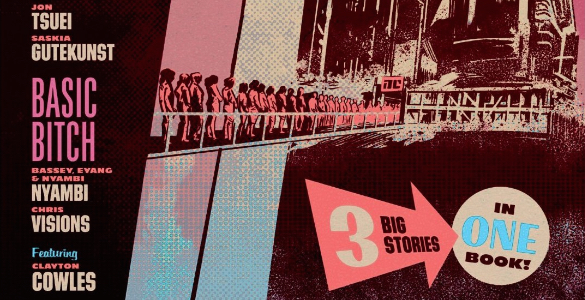
As an anthology series, Bitch Planet: Triple Feature seems to offer a fairly open brief to its contributors: tell an eight-page story set somewhere in the world of Bitch Planet, examining how its entrenched gender and racial biases affect everyday life. But, of course, exactly how those biases manifest in the world of Bitch Planet often needs to be defined in the moment, as these short stories are often venturing into areas yet unexplored by the main series. For these, creators seem to have three primary approaches: 1) present the biases as they appear in the real world with little embellishment, 2) heighten or exaggerate the biases (or their enforcement) that we see in the real world, or 3) invert the biases that we’re familiar with, creating a bizarre reflection of the real world. Issue 5 features all of these approaches, and makes a strong case for each. Continue reading

Shifting Motives in Kill Or Be Killed 13

By Drew Baumgartner

Kill or be Killed 13

This article contains SPOILERS. If you haven’t read the issue yet, proceed at your own risk!

This time, it’s personal.

Tagline, Jaws: The Revenge

It’s easy to deride “this time, it’s personal” — even without the association with the fourth Jaws movie, the sentiment has always carried with it a kind of self-parody. Or, I should say: that particular articulation of the sentiment has always felt that way. But the notion of a narrative escalating because of personal stakes is essential to virtually all drama (though, admittedly, not every drama has an impersonal/personal threshold that needs to be crossed). Which makes the implied sneer that goes with saying “this time, it’s personal” somewhat unfortunate — otherwise, it would be the perfect way to express Dylan’s newfound motivation for his war on the Russian Mafia. Continue reading

The Wild Storm 8 and the Power of the Mid-Page Scene Transition

by Drew Baumgartner

The Wild Storm 8

This article contains SPOILERS. If you haven’t read the issue yet, proceed at your own risk!

Every time I talk about this series, the first thing I want to bring up is clarity. Writer Warren Ellis and artist Jon Davis-Hunt have struck such an alluring balance of crystal clear in-the-moment actions and emotions while keeping the larger motivations and machinations in a shroud of mystery, I can’t help it. While I’m sure there’s fun to be had speculating on the unclear elements, I’m most excited by the ways Ellis and Davis-Hunt cultivate their clarity. Beyond being fun to talk about, the clarity is deployed with such deftness, each issue serves as a masterclass in comics storytelling, allowing our discussions to zero in on details like fight choreography or procedural elements. This issue affords us a closer look at another idiosyncratic element of comics storytelling: the mid-page scene transition. Continue reading

Teenage Mutant Ninja Turtles Universe 15: Discussion

By Drew Baumgartner and Patrick Ehlers

Teenage Mutant Ninja Turtles Universe 15

This article contains SPOILERS. If you haven’t read the issue yet, proceed at your own risk!

Drew: The Teenage Mutant Ninja Turtles have always been the perfect outcasts in a medium made for outcasts. Well, saying that comics were “made” for outcasts isn’t entirely accurate, but it certainly had become a medium for outcasts — at least in the US — by the time the turtles were invented in the 1980s. We don’t really need to get into the causality of why comics fandom was perceived as a weird thing — the point is that it was. And in the age before the internet, someone with a “weird” hobby or enthusiasm for some obscure piece of pop culture might not know anyone else like themselves. While the rest of the world could connect over their religion, political party, or even local sports team, the average comics reader in 1984 might not have had anyone they knew who shared their interest. I don’t bring this up to pity the lot of the poor comics fan — heaven knows plenty of people were more isolated and actively persecuted — just to say that themes of not fitting in have always been an essential part of the TMNT makeup. This is a point that Erik Burnham and Sophie Campbell clearly understand, as their Teenage Mutant Ninja Turtles Universe finds several characters seeking their place in the world. Continue reading

Killing Hope in Daredevil 27

by Drew Baumgartner

Daredevil 27

This article contains SPOILERS. If you haven’t read the issue yet, proceed at your own risk!

When you walk through the garden
You gotta watch your back.
Well I beg your pardon
Walk the straight and narrow track.
If you walk with Jesus
He’s gonna save your soul.
You gotta keep the devil
Way down in the hole.

Tom Waits, Way Down in the Hole

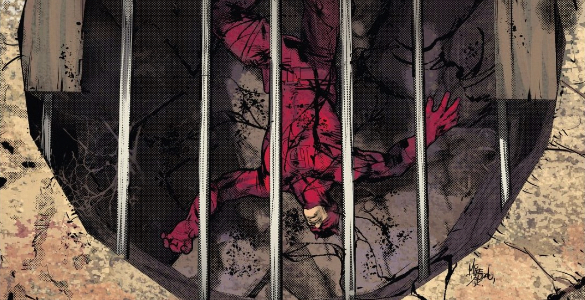
There are plenty of great morals to learn from The Wire, but one that left the biggest impression on me is the thought that many Americans simply don’t have access to the American Dream. Each successive series does a great job of detailing why both policing and education fail to end the drug trade, why politics fail to fix the police or the schools, and why the press fails to fix politics. It’s a disheartening lesson to learn, for sure, but it’s one we must reconcile with before we can mount any meaningful solutions. Unfortunately, many American’s are still too enamored of the old narrative of the American Dream — the kind represented by Matt Murdock’s “orphaned fighter’s son to high-powered attorney” origin — to accept that not everyone has access to that dream. Continue reading

Parker Luck Returns in The Amazing Spider-Man 789

by Drew Baumgartner

Amazing Spider-Man 789

This article contains SPOILERS. If you haven’t read the issue yet, proceed at your own risk!

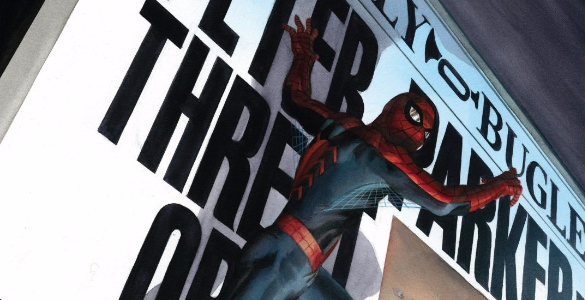
Here’s a question: What would you say is the platonic public perception of Spider-Man in the Marvel Universe? Never mind the exceptional circumstances of specific story arcs, do we imagine in general that the public sees Spider-Man as a hero, or do we think J. Jonah Jameson’s one-man crusade against him has influenced public opinion? I suppose I’ve always seen him as misunderstood by the general public, but his interactions with individual New Yorkers always seemed positive — there’s not a whole lot of ambiguity when you see him rescuing babies from burning buildings. Maybe it speaks to just how street-level Spider-Man has traditionally been that his sphere of personal influence would be small, but it sure seems like the citizens of Spider-Man’s New York are on the whole easily swayed by the media they consume. That’s probably an evergreen theme, but it’s one that feels particularly relevant in our modern political climate, and one that comes back in a decidedly unexpected way in Amazing Spider-Man 789. Continue reading

The Woods 36: Discussion

by Spencer Irwin and Drew Baumgartner

This article contains SPOILERS. If you haven’t read the issue yet, proceed at your own risk!

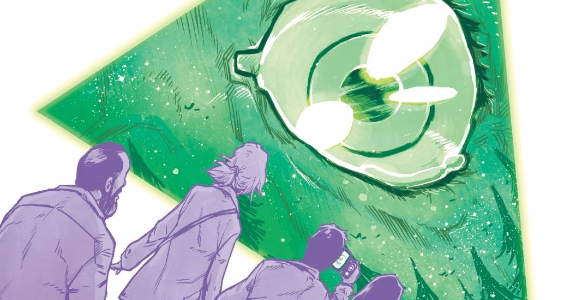
Spencer: Drew and I had the immense pleasure of chatting with The Woods artist Michael Dialynas at New York Comic Con a few weeks ago, and early in our conversation Dialynas caught me off guard by asking me how I wanted The Woods to wrap up. I like endings, and I like endings that surprise me, but I’ve also been following these characters for over three years now, so I answered, “Well, I just want a happy ending for everyone. Especially Isaac.” Dialynas proceeded to sign my comic with the words “I’m so sorry.”

Final issues are always about wrapping things up for beloved characters, but after that conversation, I especially approached The Woods 36 trying to figure out what kind of life each character could possibly live going forward. What kind of futures have Dialynas and writer James Tynion IV granted their creations?  Continue reading