Glitterbomb: The Fame Game 4: Discussion

by Patrick Ehlers and Spencer Irwin

Glitterbomb The Fame Game 4

This article contains SPOILERS. If you haven’t read the issue yet, proceed at your own risk!

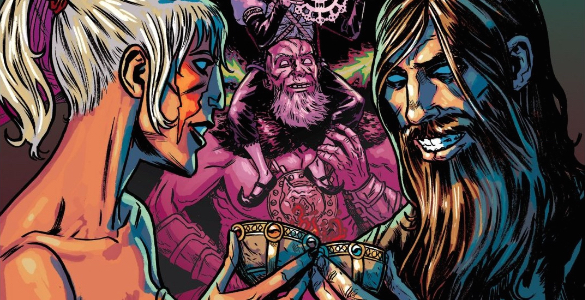
Patrick: In the first Glitterbomb series, writer Jim Zub and artist Djibril Morissette-Phan explore the late-career of actress Farrah Durante. Durante was abused by the system, sexually assaulted by her co-star, and discarded by the studio. She was emboldened by a spirit of vengeance, and ended up murdering a theater full of Hollywood’s worst scumbags in a whirlwind of intensely satisfying supernatural revenge. Mind you, it costs the character her life.

Glitterbomb: The Fame Game follows the next generation of celebrity in the form of Kaydon, Farrah’s only real friend toward the end of her life. Kaydon isn’t an actress on a TV show, she’s a personality, famous for her experience and perspective. She’s a woman of color, and at least a little bit queer, so we already know she’s able to express herself more completely than Farrah ever would have been allowed to. Continue reading

Angelic 4 Urges Us to Ask “Why?”

by Spencer Irwin

This article contains SPOILERS. If you haven’t read the issue yet, proceed at your own risk!

While organized religion is well known for rigid rules and requiring blind faith and obedience, I’ve never thought of them as qualities inherent to actually worshipping God. Malachi 3:10 implores worshippers to put God to the test in order to see for themselves the blessings he’ll bring those who love Him, while Genesis 18 describes a lengthy exchange between God and Abraham where Abraham continually questioned God’s intentions to destroy the cities of Sodom and Gomorrah, bartering for the lives of any righteous who might be in the city. I can really only speak for Judeo-Christian religions, but the point seems clear nonetheless: asking questions certainly seems to be an acceptable part of navigating faith. Forbidding questions only serves to empower men with agendas, as is the case in Simon Spurrier and Caspar Wijngaard’s Angelic 4. Continue reading

Curse Words Holiday Special 1: Discussion

by Patrick Ehlers and Spencer Irwin

This article contains SPOILERS. If you haven’t read the issue yet, proceed at your own risk!

“No hugging, no learning.”

-Larry David

Patrick: It’s maybe not fair to say that Seinfeld was a show about nothing. The show was about cynicism, it was about flawed people trapped in their familiar patterns, it was about manners and modern etiquette. But it was mostly a vehicle for observational jokes about the weird ways human beings behave. So while there are virtually no sincere lessons learned in the whole series, the show illustrates an awful lot about human nature. The only way it ever drills down into that fundamental human truth is by straying aggressively true to itself — no hugging, no learning. The same is true of Charles Soule and Ryan Browne’s Curse Words, which gets to the heart of a nearly impenetrable relationship by being just as gross, just as crazy, and just as heartless as it possibly can be in Curse Words Holiday Special 1. Continue reading

The Wicked + The Divine Christmas Annual 1: Discussion

by Spencer Irwin and Drew Baumgartner

This article contains SPOILERS. If you haven’t read the issue yet, proceed at your own risk!

Spencer: One of the most common complaints about prequels is that everyone “already knows the ending,” but sometimes that inevitability can be an asset. Take The Wicked + The Divine Christmas Annual 1, for example. Writer Kieron Gillen and a bevy of talented guest artists fill the special with tales from the early days of the Pantheon. Most are fairly sweet and upbeat in isolation, but when viewed in context with the events that follow, suddenly become much more bittersweet. The inevitable history these characters must someday face creates extra layers of meaning for each story, making the special as a whole that much richer. Continue reading

The Fix 10: Discussion

by Drew Baumgartner and Patrick Ehlers

The Fix 10

This article contains SPOILERS. If you haven’t read the issue yet, proceed at your own risk!

slim-banner

You either die a hero, or you live long enough to see yourself become the villain.

Harvey Dent, The Dark Knight

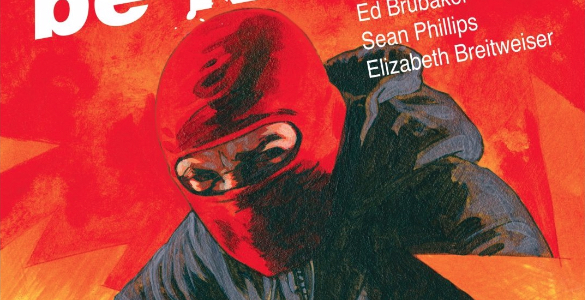
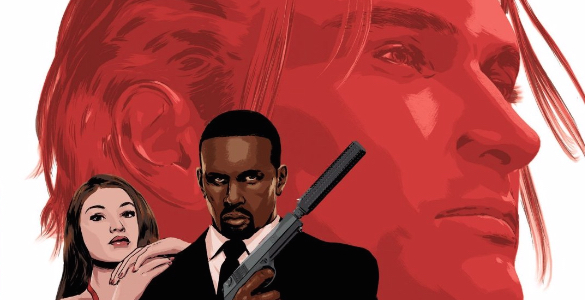
Drew: If that quote doesn’t feel like it fits this issue, it’s because it doesn’t. Where The Dark Knight explores the ideas of good, evil, and the moral relativism that exists in between, The Fix is gleefully amoral, concerned less with good and bad as it is with whatever its protagonists can get away with. Which is to say, a quote about heroes and villains doesn’t make a whole lot of sense in the world of The Fix. But I wonder if we strip away the morality from that quote, if we might get something a bit more universal (if still deeply pessimistic): you either die happy, or you live long enough to see yourself become miserable. The ordering of those outcomes betrays a cynical worldview that The Dark Knight (or at least Harvey Dent) shares with The Fix, one that presumes things are inclined to get worse. Of course, while The Dark Knight spun that cynicism into tragedy, The Fix funnels it into dark humor, making any successes Roy or Mac may enjoy are but haughty spirits before the inevitable fall. Continue reading

Kill or be Killed 14: Discussion

By Drew Baumgartner and Ryan Desaulniers

Kill or be Killed 14

This article contains SPOILERS. If you haven’t read the issue yet, proceed at your own risk!

Remove everything that has no relevance to the story. If you say in the first chapter that there is a rifle hanging on the wall, in the second or third chapter it absolutely must go off. If it’s not going to be fired, it shouldn’t be hanging there.

Anton Chekhov

Drew: I feel like we tend to talk about Chekhov’s Gun backwards: we often frame it as “a gun introduced in the first chapter must go off in the third,” but that “must” kind of scrambles the causality — guns don’t go off in narratives because they’ve been introduced; they’re introduced because they need to go off. If the gun doesn’t go off, it’s as irrelevant to the narrative as the rings of Saturn. It’s an essential concept for narrative efficiency, but my awareness of it undoubtedly influences my own understanding of what a story is. While a child may think of a story as “everything that happens to the characters between the beginning and the end” (I know I did), anyone familiar with Chekov’s Gun must recognize that a good story is, at the very least least, pared down to only the relevant events transpiring between the beginning and the end. It’s a notion that assures us that whatever we’re reading is important, which in turn provides some clues about what the narrative finds important. 14 issues in, one might think that we’d already have a great handle on what Kill or be Killed finds important, but this issue managed to surprise me with the details it chose to focus on. Continue reading

The Press Finds a Way to be Free in Lazarus X+66 5

by Drew Baumgartner

Lazarus X+66 5

This article contains SPOILERS. If you haven’t read the issue yet, proceed at your own risk!

Our liberty cannot be guarded but by the freedom of the press, nor that be limited without danger of losing it.

Thomas Jefferson

I think it would be difficult to overstate how much the founding fathers valued a free, independent press. In their minds, it was an essential check on power, providing the citizenry with vital information about the actions of the government. In that way, the press can be framed as an antagonist of those in power, but only when the actions of those in power are at odds with the will of the people. Unfortunately, recent cults of personality have made certain people more inclined to root for those in power rather than the citizens, managing to tar the press as the enemy of the people. At the same time, news sources have become increasingly consolidated and corporatized, calling into question exactly how “free” and “independent” the press truly is. As ever, the world of Lazarus exists in the space made by playing out these trends to their logical conclusion, creating a world where the press is intended as the PR arm of the family, even as it’s made up of people who are deeply suspicious of them. Continue reading

Black Magick 9 Keep Rowan in the Dark

by Drew Baumgartner

Black Magick 9

This article contains SPOILERS. If you haven’t read the issue yet, proceed at your own risk!

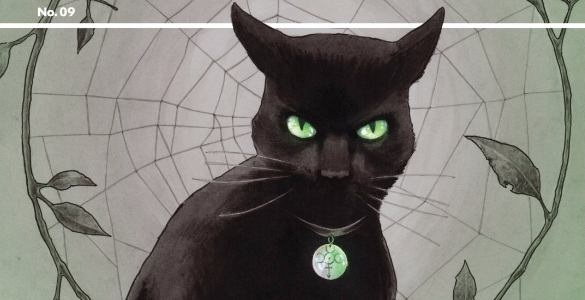
Whether it’s Harry Potter or Luke Skywalker, I tend to think of the prototypical fantasy protagonist as being relatively unfamiliar with the strange world they live in. It allows their confusion or surprise at the unexpected to mirror our own, and their ignorance offers a reasonable justification for someone to explain that wizards are real or that the Jedi channel a power called the force. A more knowledgable fantasy protagonist, then, might be hard for an audience to keep up with. I suspect this is how I’d feel about Rowan Black — who is undoubtedly knowledgable about the fantastical elements of her world — if she weren’t on her heels from issue one. She may have knowledge and motives that we don’t fully understand, but she’s just as clueless about what the heck is going on as we are. Indeed, issue 9 might even leave us with more knowledge than she has. Continue reading

Angelic 3: Discussion

by Mark Mitchell and Taylor Anderson

This article contains SPOILERS. If you haven’t read the issue yet, proceed at your own risk!

slim-banner

Mark: There’s no one-to-one mapping of the different species in Simon Spurrier and Caspar Wijngaard’s Angelic 3 onto our world. It’s not like the Monks represent Group X and the Mans represent Group Y. But at the same time, the world of Angelic is our world, and the experience of the Monks and the Mans is our experience. Continue reading

Father and Son Bonding Time in East of West 35

by Taylor Anderson

This article contains SPOILERS. If you haven’t read the issue yet, read on at your own risk!

Father and son stories have been written since the beginning of time, literally. Many myths focus on this relationship and still today there are movies, books, tv shows, and comics written about this foundational familial connection. It’s obvious to see why. The father-son relationship is…complicated…so it promises an endless well of commentary and creative ideas. And while this is true, I can’t recall ever seeing a father and son story where one member is a horseman of the Apocalypse and the other is promised to destroy the world, but in East of West this is what we have. Even though this may seem bizarre, Jonathan Hickman still finds a way to make Death and Babylon’s relationship meaningful.

Continue reading