Striving for Freedom, Not Comfort in Lazarus X+66 3

by Spencer Irwin

This article contains SPOILERS. If you haven’t read the issue yet, proceed at your own risk!

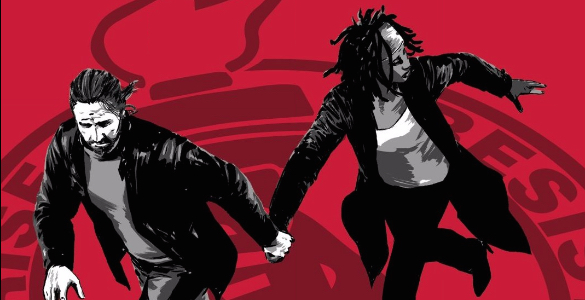
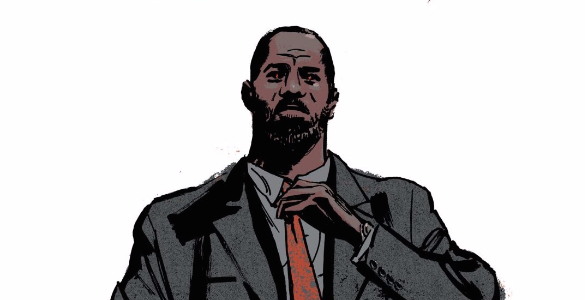
As much as Lazarus has shown us a dark vision of a future dystopia, it’s largely shown it to us from the point of view of that world’s most wealthy and privileged members. Introduced in the second arc, the Barret family allowed writer Greg Rucka to give readers a glimpse of the world from the point of view of its most unfortunate and downtrodden instead. As the series progressed, Michael and Casey have become more integrated with the world’s elite, but parents Joe and Bobbie Barret still provide that more grounded P.O.V., even as serfs. As Lazarus X+66 3 reminds us, the pain of the past can’t, and shouldn’t, be so easily forgotten. Continue reading

Godshaper 6: Discussion

by Spencer Irwin and Drew Baumgartner

This article contains SPOILERS. If you haven’t read the issue yet, proceed at your own risk!

slim-banner

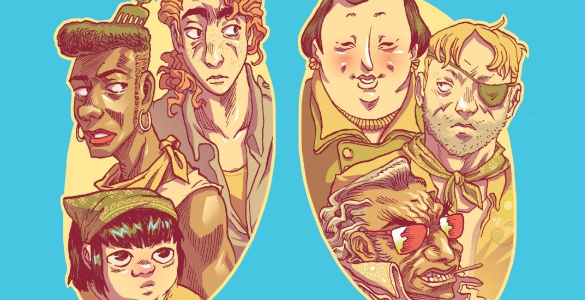
Spencer: It’s a marvelous thing to watch a series come into focus — to reach that eureka moment where you finally get what a creator is trying to say, where a series’ message finally clicks. Simon Spurrier and Jonas Goonface’s Godshaper 6 has been one of those moments for me, a finale that brings all the themes the series has been exploring together in a satisfying, yet completely unexpected fashion. Continue reading

Angelic 1: Discussion

by Spencer Irwin and Mark Mitchell

This article contains SPOILERS. If you haven’t read the issue yet, proceed at your own risk!

slim-banner

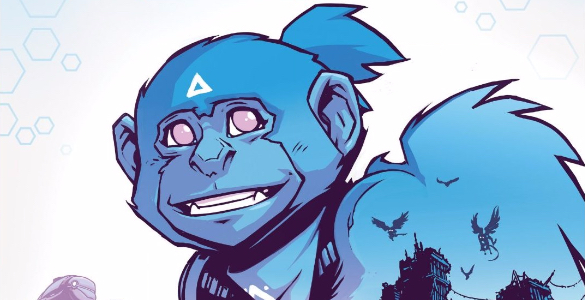
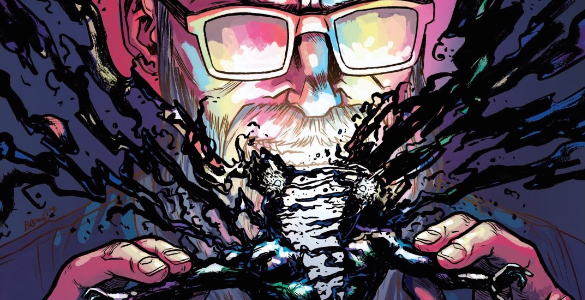
Spencer: Simon Spurrier may just be the best world builder working in comics today. We here at Retcon Punch are continually impressed by Spurrier’s ability to birth creative new world after creative new world, each with its own rules, vernacular, and aesthetic (thanks to the talented artists he’s enlisted), each feeling far vaster than the stories Spurrier decides to tell in them, each reflecting systematic problems, abuses, and issues we face here in the real world. Following on the heels of The Spire and Godshaper, Angelic finds Spurrier and Caspar Wijngaard using a world of sentient animals and oppressive lore to tell a story about the dangers of blind faith. Continue reading

A Widescreen World in Descender 24

by Spencer Irwin

This article contains SPOILERS. If you haven’t read the issue yet, proceed at your own risk!

The action of Descender 24 takes place on a new world to the series, a small, fringe planetoid known as Woch. And while the issue gives writer Jeff Lemire a chance to sharpen his focus a bit to just Driller (and eventually to reintroduce a bit-player who will seemingly become an important villain in the future), my favorite part of this issue is just getting to see Dustin Nguyen bring life to yet another new world, one with landscapes and features unlike any we’ve seen before. It’s no wonder that he uses so many double-page spreads this month — it’s the only way to fit that much wonder onto the page. Continue reading

A Glimpse Outside Non-Compliance in Bitch Planet Triple Feature 4

by Drew Baumgartner

Bitch Planet Triple Feature 4

This article will contain SPOILERS. If you haven’t read the issue yet, proceed at your own risk!

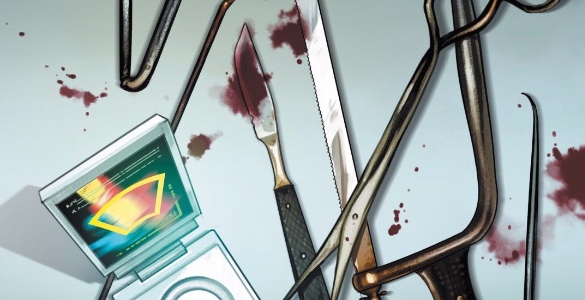
Bitch Planet has always been about non-compliance, about women refusing to be denied their humanity in a system designed to do exactly that. For me, the real teeth of its social commentary lies in just how modest the infractions — and how strict the boundaries of compliance — are. These characters by and large are asking nothing more than to look the way the look, live the way they live, and love the way they love, and are imprisoned for having the audacity to do so. The “logic” of the fathers suggests that their lives would be so much better if they just chose to comply, though we’ve seen relatively little of what life is like for compliant citizens. Bitch Planet: Triple Feature 4 offers a hint at the larger world away from the penal system, following people who otherwise live within the strict boundaries of their world, but it sure doesn’t seem like life is any better for their compliance. Continue reading

Giving Dylan a Life Worth Fighting For in Kill Or Be Killed 12

By Drew Baumgartner

Kill or be Killed 12

This article contains SPOILERS. If you haven’t read the issue yet, proceed at your own risk!

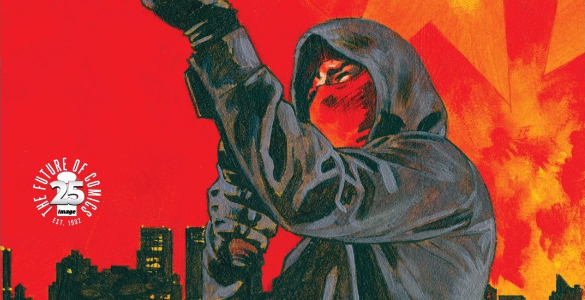
It was clear enough that Dylan’s method for first round of killings wasn’t sustainable. We understand that in a practical sense — his sloppiness had landed him in brushes with both the Russian Mob and the NYPD, both of which seemed to be edging ever closer to figuring out who was behind these attacks — but I also mean it terms of Dylan’s psyche: the more his life was mired in guilt and paranoia, the less it seemed like he would risk so much to protect it. Or, perhaps more importantly, the less we could relate to his desire to protect it. This series regularly places Dyaln at the edge of relatability, but creators Ed Brubaker and Sean Phillips are smart to pull Dylan back a bit in this issue, renewing his lease on life before plunging him headlong into a one-man war against the Russian Mob. Continue reading

Jagged Panelling Cues Evil in Curse Words 8

by Patrick Ehlers

This article contains SPOILERS. If you haven’t read the issue yet, proceed at your own risk!

Charles Soule and Ryan Browne haven’t been shy about Wizord’s twisted morality. The very first issue of Curse Words tells the tale of an interdimensional wizard sent to destroy the Earth, but who is charmed by New York City. Lest we think Wizord a pure soul, we’re quickly reminded of his origins when he shrinks a packed baseball stadium and exiles hundreds of thousands of people to a hell dimension, just to sweep his misdeeds under the rug. That’s a weirdly easy thing to forget — out of sight, out of mind, right? Wizord’s a monster, and while Soule’s script may insist on making him relatable, Browne’s paneling has an agenda of its own. Those cool chevron panels don’t just say “Wizord,” they say “evil.” Continue reading

A Study in War Preparations in Outcast 30

by Drew Baumgartner

Outcast 30

This article contains SPOILERS. If you haven’t read the issue yet, proceed at your own risk!

It’s easy to feel optimistic at the start of Outcast 30 — Simon and Kyle have just discovered a new Outcast, Daphne, and they all seem stronger than ever. Or, they will be, but right now they’re exhausted after clearing out a huge safehouse for the merge (or the possessed — we need something to call these antagonists). There’s a bit of tension as Kyle has to convince his family to take in a complete stranger, but even the resolution of that is played for maximum hopefulness, as both Simon and Amber comment on how much stronger they feel in Daphne’s presence. It’s almost enough to feel like they might be in a position of strength — especially after the way last month’s issue ended. Continue reading

The Wicked + The Divine 31: Discussion

by Drew Baumgartner and Spencer Irwin

Wicked + The Divine 31

This article contains SPOILERS. If you haven’t read the issue yet, proceed at your own risk!

In order to increase the likelihood that students will call for medical assistance in an alcohol-related emergency, some colleges and universities have instituted “Good Samaritan” or medical amnesty policies that eliminate or reduce judicial consequences for students involved in alcohol-related medical emergencies. Other schools may reject this type of strategy based on arguments such as the need to “avoid sending the wrong message” about the seriousness of underage drinking.

Doborah K. Lewis & Timothy C. Marchell,
Safety first: a medical amnesty approach
to alcohol poisoning at a U.S. university”

Drew: I first encountered the notion of a medical amnesty policy in college, though I can’t say I gave it much thought at the time. Indeed, it wasn’t until I was in a position to be worried about dangerously drunk/overdosing students not coming forward (I worked for several years at a summer camp for high-school students) that I started to appreciate how boneheaded the “avoid sending the wrong message” camp truly is. Mostly, it just forgets that the rules against drinking and alcohol use are there for the safety of the students in the first place, somehow valuing the sanctimonious tut-tutting of saying “you shouldn’t drink” over, you know, saving the life of a kid who broke the rules. It’s such an obviously flawed attitude, I was honestly taken aback when I saw reports that some sheriff in Florida was explicitly not offering amnesty to folks with warrants seeking shelter from Hurricane Irma. Or, more specifically, he was insisting on conducting unconstitutional ID checks in order to deter anyone with a warrant from seeking the refuge of a hurricane shelter, endangering their lives because he somehow values laws — the things society makes in order to protect people — more than actually protecting people.

Before I get too off topic, my point is that we’re often too preoccupied with the letter of the law to really parse its spirit. Certain things may be illegal because they’re dangerous, but if coming forward about illegal activity makes things objectively less dangerous, we should encourage that behavior. The article I quoted at the top of this piece offers objective data in support of that idea after studying a medical amnesty policy at Cornell, but I think it’s crucial to note that this type of thinking doesn’t just operate at the institutional level. Even in our daily lives we often react badly to honesty simply because we dislike the truths being revealed, but like the researchers at Cornell, we must recognize how that attitude only makes the situation worse. I found myself thinking about this phenomenon a great deal as I read The Wicked + The Divine 31, as issues of amnesty (and lack thereof) cropped up throughout the issue. Continue reading

The Inevitable Feels Vital in Saga 46

by Ryan Mogge

This article contains SPOILERS. If you haven’t read the issue yet, proceed at your own risk!

The most successful plot turns are ones that feel surprising but, in retrospect, inevitable. Brian K. Vaughan and Fiona Staples end Saga 46 with Petrichor and Robot in a passionate embrace. If this had happened on page one, perhaps the reader would have been thrown, but when the dust settles, it’s clear that this is where we were heading all along. Vaughan and Staples have fully established the depths of both Petrichor and Robot’s loneliness. Even their cliched verbal sparring into macking was telegraphed by the fact that they’ve both been reading romance novels, where kissing without first trading barbs is a rarity. Continue reading