Moonshine 11: Discussion

by Patrick Ehlers and Drew Baumgartner

This article contains SPOILERS. If you haven’t read the issue yet, proceed at your own risk!

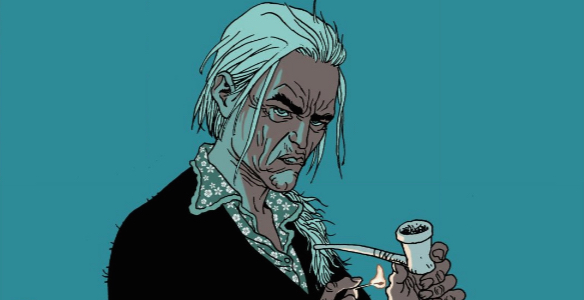
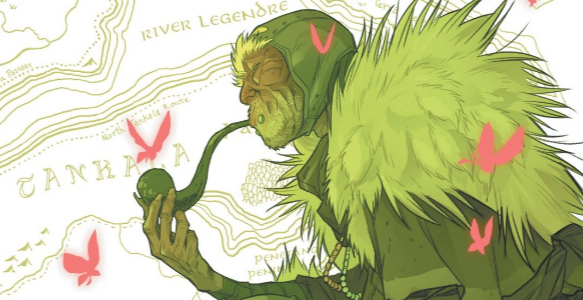
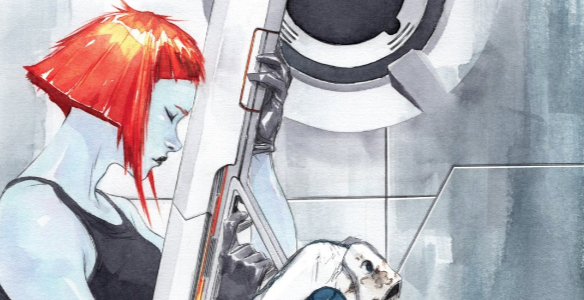
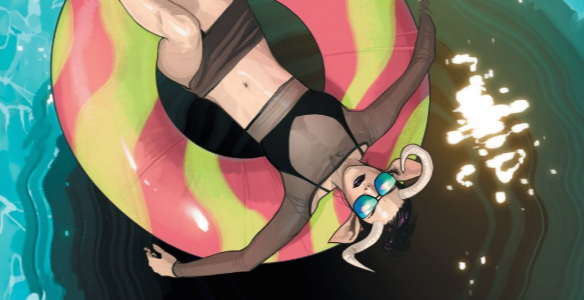
Patrick: Hey, how fast is a comic? I’ve read twenty-page comics that take me over half an hour to get through, and there are some issues I can breeze through in less than 10 minutes. Some comics take place over the course of 60 in-universe seconds, while others stretch on to tell stories that take entire lifetimes. So the answer to my question is: variable. Brian Azzarello and Eduardo Risso’s Moonshine 11 masterfully commands pacing to create breathless swings between compression, tension and release. Continue reading

Oblivion Song 4 Doesn’t Waste Time Rehashing the Plot

by Michael DeLaney

This article contains SPOILERS. If you haven’t read the issue yet, proceed at your own risk!

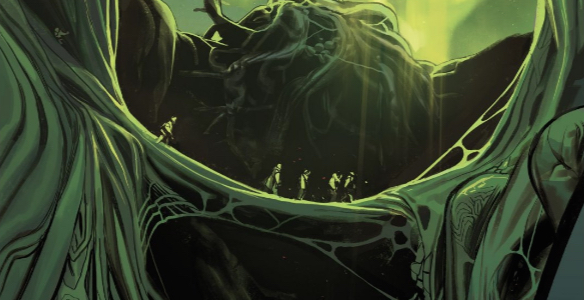
Perhaps I’m getting (even more) irritable in my old age, but more and more I find myself cringing at excessive expositional dialogue. It may not always be the case, but I like to think that comic book readers are an intelligent and intuitive bunch, making clunky fact-establishing dialogue a little jarring. As a veteran of creating his own universes and mythologies, Robert Kirkman knows the right balance of give and take when it comes to expositional dialogue. Continue reading

Secrets Don’t Stay Secret for Long in Dead Hand 3

By Spencer Irwin

This article contains SPOILERS. If you haven’t read the issue yet, proceed at your own risk!

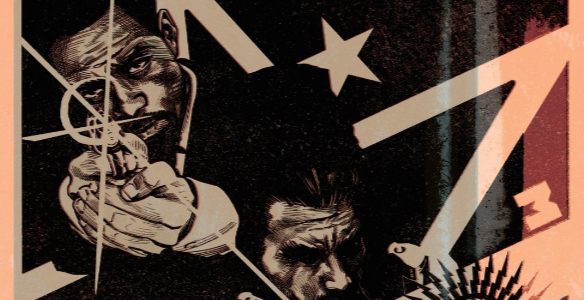
Secrets rarely stay secret for long, but this is especially true when kids are involved. Younger children will repeat anything and everything to anybody, while older children and teenagers tend to be naturals at sniffing out lies and seeing through bullshit. What this means for the cast of Kyle Higgins and Stephen Mooney’s Dead Hand is that the secret of Mountain View is coming closer and closer to being revealed — unfortunately for them, the loss of that secret could very well mean the end of the world in a fiery nuclear holocaust.  Continue reading

The Fix 12 is a Perfect Revenge Fantasy Parody

by Patrick Ehlers

This article contains SPOILERS. If you haven’t read the issue yet, proceed at your own risk!

“When I woke up, I went on what the movie advertisements refer to as a roaring rampage of revenge. I roared. I rampaged. And I got bloody satisfaction.”

The Bride, Kill Bill

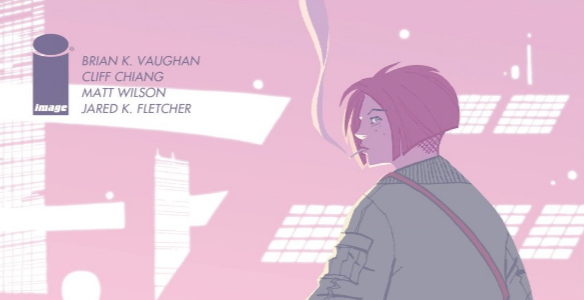
I tend to struggle with revenge fantasies. The objective of the protagonist is too prescribed for me, as though the sentiment “I want the people who made me suffer to feel what I feel” is a universal impulse. That is, of course, part of the genius of Kill Bill: the revenge fantasy is challenged the second Beatrix Kiddo sees the life she’s sworn to ruin. It’s a twist on the formula, just like Nick Spencer and Steve Lieber’s The Fix 12. The motivation remains the same, but our hero’s efficacy is the variable. Roy’s complete inability to get revenge for Mac’s death makes this issue a borderline genre spoof, and it’s just so perfect. Continue reading

Indifference is the Enemy in Analog 3

by Patrick Ehlers

This article contains SPOILERS. If you haven’t read the issue yet, proceed at your own risk!

“Oona can handle herself…”

Analog 3

We find ourselves in a wholly irrational place in history — a swing away from progressive ideals. Regressive. Part of what makes this era so fucked up is that we believed ourselves to be beyond history. The concept of the “end of history” is contingent on society having reached a perfect state of civility. There would be no war, no famine, no racism, no inequality, no income disparity if only we reached this civil equilibrium. Here’s the problem: we never got close to perfection before white America declared that we were living in a post-racial world. And why would they? We are Americans and we are exceptional! We saved the world from the most obvious evil history has ever seen, and everything since 1945 has been a victory lap. Essentially, the belief has been that the system would find justice, or that society can “handle itself.” Gerry Duggan and David O’Sullivan’s Analog 3 explores the dangers of expecting a situation to fix itself. Continue reading

Paper Girls 21: Discussion

by Ryan Mogge & Spencer Irwin

Paper Girls 21

This article contains SPOILERS. If you haven’t read the issue yet, proceed at your own risk!

slim-banner

Ryan M: One of the best things about living in 2018 is the decentralization of knowledge. With the internet, you are a few queries away from knowing just about anything. There are, of course, the downsides, like I now have the power to use WedMD to diagnose myself with chronic illnesses or see evidence of the good time my friends were having last night while I watched 100% Hotter and diagnosed myself with chronic illnesses. Despite those minor dangers, though, there is so much to appreciate about how much we can know in moments. The titular Paper Girls come from a world where news and information travels manually, literally carried to your door in a finite form. Throughout the series, they have been at an information disadvantage, constantly trying to play catch up to understand what’s happening. For the first time, in Paper Girls 21, the advancements of the future may be a savior. Continue reading

Echos of Grief Reverberate in Isola 3

By Mark Mitchell

This article contains SPOILERS. If you haven’t read the issue yet, proceed at your own risk!

We don’t know exactly what transpired between Rook and Queen Olwyn that led them to their current paths, but Isola 3 continues to deepen their connection even as the two are further separated by physical distance. Continue reading

The Power of a Clear Trajectory in Descender 30

by Spencer Irwin

This article contains SPOILERS. If you haven’t read the issue yet, proceed at your own risk!

Descender has a sense of trajectory unlike any other series I’ve ever read. From the very first issue, Jeff Lemire and Dustin Nguyen have made their young protagonist, Tim-21, the focal point of the entire series — he’s not just the star, but he’s like the horizon point in a drawing, that one spot in the galaxy that all other figures are drawn to. Even as more and more characters have been introduced into Descender‘s world, all their various agendas have continued to lead straight to Tim-21. In Descender 30, Lemire and Nguyen continue to bring more and more factions drawing inevitably closer to Tim-21, all while upping the stakes — if Tim is captured, it’s not just his life that’s in danger, but the safety of the entire universe! Continue reading

Thrillingly Putting the Pieces in Place in Saga 52

by Drew Baumgartner

Saga 52

This article contains SPOILERS. If you haven’t read the issue yet, proceed at your own risk!

In this game, Fischer (playing Black) demonstrates noteworthy innovation and improvisation. Byrne (playing White), after a standard opening, makes a seemingly minor mistake on move 11, losing tempo by moving the same piece twice. Fischer pounces, with brilliant sacrificial play, culminating in an incredible queen sacrifice on move 17. Byrne captures the queen, but Fischer gets far too much material for it – a rook, two bishops, and a pawn. At the end, Fischer’s pieces coordinate to force checkmate, while Byrne’s queen sits, helpless, at the other end of the board.

Bobby Fischer’s Breakthrough: The Game of the Century

When someone says a chapter of a story is “putting the pieces in place,” it’s usually meant to point out some emotional shortcoming. Putting the pieces in place is seen as perfunctory, a perhaps necessary prelude to the actual drama to come, lacking in any real emotional investment (and maybe even drawing our attention to the invisible hand guiding circumstances into position). But I think that attitude is entirely shortsighted, privileging the fallout of events more than the setup, and ignoring that the “pieces” and “places” are the raw materials for drama, so how and why they’re there are essential story elements. It’s the kind of attitude that would make Bobby Fischer’s famous “Game of the Century” is only thrilling in its final moments, as he finally forced Byrne’s king into checkmate, but any chess fan can tell you that the ending was set up 21 moves earlier, which in turn may have been set up six moves earlier still, reminding us that the simple act of moving pieces on the board is what drives the drama in a game of chess. Obviously, Saga isn’t a game, and the characters aren’t chess pieces (royalty notwithstanding), but it’s just a thrilling to watch them scoot into attack position — even when we can’t see the attack coming. Continue reading

The Perversion of Meaning in Lazarus 28

by Patrick Ehlers

This article contains SPOILERS. If you haven’t read the issue yet, proceed at your own risk!

Do you feel that disconnect between what you love and what you have to do? Of course you do. Human beings tend to have pretty good bullshit-detectors, and we usually know when someone is selling us something. The problem is we don’t always reject false forms of happiness. That’s the real disconnect. We can recognize the flashing lights as hollow spectacle and still opt in. Lazarus 28 shows us both the meaningful and the superficial connections to the world Jonah lives in, and the damage exacted on one by the other. It’s a harrowing issue, and creators Greg Rucka and Michael Lark place sex and family at the very center of this dichotomy between meaning and meaninglessness. Continue reading