Teenage Mutant Ninja Turtles/Ghostbusters II 5: Discussion

by Taylor Anderson and Patrick Ehlers

This article contains SPOILERS. If you haven’t read the issue yet, proceed at your own risk!

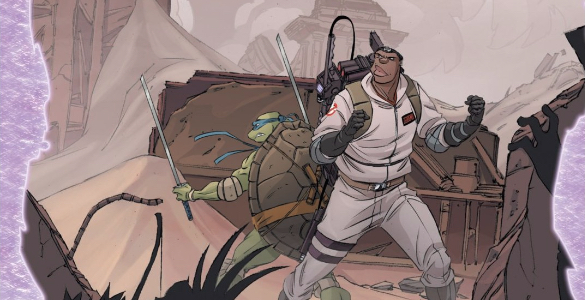
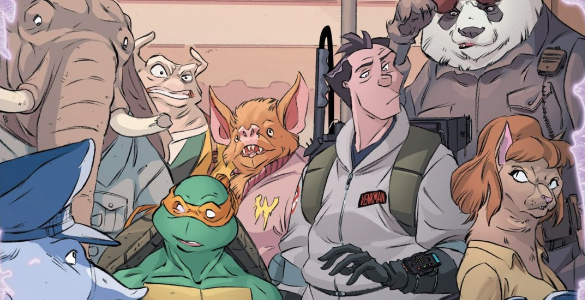
Taylor: Sticking the landing is the hardest part of any endeavor. It doesn’t matter if it’s landing a plane, finishing a gymnastics routine, or writing the end to a story: it’s just plain difficult. In all of these examples, sticking the landing is hard because they require one final flourish of skill before the tension in the situation is resolved once and for all. Teenage Mutant Ninja Turtles/Ghostbusters II has to stick its landing in this, the final fifth issue. It does so successfully but in a way that is overshadowed by the brilliance that came before it. Continue reading

Black Magick 9 Keep Rowan in the Dark

by Drew Baumgartner

Black Magick 9

This article contains SPOILERS. If you haven’t read the issue yet, proceed at your own risk!

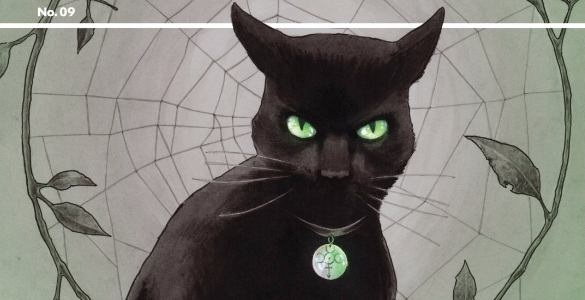
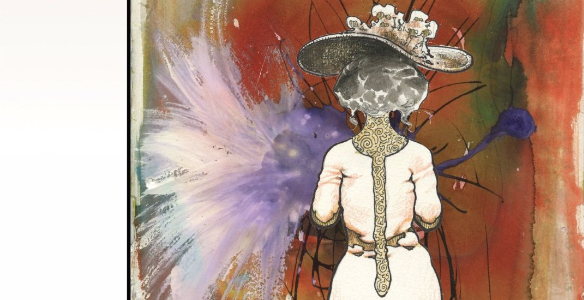
Whether it’s Harry Potter or Luke Skywalker, I tend to think of the prototypical fantasy protagonist as being relatively unfamiliar with the strange world they live in. It allows their confusion or surprise at the unexpected to mirror our own, and their ignorance offers a reasonable justification for someone to explain that wizards are real or that the Jedi channel a power called the force. A more knowledgable fantasy protagonist, then, might be hard for an audience to keep up with. I suspect this is how I’d feel about Rowan Black — who is undoubtedly knowledgable about the fantastical elements of her world — if she weren’t on her heels from issue one. She may have knowledge and motives that we don’t fully understand, but she’s just as clueless about what the heck is going on as we are. Indeed, issue 9 might even leave us with more knowledge than she has. Continue reading

Angelic 3: Discussion

by Mark Mitchell and Taylor Anderson

This article contains SPOILERS. If you haven’t read the issue yet, proceed at your own risk!

slim-banner

Mark: There’s no one-to-one mapping of the different species in Simon Spurrier and Caspar Wijngaard’s Angelic 3 onto our world. It’s not like the Monks represent Group X and the Mans represent Group Y. But at the same time, the world of Angelic is our world, and the experience of the Monks and the Mans is our experience. Continue reading

Teenage Regrets in Batgirl 17

By Drew Baumgartner

Batgirl 17

This article contains SPOILERS. If you haven’t read the issue yet, proceed at your own risk!

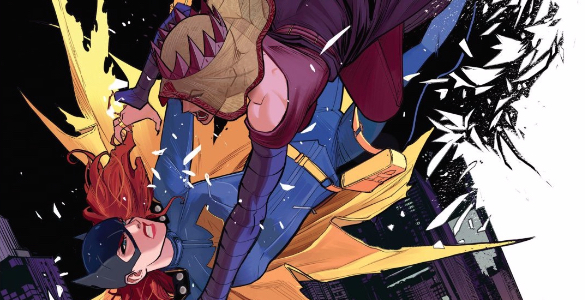
Teens are bad at perspective. It’s not their fault — adolescent brain development sticks them with overdeveloped emotional centers and underdeveloped reasoning centers — but it’s a big part of the reason they aren’t considered “adults.” Fortunately, the stakes for teens is often relatively low. Sure, who takes who to prom may feel like a big deal at the time, but maturity (and time and distance) reveal many teenage concerns to be the trivialities they always were. For that reason, it can be enlightening to revisit your biggest teenage regrets with a more worldly perspective — perhaps they’re not as regrettable as you remember. With Batgirl 17, Hope Larson and Chris Wildgoose seem to take that notion to heart, with a villain vainly asserting the opposite. Continue reading

The Mystery of Triceraton Humanity in Teenage Mutant Ninja Turtles Universe 16

by Patrick Ehlers

This article contains SPOILERS! If you haven’t read the issue, proceed at your own risk.

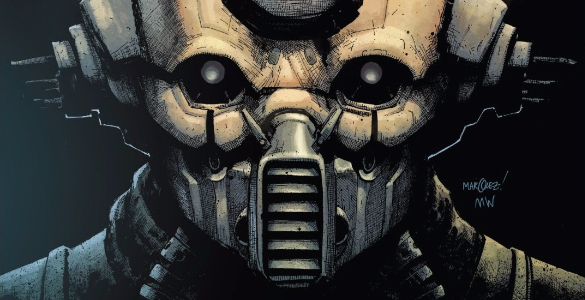
In the main TMNT series, the newly freed Triceratons have returned to Earth after millennia of servitude to the Utrom Empire. For a hulking army of dinosaur-men, they make first contact in a surprisingly sensitive way. Their ultimate aim may be to re-claim the planet, and they go in bearing axes and laser blasters, but they make an attempt as peaceful, civil discourse first. Where does that come from? If you tried to string together the most monstrous series of adjectives possible, you’d end up hitting some prime Triceraton descriptors: cloned, warrior, prehistoric, dinosaur. In Teenage Mutant Ninja Turtles Universe 16 writer Chris Mowry and Giannis Milonogiannis find the humanity within these beasts reveling in the mystery of their origins. Continue reading

Mining the Overlap in Teenage Mutant Ninja Turtles/Ghostbusters II 4

by Drew Baumgartner

Teenage Mutant Ninja Turtles Ghostbusters II 4

This article contains SPOILERS. If you haven’t read the issue yet, proceed at your own risk!

I love the idea of Platonic Forms — that there are ideas bigger and more perfect than any one example could ever be. The easiest examples are shapes; a “sphere” is a simple enough concept to imagine, but any real-world example of one, from the smallest subatomic particle to the largest star, isn’t quite as perfect, and is tied down to specific properties (weight, size, color) that have nothing to do with the idea of a sphere. And this is true of so much of our world. You can read the words I’m writing because you can identify every letter, but the same would be true if the letters were a different weight or color (or size or font, if I could figure out how to change those). In this way, we might imagine some kind of “pure” form of each letter that each example hints at, though I tend to prefer to think of it as the center of a disperse cloud of what each letter can be. Intriguingly (and increasingly), media franchises work in this same way. There may be a “pure” form of Batman that each comic, movie, cartoon, tv show, radio serial, etc. points us towards, but our reality gets to be much more interesting, as each actual manifestation highlights something different about the character and his world. The messiness of those different manifestations — the shape of the cloud they create — seems to be exactly what Teenage Mutant Ninja Turtles/Ghostbusters II  was designed to celebrate. Continue reading

Rogue One’s Bernie Bros in Star Wars 39

by Michael DeLaney

This article contains SPOILERS. If you haven’t read the issue yet, proceed at your own risk!

I’m of the opinion that Rogue One: A Star Wars Story is a giant unnecessary mess of the movie. However I also believe that Star Wars comic books do a far better job of exploring the series themes and motifs than most of the films do. Such is the case with Star Wars 39, which deals with the aftermath of the destruction the Empire delt to the planet Jedha in Rogue One. Continue reading

Eleanor and the Egret 5: Discussion

By Drew Baumgartner and Patrick Ehlers

Eleanor and the Egret 5

This article contains SPOILERS. If you haven’t read the issue yet, proceed at your own risk!

slim-banner4

Drew: What moral do we take away from heroic self-sacrifice? We undoubtedly see nobility in a hero prizing the life and safety of others more than their own, but our own takeaway is likely much more modest — we might sacrifice our material comfort or time for the benefit of others, if not our lives. But is “self-sacrifice is good” the only way to look at those stories? Is it possible to look at a hero laying down their life for others and identify with those others — not the hero making the sacrifice, but the beneficiaries of that sacrifice? Is it possible that we see the hero’s death less as a noble choice and more as satisfying a cosmic need for heroes to die — a “sacrifice” in a very different sense of the word? It’s the kind of conclusion you might expect of a world-ending sci-fi computer to draw, but it’s also embedded in the idiosyncratic resolution of John Layman and Sam Kieth’s Eleanor and the Egret. Continue reading

The Batman/Superman friendship shines in Action Comics 992

by Mark Mitchell

This article contains SPOILERS. If you haven’t read the issue yet, proceed at your own risk!

One of the many miscalculations of 2016’s Batman v Superman: Dawn of Justice was predicating the success of the entire film on the idea that it’s cool to see Batman and Superman fight. To climax an entire movie with the Dark Knight and the Kryptonian beating the crap out of each other shows a fundamental misunderstanding of why people enjoy these characters. What we like is Batman and Superman being best friends. Together, they’re the Sour Patch Kids of DC’s trinity; a little sour, but also sweet.

Continue reading

Lumberjanes 44 Isn’t Just For Kids

by Taylor Anderson

This article contains SPOILERS. If you haven’t read the issue yet, proceed at your own risk!

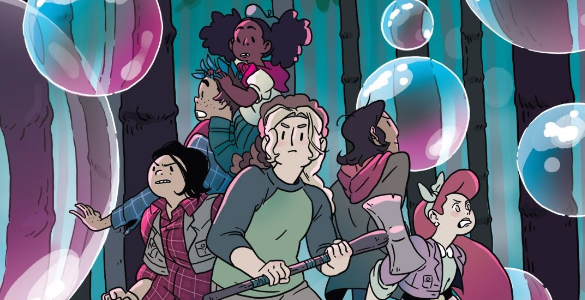
Lumberjanes is ostensibly a comic geared towards a younger audience. The young protagonists, the summer camp setting, and the the fantasy elements all suggest a title that is purposely trying to engage young comic readers. There’s nothing wrong with that and in fact it’s vitally important to foster a love of comics in young people by making titles expressly for their consumption. However, as with all art, Lumberjanes frequently isn’t heralded as much a titles written for older audiences. But as issue 44 shows, there’s no reason why that should be the case.

Continue reading