Death Roulette in Death of the Inhumans 2

by Patrick Ehlers

This article containers SPOILERS. If you have not read the issue yet, proceed at your own risk!

The title Death of the Inhumans makes one specific promise: some Inhumans are gonna die. But y’know, this is a comic book, and odds are just as good that the title is sensational hyperbole that they are of the title being literal. Writer Donny Cates and artist Ariel Olivetti spend the entirety of issue 2 insisting on three simple things:

  1. The Inhumans who have been killed already.
  2. The Inhumans left to kill.
  3. Vox’s ability to kill any Inhuman.

By the end of the issue, the reader is forced to take the threat of the title seriously. Cates and Olivetti cash in on that seriousness with one hell of a gut punch. Continue reading

The Seeds 1: Discussion

by Drew Baumgartner and Patrick Ehlers

The Seeds 1

This article contains SPOILERS. If you haven’t read the issue yet, proceed at your own risk!

Drew: Like a lot of people, I was deeply resistant to the concept of symbolism in my high school English classes. I don’t know if I resented this new (to me) world of symbols that I was so bad at identifying, or if I just lacked the imagination to conceive of writers having more literary tastes and aspirations than 15-year-old me, but I was incredulous that symbolism even existed in the works I was reading. My teacher was reading way too much into things (because, I reasoned, making things overcomplicated and boring was her job), and that no writer actually intended for these images to have any non-literal meaning. But my fixation on intent blinded me to the much more complex world of who was observing the symbolism. Is it just me, the reader, or are the characters themselves ascribing deeper meanings to the objects and actions around them? Or what if it’s the narrator, conjuring some kind of coherent aesthetic for the narrative as a whole? Perhaps it’s not the “writer,” but some diegetic force crafting these symbols, perhaps as clues to their motives or intentions? These are all questions wish I could go back to my teen self and ask, but honestly, I might be better off handing him a copy of Ann Nocenti and David Aja’s The Seeds 1, which interweaves all of these modes of symbolism with breathtaking ease. Continue reading

The Inevitability of Hal Jordan and the Green Lantern Corps 49

by Michael DeLaney

This article contains SPOILERS. If you haven’t read the issue yet, proceed at your own risk!

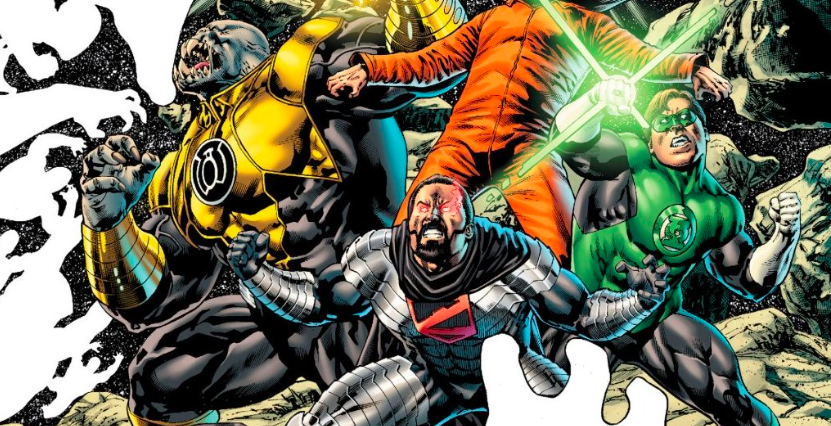
If you couldn’t tell from the title Hal Jordan and the Green Lantern Corps, the series places a lot of emphasis on one Harold “Hal” Jordan. Hal Jordan and the Green Lantern Corps 49 continues that trend, underlining the importance and inevitability that is Hal Jordan. Continue reading

Surprising Shifts in Perspective in Saga 54

by Spencer Irwin

This article contains SPOILERS. If you haven’t read the issue yet, proceed at your own risk!

As its title would suggest, Saga is a series with an ambitious scope and a sprawling cast, one where the perspective often shifts between various groups of characters, even though we can count on Marko and Alana’s family to be at the center of events at any given time. It’s also a series where nothing stays the same for long, allowing for any number of shocking betrayals, alliances, deaths, and shifts in the status quo. This all comes heavily into play in Saga 54, an issue that upends the series’ world in ways we’ve never seen before, ways most of us probably were not prepared for. Continue reading

Action Comics 1001: Discussion

By Michael DeLaney and Spencer Irwin

Action Comics 1001

This article contains SPOILERS. If you haven’t read the issue yet, proceed at your own risk!

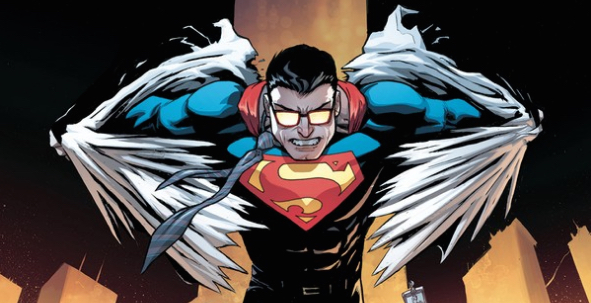
Michael: The distinction between Superman’s two long-running titles, Superman and Action Comics, has never really been made clear. Besides the dollar and cents of it all, the two books exist simultaneously to give different creators the opportunity to tell their own ongoing Superman stories. But what happens when it’s the same writer plotting both books? Continue reading

Moonshine 12: Discussion

by Drew Baumgartner and Patrick Ehlers

Moonshine 12

This article contains SPOILERS. If you haven’t read the issue yet, proceed at your own risk!

The moment. Be in it.

Lou Pirlo

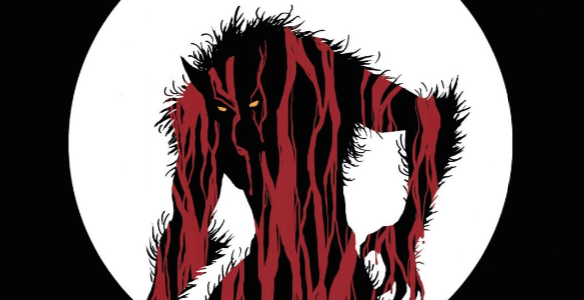
Drew: I have a theory that teens are such popular subjects of drama because they are so famously terrible at anticipating the repercussions of their actions. We accept impulsive behavior from Romeo and Juliet because they’re basically kids, but that same impulsivity needs explanation for adult characters. Maybe they’re prideful or hubristic or jealous or afraid; whatever it is, the drama is driven by a flaw in the characters that keeps them from acting rationally. Lou Pirlo has plenty of flaws that might explain his impulsivity — he’s both an alcoholic and a werewolf, after all — but with Moonshine 12, Brian Azzarello and Eduardo Risso suggest that impulsivity might be baked into his very core. The result is refreshingly free of the dramatic irony that characterizes other drama; we might recognize the decisions here as impulsive or ill-thought-through, but we have no idea what their repercussions might be. Continue reading

Love Doesn’t Conquer All in Descender 32

by Spencer Irwin

This article contains SPOILERS. If you haven’t read the issue yet, proceed at your own risk!

Much like our own, the world of Descender is full of prejudice, hatred, and war. These various traits all fuel each other in some sort of endless, infinite loop — the only way to break the cycle is to come together, to learn from each other, to empathize with each other, to love instead of hate. Like in so many stories — and, again, perhaps like our own world as well — love is the answer, but it’s not a solution that comes easily. In Descender 32, the final issue of Jeff Lemire and Dustin Nguyen’s saga, love may be the answer, but love doesn’t conquer all. Continue reading

Parallels, Dramatic Irony, and Time in The New World 1

by Drew Baumgartner

New World 1

This article contains SPOILERS. If you haven’t read the issue yet, proceed at your own risk!

My wife is itinerantly averse to spoilers, to the point that she refuses to watch trailers for movies. It’s an attitude I can sympathize with (many trailers seem more like hyper-condensed edits of the entire film than teasers), but can’t fully understand — how could she possibly know if a movie appeals to her if she doesn’t know anything about it? To me, some foreknowledge of the genre and basic premise of a narrative is essential to my interest in it. Of course, in serialized media — especially ones with particularly high-concept premises — the first chapter might just cover the “basic premise,” effectively spoiling its own plot. But the thing I’ve always resented about “spoiler” talk is the way it privileges plotting (and especially surprise twists in plotting) over every other narrative element. There are real, unique pleasures to be mined from having more perspective than the characters within the narrative, and a well-told story will use those tools as effectively as any narrative twist. Aleš Kot and Tradd Moore demonstrate the value of those tools on both the micro and macro level in The New World 1. Continue reading

Doomsday Clock 6 Circles Marionette’s Past as it Circles the Drain

By Patrick Ehlers

This article contains SPOILERS. If you haven’t read the issue yet, proceed at your own risk!

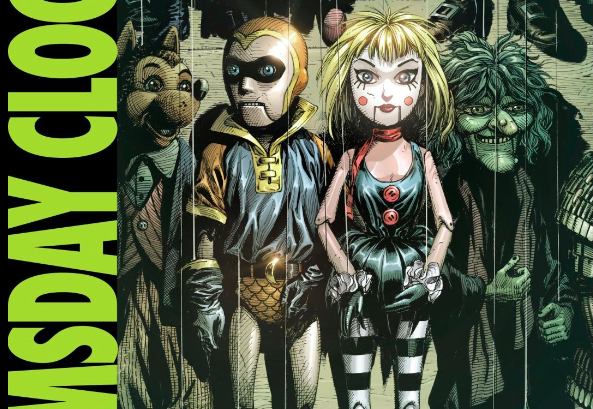
If I asked you to picture the single imagine that evokes Watchmen, what would you picture? Likely, you’re imagining the Comedian’s smiley face button, but I could also see an argument for Doctor Manhattan’s circular forehead logo. Both symbols are circles. I know that’s not exactly mind-blowing, but this is the level of visual rhetoric writer Geoff Johns and artist Gary Frank are playing with in Doomsday Clock 6.

The series continues to slump along in much the same way it did last time we talked about it. This time, Marionette and Mime are the focus of the story, which really doesn’t do Johns or Frank any favors. Stripped of all but the most tangential references to the Watchmen universe, the creators are left with the tone and tools of the piece to tell a story that spans two tonally discrete universes. If that sounds like an inadequate set of tools to complete an impossible task, that’s because it is. Continue reading

What Parents Want in East of West 38

by Taylor Anderson

This article contains SPOILERS. If you haven’t read the issue yet, read on at your own risk!

It’s generally assumed that parents always have the best interest of their children at heart. However, as is often the case in our world there is a difference between what is assumed and what is reality. In my job as a teacher it’s sometimes my sad duty to witness parents putting their own interests before their kid’s. Such was the case of one student who was forced by his mother to be in student council when he had no interest in it whatsoever. He hated all the meetings and eventually started to skip them which led to him breaking down in tears in front of me when his mom wanted to call a meeting about the ordeal. No one was happy then and I am reminded of this when I read East of West 37, where parents put their needs and wants before the kid’s resulting in sorrow for all.

Continue reading