Dumbass Details in Sideways 2

By Patrick Ehlers

This article contains SPOILERS. If you haven’t read the issue yet, proceed at your own risk!

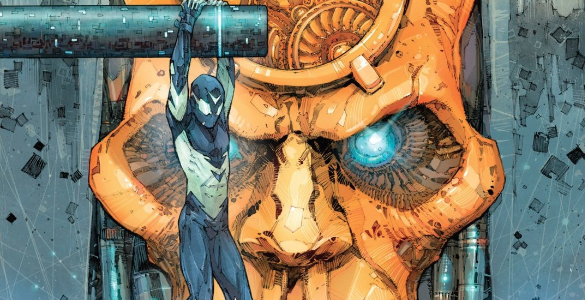
Last month, I praised Sideways 1’s hyper-specificity. Writers Dan DiDio and Justin Jordan crafted an excruciatingly detailed world for the would-be superhero Derek and his geek-culture-obsessed best friend Ernie. Artist Kenneth Rocafort dutifully filled the pages with visual details, whether painstakingly realizing the Gotham City skyline or Ernie’s shrine to cosplay and video games. The high I was feeling from that issue has all but evaporated during the second issue as the details began to feel awkward, forced, or generic. Continue reading
Mister Miracle 7: Discussion

by Michael DeLaney and Drew Baumgartner 

This article contains SPOILERS. If you haven’t read the issue yet, proceed at your own risk!

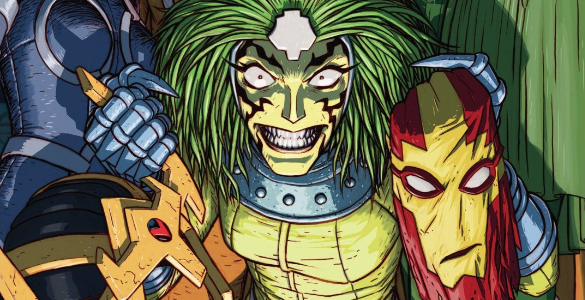
Michael: A “realistic approach” to comic book superheroes is sometimes successful (often with Batman comics). But most of the time, when you bind the mythic origins of superheroes to real world science and logic, you lose something from the original incarnation. However there’s a difference between a realistic approach and a serious approach to superheroes, like Tom King’s exploration of Jack Kirby’s Fourth World in Mister Miracle 7. This isn’t to say that King’s script is grim and humorless, but that he takes all aspects of Scott Free’s otherworldly life at face value, no matter how “silly” or “outrageous” they might sound in the context of the real world. Continue reading

Escalation and Coincidence in The Wild Storm 12

by Drew Baumgartner

Wild Storm 12

This article contains SPOILERS. If you haven’t read the issue yet, proceed at your own risk!

Towards the end of this issue, Jackie King dismisses the simultaneity of the attack on Hightower and IO’s own attack on Skywatch as “coincidental.” She’s not wrong, exactly — not only was the Hightower attack not retaliatory, it wasn’t even perpetrated by Skywatch — but she’s not quite right, either. In a series so fixated on cause and effect, there are no coincidences; these attacks may be separate bowling pins, but they were set in motion by the same ball. It’s a hell of an idea for us to get our heads around — especially when one of the most cunning characters makes clear she hasn’t quite internalized it yet — but it’s an attitude that Warren Ellis and Jon Davis-Hunt have woven into every panel of this series, creating a kind of fractal that keeps pointing to cause and effect. Continue reading

Knowing Your Opponent in Batman 42

By Spencer Irwin

This article contains SPOILERS. If you haven’t read the issue yet, proceed at your own risk!

About halfway through my first read of Batman 42, as Poison Ivy (through her minions) dangled Catwoman upside-down from a skyscraper, I suddenly remembered that the two characters are supposed to be friends. As if reading my mind, a few pages later Tom King and Mikel Janin addressed this head-on, with Selina appealing to their friendship and Ivy claiming that Selina doesn’t know the first thing about her. Apparently Ivy’s bid at world domination is meant to be benign, charitable even — a genuine attempt from her to fix the world, to redeem for past crimes. Apparently there was a rock of regret inside her that not even her closest friends and allies knew about — but Batman knows. His entire plan, and his eventual, inevitable victory, revolves around him having nailed down Ivy’s motives and methods. Continue reading

Green Arrow 38: Discussion

by Spencer Irwin and Michael DeLaney 

This article contains SPOILERS. If you haven’t read the issue yet, proceed at your own risk!

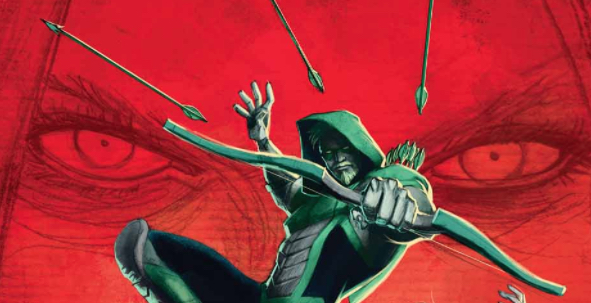
Spencer: In the Justice League Unlimited animated series, Green Arrow isn’t recruited to the League for his skills with a bow and arrow, but for his conscience and candor. Indeed, in all the character’s best portrayals Green Arrow’s greatest strength isn’t his trick arrows, but his unflinching honesty, his willingness to stand up to (and get in the face of) absolutely anybody, and his “man on the ground” perspective. These qualities are at the forefront of Green Arrow 38, an issue where (outside of one largely symbolic image) Oliver Queen doesn’t fire a single arrow, instead saving the day simply by standing up for what he believes in. Continue reading

Space Cops, Faith and History in Green Lanterns 42

by Michael DeLaney

This article contains SPOILERS! If you haven’t read the issue, proceed at your own risk.

As much as I know about the DC Universe, it is a BIG place full of characters and worlds that have still not entered the pages of my brain encyclopedia. If you’re a fan of those Easter eggs and nods to DC lore, then Green Lanterns 42 is what you are looking for. Mentions of “Khundians,” “Durlans” or “Omega Men” appear throughout the issue in a way that is not distracting but simply supports the narrative. Continue reading

Memories Leave their Mark in Batgirl 20

By Drew Baumgartner

Batgirl 20

This article contains SPOILERS. If you haven’t read the issue yet, proceed at your own risk!

Batgirl’s eidetic memory has long been one of her most valuable assets as a crime fighter. Remembering crime scenes in intricate detail or the face of every suspect she encounters makes detective work almost a natural extension of her being. Indeed, her eidetic memory has proven so essential to her detective work, it’s easy to forget that it has dramatic possibilities beyond that. Or, at least, other creative teams have made it easy to forget — not so with Hope Larson’s run, which has found countless inventive ways to use Batgirl’s eidetic memory. With issue 20, Larson finds yet another great use for it, as Batgirl takes a drive down some literal memory lanes. Continue reading

Learning New “Normals” in Super Sons 13

by Spencer Irwin

This article contains SPOILERS. If you haven’t read the issue yet, proceed at your own risk!

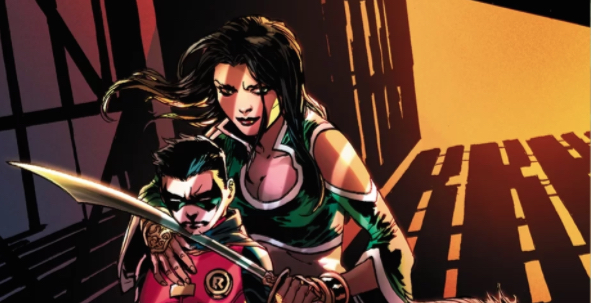
Growing up, we tend to think of our families as “normal.” Even if we think our family and their routines are weird or embarrassing, a lack of reference and experience often leave us assuming that this is just what every family is like — it isn’t until we get older and start spending time with friends and meeting new people that we realize how varied the human experience actually is. As always, Super Sons continues to use its two leads’ wildly different life experiences as learning aids for both, expanding their understanding of what “normal” is. Continue reading

Batman 41: Discussion

by Michael DeLaney and Ryan Mogge

This article contains SPOILERS. If you haven’t read the issue yet, proceed at your own risk!

Michael: The traditional superhero narrative can boil down to “hero is on top, villain arrives and takes over, hero defeats villain and the status-quo is restored.” There will be a period — however long or brief — where the villain has won and all hope is lost. Instead of showing a gradual build to that moment of defeat, Batman 41 starts us off there. Instead of opening with the first act optimism of A New Hope, Batman 41 goes right for the bleak Empire Strikes Back act break. Continue reading

Scrutiny Reveals the Flaws in Batman and the Signal 2

By Patrick Ehlers

This article contains SPOILERS. If you haven’t read the issue yet, proceed at your own risk!

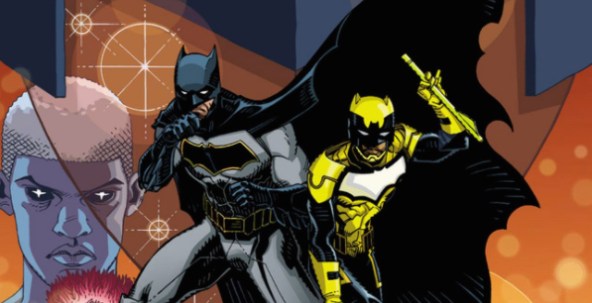
One of the driving philosophies of Batman and the Signal is the idea that light reveals the flaws in something. A story from the beginning of issue 2 targets Gotham City skyscrapers, partially constructed at night by crews of illegal laborers. Duke’s father was one of these nighttime construction men. He would bring his son to check out the fruits of his nocturnal labor in the cold light of day so Duke could clearly witness the cost of cutting corners. Fittingly, this metaphor falls apart the more closely you examine it. Can you see tiny imperfections in the craftsmanship that goes into building a skyscraper? Probably. Is that overlooking the fact that its a modern marvel of engineering that pierces the sky with steel, iron and glass? Absolutely. My experience writing about comics for Retcon Punch has shown me that we are more often rewarded for our intense scrutiny than we are disappointed by the trivial cracks in the handiwork.

Leave it to Batman and the Signal to demonstrate the opposite. Continue reading