The Fix 10: Discussion

by Drew Baumgartner and Patrick Ehlers

The Fix 10

This article contains SPOILERS. If you haven’t read the issue yet, proceed at your own risk!

slim-banner

You either die a hero, or you live long enough to see yourself become the villain.

Harvey Dent, The Dark Knight

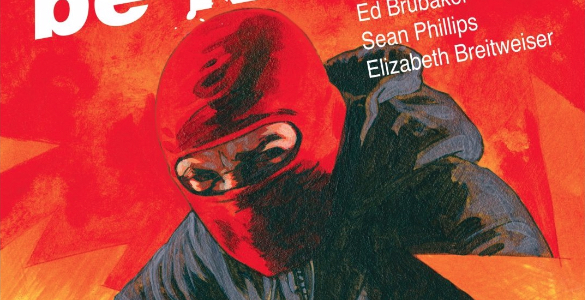
Drew: If that quote doesn’t feel like it fits this issue, it’s because it doesn’t. Where The Dark Knight explores the ideas of good, evil, and the moral relativism that exists in between, The Fix is gleefully amoral, concerned less with good and bad as it is with whatever its protagonists can get away with. Which is to say, a quote about heroes and villains doesn’t make a whole lot of sense in the world of The Fix. But I wonder if we strip away the morality from that quote, if we might get something a bit more universal (if still deeply pessimistic): you either die happy, or you live long enough to see yourself become miserable. The ordering of those outcomes betrays a cynical worldview that The Dark Knight (or at least Harvey Dent) shares with The Fix, one that presumes things are inclined to get worse. Of course, while The Dark Knight spun that cynicism into tragedy, The Fix funnels it into dark humor, making any successes Roy or Mac may enjoy are but haughty spirits before the inevitable fall. Continue reading

Kill or be Killed 14: Discussion

By Drew Baumgartner and Ryan Desaulniers

Kill or be Killed 14

This article contains SPOILERS. If you haven’t read the issue yet, proceed at your own risk!

Remove everything that has no relevance to the story. If you say in the first chapter that there is a rifle hanging on the wall, in the second or third chapter it absolutely must go off. If it’s not going to be fired, it shouldn’t be hanging there.

Anton Chekhov

Drew: I feel like we tend to talk about Chekhov’s Gun backwards: we often frame it as “a gun introduced in the first chapter must go off in the third,” but that “must” kind of scrambles the causality — guns don’t go off in narratives because they’ve been introduced; they’re introduced because they need to go off. If the gun doesn’t go off, it’s as irrelevant to the narrative as the rings of Saturn. It’s an essential concept for narrative efficiency, but my awareness of it undoubtedly influences my own understanding of what a story is. While a child may think of a story as “everything that happens to the characters between the beginning and the end” (I know I did), anyone familiar with Chekov’s Gun must recognize that a good story is, at the very least least, pared down to only the relevant events transpiring between the beginning and the end. It’s a notion that assures us that whatever we’re reading is important, which in turn provides some clues about what the narrative finds important. 14 issues in, one might think that we’d already have a great handle on what Kill or be Killed finds important, but this issue managed to surprise me with the details it chose to focus on. Continue reading

Batman: Creature of the Night 1: Discussion

By Spencer Irwin and Michael DeLaney

This article contains SPOILERS. If you haven’t read the issue yet, proceed at your own risk!

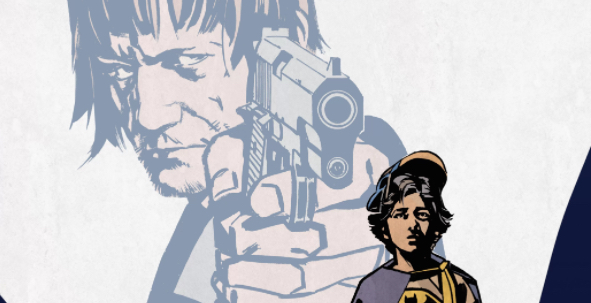
Spencer: When I was a kid, if you’d asked me what I wanted to be when I grew up, I’d have answered “Batman.” Growing up on the Adam West series, I didn’t recognize the tragedy that fuels the character — I only saw the potential for adventure. As someone who was bullied a lot as a kid, I think I was especially attracted to the justice of Batman, the idea that the good guys always won and that the villains always got what was coming to them. For many — both children and adults — comics can serve as an oasis or an escape, but at times they also just serve to highlight, to painfully drive home how unfair the real world actually is. That juxtaposition lies at the heart of Batman: Creature of the NightContinue reading

Teenage Mutant Ninja Turtles/Ghostbusters II 5: Discussion

by Taylor Anderson and Patrick Ehlers

This article contains SPOILERS. If you haven’t read the issue yet, proceed at your own risk!

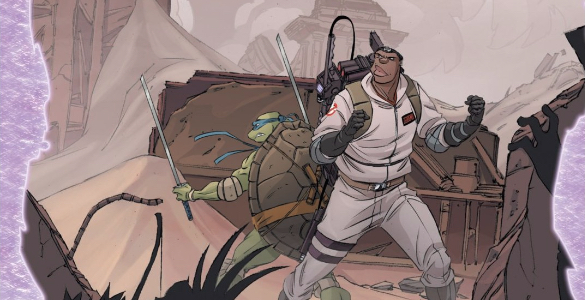
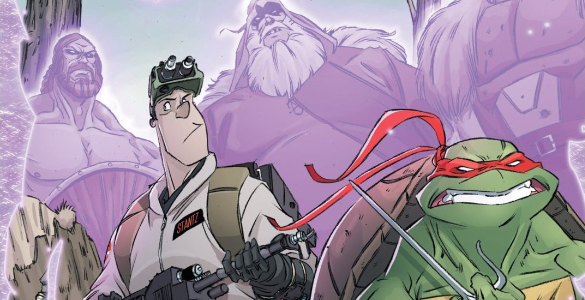
Taylor: Sticking the landing is the hardest part of any endeavor. It doesn’t matter if it’s landing a plane, finishing a gymnastics routine, or writing the end to a story: it’s just plain difficult. In all of these examples, sticking the landing is hard because they require one final flourish of skill before the tension in the situation is resolved once and for all. Teenage Mutant Ninja Turtles/Ghostbusters II has to stick its landing in this, the final fifth issue. It does so successfully but in a way that is overshadowed by the brilliance that came before it. Continue reading

Angelic 3: Discussion

by Mark Mitchell and Taylor Anderson

This article contains SPOILERS. If you haven’t read the issue yet, proceed at your own risk!

slim-banner

Mark: There’s no one-to-one mapping of the different species in Simon Spurrier and Caspar Wijngaard’s Angelic 3 onto our world. It’s not like the Monks represent Group X and the Mans represent Group Y. But at the same time, the world of Angelic is our world, and the experience of the Monks and the Mans is our experience. Continue reading

Mining the Overlap in Teenage Mutant Ninja Turtles/Ghostbusters II 4

by Drew Baumgartner

Teenage Mutant Ninja Turtles Ghostbusters II 4

This article contains SPOILERS. If you haven’t read the issue yet, proceed at your own risk!

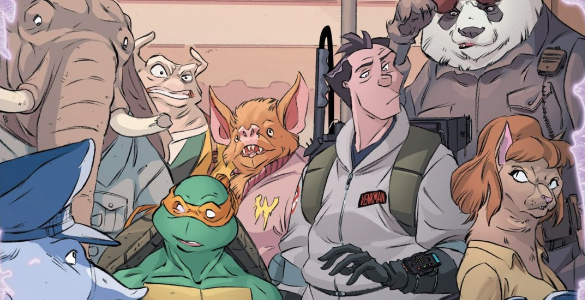
I love the idea of Platonic Forms — that there are ideas bigger and more perfect than any one example could ever be. The easiest examples are shapes; a “sphere” is a simple enough concept to imagine, but any real-world example of one, from the smallest subatomic particle to the largest star, isn’t quite as perfect, and is tied down to specific properties (weight, size, color) that have nothing to do with the idea of a sphere. And this is true of so much of our world. You can read the words I’m writing because you can identify every letter, but the same would be true if the letters were a different weight or color (or size or font, if I could figure out how to change those). In this way, we might imagine some kind of “pure” form of each letter that each example hints at, though I tend to prefer to think of it as the center of a disperse cloud of what each letter can be. Intriguingly (and increasingly), media franchises work in this same way. There may be a “pure” form of Batman that each comic, movie, cartoon, tv show, radio serial, etc. points us towards, but our reality gets to be much more interesting, as each actual manifestation highlights something different about the character and his world. The messiness of those different manifestations — the shape of the cloud they create — seems to be exactly what Teenage Mutant Ninja Turtles/Ghostbusters II  was designed to celebrate. Continue reading

Eleanor and the Egret 5: Discussion

By Drew Baumgartner and Patrick Ehlers

Eleanor and the Egret 5

This article contains SPOILERS. If you haven’t read the issue yet, proceed at your own risk!

slim-banner4

Drew: What moral do we take away from heroic self-sacrifice? We undoubtedly see nobility in a hero prizing the life and safety of others more than their own, but our own takeaway is likely much more modest — we might sacrifice our material comfort or time for the benefit of others, if not our lives. But is “self-sacrifice is good” the only way to look at those stories? Is it possible to look at a hero laying down their life for others and identify with those others — not the hero making the sacrifice, but the beneficiaries of that sacrifice? Is it possible that we see the hero’s death less as a noble choice and more as satisfying a cosmic need for heroes to die — a “sacrifice” in a very different sense of the word? It’s the kind of conclusion you might expect of a world-ending sci-fi computer to draw, but it’s also embedded in the idiosyncratic resolution of John Layman and Sam Kieth’s Eleanor and the Egret. Continue reading

Teenage Mutant Ninja Turtles 76: Discussion

By Drew Baumgartner and Ryan Mogge

Teenage Mutant Ninja Turtles 76

This article contains SPOILERS. If you haven’t read the issue yet, proceed at your own risk!

Drew: If there’s a sci-fi equivalent to “boy meets girl…” it might reasonably be “alien race comes in peace, humans react badly.” Where it goes from there depends a great deal on what type of story is being told, but the premise of an earnestly peaceful alien race forced to defend itself against panicky earthlings is full of the kind of themes sci-fi writers love, vilifying the xenophobia and shortsightedness that hold humanity back. Indeed, the human attack on the aliens is so despicable, storytellers have to go out of their way to make the aliens seem somehow suspicious — perhaps they look scary or seem to be keeping some kind of secret from us. That is, while we may come to sympathize with the aliens, there’s often some ambiguity to their intentions. This is decidedly not the case for the Triceratons in Teenage Mutant Ninja Turtles 76, whose intentions are clear to everyone — especially the reader — from the moment they arrive on Earth. It sets them up as the unequivocal good guys, allowing Agent Bishop to really cut loose as the issue’s villain. Continue reading

Batman Who Laughs 1: Discussion

by Patrick Ehlers & Mark Mitchell

This article contains SPOILERS. If you haven’t read the issue yet, proceed at your own risk!

slim-banner

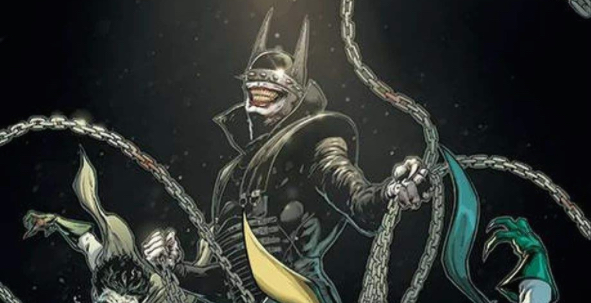
Patrick: Outside of dance-able club hits, which state their desire to make you dance, very few works of art tell you what effect they intend to have on you. Batman Who Laughs has one purpose and one purpose only: to shock longtime Batman fans with a violent, evil twist on the Dark Knights’ mythos. And the book cockily asserts that it is going to surprise its readers, by having the titular laughing Batman address the camera directly and saying as much. “You really thought you had it all figured out. That you knew every combination in the deck.” The work assumes the reader is skeptical of its goal from page one — the remainder of the issue is spent trying to prove that this is the darkest, most twisted Batman story ever told. Continue reading

Intriguing Character Pairings in Teenage Mutant Ninja Turtles/Ghostbusters II 3

by Spencer Irwin

Teenage Mutant Ninja Turtles Ghostbusters II 3

This article contains SPOILERS. If you haven’t read the issue yet, proceed at your own risk!

Crossover stories are meant to be fun, but like all the best stories, they also have the potential to explore and deepen characters in unique ways. Teenage Mutant Ninja Turtles/Ghostbusters II writers Erik Burnham and Tom Waltz take advantage of this opportunity by splitting their two teams up into unique pairings, each with the potential to draw something new out of their characters. Continue reading