Suffocating Ugliness in The Beef 1

by Mark Mitchell

This article contains SPOILERS. If you haven’t read the issue yet, proceed at your own risk!

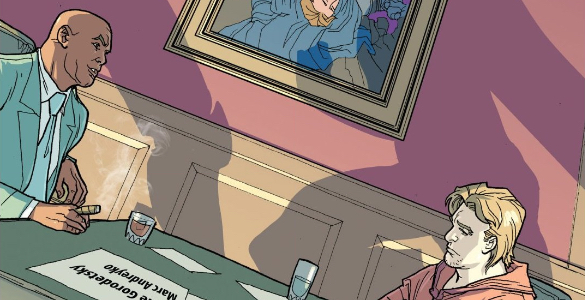
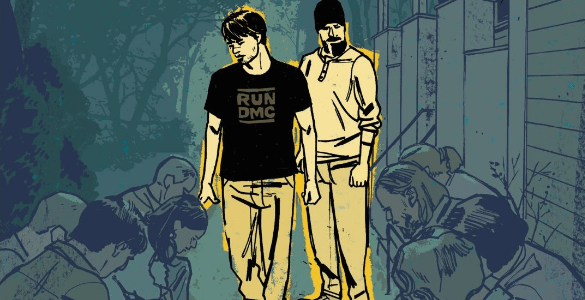
I’m overwhelmed by the relentless ugliness on display in Richard Starkings, Tyler Shainline, and Shaky Kane’s The Beef 1. The issue closes with the image of a man transforming into a skinless, muscle-bound freak, and it’s a welcome respite from the grotesqueries that come before. Continue reading

Opportunity Knocks in The Further Adventures of Nick Wilson 2

By Drew Baumgartner

The Futher Adventures of Nick Wilson 2

This article contains SPOILERS. If you haven’t read the issue yet, proceed at your own risk!

We believe that we are always better off gathering as much information as possible and spending as much time as possible in deliberation. We really only trust conscious decision making. But there are moments, particularly in times of stress, when haste does not make waste, when our snap judgements and first impressions can offer a much better means of making sense of the world.

Malcolm Gladwell, Blink

We’re all bad at making decisions. Or, rather, we’re bad at listening to the parts of ourselves that make good decisions. That’s the main takeaway of Malcolm Gladwell’s Blink, but its a ubiquitous phenomenon once you know how to spot it. We’re more concerned with the logical story of our choices than we are with the more perceptive part of us that can make the right choice subconsciously. “It felt right” isn’t a satisfying explanation, so we avoid it to our own detriment. To hear Gladwell’s explanation, we then draw out the decision-making process long beyond that initial (and often correct) feeling, sometimes long enough to talk ourselves out of the right choice or miss the opportunity entirely. That’s the path Nick starts down in The Further Adventures of Nick Wilson, but a few swift kicks in the but remind him that missed opportunities might be worse than bad decisions. Continue reading

Moonshine 7: Discussion

by Patrick Ehlers and Drew Baumgartner

This article contains SPOILERS. If you haven’t read the issue yet, proceed at your own risk!

Patrick: On February 14th, a 19 year old former student opened fire on Marjory Stoneman Douglas High School. He killed 14 students and three teachers. The gunman had been expelled before completing school, and he bounced in and out of foster care. He suffered from depression, cut himself, frequented white supremacy websites, and actively posted about his desire to shoot up the school. When he was still a student, he wasn’t allowed to wear a backpack, because administrators feared he might bring something dangerous on the campus. On the day of the shooting, he was armed with an AR-15, which he had purchased legally. This shooting is a critical system failure. And that failure is necessarily the failure of the generation that came before both the shooter and his victims — the children punished for their parents’ crime of inaction. How does that happen? How does a generation obsessed with protecting their young end up harming them? Brian Azzarello and Eduardo Risso’s Moonshine 7  explores the devastating relationship between generations, staging acts of innocence and malice simultaneously. Continue reading

The View from the Edges of The Black Monday Murders 8

by Ryan Desaulniers 

Black Monday Murders 8

This article contains SPOILERS. If you haven’t read the issue yet, proceed at your own risk!

The Edge… there is no honest way to explain it because the only people who really know where it is are the ones who have gone over.

Hunter S. Thompson

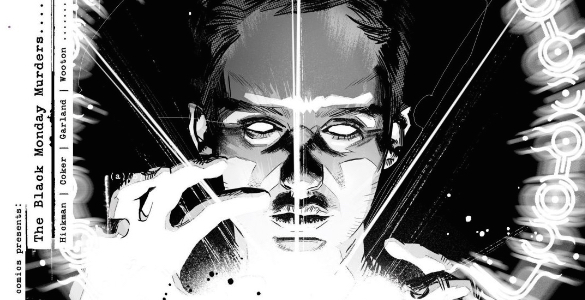
Ryan D: If there’s one incredible thing about being a comic reader nowadays, it’s that we are privy to so many new worlds being built, month to month, in front of us. In a time when so much of Hollywood’s machinations revolve around rehashing existing properties, comic books (alongside maybe the slew of Netflix-style originals) lead the charge for the new and exciting. When encountering one of these new universes, it’s always interesting to see how we are introduced to the mechanics inherent in them. How much does the creative team tip their hand as issues progress? Black Monday Murders 8 shows us how confident writer Jonathan Hickman is at keeping both the audience and its characters on the edge of this world. Continue reading

War, Religion, and Slavery in Angelic 6

by Spencer Irwin


This article contains SPOILERS. If you haven’t read the issue yet, proceed at your own risk!

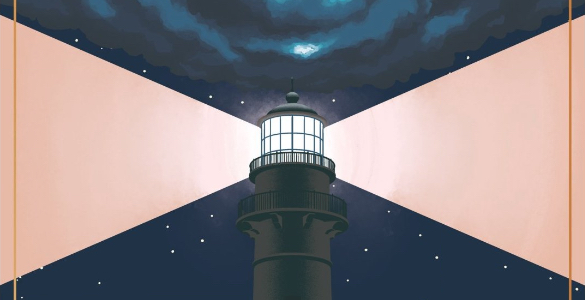
Angelic 6 is a massive issue. Writer Simon Spurrier recalls every seed of plot he’s planted throughout this arc, and artist Caspar Wijngaard brings the mass of ideas to life in a way that’s big and exciting, chaotic but never hard to follow. Even as the issue’s plot goes big, though, Spurrier and Wijngaard zoom in thematically, finding the one idea that connects the themes of religion, war, and blind faith that have run throughout this entire series. That theme, of course, is slavery. Continue reading

The Makings of a Monster in Lazarus X+66 6

by Drew Baumgartner

Lazarus X+66 6

This article contains SPOILERS. If you haven’t read the issue yet, proceed at your own risk!

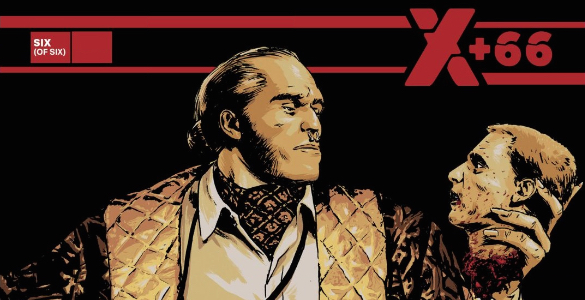
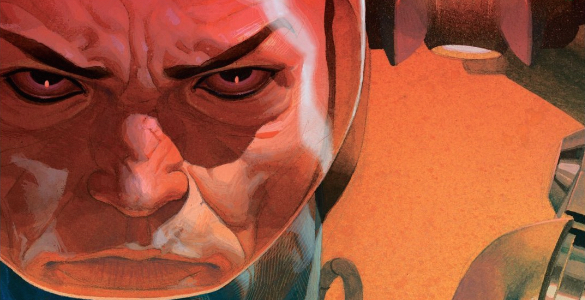
Comics tend to make a big deal about the prosocial mission of superheroes. That is, their origin isn’t just about why they can leap tall buildings or outrun a bullet, but why they choose to use those powers to protect innocent people. It’s interesting that creators emphasize this point — the choice to don a cape and charge into a burning building is a certainly a remarkable one, but it’s also understandable. That is, even if we don’t all have the courage and strength to do those things, we immediately grasp the desire to help people. Villains, on the other hand, demand a much more thorough explanation — if stopping a massacre is remarkable but understandable, causing a massacre is both remarkable and baffling. Creators are rarely up to the task, vaguely suggesting an overgrown thirst for power or money, but never quite convincing us how those things add up to a homicidal maniac. Those creators would do well to check out Lazarus X+66 6, which offers an origin for the Zmey that covers both his superhuman abilities and his monstrous psychology. Continue reading

An Unwelcoming Welcome in Curse Words 11

By Patrick Ehlers

This article contains SPOILERS. If you haven’t read the issue yet, proceed at your own risk!

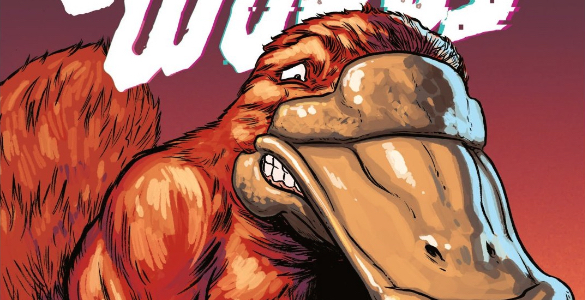
Curse Words 11 ends with a welcome letter from writer Charles Soule. Is the end of the issue maybe kind of a weird place to welcome his readers? Well, that’s the trick — it’s not particularly welcoming, and neither is the rest of the issue. You’ve got a weird issue of a weird series in your hands, and if the rapid expansion of cast and the mythology is making your head spin, then you’re feeling exactly what Soule and artist Ryan Browne want to you feel. This is Curse Words in all of its cold, unwelcoming glory: which of course means that it’s impossibly fun. Continue reading

“High” and “Low” Art Collide in The Wicked + The Divine 1923AD

by Spencer Irwin

This article contains SPOILERS. If you haven’t read the issue yet, proceed at your own risk!

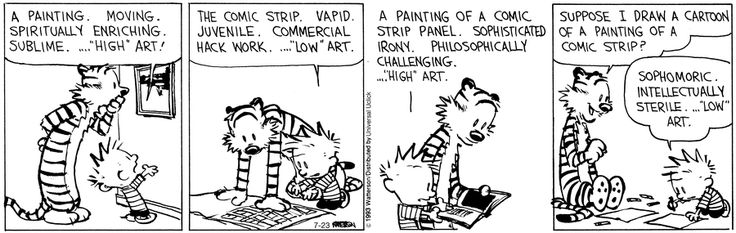
The difference between “high” and “low” art has always seemed rather arbitrary and elitist to me, but that hasn’t stopped debates about the two from raging in one way or another for centuries. That conflict is the heart of The Wicked + The Divine 1923AD, manifesting both in the actual plot and in the format in which Kieron Gillen chooses to tell his story, a tale and a format that can really only serve as celebrations of all kinds of art: “high,” “low,” or otherwise. Continue reading

Obliterated Boundaries in Vs 1

By Patrick Ehlers

This article contains SPOILERS. If you haven’t read the issue yet, proceed at your own risk!

While the concept of war is terrifying on its own, the actual reality of it is alien to a lot of us. Myself included, and I have a brother, a sister, and a brother-in-law that have served in the US Army and seen combat in Iraq and Afghanistan. What it really means to be “at war” is far enough divorced from my day-to-day life, that I can comfortably sort it into an experience that someone else has. Vs takes the “otherness” of war and smashes it into the everyday, making the reader question the separation between entertainment, spectacle, and violence. Continue reading

Relishing the Details in Outcast 33

by Drew Baumgartner

Outcast 30

This article contains SPOILERS. If you haven’t read the issue yet, proceed at your own risk!

One of the most distinctive stylistic choices of Outcast has always been its use of small insert shots, inset into larger panels. Early in the series, those inserts were largely used to capture small scene details and gestures, but as the cast has grown, they’ve increasingly focused on faces, offering us the emotional state of several characters at a glance — especially those who might not be actively participating in the action/conversation of the scene. We might understand that as reflective of Kyle’s own shift in priorities, focusing less on the textural trappings of his life and more on the people he loves, but the effect is a series that now has an audience surrogate on virtually every page, reflecting our own shock and horror back at us. Continue reading