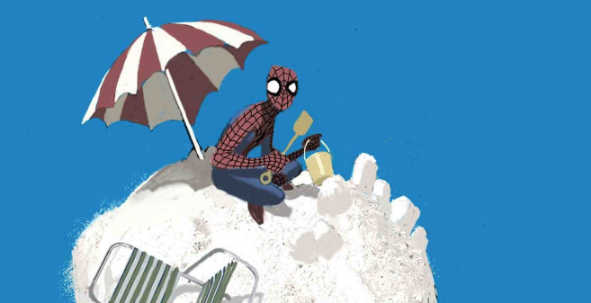
Connection and Humanity in Peter Parker: the Spectacular Spider-Man 308

by Spencer Irwin

Peter Parker The Spectacular Spider-Man 308

This article contains SPOILERS. If you haven’t read the issue yet, proceed at your own risk!

It’s been fascinating watching Chip Zdarsky evolve as a writer. While I once thought of him primarily as a humorist, over the last few years it’s become apparent that his greatest strength is actually his ability to find the humanity in any character he touches, even villains. Throughout his run on Peter Parker: The Spectacular Spider-Man Zdarsky’s turned that into a strength of Peter’s as well, having him “defeat” several of his opponents (J. Jonah Jameson, The Tinkerer) by connecting and empathizing with them, by appealing to their shared humanity. Issue 308 pulls off the same feat with a particularly tricky character to humanize: The Sandman. Continue reading

Line Holds and Unreality in Tony Stark: Iron Man 3

by Drew Baumgartner

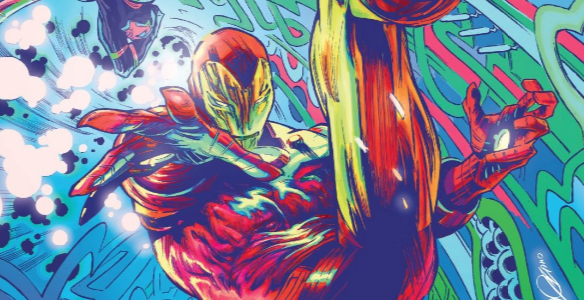
Tony Stark Iron Man 3

This article contains SPOILERS. If you haven’t read the issue yet, proceed at your own risk!

Does Stark not get HBO? Everyone knows that if you make a virtual wild west chances are the NPCs will start killing off everybody.

Jacosta, Tony Stark: Iron Man 3

It’s no coincidence that Dan Slott all-but name checks Westworld in Tony Stark: Iron Man 3, as the issue is all about our ability to distinguish humans from robots. Westworld relishes surprising us at every turn — often with the reveal that someone was or wasn’t a robot all along, but sometimes with the very fact that he world we’re seeing is or isn’t what we think it is. This issue leans into the game of “spot the robot” (with its own Westworld-ian twist), but plays things very straight with the division between reality and fantasy, relying on some smart decisions by artist Valerio Schiti and colorists Edgar Delgado and Rachelle Rosenberg. Continue reading

An Opaque Reflection of Anakin in Darth Vader 19

by Spencer Irwin

Darth Vader 19

This article contains SPOILERS. If you haven’t read the issue yet, proceed at your own risk!

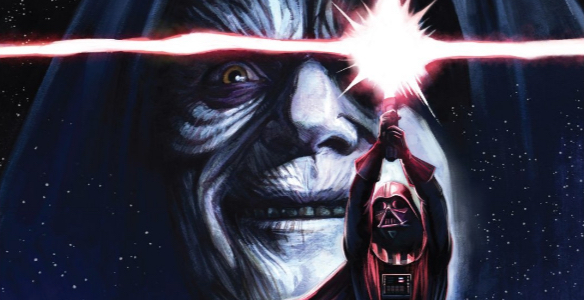
I could easily spend hours listing qualities that make Darth Vader one of media’s most terrifying villains, but one of the most prominent is simply how inscrutable he is. His mask and his voice give away almost nothing about his emotions, his goals, or his thought process, rendering him cold and unknowable — and nothing’s scarier than that. Charles Soule and Giuseppe Camuncoli have made excellent use of this attribute in their run on Darth Vader, and issue 19 is no exception. Despite offering up a mirror, an echo of Vader’s former life, in the form of exiled Jedi Eeth Koth, the Sith Lord remains as fascinatingly opaque as ever. Continue reading

Fantastic Four 1 Teases the Reader with Pathos

by Patrick Ehlers

This article contains SPOILERS. If you haven’t read the issue yet, proceed at your own risk!

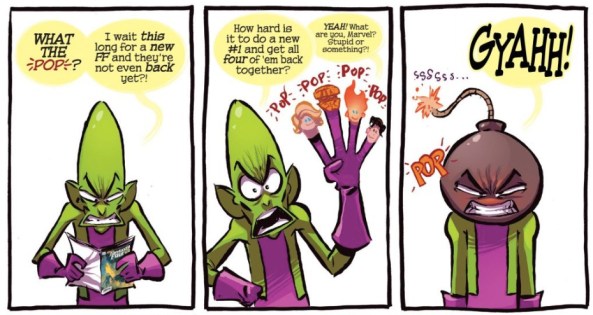
Patrick: Dan Slott and Skottie Young close out the first issue of Fantastic Four by giving the creative team shit for not actually reuniting the titular superheroes. It’s a cute little one-pager, playing to Young’s hyper-specific strength for drawing adorably angry characters.

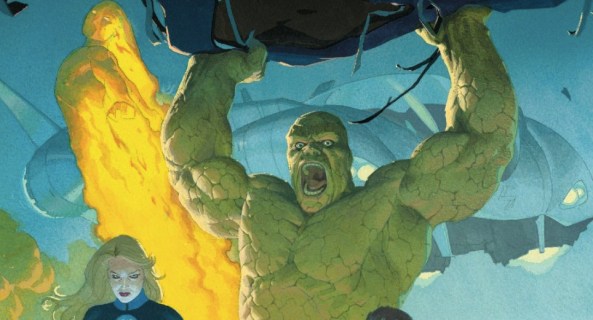
But this epilogue is more than just a cute way to sign off with joke. By ending the issue with an explicit acknowledgement that “they’re not even back yet”, Slott and Young are doubling down on the idea that the absence of the Four itself is a phenomenon worth exploring. Continue reading

Star Wars 52: Discussion

by Michael DeLaney and Patrick Ehlers

This article contains SPOILERS. If you haven’t read the issue yet, proceed at your own risk!

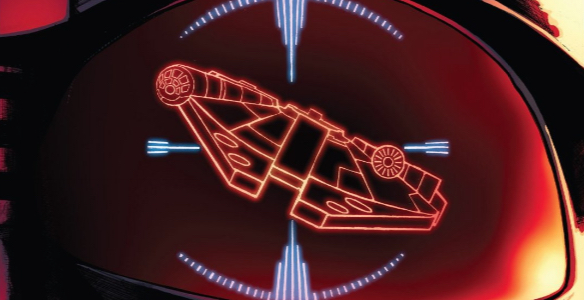
Michael: In The Empire Strikes Back, Darth Vader has a score to settle with Luke Skywalker — solely for the reason that he is the rebel who blew up the Death Star. But Luke was only able to take that final shot because Han Solo intervened and blasted Vader’s Tie-Fighter out of the way. It is the dogfight of A New Hope. In Star Wars 52 we get the rematch we never knew we wanted: Han vs. Vader. Continue reading

It’s Wade Wilson’s World in Deadpool 3

by Michael DeLaney

This article contains SPOILERS. If you haven’t read the issue yet, proceed at your own risk!

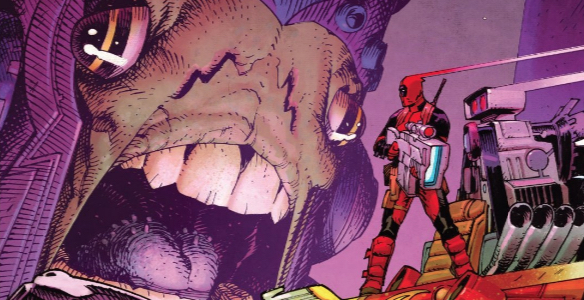
Deadpool is a mercenary, assassin, sometimes hero, and fourth wall-breaking jokester. But after nearly 30 years of quips, kills and general raunch Deadpool has become something else entirely: a lens to see the Marvel Universe through. Deadpool has a funny effect on the characters and setting surrounding him — he Deadpoolifies everything he touches. Continue reading

Death Roulette in Death of the Inhumans 2

by Patrick Ehlers

This article containers SPOILERS. If you have not read the issue yet, proceed at your own risk!

The title Death of the Inhumans makes one specific promise: some Inhumans are gonna die. But y’know, this is a comic book, and odds are just as good that the title is sensational hyperbole that they are of the title being literal. Writer Donny Cates and artist Ariel Olivetti spend the entirety of issue 2 insisting on three simple things:

  1. The Inhumans who have been killed already.
  2. The Inhumans left to kill.
  3. Vox’s ability to kill any Inhuman.

By the end of the issue, the reader is forced to take the threat of the title seriously. Cates and Olivetti cash in on that seriousness with one hell of a gut punch. Continue reading

Artistic Styles Inform Character Perspectives in The Immortal Hulk 3

by Michael DeLaney

This article contains SPOILERS. If you haven’t read the issue yet, proceed at your own risk!

slim-banner

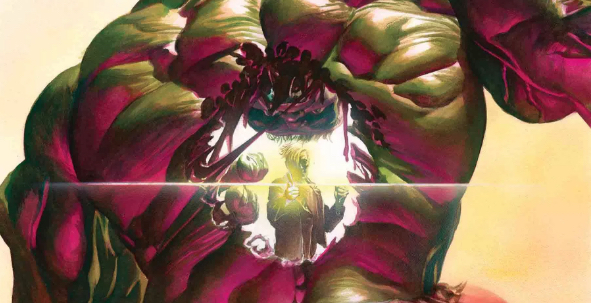
In The Immortal Hulk 3, reporter Jackie McGee is following up on a recent Hulk-related incident, interviewing four witnesses: “The Cop”, “The Bartender”, “The Old Lady” and “The Priest.” Series artist Joe Bennett is joined by Leonardo Romero, Marguerite Sauvage, Paul Hornschemeier and Gary Brown to visually highlight the there characters different perspectives on one Hulk sighting. Continue reading

De-Romanticizing War Stories in Poe Dameron 29

by Patrick Ehlers

This article containers SPOILERS. If you have not read the issue yet, proceed at your own risk!

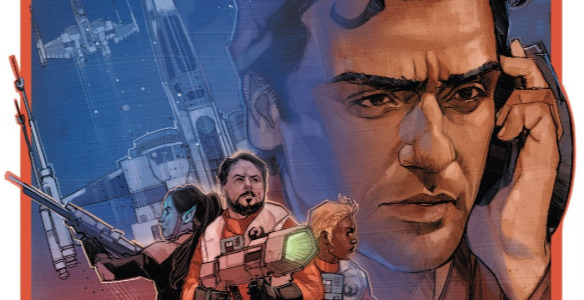
This arc in Star Wars Poe Dameron has been all about telling war stories: who does it, and why they do it. The answers thus far have been pretty straightforward. Poe tells Rey and Finn what he was up to during The Force Awakens so they can bond over their differing perspectives on a shared experience. It brings them closer together. And Artoo and Beebee honor their fallen droid brothers by recounting the serial number of every robot lost in the attack on Starkiller Base. These are noble war stories, and that’s weirdly consistent with the tone of the original trilogy. For as much as Star Wars was about Vietnam, Lucas perhaps didn’t have the historical perspective to capture the tone or cadence of war stories from that conflict. With Poe Dameron 29, writer Charles Soule taps into a sense of hopeless, confusion and pointlessness, rounding out his list of reasons to tell war stories with one of the hardest explanation out there: because they happened. Continue reading

Appearance Affects Identity in Runaways 11

By Spencer Irwin

This article contains SPOILERS. If you haven’t read the issue yet, proceed at your own risk!

Our appearance and how we present ourselves to the world are vital parts of our personal identities, especially as teenagers. The way we look can be used to rebel or conform, to highlight and emphasize our strengths or conceal our flaws and insecurities. Sometimes our appearance perfectly reflects who we want to be, while at other times it just reminds us of everything we hate about ourselves. Our appearance can even have an affect on others, for better or for worse. All of these various facets of appearance and identity play vital, central roles in Rainbow Rowell and Kris Anka’s Runaways 11. Continue reading