The Timeline Skews in Batman 45

By Drew Baumgartner

Batman 45

This article contains SPOILERS. If you haven’t read the issue yet, proceed at your own risk!

Here’s the present, 1985, the future, and the past. Prior to this point in time, somewhere in the past…the time line skewed into this tangent…creating an alternate 1985. Alternate to you, me, and Einstein…but reality for everyone else.

Doc Brown, Back to the Future Part II

We’re all familiar enough with the notion of alternate timelines and the butterfly effect by this point that any reasonable time-traveler would have to fear ever changing past events — indeed, it’s a sci-fi concept so ubiquitous, even Abe Simpson thought to offer Homer a warning about it on his wedding day. And yet, we still like to imagine “what if” scenarios about making different decisions in only our own pasts, but those of fictional characters. The most well-known “what if” story in superhero comics might well be “For the Man Who Has Everything,” Alan Moore and Dave Gibbon’s clever parable about fantasy wish fulfillment. Superman’s fantasy necessarily focuses on his own experiences on a non-exploded Krypton, but the absence of Superman would obviously have profound effects back on Earth. That is, there are butterfly effects in that fantasy timeline we never see, that a Krypton-based Kal-El wouldn’t even know about. Cleverly, Tom King and Tony Daniel open on the butterfly effects of their alternate timeline in Batman 45 before circling back to explain how and why this alternate timeline was created in the first place. Continue reading

Batman 44: Discussion

by Mark Mitchell and Taylor Anderson

This article contains SPOILERS. If you haven’t read the issue yet, proceed at your own risk!

Mark: Comic book characters locked into perpetual monthly stories can never really change; someone like Batman is an archtype unto himself, and if you mess with that alchemy too much, you threaten to change what Batman is. I used to think of this limitation as a bug in serialized comic storytelling, that the lack of permanent change in a character somehow devalued the overall impact any specific authorial choices could have, but I’m beginning to see it as a huge advantage. Continue reading

Dark Nights: Metal 6: Discussion

by Spencer Irwin and Mark Mitchell 

This article contains SPOILERS. If you haven’t read the issue yet, proceed at your own risk!

slim-banner

Spencer: Now that the series has come to an end, I can safely say that I have very mixed feelings about Dark Nights: Metal as a whole. So much of this event has been about embracing gonzo, bonkers, throwback action, but much of that fun is buried under attempts to overexplain every aspect of the (often impossible to follow) plot. The stakes of the event never fully sank in for me, as aside from artist Greg Capullo’s hellish landscapes, most of the nightmarish aspects of the Dark Multiverse were buried away in tie-in issues, while the main series focused on fun, but straightforward action beats. That said, there were a few areas where this series shined, and Dark Nights: Metal 6 exemplifies them all. It’s a strong metaphor for embracing hope and community over nihilism and isolation, a powerful reminder of stories’ ability to inspire, and an ode to the past (and future) of the DC Universe. Continue reading

Strength in Teamwork in Batman 43

By Drew Baumgartner

Batman 43

This article contains SPOILERS. If you haven’t read the issue yet, proceed at your own risk!

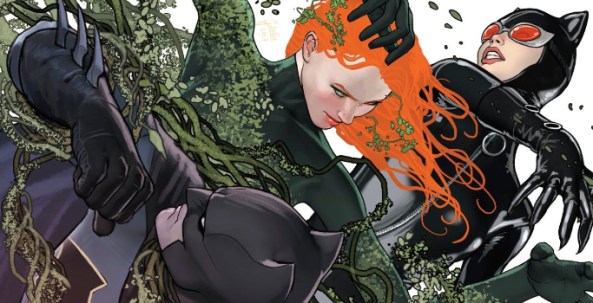
On the surface, grief and regret may not seem all that similar; one deals with an inescapable force of nature, the other is preoccupied with (potentially avoidable) personal failures. I might argue that regret is a kind of grief, albeit over the death of an idea or an opportunity, as opposed to a loved one, but there’s a more fundamental commonality between these two: how personal they feel. This can make both grief and regret feel very lonely, potentially driving us away from the friends and family who might want to support us through those difficult times. It’s a trap Ivy falls into, trying to go it alone in the face of her own grief and regrets, but Batman and Catwoman (and the entire creative team behind Batman 43) have a better way. Continue reading

Knowing Your Opponent in Batman 42

By Spencer Irwin

This article contains SPOILERS. If you haven’t read the issue yet, proceed at your own risk!

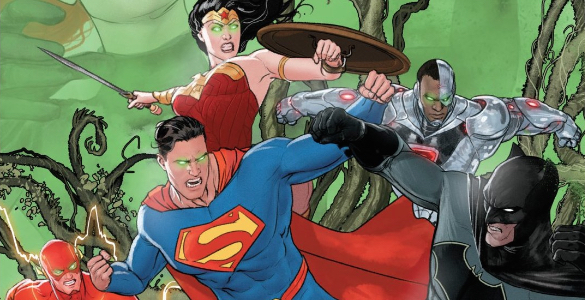
About halfway through my first read of Batman 42, as Poison Ivy (through her minions) dangled Catwoman upside-down from a skyscraper, I suddenly remembered that the two characters are supposed to be friends. As if reading my mind, a few pages later Tom King and Mikel Janin addressed this head-on, with Selina appealing to their friendship and Ivy claiming that Selina doesn’t know the first thing about her. Apparently Ivy’s bid at world domination is meant to be benign, charitable even — a genuine attempt from her to fix the world, to redeem for past crimes. Apparently there was a rock of regret inside her that not even her closest friends and allies knew about — but Batman knows. His entire plan, and his eventual, inevitable victory, revolves around him having nailed down Ivy’s motives and methods. Continue reading

Batman 41: Discussion

by Michael DeLaney and Ryan Mogge

This article contains SPOILERS. If you haven’t read the issue yet, proceed at your own risk!

Michael: The traditional superhero narrative can boil down to “hero is on top, villain arrives and takes over, hero defeats villain and the status-quo is restored.” There will be a period — however long or brief — where the villain has won and all hope is lost. Instead of showing a gradual build to that moment of defeat, Batman 41 starts us off there. Instead of opening with the first act optimism of A New Hope, Batman 41 goes right for the bleak Empire Strikes Back act break. Continue reading

Welcome Nuance Enriches Batman: White Knight 5

by Spencer Irwin

This article contains SPOILERS. If you haven’t read the issue yet, proceed at your own risk!

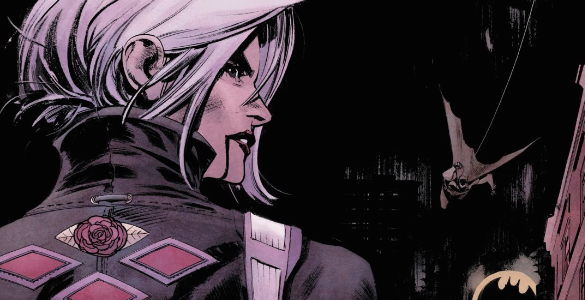
This is the first installment of Batman: White Knight where Batman has really felt like Batman to me. Sean Murphy digs into the character’s nuances in a way that he hasn’t in previous issues. This is the Batman who will buy Harley Quinn a dress and support her sincere, if bungled, efforts to reform, because under his gruff exterior he truly does care about people, even villains. This is the brilliant detective who has managed to piece together a good 95% of Neo-Harley’s plan when most of the other heroes barely even realize she has a scheme at all. Even Batman’s failed attack on Neo-Harley that closes the issue — which results in the destruction of one of Gotham’s bridges and Batman becoming a fugitive — is motivated by Neo-Harley’s personal attack on him and a desire to protect his family, not wild, unreasonable vengeance. This isn’t the gruff madman of previous issues — this is a complex Batman who still wants what is best for Gotham City. He’s just blinded by his hatred of the Joker. Continue reading

Apologies in Batman 40

By Patrick Ehlers

This article contains SPOILERS. If you haven’t read the issue yet, proceed at your own risk!

Batman: This is new, but I’m trying.
Catwoman: Yes, well, try harder.

Batman 40

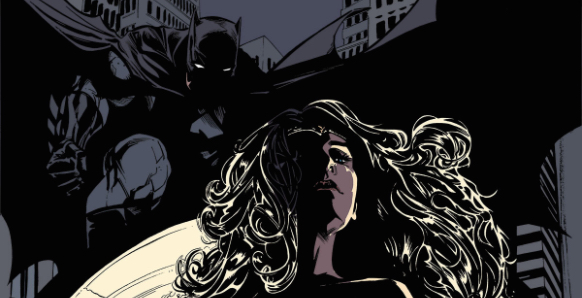
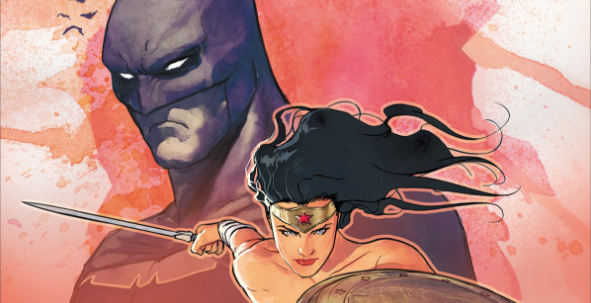
How do we admit our failings? The #MeToo movement is bringing a lot of stories of abuse to light, which means there have also been scores of written apologies. Some don’t use the word “sorry,” some make excuses, some try to deflect with their own surprise admissions. No matter how carefully crafted these statements are, they are all bound to fuck up and fall short. Words do no erase actions. Batman 40 sees creator and creation in similar roles, trying to explain they way they botched handling Wonder Woman. It’s messy, it’s riddled with mistakes, and it’s a genuine expression of how it feels to put your foot in your mouth. Continue reading

Batman 39: Discussion

By Drew Baumgartner and Mark Mitchell

Batman 39

This article contains SPOILERS. If you haven’t read the issue yet, proceed at your own risk!

Drew: Hey, so what is fidelity? I think we all understand the general concept, but the exact borders of the definition are not entirely well defined. If your significant other dies, for example, very few people would classify moving on to another relationship as “cheating,” so we might fairly define “death” as one of the hard edges of fidelity. But what if they’re just presumed dead — say, on a desert island for years and years? Do we consider Helen Hunt’s marriage in Cast Away to be cheating on Tom Hanks? What if it had been Tom Hanks who forged the new relationship (on the island, somehow) — he knows he’s not dead (and could reasonably assume Helen Hunt isn’t), but do the rules of fidelity extend to seemingly hopeless circumstances of languishing in a remote corner of the world? These are certainly unlikely hypotheticals, but unlikely hypotheticals are what superhero comics are all about, and exactly what Batman 39 needs in order to maybe-kinda-sorta justify Batman and Wonder Woman hooking up. Continue reading

Uncertain Uncertainties in Batman: White Knight 4

by Spencer Irwin

This article contains SPOILERS. If you haven’t read the issue yet, proceed at your own risk!

Despite the series being at its halfway point, I honestly don’t quite know what to make of Batman: White Knight. I still believe that Sean Murphy is a tremendous artist, but other than that, my feelings about this series are mired in uncertainty. It seems that some of that uncertainty is purposeful, inherent to the premise, but some of it feels very unintentional and frustrating. I wish it was easier to tell the difference. Continue reading