Moonshine 12: Discussion

by Drew Baumgartner and Patrick Ehlers

Moonshine 12

This article contains SPOILERS. If you haven’t read the issue yet, proceed at your own risk!

The moment. Be in it.

Lou Pirlo

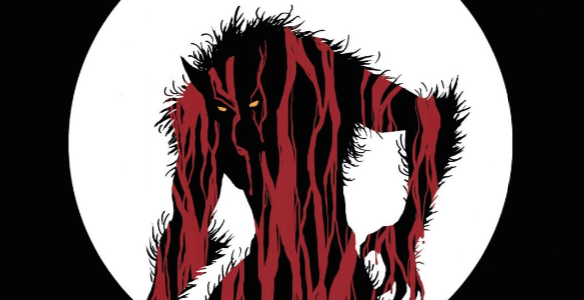
Drew: I have a theory that teens are such popular subjects of drama because they are so famously terrible at anticipating the repercussions of their actions. We accept impulsive behavior from Romeo and Juliet because they’re basically kids, but that same impulsivity needs explanation for adult characters. Maybe they’re prideful or hubristic or jealous or afraid; whatever it is, the drama is driven by a flaw in the characters that keeps them from acting rationally. Lou Pirlo has plenty of flaws that might explain his impulsivity — he’s both an alcoholic and a werewolf, after all — but with Moonshine 12, Brian Azzarello and Eduardo Risso suggest that impulsivity might be baked into his very core. The result is refreshingly free of the dramatic irony that characterizes other drama; we might recognize the decisions here as impulsive or ill-thought-through, but we have no idea what their repercussions might be. Continue reading

Love Doesn’t Conquer All in Descender 32

by Spencer Irwin

This article contains SPOILERS. If you haven’t read the issue yet, proceed at your own risk!

Much like our own, the world of Descender is full of prejudice, hatred, and war. These various traits all fuel each other in some sort of endless, infinite loop — the only way to break the cycle is to come together, to learn from each other, to empathize with each other, to love instead of hate. Like in so many stories — and, again, perhaps like our own world as well — love is the answer, but it’s not a solution that comes easily. In Descender 32, the final issue of Jeff Lemire and Dustin Nguyen’s saga, love may be the answer, but love doesn’t conquer all. Continue reading

Parallels, Dramatic Irony, and Time in The New World 1

by Drew Baumgartner

New World 1

This article contains SPOILERS. If you haven’t read the issue yet, proceed at your own risk!

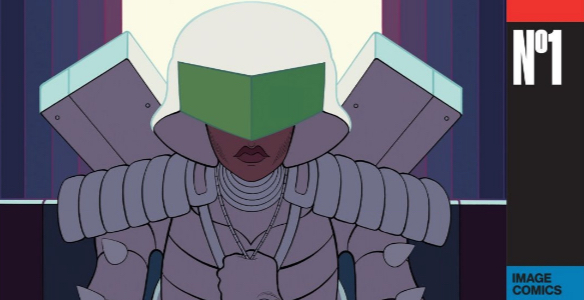
My wife is itinerantly averse to spoilers, to the point that she refuses to watch trailers for movies. It’s an attitude I can sympathize with (many trailers seem more like hyper-condensed edits of the entire film than teasers), but can’t fully understand — how could she possibly know if a movie appeals to her if she doesn’t know anything about it? To me, some foreknowledge of the genre and basic premise of a narrative is essential to my interest in it. Of course, in serialized media — especially ones with particularly high-concept premises — the first chapter might just cover the “basic premise,” effectively spoiling its own plot. But the thing I’ve always resented about “spoiler” talk is the way it privileges plotting (and especially surprise twists in plotting) over every other narrative element. There are real, unique pleasures to be mined from having more perspective than the characters within the narrative, and a well-told story will use those tools as effectively as any narrative twist. Aleš Kot and Tradd Moore demonstrate the value of those tools on both the micro and macro level in The New World 1. Continue reading

Doomsday Clock 6 Circles Marionette’s Past as it Circles the Drain

By Patrick Ehlers

This article contains SPOILERS. If you haven’t read the issue yet, proceed at your own risk!

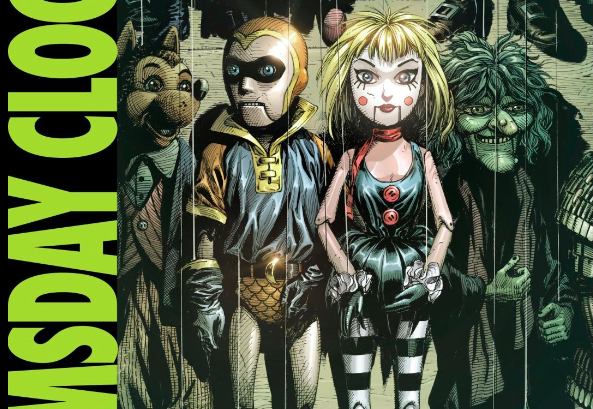
If I asked you to picture the single imagine that evokes Watchmen, what would you picture? Likely, you’re imagining the Comedian’s smiley face button, but I could also see an argument for Doctor Manhattan’s circular forehead logo. Both symbols are circles. I know that’s not exactly mind-blowing, but this is the level of visual rhetoric writer Geoff Johns and artist Gary Frank are playing with in Doomsday Clock 6.

The series continues to slump along in much the same way it did last time we talked about it. This time, Marionette and Mime are the focus of the story, which really doesn’t do Johns or Frank any favors. Stripped of all but the most tangential references to the Watchmen universe, the creators are left with the tone and tools of the piece to tell a story that spans two tonally discrete universes. If that sounds like an inadequate set of tools to complete an impossible task, that’s because it is. Continue reading

What Parents Want in East of West 38

by Taylor Anderson

This article contains SPOILERS. If you haven’t read the issue yet, read on at your own risk!

It’s generally assumed that parents always have the best interest of their children at heart. However, as is often the case in our world there is a difference between what is assumed and what is reality. In my job as a teacher it’s sometimes my sad duty to witness parents putting their own interests before their kid’s. Such was the case of one student who was forced by his mother to be in student council when he had no interest in it whatsoever. He hated all the meetings and eventually started to skip them which led to him breaking down in tears in front of me when his mom wanted to call a meeting about the ordeal. No one was happy then and I am reminded of this when I read East of West 37, where parents put their needs and wants before the kid’s resulting in sorrow for all.

Continue reading

Contemporary Fears in the Near Future of Analog 4

by Mark Mitchell

This article contains SPOILERS. If you haven’t read the issue yet, proceed at your own risk!

Science fiction stories are often set in the future, but they reflect the contemporary anxieties of the societies in which they’re created. The Los Angeles of Ridley Scott’s 1982 film Blade Runner was heavily inspired by the modern landscape of Tokyo — it’s bustle and aesthetics cranked way up to sinister levels. As Sarah Emerson notes in a 2017 piece for Motherboard regarding cultural fetishization in the franchise, Blade Runner was a product of its time; in the 1980’s the West was still feeling the effects of an economic downturn just as Japan’s economy began to kick into high gear. Couple that with already high fear of cultural invasion thanks to the ever-present Cold War, and the futuristic dystopia of Blade Runner where, as Emerson writes, “communities are ghettoized beneath Asian-branded skyscrapers” comes into focus.

Unlike Blade Runner, which consciously or unconsciously stoked audiences’ fears for mere atmosphere, Gerry Duggan and David O’Sullivan use Analog to actively exercise their fears about the present. That’s exercise — not exorcise. The internet run amok, neo-Nazis, greed and corruption in the systems meant to protect us, Duggan and O’Sullivan are writing a noir story of the meanest kind, where the rot in society is too deep to be cured and the best one can hope for is making it out alive. There are no solutions to be found in Analog. Jack McGinnis managed to shut down the internet and it wasn’t enough to make things right.

But like any good noir, just because Analog is bleak it doesn’t mean it’s joyless. As someone who spends most of their time tied up with anxiety about the state of the world, I’ve found there’s catharsis in Analog’s pessimism. Have a few thoughtless internet billionaires seemingly fucked everything up for the rest of us? Hell yes they have! Doesn’t it suck how the world continues to get hotter and hotter? Absolutely! Can you believe that we have to regularly talk about white supremecists — like on an almost day to day basis? No, I can’t! Reading an issue of Analog is like going to Angry Liberal Church on a regular basis and I love it. Amen!

For a complete list of what we’re reading, head on over to our Pull List page. Whenever possible, buy your comics from your local mom and pop comic bookstore. If you want to rock digital copies, head on over to Comixology and download issues there. There’s no need to pirate, right?

Artistic Styles Inform Character Perspectives in The Immortal Hulk 3

by Michael DeLaney

This article contains SPOILERS. If you haven’t read the issue yet, proceed at your own risk!

slim-banner

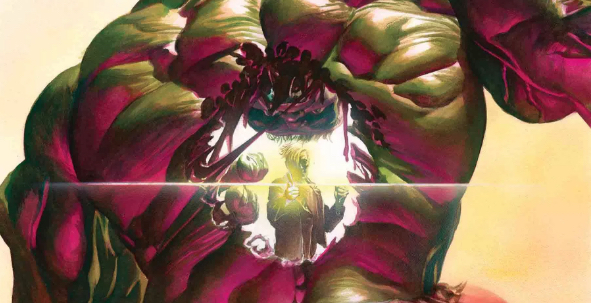
In The Immortal Hulk 3, reporter Jackie McGee is following up on a recent Hulk-related incident, interviewing four witnesses: “The Cop”, “The Bartender”, “The Old Lady” and “The Priest.” Series artist Joe Bennett is joined by Leonardo Romero, Marguerite Sauvage, Paul Hornschemeier and Gary Brown to visually highlight the there characters different perspectives on one Hulk sighting. Continue reading

Infidel 5: Discussion

by Patrick Ehlers and Drew Baumgartner

Infidel 5

This article contains SPOILERS. If you haven’t read the issue yet, proceed at your own risk!

The function, the very serious function of racism is distraction. It keeps you from doing your work. It keeps you explaining, over and over again, your reason for being. […] None of this is necessary. There will always be one more thing.

Toni Morrison

Patrick: There is a lot to be stressed out about in 2018. One of the more insidious is also one of the more pointless: racism. It’s a series of prejudices and assumptions based on lies passed down by generations of systems put in place to keep the powerful in power. It is literally senseless. But it is also tenacious as fuck. Whatever else is going on, the looming specter of prejudice is going to warp everything else, muting solutions to all other societal problems. Pornshak Pichetshote and Aaron Campbell’s Infidel 5 takes this uncomfortable truth and and shows just how persistent racism can be, even in the face of literal demons. Continue reading

De-Romanticizing War Stories in Poe Dameron 29

by Patrick Ehlers

This article containers SPOILERS. If you have not read the issue yet, proceed at your own risk!

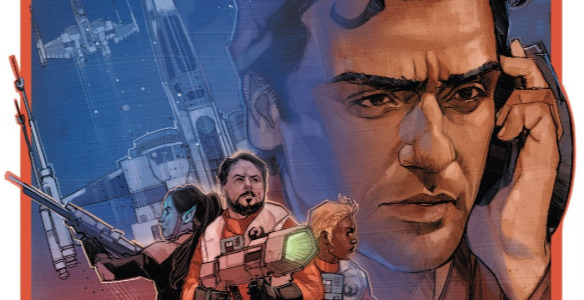
This arc in Star Wars Poe Dameron has been all about telling war stories: who does it, and why they do it. The answers thus far have been pretty straightforward. Poe tells Rey and Finn what he was up to during The Force Awakens so they can bond over their differing perspectives on a shared experience. It brings them closer together. And Artoo and Beebee honor their fallen droid brothers by recounting the serial number of every robot lost in the attack on Starkiller Base. These are noble war stories, and that’s weirdly consistent with the tone of the original trilogy. For as much as Star Wars was about Vietnam, Lucas perhaps didn’t have the historical perspective to capture the tone or cadence of war stories from that conflict. With Poe Dameron 29, writer Charles Soule taps into a sense of hopeless, confusion and pointlessness, rounding out his list of reasons to tell war stories with one of the hardest explanation out there: because they happened. Continue reading

Appearance Affects Identity in Runaways 11

By Spencer Irwin

This article contains SPOILERS. If you haven’t read the issue yet, proceed at your own risk!

Our appearance and how we present ourselves to the world are vital parts of our personal identities, especially as teenagers. The way we look can be used to rebel or conform, to highlight and emphasize our strengths or conceal our flaws and insecurities. Sometimes our appearance perfectly reflects who we want to be, while at other times it just reminds us of everything we hate about ourselves. Our appearance can even have an affect on others, for better or for worse. All of these various facets of appearance and identity play vital, central roles in Rainbow Rowell and Kris Anka’s Runaways 11. Continue reading