The Difference Between Safe and Fair in Batman Creature of the Night 2

by Patrick Ehlers

This article contains SPOILERS. If you haven’t read the issue yet, proceed at your own risk!

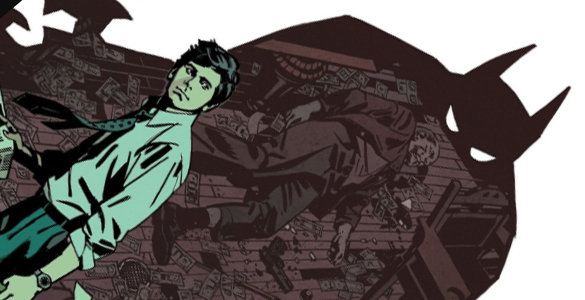
As a force for good in the world, there’s a lot missing in the Batman equation. Or, if not missing, at least contradictory. Batman’s search for justice implies a kind of universal balance, one where all bad behavior is punished and all good behavior rewarded, and because money is never an object for Bruce Wayne, this balance is achieved at no real cost to anyone. Batman Creature of the Night 2 explores the inherent imbalance necessary to create Batman in the first place, illustrating the difference between being safe and being fair. Continue reading

Glitterbomb: The Fame Game 4: Discussion

by Patrick Ehlers and Spencer Irwin

Glitterbomb The Fame Game 4

This article contains SPOILERS. If you haven’t read the issue yet, proceed at your own risk!

Patrick: In the first Glitterbomb series, writer Jim Zub and artist Djibril Morissette-Phan explore the late-career of actress Farrah Durante. Durante was abused by the system, sexually assaulted by her co-star, and discarded by the studio. She was emboldened by a spirit of vengeance, and ended up murdering a theater full of Hollywood’s worst scumbags in a whirlwind of intensely satisfying supernatural revenge. Mind you, it costs the character her life.

Glitterbomb: The Fame Game follows the next generation of celebrity in the form of Kaydon, Farrah’s only real friend toward the end of her life. Kaydon isn’t an actress on a TV show, she’s a personality, famous for her experience and perspective. She’s a woman of color, and at least a little bit queer, so we already know she’s able to express herself more completely than Farrah ever would have been allowed to. Continue reading

Simultaneous Silliness and Sincerity in Marvel Two-in-One 1

by Patrick Ehlers

This article contains SPOILERS. If you haven’t read the issue yet, proceed at your own risk!

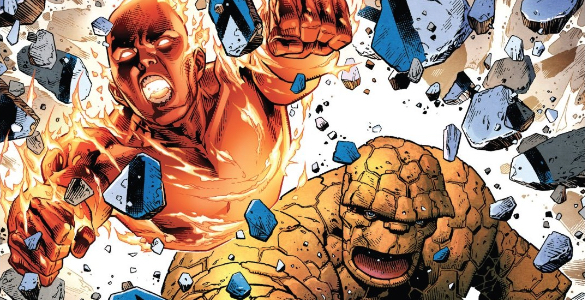
Patrick: Does writer Chip Zdarsky leverage humor to find pathos, or does he exploit genuine emotion for comedy? It’s almost impossible to tell. Zdarsky often rides the line between celebrating the absurdity and celebrating the sincerity of his characters and his stories. Marvel Two-In-One somehow achieves both simultaneously, giving the reader a sad, almost Venture Brothersian look into the loneliness and ennui of the last remaining members of the Fantastic Four, while never letting go of the inherent weirdness of these characters. It’s a stupendous feat of writing, emboldened by Jim Cheung’s reverent artwork. Continue reading

Green Lanterns 37 is a Clumsy Parable

by Patrick Ehlers

This article contains SPOILERS. If you haven’t read the issue yet, proceed at your own risk!

“I conducted my own investigation because no one listens to me. I got away with it because no one looks at me. Because, unless I have your reports, your coffee or your lunch, I’m invisible.”

Peggy Carter, Agent Carter

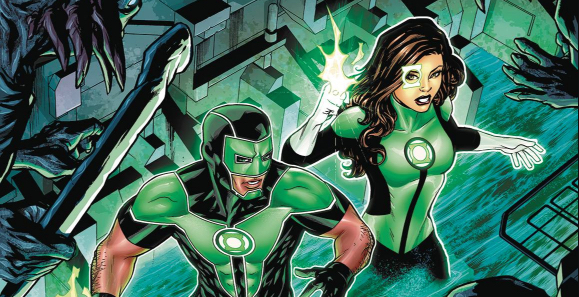
Patrick: Part of what I love about the short-lived Agent Carter television series is that, when it wants to, it can be thuddingly obvious about its themes and values. Peggy is a bad-ass super-spy often overlooked — or worse, taken advantage of — because she is a woman in the 1950s. The show loves putting these blatant statements of gender theory in Peggy’s mouth, but only once the show itself has actually demonstrated what she’s describing. It makes for an exhilarating story that embodies complicated values: having fun and having something to say at the same time. Green Lanterns 37 has an awful lot to say, but has not quite mastered how to have fun saying it. Continue reading

There’s Power Beyond the Hammer in Mighty Thor 702

by Taylor Anderson

This article contains SPOILERS. If you haven’t read the issue yet, proceed at your own risk!

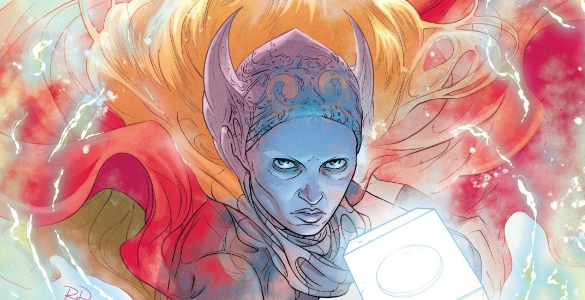
In the recent arc of Mighty Thor, tension has been building regarding Jane Foster’s inability to chose between being Thor or herself. At the crux of the matter is the fact that Jane has cancer which needs to be treated — which can only be done in her human form. However, she’s needed in virtually every corner of the universe as Thor to try and stop Malekith and his armies of evil. Forced to choose between saving thousands (millions?) and saving herself, Jane makes the obvious heroic choice. But as issue 702 shows, sometimes the obvious heroic choice isn’t always the best one. Continue reading

Curse Words Holiday Special 1: Discussion

by Patrick Ehlers and Spencer Irwin

This article contains SPOILERS. If you haven’t read the issue yet, proceed at your own risk!

“No hugging, no learning.”

-Larry David

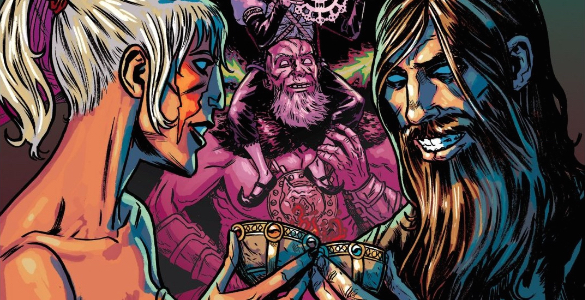
Patrick: It’s maybe not fair to say that Seinfeld was a show about nothing. The show was about cynicism, it was about flawed people trapped in their familiar patterns, it was about manners and modern etiquette. But it was mostly a vehicle for observational jokes about the weird ways human beings behave. So while there are virtually no sincere lessons learned in the whole series, the show illustrates an awful lot about human nature. The only way it ever drills down into that fundamental human truth is by straying aggressively true to itself — no hugging, no learning. The same is true of Charles Soule and Ryan Browne’s Curse Words, which gets to the heart of a nearly impenetrable relationship by being just as gross, just as crazy, and just as heartless as it possibly can be in Curse Words Holiday Special 1. Continue reading

Life After the Title in Doctor Strange 383

by Patrick Ehlers

This article contains SPOILERS. If you haven’t read the issue yet, proceed at your own risk!

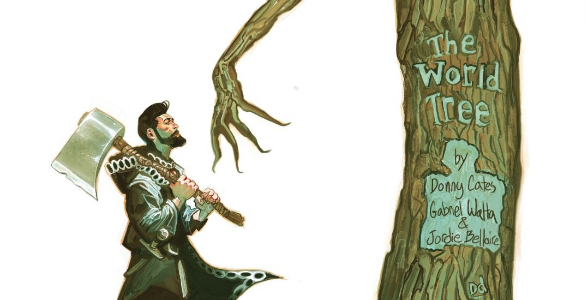
Patrick: Doctor Stephen Strange was the Sorcerer Supreme of Earth. It’s a baller title, and it comes with some insane responsibilities and nearly unimpeachable authority. Like, when Doctor Strange shows up on the scene, the other heroes know that he’s there because he knows what he’s doing. But when you strip the title away, what changes in Stephen’s life? Doctor Strange 383 continues Donny Cates’ saga of Loki’s tenure as the Sorcerer Supreme, but keeps Stephen under the microscope to determine what the remains of the main without the mantle. Continue reading

The Limits to Resistance Daredevil 596

by Patrick Ehlers

This article contains SPOILERS. If you haven’t read the issue yet, proceed at your own risk!

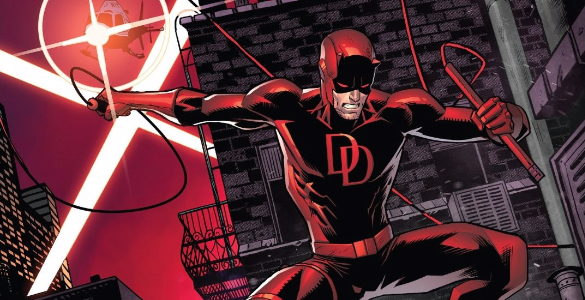
When Donald Trump was elected President of the United States, I took comfort in some of the facts of the matter. For starters, while he won the electoral college, he actually lost the popular vote by more than a million votes. This wasn’t some nation-wide referendum on misogyny and white supremacy, but a statistical loophole exploited by opportunists and trolls. Trump may be in office, but with a historically low approval rating, he is not representing the interests of the people he was elected to lead. But this is a cold fucking comfort. A man in power, even if a widely reviled one, still commands the resources and the authority to make some terrible stuff happen. Wilson Fisk, in his mayoral victory, is an obvious and easy stand-in for Trump, and while Daredevil may be confident that the people of New York City aren’t actually behind Fisk, there’s no denying that the office itself has power. Continue reading

Bug! The Adventures of Forager 6: Discussion

by Patrick Ehlers and Drew Baumgartner

This article contains SPOILERS. If you haven’t read the issue yet, proceed at your own risk!

“Come now — what’s more believable? A teddy bear that talks? A ghost girl who doesn’t? Spontaneous resurrections? Infinite Realities? Or the simple fact that you’re dead?”

-Chagra, Bug! The Adventures of Forager 6

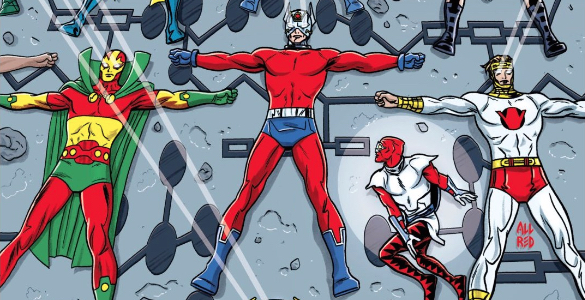
Patrick: Longtime readers of this site will know that I’ve got a limited amount of patience for stories that refuse to ground themselves. Often, this is literal — my favorite Green Lantern stories are those that tie back to Coast City, or Earth, or even just Hal Jordan. My attachment to the characters wane when they start to slip through time, space or even layers of reality. As such, I’ve always had something of a hard time with Fourth World stories and the whole cast of New Genesis characters. They’re fucking weirdos, in weird situations, somehow both a part of and separate from the multiverse. Lee, Michael and Laura Allred have been telling a story that leans into my biggest fears about Kirby’s opus, but wraps it all up by insisting on the purity of the simplest explanation: what you see is what you get. And they make “what you see” something truly worth the readers’ time.

Continue reading

An Unstoppable Force is not Stopped in Jean Grey 10

by Patrick Ehlers

This article contains SPOILERS. If you haven’t read the issue yet, proceed at your own risk!

Patrick: Superhero comics are full of unstoppable forces. Darkseid, Doomsday, Thanos — these are all bulldozers that the heroes claim to be powerless against. But, time and time again, they are repelled, resisted and defeated. That’s done out of narrative necessity. For starters, we want to see our scrappy heroes overcome impossible odds. But more importantly, if our heroes are slaughtered and their homes razed, how can the story continue? Writer Dennis Hopeless and artist Alberto Alburquerque plow headlong into their series conclusion by giving their own nuclear option a W. Continue reading