Babs Can Afford to Trust in Batgirl 24

By Drew Baumgartner

Batgirl 24

This article contains SPOILERS. If you haven’t read the issue yet, proceed at your own risk!

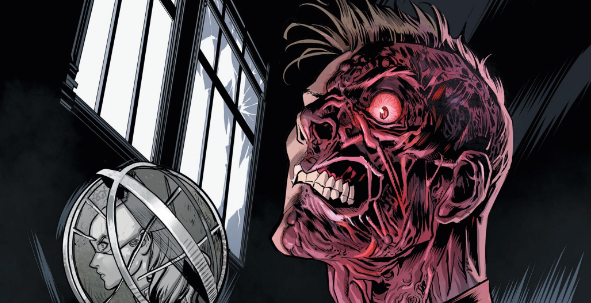
Quick, what distinguishes Batgirl from Batman? The specifics may have changed over time, but one of the key components of her current incarnation is that she’s a bit more street level, tackling cases that impact her local community as opposed to ones that threaten the entire city, country, world, or fabric of reality as we know it. Her relationship to commissioner Gordon is also more fraught, as her closeness with him in civilian life complicates her interactions with him in her costumed life. And then there’s her compassion. Batman can be a bit flexible on this front — in some stories, he goes out of his way to help would-be criminals make smarter choices, in others, he goes out of his way to break as many of their bones as possible — but Batgirl almost invariably leads with empathy. It’s an approach that can occasionally blow up in her face, as it does in issue 24, but never so much that she can’t course-correct. Continue reading
Batman 49 is the Anti-“The Killing Joke”

by Patrick Ehlers

This article contains SPOILERS. If you haven’t read the issue yet, proceed at your own risk!

slim-banner

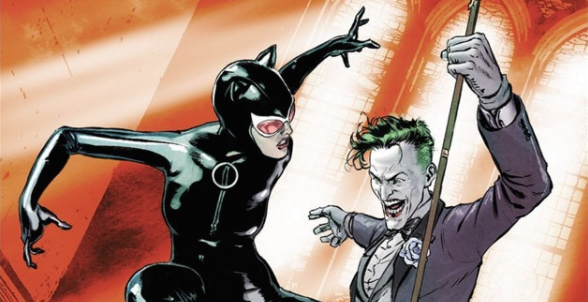
Tom King and Mikel Janin’s Batman 49 gives Catwoman and Joker an opportunity to discuss the role humor plays in both their lives and the greater Batman franchise. Joker’s goal in all of this is to get a laugh out of Selina, and by the end of the issue, she obliges him with a joke of her own and a chuckle. Sounds like Killing Joke, right? Here’s the thing – King gets us there by trading in connection, nostalgia and shared history, where Alan Moore and Brian Bolland got there by trading in misery. The result is an inversion on the classic story, and an update on the storytelling values in Batman and in comics in general. Continue reading

Justice League 2: Discussion

By Michael DeLaney and Ryan Mogge

This article contains SPOILERS. If you haven’t read the issue yet, proceed at your own risk!

Michael: Justice League 2 is all over the place, and for once that is intended as a compliment. With Dark Knights: Metal and Justice League: No Justice, Scott Snyder has gotten plenty of practice writing a team dynamic in the face of epic-level threats. And while both of those stories had their highs and lows, Justice League has been a pretty solid, fun ride thus far. Continue reading

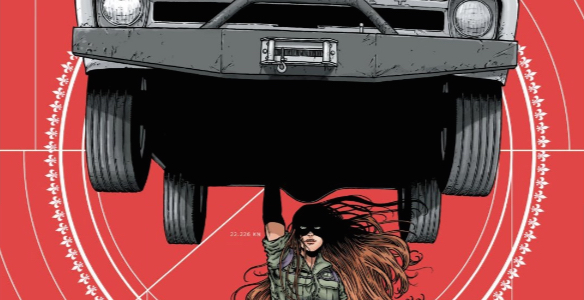
Reaching a Fever Pitch in The Wild Storm 14

by Drew Baumgartner

Wild Storm 13

This article contains SPOILERS. If you haven’t read the issue yet, proceed at your own risk!

I’ve spent plenty of write-ups of The Wild Storm praising Jon Davis-Hunt’s diagrammatic approach to action AND connecting that aesthetic to the interconnected world Warren Ellis is crafting. It’s a remarkably unified vision that has the power to keep even the wordiest talking-head pages engaging (though admittedly, I tend to use big action sequences to illustrate its efficacy). And to be sure, there are definitely some talking-head sequences in this issue, but as the central conflict between Skywatch and IO heats up, the slow simmer that defined the first year of this series is quickly becoming a rolling boil, meaning pretty much every scene is going to feature some action, too. Continue reading

Corruption Within the Corps in Green Lanterns 49

by Spencer Irwin

This article contains SPOILERS. If you haven’t read the issue yet, proceed at your own risk!

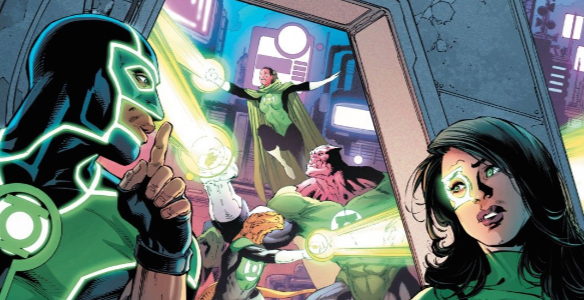
Over the past few years, as police injustices have been brought more and more into the open and it’s become harder and harder to justify supporting them (or often even tolerating them) as an organization, it’s become harder for me to fully buy into the idea of the Green Lantern Corps as well. It’s not the characters that give me pause — I adore Jessica, Simon, Kyle, and Guy — but their space cop routine. I don’t know, maybe that’s the point — so many Green Lantern stories in the past decade have positioned the Corps’ own leadership as their greatest enemies — but it’s certainly a thought that ran through my mind in Green Lanterns 49, where the biggest threat to Jessica Cruz isn’t the crime-lord who helped frame her, but the leaders within the Corps who already had it out for her before that even happened. Continue reading

The Restraint and the Rage of The Man of Steel 4

by Michael DeLaney

This article contains SPOILERS. If you haven’t read the issue yet, proceed at your own risk!

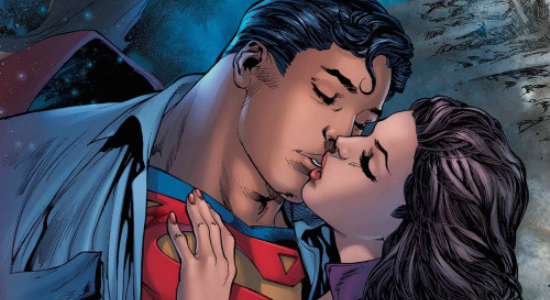
Outside of certain movies, Superman is not a creature of rage. He does not fly blindly into a situation without tying to think of its ramifications. And most important of all: he does everything possible to ensure the safety of innocent bystanders. The Man of Steel 3 ended with an enraged Superman attacking Rogol Zaar in a rare instance of blind rage. In The Man of Steel 4 Superman quickly comes to his senses, as he regains that trademark composure, restraint and presence of thought. Continue reading

Malice in Civility in Mister Miracle 9

By Patrick Ehlers

This article contains SPOILERS. If you haven’t read the issue yet, proceed at your own risk!

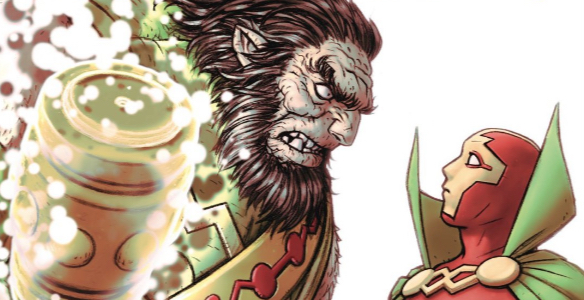
War is hell. It is economically, physically, and psychologically catastrophic for both those waging war and anyone unfortunate enough to be in war’s orbit. But ending a war? Ending a war requires one of two things: one side to be completely destroyed, or an agreement to be reached between the warring parties. Most wars end the second way. Which is borderline unfathomable, right? Imagine sitting down to negotiate with someone who has been systematically, enthusiastically, killing your friends and family every day for months or years. Tom King and Mitch Gerads’ Mister Miracle 9 wrestles with the dissonance of trying to make peace out of war. Continue reading

Eternity Girl 4 Skips Through the Comics Multiverse

By Drew Baumgartner

Eternity Girl 4

This article contains SPOILERS. If you haven’t read the issue yet, proceed at your own risk!

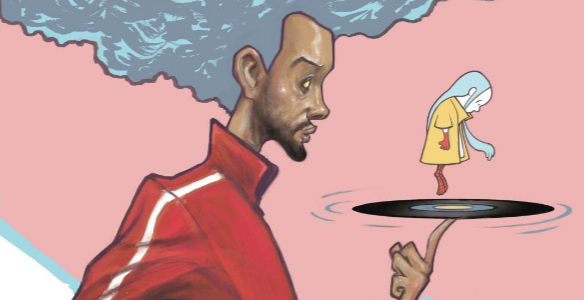
Comics critics are bad at talking about art. I suspect there are a few overlapping causes — some critics are diehard fans of specific characters, so are more invested in what happens to those characters than they are acknowledging that they live in a fictional world created by real human beings; others are (nominally) writers, so are have an affinity towards writing, which doesn’t leave much room (or knowledge) for anything else. And to be clear, I’m not suggesting that I’m any better. As a non-artist, it’s easy for me to get caught up in the most superficial elements of a given artist’s style. Defying that tendency has always been what excites me about artist Sonny Liew. My first exposure to Liew’s work was his original graphic novel The Art of Charlie Chan Hock Chye, which is part biography, part retrospective on a fictional comics artist, requiring that Liew modulate his style between the docudrama and epistolary elements. The effect was downright magical, creating the sense that there truly was a second artist creating all of the diegetic comics. It effectively defies my tendency to pigeonhole an artist based on “their” style. It’s that skill that Liew taps into with Eternity Girl 4, offering us multiple iterations (and styles) of the life and times of Caroline Sharp. Continue reading

Plastic Man 1: Discussion

by Spencer Irwin and Michael DeLaney 

This article contains SPOILERS. If you haven’t read the issue yet, proceed at your own risk!

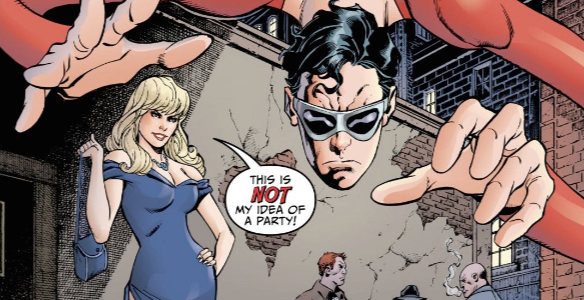
Spencer: The first JLA comic I ever read was an issue from Joe Kelly’s early 2000s run. The story found Martian Manhunter corrupted and turned against a hopelessly outmatched League. The only hero who could stand up to him was, surprisingly, Plastic Man, whose shapeshifting skills were on par with J’onn’s and whose elastic brain resisted his telepathy entirely. Plastic Man was also an interesting contrast to the rest of the uber-serious League, a walking visual gag who cracked wise even as he fought the most powerful being on Earth one-on-one. That issue impressed on me the value of Plastic Man and the unique charm he adds to the DC universe. Gail Simone and Adriana Melo clearly understand the character’s appeal, and it’s ultimately Plastic Man’s charisma that carries Plastic Man 1 in its shakier moments. Continue reading

The Fix 12 is a Perfect Revenge Fantasy Parody

by Patrick Ehlers

This article contains SPOILERS. If you haven’t read the issue yet, proceed at your own risk!

“When I woke up, I went on what the movie advertisements refer to as a roaring rampage of revenge. I roared. I rampaged. And I got bloody satisfaction.”

The Bride, Kill Bill

I tend to struggle with revenge fantasies. The objective of the protagonist is too prescribed for me, as though the sentiment “I want the people who made me suffer to feel what I feel” is a universal impulse. That is, of course, part of the genius of Kill Bill: the revenge fantasy is challenged the second Beatrix Kiddo sees the life she’s sworn to ruin. It’s a twist on the formula, just like Nick Spencer and Steve Lieber’s The Fix 12. The motivation remains the same, but our hero’s efficacy is the variable. Roy’s complete inability to get revenge for Mac’s death makes this issue a borderline genre spoof, and it’s just so perfect. Continue reading