Trust Saves the Day in Super Sons 16

by Spencer Irwin

This article contains SPOILERS. If you haven’t read the issue yet, proceed at your own risk!

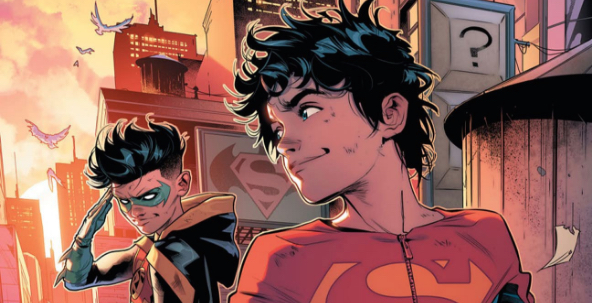
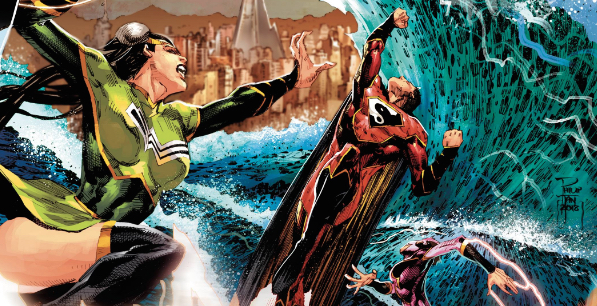
This month’s issue 16 marks the end of Super Sons (for now — a continuation is already solicited), so it only makes sense that writer Peter Tomasi, along with artists Carlo Barberi and Brent Peeples, would want to close on a milestone victory for Superboy and Robin. More important than the actual victory, though, is how they achieve it — partially by channeling their parents, but mostly by trusting in each other. Continue reading

Breaking the Loop in Batgirl 23

By Drew Baumgartner

Batgirl 23

This article contains SPOILERS. If you haven’t read the issue yet, proceed at your own risk!

We all have patterns. We run through them again and again until, one day, we finally see ourselves clearly and choose a different path.

Barbara Gordon, Batgirl

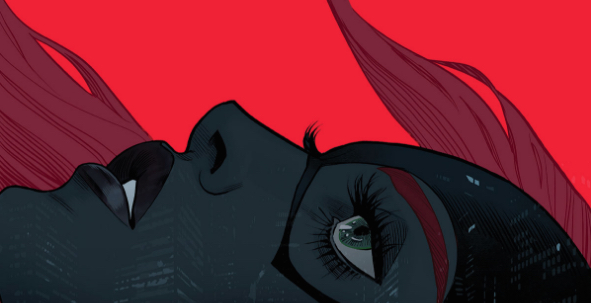
Let’s hear it for the quarter-life crisis. We tend to hear more about the mid-life crisis as either a pitiful or destructive force (usually middle aged men blowing money on a sports car or torpedoing their family life for a young girlfriend), but I think the quarter-life crisis is almost the opposite. As society extends adolescence well beyond the teenage years, and careers now take longer to kickstart than they did in generations past, the “what am I doing with my life?” urgency that kicks in around 25 can add some guiding structure. Maybe I’m biased in that way — my own quarter-life crises forced me to identify concrete goals that eventually sent me back to school — but I think a lot of us fall into a rut in our early 20s that we only later get the perspective to shake us out of. Maybe it’s a dead-end job, or an unfulfilling relationship, or a crummy apartment, or bad eating habits. For Barbara Gordon, that rut is a literal mind loop, preventing her from moving forward with her life. Continue reading

The Inconsistent Emotions of Batman 47

by Michael DeLaney

This article contains SPOILERS. If you haven’t read the issue yet, proceed at your own risk!

slim-banner

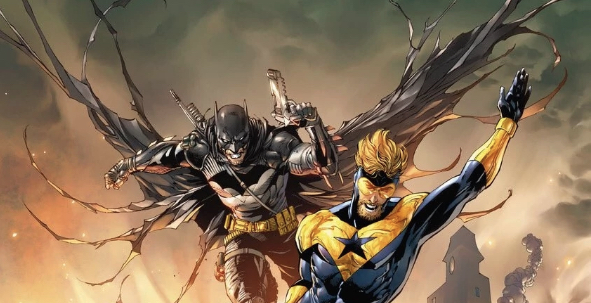
Tom King recently announced that he has a “HUGE” Booster Gold story coming for DC sometime in the near future, which makes his latest Batman arc “The Gift” a dry run of sorts on the braggadocious time-traveler. Batman 47 closes out the arc with Booster undoing his foolish time alterations, leaving him a little shell-shocked. As entertaining as “The Gift” has been in its Flashpoint-y twists, it leaves a very mixed depiction of Booster Gold. Continue reading

Heroes We Can All Relate To in Green Lanterns 47

By Mark Mitchell

This article contains SPOILERS. If you haven’t read the issue yet, proceed at your own risk!

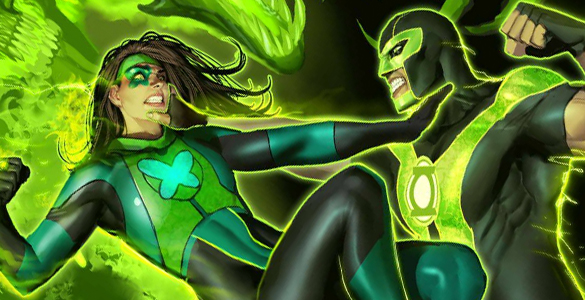
I really misjudged Green Lanterns 45. In my write up of that issue I figured Tim Seeley’s story to be primarily interested in teasing out the mystery surrounding the indentity of the murderers who killed Jessica Cruz’s friends, but in truth, the larger “Ghosts of the Past” arc has much more on its mind.

Continue reading

The Timelines Dissociate in Eternity Girl 3

By Drew Baumgartner

Eternity Girl 3

This article contains SPOILERS. If you haven’t read the issue yet, proceed at your own risk!

Spoiler alert for season one of Westworld, but I’m now deeply suspicions of non-explicit linearity in sci-fi. Fiction has long featured flashbacks and achronological storytelling, but usually by being up-front about when and where those things are happening. Westworld reminded us that stories don’t have to be transparent about when things are happening in relation to one another, and with characters that are impervious to age, we might make bad assumptions (or be intentionally misled). It’s unclear to me how much this applies to Eternity Girl, but that’s exactly why I’m so wary of jumping to any conclusions. Continue reading

The Hard Truth of Batman: White Knight 8

by Michael DeLaney

This article contains SPOILERS. If you haven’t read the issue yet, proceed at your own risk!

slim-banner

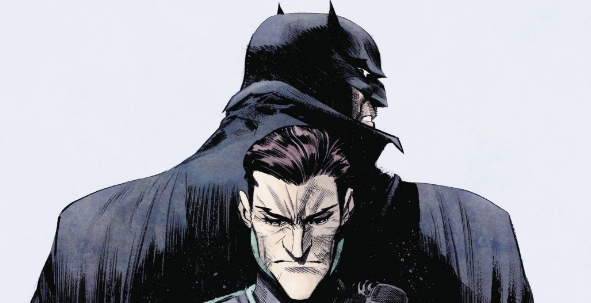
Sean Murphy debuted Batman: White Knight with a simple twist: what if The Joker went good and made Batman the villain? Throughout the subsequent seven issues, Murphy added unique layers to both The Joker, Harley Quinn and Gotham City as a whole. Batman: White Knight 8 closes out the series by bringing the attention back to The Caped Crusader himself. Continue reading

Plot, Without Thematics to Match, in New Super-Man and the Justice League of China 23

by Mark Mitchell

This article contains SPOILERS. If you haven’t read the issue yet, proceed at your own risk!

It’s taken me twenty-three issues, but I am finally coming to terms with the kind of book New Super-Man is, versus the book I want it to be. What it is is a plot-driven book that smooths over its rough patches with sheer momentum and the clever mash-up of Chinese folklore with DC mythos. What it is not is interested in meditating on the themes it employs to drive its plot. Continue reading

Exploring Dick Grayson in the Here-And-Now in Nightwing 44

By Michael DeLaney

This article contains SPOILERS. If you haven’t read the issue yet, proceed at your own risk!

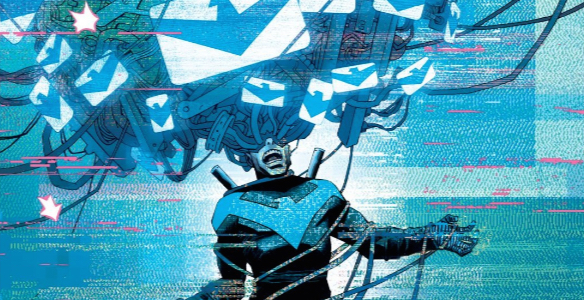
Michael: As a whole, DC comic book readers are very protective of Dick Grayson. He’s the first Robin, the first one to leave the short pants behind, lauded as the sexiest man in the DCU, and just an all-around great guy. Nevertheless Mr. Grayson can never seem to completely escape Batman’s shadow — I can name a slew of my favorite Batman stories but barely any Nightwing stories. Nightwing 44 is Benjamin Percy and Christopher Mooneyham’s inaugural issue on the title, and they are setting out to explore what makes Dick Grayson unique from the very first page. Continue reading

Being an Ally in Green Arrow 40

by Spencer Irwin

This article contains SPOILERS. If you haven’t read the issue yet, proceed at your own risk!

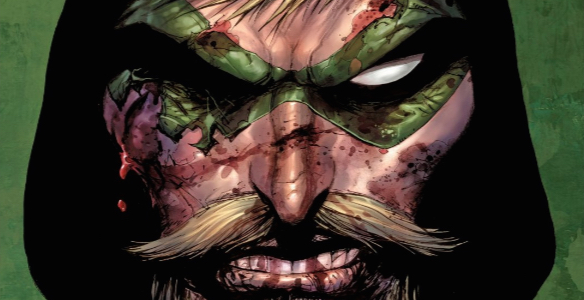
Spencer: One of the biggest challenges for many people — but especially for straight, white, cis-gendered males — is realizing that not every story is your story. We don’t always need to be the center of attention, our opinions don’t always need to be voiced, our methods and plans aren’t always right, much less the best ones for everyone else involved. That’s certainly what Oliver Queen was reminded of in last month’s Green Arrow 39 as his attempt to help out the war-torn country of Rhapastan backfired on him. He never should have gotten involved at all, right?

Wrong. Ollie’s conscious is his best feature — his mistake wasn’t getting involved, but charging head-first into a strange land without truly understanding the problem and working with the locals to address the root causes. The people of Rhapastan didn’t need a savior — they needed an ally, and that’s exactly what Ollie becomes in Jackson Lanzing, Collin Kelly, and Marcio Takara’s Green Arrow 40. Continue reading

The Darkest Timeline in Batman 46

By Drew Baumgartner

Batman 46

This article contains SPOILERS. If you haven’t read the issue yet, proceed at your own risk!

From now on, I am Evil Abed. We are the Evil Study group, and we have but one evil goal: return somehow to the Prime Timeline, the one that I stopped you from rolling that die. Then we destroy the good versions of ourselves and reclaim our proper lives.

Evil Abed, Community

The notion of the “darkest timeline” seems to have entered the zeitgeist, mostly through tongue-in-cheek suggestions that we’re currently living in it, but it’s a relatively common concept in science fiction. Indeed, there are so many examples, I kind of split my metaphor on my discussion of Batman 45, touching on everything from Back to the Future Part II to It’s a Wonderful Life to that “Treehouse of Horror” episode of The Simpsons where Homer keeps accidentally changing the timeline. But none are more explicit about the superlativeness of the badness of the timeline than Community‘s darkest timeline.

It stands as a kind of conceptual opposite of Gottfried Leibniz’s “best of all possible worlds” theory — his explanation for human suffering that any other “world” (effectively, a different timeline) would be worse. The Back to the Future franchise suggests that the original timeline was neither the best nor the worst (Marty improves it in the first movie, turning his father into a successful science fiction writer, Biff makes it worse in the second, turning himself into a Trump-ian real-estate mogul), but most of these other examples only show changes to the timeline making things worse — effectively, that we’re actually living in the best of all possible worlds. This is definitely supported in the horrific timeline Booster Gold created as Bruce’s wedding gift, which is undeniably worse than the DC Universe as we know it, though on the surface appeared better for Bruce. That is, until Booster tries to fix things in this issue. Continue reading