Futility in Days of Hate 9

by Patrick Ehlers

This article contains SPOILERS. If you haven’t read the issue yet, proceed at your own risk!

“All we do is sit in rooms and wait.”

Arvid, Days of Hate 9

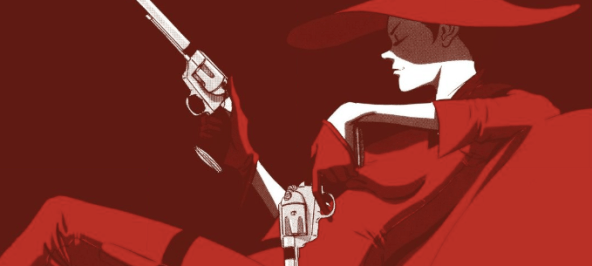
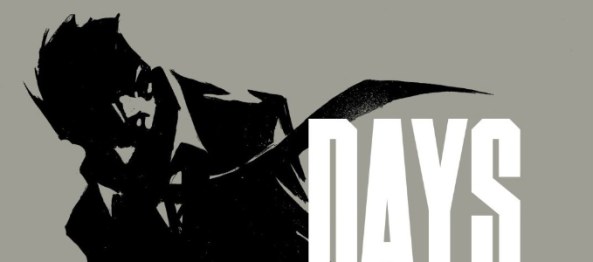
The scariest thing about the rise of fascism in the United States is the immeasurable apathy it has been met with. While people on the left have donated and volunteered and campaigned and protested, there’s nothing that won’t send us back to our couches like a little tongue-clucking about civility. We still expect the old tools work, but leverage and hypocrisy and blackmail only work if your opponent lets it work. In Days of Hate 9, writer Ales Kōt and artist Danijel Žeželj show the futility of protest, blackmail, and scheming against the unstoppable juggernaut of cruelty that is Agent Freeman. Continue reading

Strategies at Cross-Purposes in Coda 6

by Drew Baumgartner

Coda 6

This article contains SPOILERS. If you haven’t read the issue yet, proceed at your own risk!

I think it’s fair to say that Coda is set in a particularly fantastical world. Beyond the trappings of magical beings and beasts, the characters themselves recognize that they’re in a kind of mythical world that almost fetishizes heroic virtues of bravery and self-sacrifice. Which makes the cowardly pragmatism of our protagonist a distinguishing characteristic. He’s not an idealist willing to die in the battle against evil — he’s just a guy who wants to settle down for a quiet life with his wife somewhere. In pulling away from heroism, Hum forces us to reexamine the assumptions we have about what it means to be a hero, and what it means to not be one. It’s a subject Simon Spurrier and Matías Bergara have been playing with since the first issue, but one that comes to the fore in issue 6, as Hum argues his position with Serka. Continue reading

Black Panther vs. Deadpool 1

by Michael DeLaney and Drew Baumgartner 

Black Panther vs. Deadpool 1

This article contains SPOILERS. If you haven’t read the issue yet, proceed at your own risk!

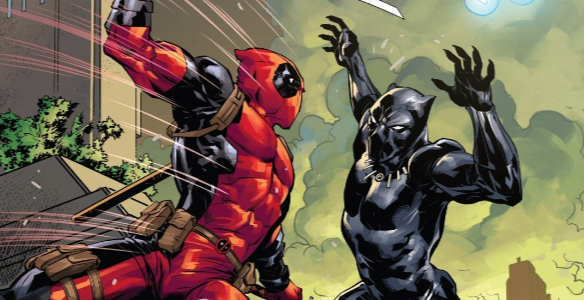
Michael: How do you think Marvel editorial goes about creating another “Vs” mini-series? Is there a quarterly mandate they must fill? Is it a writer’s repurposed series pitch? I suppose there must be some sort of demand since they keep making them, right? In spite of that I must say I was pleasantly surprised by Black Panther vs. Deadpool 1, a book that accurately depicts the tones of these very different characters without compromising either one of them. Continue reading

Teenage Mutant Ninja Turtles Macro Series: Michelangelo 1

by Patrick Ehlers and Spencer Irwin

This article contains SPOILERS. If you haven’t read the issue yet, proceed at your own risk!

Patrick: I love the Teenage Mutant Ninja Turtles, but part of that love comes from my now-decades-long exposure to them. I can look at any one of these four brothers and see a multifaceted, well-rounded character. This is in spite of the fact that they were introduced to me in a cartoon theme song that was content with describing Raphael as “cool, but rude.” And, to be fair, they can be tremendously fun characters, even when boiled down to archetypes. With that in mind, it’s fascinating to see how writer Ian Flynnn and artist Michael Dialynas craft a story the requires our hero to be so much more than a party dude. Continue reading

Dreams and Death Wishes in Daredevil 609

by Michael DeLaney

This article contains SPOILERS. If you haven’t read the issue yet, proceed at your own risk!

slim-banner

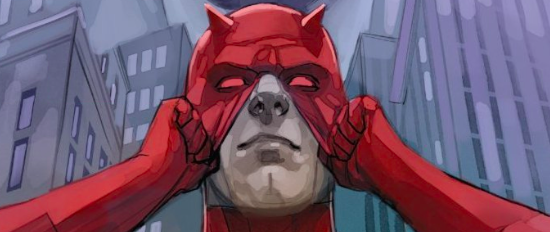
Matt Murdock is a maniac – I love him – but he’s a maniac. As the name Daredevil implies, he often throws himself into a situation with wanton abandon. That’s not to say that he doesn’t have a strategical mind, he clearly does. But his innate “fight or flight” response comes from a place of selflessness. He wants to protect people. Continue reading

The Mutability of Truth in East of West 39

by Patrick Ehlers

This article contains SPOILERS. If you haven’t read the issue yet, proceed at your own risk!

slim-banner

apocrypha: apoc·ry·pha | \ə-ˈpä-krə-fə

  1. writings or statements of dubious authenticity
  2. capitalized
    1. books included in the Septuagnint and Vulgate but excluded from the Jewish and Protestant canons of the Old Testament
    2. early Christian writings not included in the New Testament.

Why, in any discipline, can one work be canon while another is disregarded? This is one of those petulant questions I used to spit back at my confirmation teachers in high school. How can anyone be expected to believe a text over their experience of the world if there’s any room to believe the text could be false? Jonathan Hickman, Nick Dragotta and Frank Martin’s East of West 39 finds all of its characters in various states of deciding what to believe, sometimes even in spite of what they see. Continue reading

Darth Vader 22: Discussion

by Patrick Ehlers and Spencer Irwin 

This article contains SPOILERS. If you haven’t read the issue yet, proceed at your own risk!

Patrick: Our very own Mark Mitchell has expressed to me on a couple different occasions that he doesn’t get the appeal of either Darth Vader series that Marvel has published. His rationale is that the more we know about Darth Vader, the less terrifying he becomes. And he’s not wrong: there’s a whole trilogy of movies clarifying Anakin’s motives and they only serve to make the Dark Lord of the Sith more of a bumbling blunt instrument than an evil mastermind. But with Darth Vader 22 writer Charles Soule shows us how scary the motivations of a truly evil Dark Side master can be. Of course, Vader proves himself to be even scarier by rejecting Lord Momin’s ideology in favor of a far more direct motivation: accumulation of power. Continue reading

Thor 6 is a Mirror for Our Own Societal Flaws

by Michael DeLaney

This article contains SPOILERS. If you haven’t read the issue yet, proceed at your own risk!

slim-banner

In the six issues of Jason Aaron’s latest Thor relaunch, the veteran writer has the most fun with an arc set in the far future at “the end of time.” While it’s certainly been a trip to see Marvel staples like Wolverine and Dr. Doom juiced up with powers of other heroes, I was most affected by the commentary at work – both from environmentalist and societal perspectives. Continue reading

Batman 57 Pushes Through the Looking-Glass

by Drew Baumgartner

Batman 57

This article contains SPOILERS. If you haven’t read the issue yet, proceed at your own risk!

slim-banner

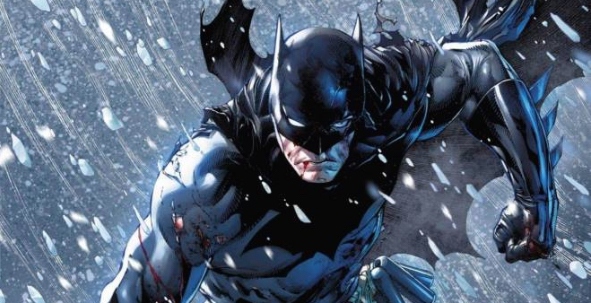
In his write-up of Batman 55, our very own Spencer Irwin highlighted the formal differences between the sequences featuring Dick Grayson and those featuring the mysterious “Mr. Zimmerman.” The Dick Grayson layouts are freewheeling and unpredictable, while “The Zimmerman sequences are highly regimented, each and every one depicted as nine-panel grids. This seems to represent how cold and calculated Zimmerman is and how mercenary and transnational his life is, but also how isolated he’s become.” Issue 56 drove that point home further, doubling down on the formal differences between the two stories (even after Dick Grayson stopped appearing). So by the time we read Batman 57 we’re pretty well conditioned to the notion that nine-panel grids = the KGBeast’s story, while anything else = Batman’s. It’s an expectation Tom King and his collaborators upend brilliantly, forcing us to question those conclusions we drew about these formal choices way back at the start of this arc. Continue reading

Shuri 1: Discussion

by Spencer Irwin and Michael DeLaney

This article contains SPOILERS. If you haven’t read the issue yet, proceed at your own risk!

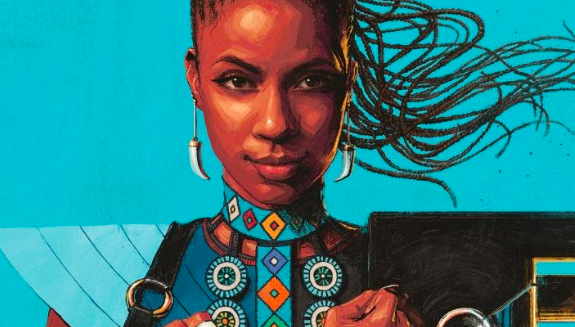
Spencer: The character of Shuri is currently riding a wave of popularity, one that can be traced back to February’s Black Panther film, and one which leads right up to this very comic, the first issue of Shuri’s first ongoing series. Despite being the breakout character in a movie full of breakout characters, though, Shuri has existed in the comics for close to fifteen years now, and has built up a history quite different from her MCU counterpart. How do you reconcile those disparate takes on the character? If you’re Shuri writer Nnedi Okorafor, you don’t; you confront each version of Shuri head-on, and make her (and others) do the same. Shuri’s journey to figure out who exactly she is and what exactly she wants becomes the central conflict of Shuri 1. Continue reading