The Weight of Influence in Batman 38

By Patrick Ehlers

This article contains SPOILERS. If you haven’t read the issue yet, proceed at your own risk!

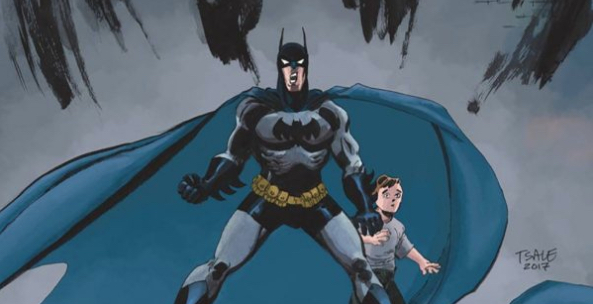
About halfway through Batman 38, Batman discovers a clue that leads him to Dennis O’Neil Avenue. Longtime Batman fans are going to recognize that name, but even relative neophytes are gong to pause at the specificity of that name. Outside of some of the biggest names of the last century — Martin Luther King Jr or John F Kennedy — you’re going to be hard pressed to find a figure who’s full name is up on a street sign. Hell, Chicagoans love Casimir Pulaski, but the north-south thoroughfare that bares his name is simply called “Pulaski Road.” (Though, hilariously, there’s also a brown placard below the street sign designating it “Honorary Casimir Pulaski Road.” It’s a weird town.) But writer Tom King’s use of O’Neil’s full name makes the creators influence on this issue explicit, just as the story itself leans in to one of O’Neil’s pet themes: the psychology of Batman. Continue reading
Batman and The Signal 1: Discussion

by Michael DeLaney and Taylor Anderson 

This article contains SPOILERS. If you haven’t read the issue yet, proceed at your own risk!

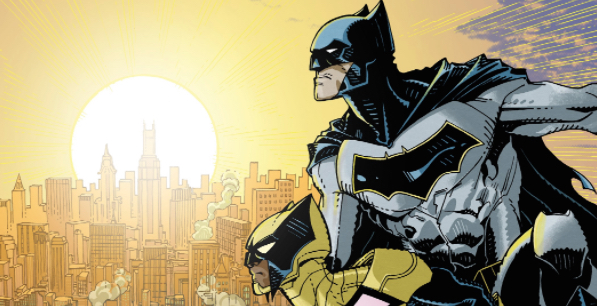
Michael: “Do I fit in?” If you are a human being, then you have likely asked yourself this question at least once in your lifetime. We all want to be a part of something; to be a member of a group, team, or soul-costing cult. And if you’ve been reading Scott Snyder’s Batman run for the past few years, another question has been on your mind: “What the hell is the plan for Duke?” Batman and the Signal 1 finally begins to answer that. Continue reading

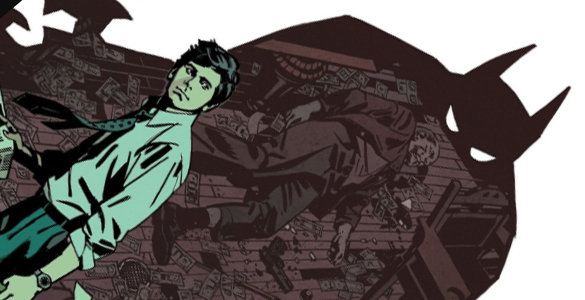
The Difference Between Safe and Fair in Batman Creature of the Night 2

by Patrick Ehlers

This article contains SPOILERS. If you haven’t read the issue yet, proceed at your own risk!

As a force for good in the world, there’s a lot missing in the Batman equation. Or, if not missing, at least contradictory. Batman’s search for justice implies a kind of universal balance, one where all bad behavior is punished and all good behavior rewarded, and because money is never an object for Bruce Wayne, this balance is achieved at no real cost to anyone. Batman Creature of the Night 2 explores the inherent imbalance necessary to create Batman in the first place, illustrating the difference between being safe and being fair. Continue reading

Doomsday Clock 2: Discussion

by Michael DeLaney and Drew Baumgartner 

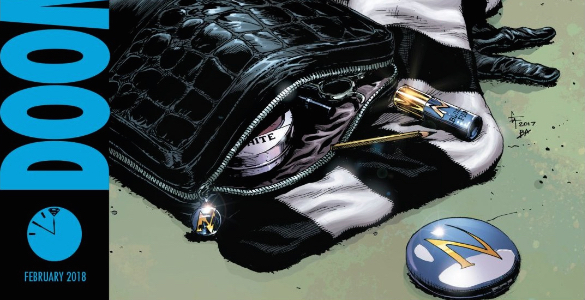
Doomsday Clock 2

This article contains SPOILERS. If you haven’t read the issue yet, proceed at your own risk!

Michael: It seems that the divisive issue this holiday season was not about the fictitious “War on Christmas” but instead about your opinion of Star Wars: The Last Jedi. I’m fascinated by the varying differences of opinions on this film. One of the most popular criticisms amongst detractors is that it didn’t meet their expectations. Some Star Wars fans might have given The Last Jedi a small margin of potential victory where the film was both different and spiritually the same to the original films. I’m reminded of this intense desire for both nostalgia and innovation in Doomsday Clock 2. Continue reading

Batman 37 Knocks it Out of the Park

by Drew Baumgartner

Batman 37

This article contains SPOILERS. If you haven’t read the issue yet, proceed at your own risk!

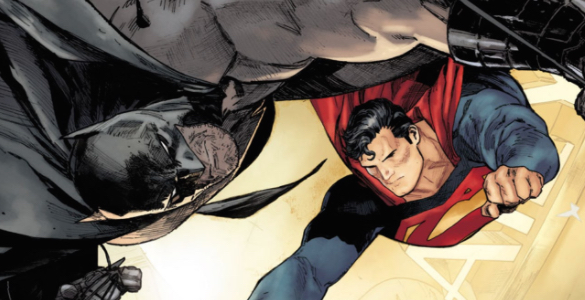
There are lots of reasons to love superhero comics. Maybe you’re in it for the high-wire action or the sci-fi worlds. Maybe you’re in it for the superhuman feats or the super human morals. There are as many reasons to love superheroes as there are superhero fans, but I think at some level, every fan must share some real affection for these characters, and perhaps even a childlike desire to be them. Those aspirations usually exist off the page, taking shape in our minds as we read, but Tom King and Clay Mann have found an elegant way to address the phenomenon in-universe: making Batman and Superman fans of one another. Continue reading

Dark Nights: Metal Finds Its Thematic Core in Issue 4

by Spencer Irwin

This article contains SPOILERS. If you haven’t read the issue yet, proceed at your own risk!

So far, Dark Knights: Metal has been best known for its reverence for DC’s history and its dedication to ideas and concepts as convoluted and zany as they are grand and cosmic (i.e., the instantly iconic Baby Darkseid). This focus has made the event a breathless thrill-ride, but in issue 4 Scott Snyder and Greg Capullo finally start to dig into the thematic and character-driven cores of their story, instantly making it a far more memorable and satisfying experience. Continue reading

The Mother of All Betrayals in Green Arrow 35

by Michael DeLaney

This article contains SPOILERS. If you haven’t read the issue yet, proceed at your own risk!

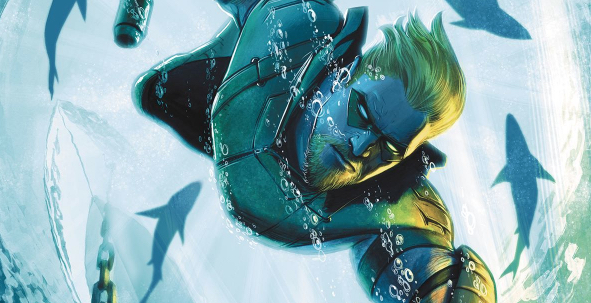
A common criticism of Green Arrow is that he’s Batman by another name: he’s rich, handy with the ladies, and, as a non-powered superhero, he’s got an arsenal of crime fighting tech. The biggest difference between The Dark Knight and The Emerald Archer? Batman thinks with his head and Green Arrow think with his heart. Continue reading

Batman: White Knight 3

by Mark Mitchell

Batman White Knight 3

This article contains SPOILERS. If you haven’t read the issue yet, proceed at your own risk!

The primary mystery of Sean Murphy’s Batman: White Knight (with an assist from Matt Hollingsworth on colors) is determining what exactly Jack Napier’s intentions are. How much of his stance against Batman on moral grounds is part of a longer con? And even if Napier is truly free of the Joker, he’s certainly willing to indulge in a little villainy if the ends justify the means. But then, the same can be said of Murphy’s Batman, and it’s the murky morality of most all the major players in Batman: White Knight 3 that makes this book so compelling. Continue reading

Batman 36: Discussion

By Spencer Irwin and Mark Mitchell

Batman 36

This article contains SPOILERS. If you haven’t read the issue yet, proceed at your own risk!

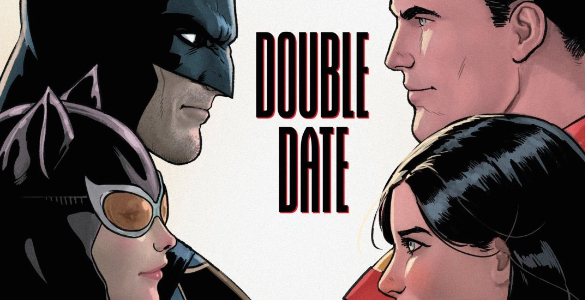
Spencer: Is Bruce Wayne the mask, or is Batman? Which one is “real”? It’s a long-standing debate amongst the comic book community, and given the myriad of different interpretations of the character, probably one that will never have a definitive answer. My own feelings about this question have shifted and evolved over time, but if you asked me right this second, I’d say that both Bruce and Batman are masks of sorts — the millionaire playboy and the dark knight, respectively. We don’t see him too often, but there’s a real Bruce beneath both those facades, one with real human emotions that often get buried beneath the weight of his own mythology. The best parts of Tom King’s run on Batman have been the moments where he’s let that real Bruce shine through, and more than anything it’s been Catwoman who has allowed this Bruce to do just that. In Batman 36, King adds another tool to his storytelling arsenal that similarly cuts right to Batman’s hidden humanity: his best friend, Superman. Continue reading

Batman: Creature of the Night 1: Discussion

By Spencer Irwin and Michael DeLaney

This article contains SPOILERS. If you haven’t read the issue yet, proceed at your own risk!

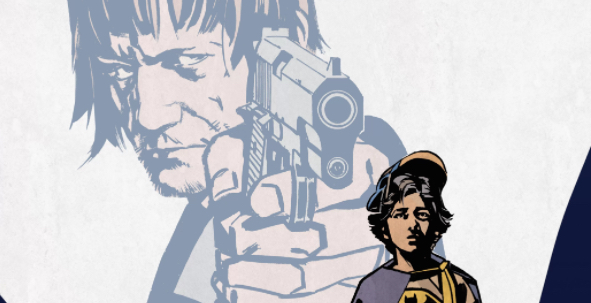
Spencer: When I was a kid, if you’d asked me what I wanted to be when I grew up, I’d have answered “Batman.” Growing up on the Adam West series, I didn’t recognize the tragedy that fuels the character — I only saw the potential for adventure. As someone who was bullied a lot as a kid, I think I was especially attracted to the justice of Batman, the idea that the good guys always won and that the villains always got what was coming to them. For many — both children and adults — comics can serve as an oasis or an escape, but at times they also just serve to highlight, to painfully drive home how unfair the real world actually is. That juxtaposition lies at the heart of Batman: Creature of the NightContinue reading