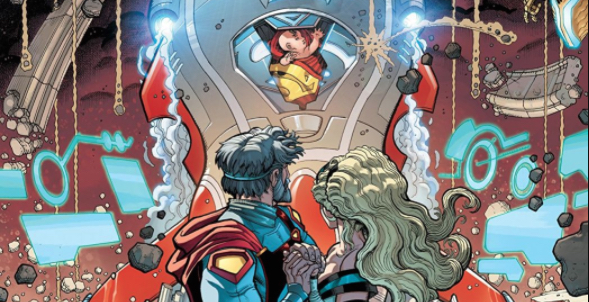
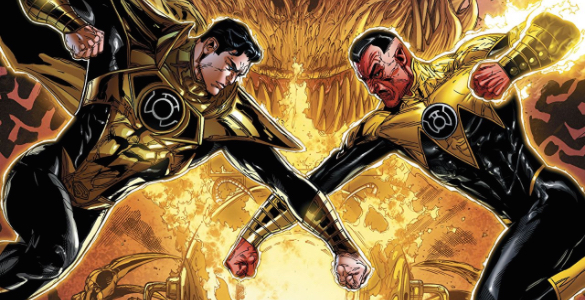
Jor-El Loses Hope in Action Comics 988

by Spencer Irwin

This article contains SPOILERS. If you haven’t read the issue yet, proceed at your own risk!

While Superman’s mission is most often described as “truth, justice, and the American Way,” personally I think the quality that best describes him and his methods is “hope.” Superman has hope that people can be better, and that’s the one thing he can never give up on. It’s also clearly going to be a major point of contention between him and his father, Jor-El a.k.a. the newly revealed Mr. Oz, as this arc of Action Comics moves forward. Continue reading

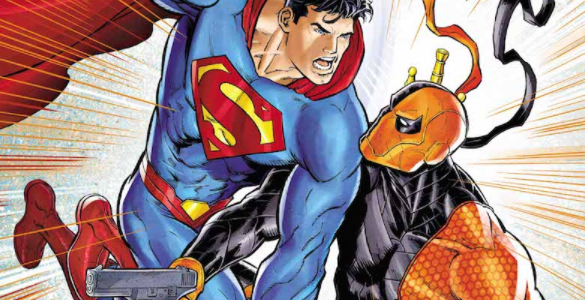
Ace Reporter Lois Lane Returns in Superman 31

by Mark Mitchell

This article contains SPOILERS. If you haven’t read the issue yet, read on at your own risk!

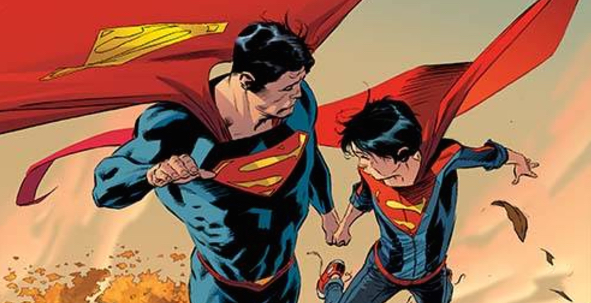
So much of Rebirth-ed Superman has been focused on Clark and Lois as parents. These familial dynamics are an interesting lens through which to view such storied characters, but doing so has largely left Lois cast in a passive role. The cover of Superman 31 promises fisticuffs between the Man of Steel and Deathstroke, but the issue is really all about Lois Lane, Ace Reporter, and how sweet it is to have this version of Lois back. Continue reading

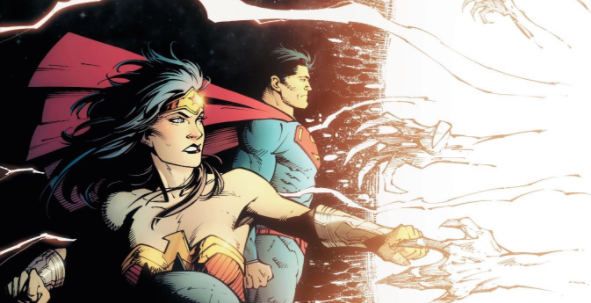
Dark Nights: Metal 2 Learns to Stop Worrying and Love the Weird

by Michael DeLaney

This article contains SPOILERS. If you haven’t read the issue yet, read on at your own risk!

Over the past 50 years, relaunches like The New 52 have favored comic book “realism” — whatever that may be. As I’ve gotten older, however, I’ve found that comic books are at their best when they embrace the silly, high-concept ideas that ran without question for the first 50 odd years of comic book history. Dark Nights: Metal 2 is the type of book that blends the modern “realism” with the whacky fearlessness of the books of old. Continue reading

Action Comics 987: Discussion

by Mark Mitchell and Michael DeLaney  

Action Comics 987

This article contains SPOILERS. If you haven’t read the issue yet, proceed at your own risk!

slim-banner

Mark: Modern comic books are built on tropes. After nearly a century of storytelling in the medium, the particulars of what makes a Superman story different from a Batman story are so deeply engrained that creators have a binary choice when sitting down to craft a tale: embrace the tropes or react against them. And while longtime comic book readers tend to seek out and reward stories that are willing to subvert and contort their expectations, either choice can be successful if executed well. Continue reading

The Details Drag Down a Strong Premise in Superman 30

by Spencer Irwin

This article contains SPOILERS. If you haven’t read the issue yet, proceed at your own risk!

There’s a particular brand of story that eschews hard logic or consistent rules for pure emotional storytelling: think Doctor Who at its best, where rules are often bent or changed to support the emotional thrust a given episode, or even the old Teen Titans animated series, where Trigon was defeated by the metaphor of Raven growing up, even if there was never explanation given as to how she gained so much raw power. This kind of storytelling can be tricky: if the emotions and metaphors work well enough readers will forgive (or perhaps not even notice) any gaps in logic, but there’s always the risk that they won’t. For my money, Superman 30 falls a little too close to the latter category; there’s a strong emotional core here, but also a lot of details that don’t fully add-up or make sense. Continue reading

Dark Nights: Metal 1: Discussion

by Patrick Ehlers and Mark Mitchell 

This article contains SPOILERS. If you haven’t read the issue yet, proceed at your own risk!

slim-banner

Patrick: Throughout Scott Snyder and Greg Capullo’s run on Batman, the creative team valued invention over archeology. The character of Batman has been around for so long that deconstruction of the character is practically in his DNA, and while Snyder and Capullo found ways to riff on Batman’s history, their stories were always new. New threats, new allies, new secret identity. With Metal, the latest DC event, Snyder and Capullo turn inward, to explore, refine, and recontextualize the mythology and iconography that is already part of their multiverse. There’s a premium on re-arranging existing pieces into an entirely new whole. Continue reading

“People” are the Detail that Matters Most in Green Arrow 28

by Spencer Irwin

This article contains SPOILERS. If you haven’t read the issue yet, proceed at your own risk!

At one point in Green Arrow 28 Lex Luthor compares himself to Sherlock Holmes, priding himself in his ability to be 12 steps ahead of everyone else, and proving it by (rather accurately) analyzing Arrow’s current situation based off of a few small clues in a most Cumberbatchian fashion. Yet for all his genius and detective prowess, there’s one small detail Luthor is rather blind to: people, especially the people who have helped make his company great. Continue reading

Superman 28: Discussion

by Spencer Irwin and Michael DeLaney
This article contains SPOILERS. If you haven’t read the issue yet, proceed at your own risk!

Spencer: I’ve never considered myself very patriotic. I appreciate the freedoms and privileges I enjoy as an American citizen, of course, as well as the sacrifices so many have made in order to ensure them, but it’s hard for me to fully support a country built on slavery and genocide, a country that’s struggled to properly care for minorities and the poor, a country that effortlessly and thoughtlessly kills foreign innocents in their own homes. I’m not comfortable putting my faith in an organization whose agendas so often shift (or can so easily be bought); I’d rather put my faith in individual people.

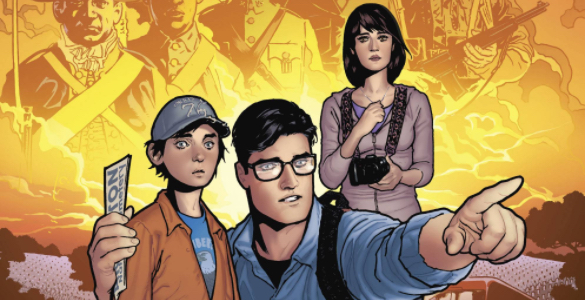
On paper, then, I probably shouldn’t like Superman 28, the conclusion of Peter Tomasi, Patrick Gleason, and Scott Godlewski’s brief “Declaration” storyline. In many ways Clark, Lois, and Jon’s road trip is patriotism at its finest, yet what endears me to this story is the focus the creative team puts on people; on the people who sacrificed so much to fight for their beliefs, and on the very human cost of America’s many wars. That’s a thesis I can get behind. Continue reading

“Preachy” Doesn’t Mean “Bad” in Superman 27

by Spencer Irwin

This article contains SPOILERS. If you haven’t read the issue yet, proceed at your own risk!

“Preachy” is one of those words that I, as both a critic and a human being, hate using. Almost every narrative preaches in one way or another, meaning that the word largely ends up being used, much like “agenda” or “pandering,” only to describe concepts the speaker can’t stand. Yet, I can’t find a better word to describe Superman 27 than “preachy” — I mean, Lois and Clark spend the majority of the issue stating their beliefs almost directly to the reader in language that sounds straight from a dictionary, eliciting several eye-rolls from me. Thankfully, this doesn’t lead to the issue’s doom. In fact, it still succeeds because of three reasons. Continue reading

Super Sons 6: Discussion

by Spencer Irwin and Mark Mitchell

This article contains SPOILERS. If you haven’t read the issue yet, proceed at your own risk!

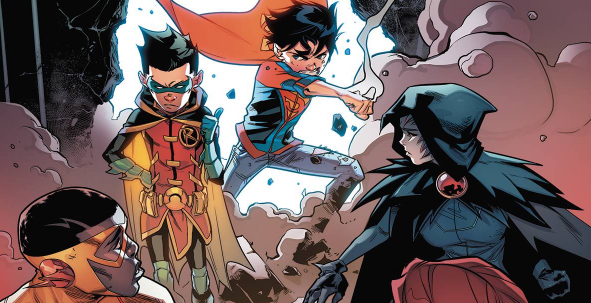
Spencer: Despite not making a single appearance, the Teen Titans loomed large over the first five issues of Super Sons. The Titans were Damian’s trump card, the cool older friends he could taunt Jon with whenever Jon gained the upper-hand against him. Amazingly, Jon never seemed all that affected by Damian’s bluster, at one point even telling Damian off for bringing the Titans up so much. This all changes as Peter Tomasi and Jorge Jimenez bring the Titans into the fold in Super Sons 6, adding some interesting new wrinkles to these two boys’ relationship. Continue reading