Thrillingly Putting the Pieces in Place in Saga 52

by Drew Baumgartner

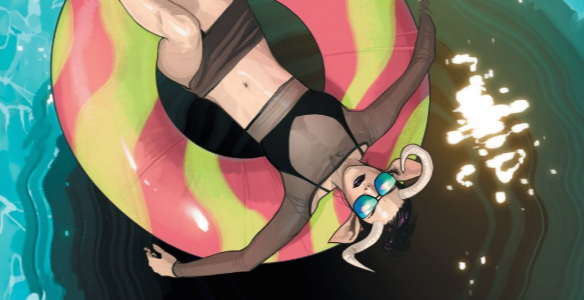
Saga 52

This article contains SPOILERS. If you haven’t read the issue yet, proceed at your own risk!

In this game, Fischer (playing Black) demonstrates noteworthy innovation and improvisation. Byrne (playing White), after a standard opening, makes a seemingly minor mistake on move 11, losing tempo by moving the same piece twice. Fischer pounces, with brilliant sacrificial play, culminating in an incredible queen sacrifice on move 17. Byrne captures the queen, but Fischer gets far too much material for it – a rook, two bishops, and a pawn. At the end, Fischer’s pieces coordinate to force checkmate, while Byrne’s queen sits, helpless, at the other end of the board.

Bobby Fischer’s Breakthrough: The Game of the Century

When someone says a chapter of a story is “putting the pieces in place,” it’s usually meant to point out some emotional shortcoming. Putting the pieces in place is seen as perfunctory, a perhaps necessary prelude to the actual drama to come, lacking in any real emotional investment (and maybe even drawing our attention to the invisible hand guiding circumstances into position). But I think that attitude is entirely shortsighted, privileging the fallout of events more than the setup, and ignoring that the “pieces” and “places” are the raw materials for drama, so how and why they’re there are essential story elements. It’s the kind of attitude that would make Bobby Fischer’s famous “Game of the Century” is only thrilling in its final moments, as he finally forced Byrne’s king into checkmate, but any chess fan can tell you that the ending was set up 21 moves earlier, which in turn may have been set up six moves earlier still, reminding us that the simple act of moving pieces on the board is what drives the drama in a game of chess. Obviously, Saga isn’t a game, and the characters aren’t chess pieces (royalty notwithstanding), but it’s just a thrilling to watch them scoot into attack position — even when we can’t see the attack coming. Continue reading
Finding Strength in Others in The Amazing Spider-Man 800

by Spencer Irwin

This article contains SPOILERS. If you haven’t read the issue yet, proceed at your own risk!

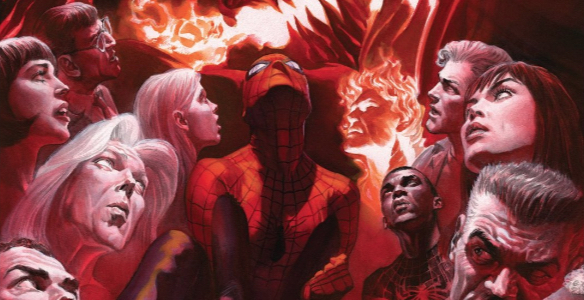
Spider-Man has one of the most iconic, expansive, and enduring supporting casts in all of superhero comics, and that’s a fact Dan Slott has used to his advantage throughout his long tenure on The Amazing Spider-Man. He especially leans on his supporting cast in issue 800, the penultimate issue of his run and the grand finale of “Go Down Swinging.” It’s an issue all about the power of the people in Peter Parker’s life, be it the power he gives them, or the power they give him. Continue reading

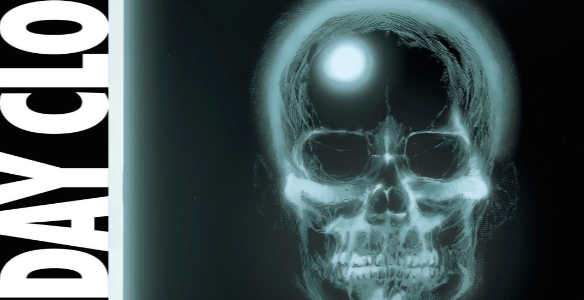
Doomsday Clock 5 Meanders

By Drew Baumgartner

Doomsday Clock 5

This article contains SPOILERS. If you haven’t read the issue yet, proceed at your own risk!

The essence of drama, and especially melodrama, is compression. Show only what’s important. So start the scene as late as possible and once the dramatic point is made, end it.

Dennis O’Neil, The DC Comics Guide to Writing Comics

Pound for pound, this might be some of the best writing advice I know. But in this age of sequels, prequels, spin-offs and tie-ins, it seems like it’s all but been forgotten. That is, the artistic discipline of narrative efficiency is no match for the commercial demands of more familiar content. I don’t mean to dismiss all sequels etc. out of hand (The Godfather: Part II is a goddamned masterpiece, and is both a sequel and a prequel), but I do think they need to work a bit harder to justify their existence — if the details of this prequel story truly are essential, why weren’t they included in the original. And that scrutiny goes double when augmenting a beloved masterpiece. It’s absolutely possible for a sequel to justify itself, even under those circumstances (again, The Godfather: Part II), but it’s no easy feat. Unfortunately, the longer Doomsday Clock wears on, the less it seems up to that task, not only failing to justify its existence, but pretty much every storytelling choice it makes. Continue reading

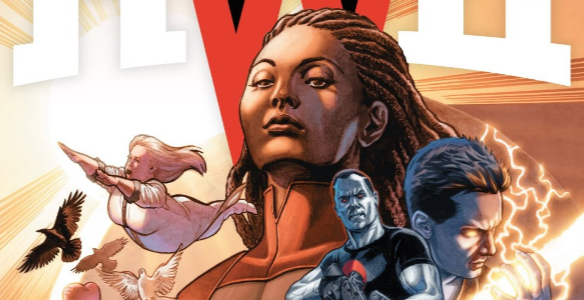
Harbinger Wars 2 1: Discussion

by Patrick Ehlers and Michael DeLaney

This article contains SPOILERS. If you haven’t read the issue yet, proceed at your own risk!

Patrick: Let’s run a hypothetical scenario: you’ve got access to a shared universe, full of superpowered characters, all of whom you’d classify as either heroes or antiheroes. You want to pit them against each other, in a… I don’t want to call it a “Civil War” for litigious Disney-related reasons… we’ll say it’s a “Harbinger War.” How do you establish sides? Pick an ideological divide and let it split up your character base, right? That’s a fun, toothless way to pit all your favorites against each other! With Harbinger Wars 2, writer Matt Kindt is crafting a more direct criticism of structures of power, casting the dutiful soldiers and company-men as stooges. It’s a clash of superheroes with the courage to say “hey, some of these guys are wrong.” Continue reading

Being The Hero, and Being the Sidekick in Lockjaw 4

By Spencer Irwin

This article contains SPOILERS. If you haven’t read the issue yet, proceed at your own risk!

Lockjaw is a pet, Black Bolt’s (and sometimes Ms. Marvel’s) faithful companion, so often a sidekick in their adventures. Daniel Kibblesmith and Carlos Villa’s Lockjaw miniseries has provided a chance for the teleporting canine to step into the spotlight and become the hero of his own story, a fact that takes center stage in the series finale. Continue reading

The Perversion of Meaning in Lazarus 28

by Patrick Ehlers

This article contains SPOILERS. If you haven’t read the issue yet, proceed at your own risk!

Do you feel that disconnect between what you love and what you have to do? Of course you do. Human beings tend to have pretty good bullshit-detectors, and we usually know when someone is selling us something. The problem is we don’t always reject false forms of happiness. That’s the real disconnect. We can recognize the flashing lights as hollow spectacle and still opt in. Lazarus 28 shows us both the meaningful and the superficial connections to the world Jonah lives in, and the damage exacted on one by the other. It’s a harrowing issue, and creators Greg Rucka and Michael Lark place sex and family at the very center of this dichotomy between meaning and meaninglessness. Continue reading