Doctor Strange 6

doctor strange 6

Today, Spencer and Drew are discussing Doctor Strange 6, originally released March 9th, 2016.

Spencer: I’ve never really been able to get into stories about magic. Part of that is just my upbringing — they were strictly forbidden in my household growing up — but I also have trouble getting invested in the stakes. So many characters who use magic are capable of doing anything, of solving any problem effortlessly, and so many stories about magic are obsessed with defining the rules of magic while never establishing why those rules are worth caring about in the first place. Thankfully, Doctor Strange has managed to avoid both of these problems, and issue 6 especially stands out in this regard. Jason Aaron and Chris Bachalo have crafted a story about the “End of Magic” that actually shows us why the loss of magic would be a tragic blow to the Marvel Universe. Continue reading
Detective Comics 50

detective comics 50

Today, Mark and Michael are discussing Detective Comics 50, originally released March 9th, 2016.

Mark: Well…huh. Is that all there is?

Writing a mystery story in any medium is an unenviable task. It’s basically impossible to nail the landing. For my money, the ideal solution to any mystery is both surprising and logical. Once the solution is revealed, the audience wants to see that the answer was hiding in plain sight all along. Writing a satisfying conclusion like that is nearly impossible. It’s why when something like The Sixth Sense comes along it is so successful. But M. Night Shyamalan learned the wrong lesson from its success, thinking that audiences craved a “GOT YA” ending. And it’s why his other films that attempted a twist failed. Sure, the twists are surprising…but they’re meaningless and add no additional understanding to what came before. So after two (and a half) strong issues of Peter J. Tomasi’s Detective Comics mystery, we reach the end of The Bronze Age arc and, again, I ask: is that all there is? Continue reading

Gotham Academy 16

gotham academy 16

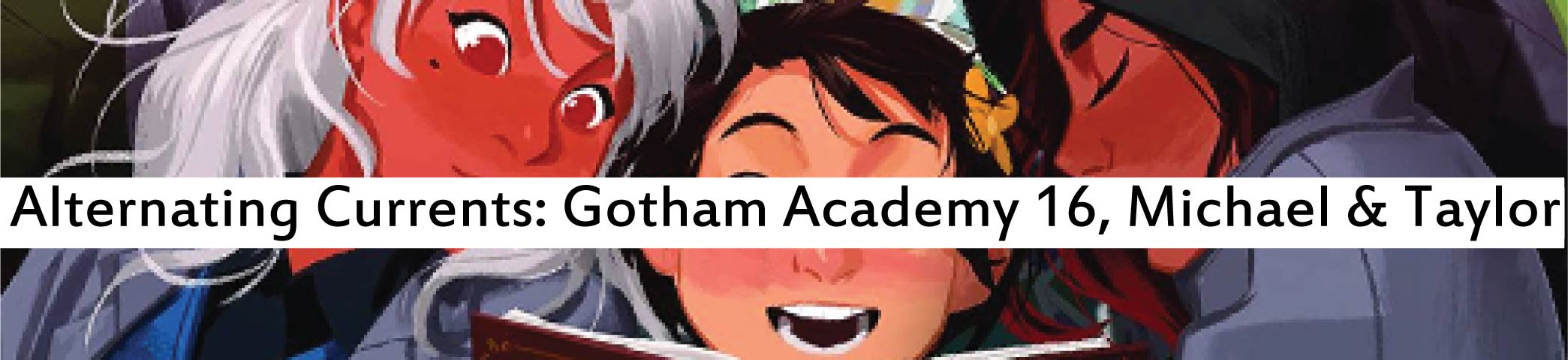
Today, Michael and Taylor are discussing Gotham Academy 16, originally released March 9th, 2016.

Michael: What is the proper way for a comic book series to say goodbye? Depending on the critical and commercial success of that book, the answer may vary. You might have the fore-sight or -knowledge to plot things towards a conclusion or just have to wrap things up as quickly as possible with a few issues. Though DC’s Rebirth will be bringing us another Gotham Academy series — Gotham Academy: Next Semester — these are the last few issues of the series as we have known it. Brenden Fletcher is joined by a handful of other creators to relish in the whimsical nature of Gotham Academy before he says his (brief?) goodbye. Continue reading

The Vision 5

vision 5

Today, Drew and Patrick are discussing The Vision 5, originally released March 9th, 2016.

Drew: I’m always baffled that the notion of privilege — that the majority class might benefit from their majority status in ways they aren’t aware of — is met with such resistance. But, I suppose that’s another symptom of privilege: blindly assuming you’re in the right, evidence to the contrary be damned. That’s the spirit that made Imperialism such a cultural force in the 19th and 20th centuries, as Western Europeans and (later) Americans replaced indigenous cultures with their own, believing whole-heartedly that it was the moral thing to do. Of course, whatever high ground a colonist might presume their medical technology or christian theology gives them, there’s no denying that imperialism brings all of the evils of the western world, as well, from literal plagues to damaging social and economic practices. The Vision 5 opens with the most memorable line from Shakespeare’s Merchant of Venice — Shylock’s pledge to embrace the evils of the majority class — suggesting that the Visions might be better off not being human, after all. Continue reading

Saga 34

saga 34

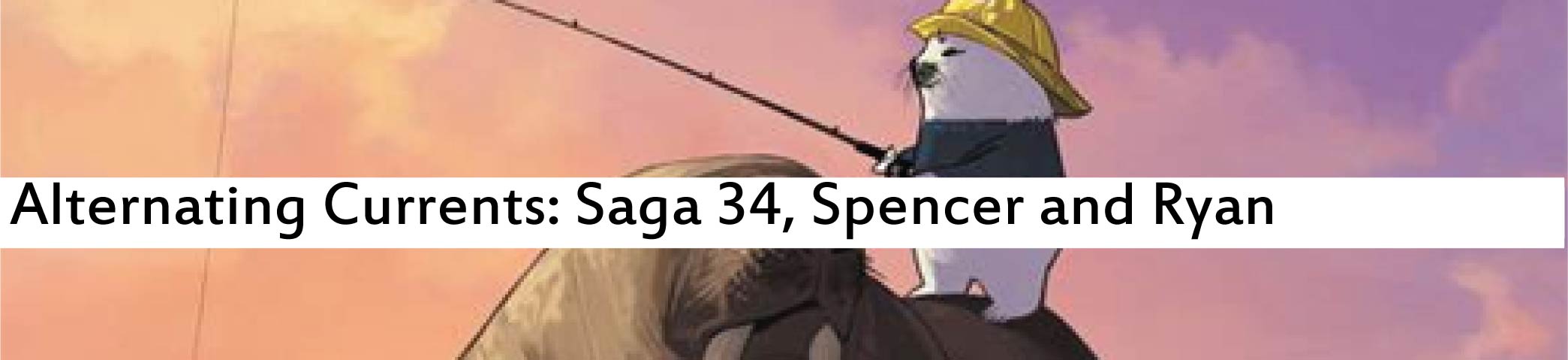
Today, Spencer and Ryan M. Patrick are discussing Saga 34, originally released February 24th, 2016.

Spencer: Every once in a while, a long running series will introduce a new concept and try to say, “hey, this has been important all along!” This can be frustrating when it isn’t true (see: all the various retcons in Star Wars) or when the concept changes the entire dynamic of the series. Yet, when a new idea seamlessly integrates itself into the structure of the story, helping to express and define concepts that have been there all along, it can be absolutely enlightening. That’s what happens in Saga 34, where Fiona Staples and Brian K. Vaughan use the idea of “diversity” to dig into both the causes and the solutions to all the problems plaguing the world of Saga. Continue reading

Nova 5

Alternating Currents: Nova 5, Drew and Ryan

Today, Drew and Ryan D are discussing Nova 5, originally released March 2nd, 2016. 

slim-banner

Drew: I developed my love of analysis with music. I studied music at college, where we learned a number of analytical approaches, examining everything from harmony to orchestration to rhythmic saturation. My favorite, though, was always the study of formal structure — the shape a piece of music takes. What’s remarkable about form is that you experience differently in the moment than you can in hindsight. As a piece of music unfolds, you have no idea if this is really a repeat, or some kind of clever fake-out (don’t even get me started on sonata form), but it’s patently obvious after the music ends (or, if you happen to have the score in front of you). I believe narratives — and especially serialized narratives — have a similarly plastic form; it’s easy to break a television season into acts once the whole thing has unfolded, but picking THE inciting incident or THE lowest point might be a bit more difficult in-the-moment. This is even more true for superhero comics, where things can always get worse, often in totally unexpected, physics-defying ways. So it’s with some reservation that I call Nova 5 Sam Alexander’s lowest point (at least as far as this volume is concerned), but all signs point to this issue as the nadir of the pastoral life established in issue 1. Continue reading

Darth Vader 17

darth vader 17

Today, Taylor and Michael are describing Darth Vader 17, originally released March 2nd, 2016.

Taylor: Part of Darth Vader’s mystique is that he’s a loner. He’s solitary, unknowable, and ultimately dangerous to those who both know and don’t know him. This penchant for solitude is part of what makes Vader fearsome. There are few people in the universe who can take on entire platoons of soldiers alone and emerge victorious, but Vader is one of them. Pair this with his basic distrust of just about everyone and everything and it’s no wonder the galaxy fears him. He is ultimately unknowable and what people can’t know they necessarily fear. In his black robes, Vader is essentially the embodiment of black hole: he can’t be known, he destroys all that come close to him, and ultimately he is misunderstood. Issue 17 of Darth Vader explores its titular character’s isolation and shows us how that is both the source of his downfall and ultimate redemption. Continue reading

Midnighter 10

midnighter 10

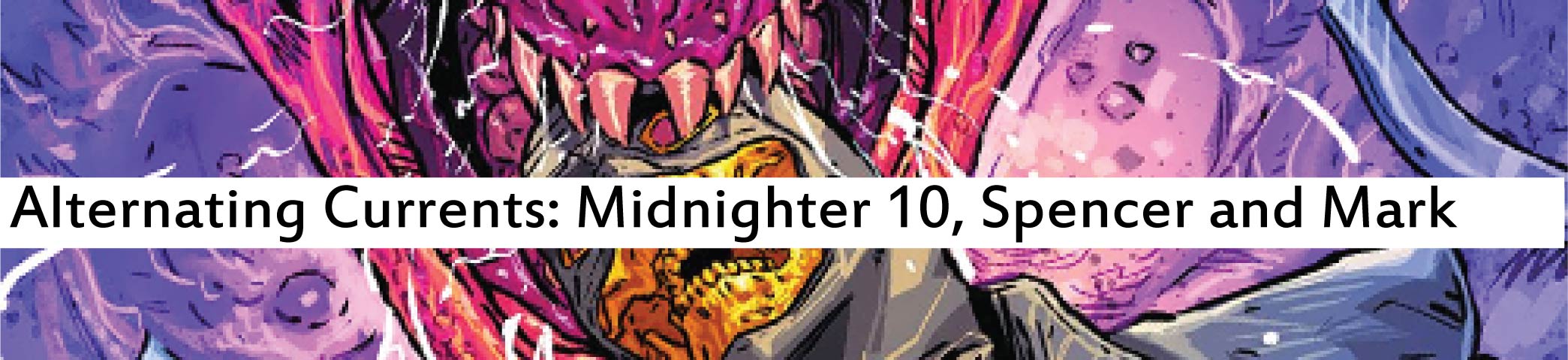
Today, Spencer and Mark are discussing Midnighter 10, originally released March 2nd, 2016.

Spencer: I was a little know-it-all as a kid. One of my earliest memories is interrupting a lecturer on a field trip to a planetarium to correct him about outer space trivia; “well, actually” might as well have been my catchphrase in elementary school. Even as an adult with decidedly screwed-up self esteem, I still occasionally find myself falling prey to the snare of overconfidence; in many ways, I think it’s just human nature. Supreme confidence has always been presented as one of Midnighter’s most charming attributes, but after suffering yet another loss, Midnighter 10 starts to explore whether that confidence is an asset or a hindrance, and one of the most effective ways it does so is by comparing it to the overconfidence of the rest of the cast. Continue reading

Deadpool 8

deadpool 8

Today, Patrick and Taylor are discussing Deadpool 8, originally released March 2, 2016 

slim-banner

Patrick: Every couple years, Drew and I end up having a conversation about the “death of irony” or the “death of sincerity” and every time we have it, we’re basically blowing smoke out our asses. Concepts like “irony” and “sincerity” need not be mutually exclusive – in fact that’s where most genre fiction rest: comfortably in both camps. A superhero comic in 2016 wears the trappings of a superhero comic because its creators and its audience simultaneously love and are bored by those trappings. That puts a character like Deadpool in a tricky spot, when it seems like his mission statement is to subvert what is gradually becoming the insubvertible. Deadpool’s popularity almost works against him in this regard – how can you continue to classify him as a misfit underdog if everyone loves him? And then there’s the wildly successful Deadpool film, catapulting audiences acceptance of the Merc with the Mouth to meteoric heights. Writer Gerry Duggan and editor Jordan D. White act as Deadpool’s tonal shepherds in this series, keeping the character’s aims purely subversive, the key difference is that the subject they’re subverting is no longer as broad as “comics” or “superheroes” or “the 90s” – the subject is Deadpool.

Continue reading

Batgirl 49

batgirl 49

Today, Michael and Drew are discussing Batgirl 49, originally released March 2nd, 2016.

Michael: DC Comics has (sort of) clarified what its upcoming “Rebirth” is, and it has been changing my reading of every comic I’ve read from them in the meantime. It’s still anyone’s guess as to what kinds of changes “Rebirth” brings to the DC line, but we are definitely at the climax/resolution threshold of each title’s story. Case in point: the semi-continuity-resolving, Inception-ish issue that is Batgirl 49. Continue reading