Secret Identities are a Weakness in Incognegro Rennaisance 4

by Drew Baumgartner

Incognegro Renaissance 4

This article contains SPOILERS. If you haven’t read the issue yet, proceed at your own risk!

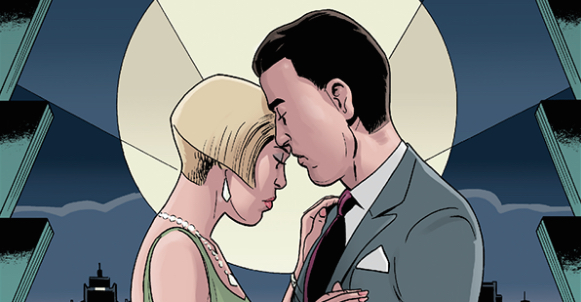
Dark secrets are the number one motivator in noir, whether they’re motivating criminals (or witnesses) to hide the truth, or motivating detectives to uncover it. Indeed, the world of a noir story often feels like everybody has a deep dark secret they’re hiding from the world, leaving the detective with nobody to trust. It’s a great way to goose the tension of an investigation, but it can also feel a bit over-the-top, as though the secrets are there specifically to complicate the narrative. I don’t know how many times I’ve seen a suspect be evasive about their alibi because they were with a mistress or something, but more than enough to spot it a mile away. Which makes the secrets in Incognegro Renaissance 4 a refreshing change of pace. Here, the secrets aren’t reduced to some underhanded act the characters want to hide, but are tied up in their very identities. The result is a much more interesting and nuanced vision of secret lives that draws on the realities of 1920s Harlem, as opposed to the fantasies of noir’s criminal world. Continue reading

Breaking the Loop in Batgirl 23

By Drew Baumgartner

Batgirl 23

This article contains SPOILERS. If you haven’t read the issue yet, proceed at your own risk!

We all have patterns. We run through them again and again until, one day, we finally see ourselves clearly and choose a different path.

Barbara Gordon, Batgirl

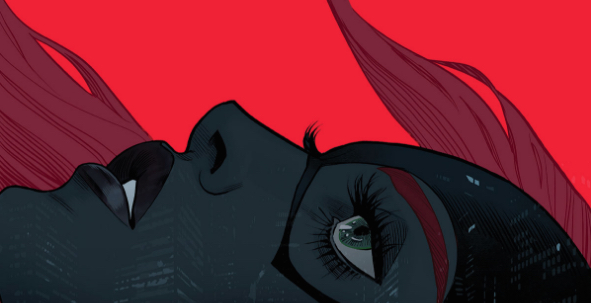
Let’s hear it for the quarter-life crisis. We tend to hear more about the mid-life crisis as either a pitiful or destructive force (usually middle aged men blowing money on a sports car or torpedoing their family life for a young girlfriend), but I think the quarter-life crisis is almost the opposite. As society extends adolescence well beyond the teenage years, and careers now take longer to kickstart than they did in generations past, the “what am I doing with my life?” urgency that kicks in around 25 can add some guiding structure. Maybe I’m biased in that way — my own quarter-life crises forced me to identify concrete goals that eventually sent me back to school — but I think a lot of us fall into a rut in our early 20s that we only later get the perspective to shake us out of. Maybe it’s a dead-end job, or an unfulfilling relationship, or a crummy apartment, or bad eating habits. For Barbara Gordon, that rut is a literal mind loop, preventing her from moving forward with her life. Continue reading

X-Men Red 4 Battles Real-World Threats

by Drew Baumgartner

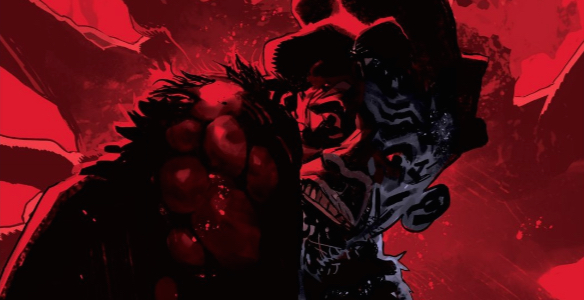
X-Men Red 4

This article containers SPOILERS. If you haven’t read the issue yet, proceed at your own risk.

Comics have always reflected our real-world fears — from inner-city crime or nuclear panic — by heightening them to exaggerated extremes. Except, I’d argue, when it comes to the X-Men’s persecution. Sure, the X-Men’s superpowers would qualify as an “exaggerated extreme” of the types of differences that normally mark a minority class, but it’s straight-up not possible for writers to come up with more exaggerated ways societies persecute their minorities. From apartheid to lynchings to genocides, there’s nothing the X-Men have faced that real-world minorities haven’t already suffered, grounding even their most fanciful stories in sober reality. It’s a fact that Tom Taylor and Mahmud Asrar have leaned into from the start of X-Men Red, lending the series a “ripped from the headlines” approach that is truly unique in superhero comics. Continue reading

The Shield as Excalibur in Captain America 702

by Drew Baumgartner

Captain America 702

This article contains SPOILERS. If you haven’t read the issue yet, proceed at your own risk!

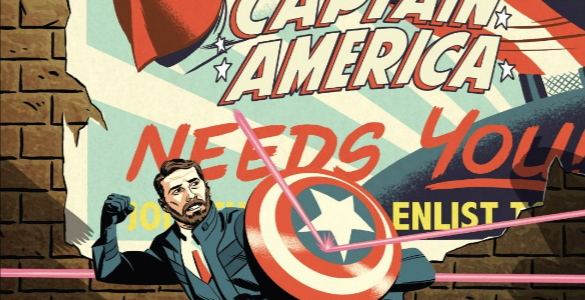
Drew: Comics historians are obsessed with Wonder Woman’s Lasso of Truth. There’s fun parallels to draw between the lasso and Wonder Woman creator William Moulton Marston’s invention of the lie detector, but another essential point is that a lasso isn’t a phallus in the same way that a sword or gun is. That is, it’s a feminine weapon, designed to entwine Wonder Woman’s enemies, rather than pierce their flesh. I think that reading certainly has utility, but I think practically, the effect of that choice is that Wonder Woman is less concerned with injuring and maiming her enemies as she is neutralizing them — her weapon of choice embodies her compassion. I think Captain America’s shield represents a similar compassion, positioning as a defender, rather than an aggressor. That fact becomes particularly salient as Mark Waid and Leonardo Romero explicitly draw parallels between the shield and Excalibur, effectively highlighting the difference between a shield and a sword. Continue reading

Moonshine 10: Discussion

by Drew Baumgartner and Patrick Ehlers

Moonshine 10

This article contains SPOILERS. If you haven’t read the issue yet, proceed at your own risk!

Remove everything that has no relevance to the story. If you say in the first chapter that there is a rifle hanging on the wall, in the second or third chapter it absolutely must go off. If it’s not going to be fired, it shouldn’t be hanging there.

Anton Chekhov

Drew: Chekhov’s gun has parallels in virtually every artform (at least in aesthetics that value clarity); whether it’s a brushstroke in illustration, a word in prose, or a note in music, if it doesn’t have an explicit purpose, it shouldn’t be there. But, of course, our knowledge of this principle lends a sense of foreshadowing to every object, character, or concept that is introduced in a narrative (again, if we can assume the narrative is playing by Chekhov’s rules). But because narratives are driven by drama (that is, difficulties for the protagonist), Chekhov’s gun mostly applies to things that can somehow harm or disrupt the characters’ lives — there’s a reason it’s not called “Chekhov’s birthday present.” Which creates very different expectations for things going right and wrong — things going wrong are far more likely to be introduced ahead of time (per Chekhov’s rules), while the drama of things going right is left best to the last possible moment. In that way, narratives reflect our own experience of reality, where we’ve given the name “Murphy’s law” to the notion that things will go wrong if they can, but no similar expectation for things going right. That is, we expect things to go wrong, so things going right is always a pleasant surprise. Or, as Lou Pirlo puts it in Moonshine 10, “God works in mysterious ways,” but “Old Lucifer…he was direct.” Continue reading

The Worst Horrors in Infidel 3 are Real

by Drew Baumgartner

Infidel 3

This article contains SPOILERS. If you haven’t read the issue yet, proceed at your own risk!

slim-banner

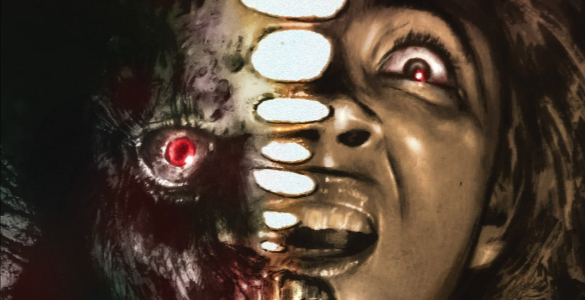
Last month, Patrick remarked on how both real and scary Infidel is — that is, the horrors of this book come from societies worst (but all too real) problems. And they really do seem to come from those problems. For some reason, when I read the solicit for this series, I imagined that the specters in this series somehow caused the islamophobia that runs rampant throughout Aisha’s building; that it was somehow responsible for making people hateful. As we spend more time with them, however, (and as more residents seem to encounter them), it seems like they aren’t so much the cause of the bigotry, but the result of it. That is, they are the manifestation of the fear minorities feel when encountering bigotry. Continue reading

James Bond: The Body 5 Discussion

by Michael DeLaney and Drew Baumgartner 

This article contains SPOILERS. If you haven’t read the issue yet, proceed at your own risk!

slim-banner

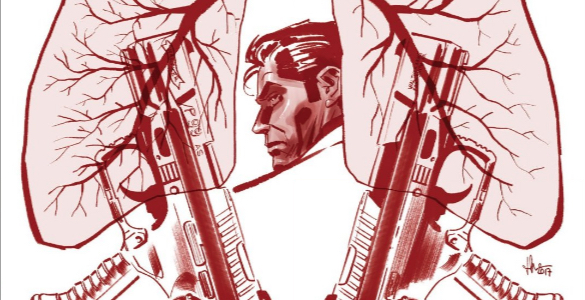
Michael: “Realism” can be a dirty word in the realm of comic books and its movie franchise offspring. Making comic book superheroes “more realistic” often makes them lose their larger-than-life qualities. James Bond, on the other hand, is a character who could probably use a little more realism. The Daniel Craig series of James Bond films have been hailed as “more realistic” than their predecessors, but he’s still an uncrackable murder machine. The beauty of James Bond: The Body 5 is that Aleš Kot provides us with a rare opportunity: to get inside Bond’s head. Continue reading

Loving the Dimension You’re With in Oblivion Song 3

by Drew Baumgartner

Oblivion Song 3

This article contains SPOILERS. If you haven’t read the issue yet, proceed at your own risk!

Hey, can you get Stockholm syndrome for a place? For a set of circumstances? When generalized in this way, Stockholm syndrome seems less like a pathology and more like a testament to human resilience. We can come to love whatever hand life deals us, even when we initially wanted something completely different. Maybe that’s a coping mechanism to keep us from dwelling on what could have been, but it’s potent, either way. Anywhere you look, from crumbling cities to evacuated war zones, you’ll find people who refuse to leave because this is their home. Or, more precisely, this is their life — they can’t just chuck it all away for something they might have preferred a decade ago. It’s not an attitude that makes a whole lot of sense from the outside looking in, but that may be exactly what the remaining survivors in Oblivion are feeling. Continue reading

The Timelines Dissociate in Eternity Girl 3

By Drew Baumgartner

Eternity Girl 3

This article contains SPOILERS. If you haven’t read the issue yet, proceed at your own risk!

Spoiler alert for season one of Westworld, but I’m now deeply suspicions of non-explicit linearity in sci-fi. Fiction has long featured flashbacks and achronological storytelling, but usually by being up-front about when and where those things are happening. Westworld reminded us that stories don’t have to be transparent about when things are happening in relation to one another, and with characters that are impervious to age, we might make bad assumptions (or be intentionally misled). It’s unclear to me how much this applies to Eternity Girl, but that’s exactly why I’m so wary of jumping to any conclusions. Continue reading

Luck vs. Skill in Domino 2

by Drew Baumgartner

Domino 2

This article containers SPOILERS. If you have not read the issue yet, proceed at your own risk!

Is privilege just luck that we don’t recognize as luck? The failure to recognize the benefits afforded by our race, gender, class, nationality, or any other number of inborn factors in our lives? That is, a privileged person is a lucky person, but specifically one that misattributes their luck as merit or skill. This helps protect Domino from coming off as too privileged — she absolutely recognizes how lucky she is — though Gail Simone and David Baladeón take pains to make it clear that she’s not that lucky, and that much of her success is ultimately attributable to her skills, too. Continue reading