De-Romanticizing War Stories in Poe Dameron 29

by Patrick Ehlers

This article containers SPOILERS. If you have not read the issue yet, proceed at your own risk!

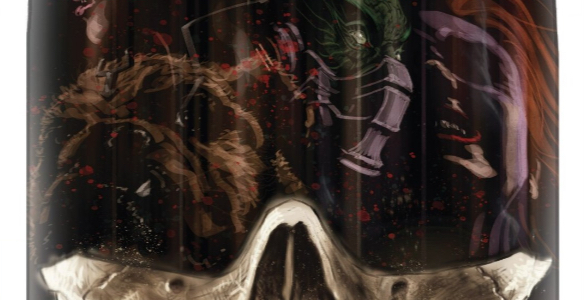
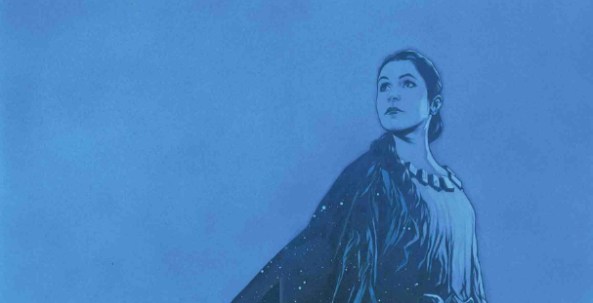
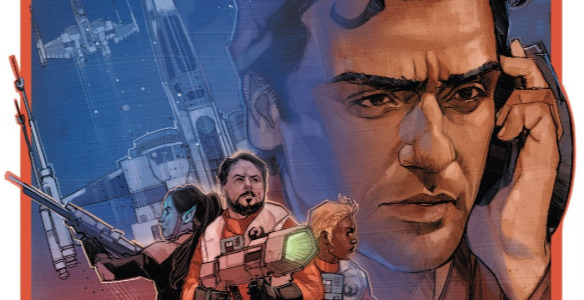
This arc in Star Wars Poe Dameron has been all about telling war stories: who does it, and why they do it. The answers thus far have been pretty straightforward. Poe tells Rey and Finn what he was up to during The Force Awakens so they can bond over their differing perspectives on a shared experience. It brings them closer together. And Artoo and Beebee honor their fallen droid brothers by recounting the serial number of every robot lost in the attack on Starkiller Base. These are noble war stories, and that’s weirdly consistent with the tone of the original trilogy. For as much as Star Wars was about Vietnam, Lucas perhaps didn’t have the historical perspective to capture the tone or cadence of war stories from that conflict. With Poe Dameron 29, writer Charles Soule taps into a sense of hopeless, confusion and pointlessness, rounding out his list of reasons to tell war stories with one of the hardest explanation out there: because they happened. Continue reading
Chemistry in Dead Hand 4

by Patrick Ehlers

This article contains SPOILERS. If you haven’t read the issue yet, proceed at your own risk!

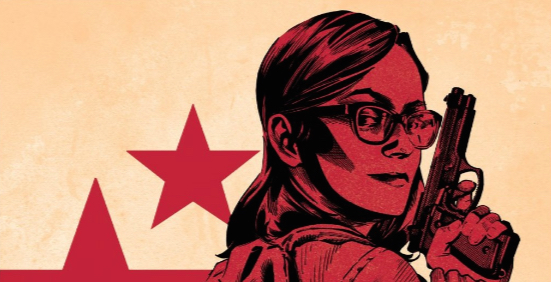
Chemistry between characters is one of those things that’s almost impossible to fake. Either a group of people crackle with common charisma or they don’t. That’s very easy to recognize on TV or in movies, but how does that translate over to a comic book page? Snappy dialogue is one way to get that across, but that only works if your characters are the quippy type. So, sure, you can show that the Teenage Mutant Ninja Turtles have chemistry with each other, but good luck showing me Frank Castle has chemistry with anyone. In Kyle Higgins and Stephen Mooney’s Dead Hand 4, chemistry is expressed through non-acting visual cues, allowing the storytelling flow to express quality of the relationship. Continue reading

The Responsibility of the Witness in Daredevil 605

by Patrick Ehlers

This article contains SPOILERS. If you haven’t read the issue yet, proceed at your own risk!

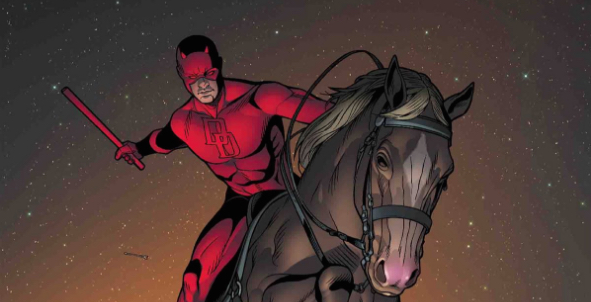
Charles Soule and Mike Henderson’s Daredevil 605 begins with Wilson Fisk raising from his hospital bed to attempt to regain control of New York City. Even dressed in a hospital gown and dragging an IV pole behind him, Fisk backs Foggy into a corner. It looks like Fisk is going to get his way, but ends up collapsing to the ground — it turns out that he wasn’t well enough to exert himself so much. But he made a choice to stop letting Matt Murdock run New York City, rather that simply witnessing it from the safety of his hospital room. While the sun sets on this Wilson Fisk story after three pages, the remainder of the issue plays out that same fundamental question over and over again: what responsibility does a witness have to interfere with whatever they are witnessing? Continue reading

Amazing Spider-Man 1: Discussion

By Drew Baumgartner and Patrick Ehlers

Amazing Spider-Man 1

This article contains SPOILERS. If you haven’t read the issue yet, proceed at your own risk!

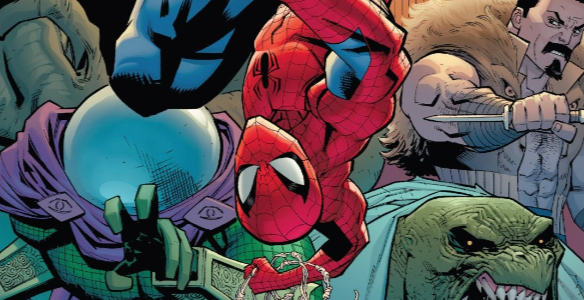
Drew: If you only had one word to describe Spider-Man, what would it be? Strength? Responsibility? Verbosity? These are all great answers, each with plenty of classic Spidey stories that emphasize those characteristics, but they aren’t quite perfect. Plenty of heroes are as strong and/or responsible, and a few even talk as much as Spider-Man, but there’s something else that makes him unique. With Amazing Spider-Man 1, Nick Spencer and Ryan Ottley offer up their own answer — one I had never considered, but feels obvious on reflection: Karma. Beyond his powers and the responsibilities that come with them, Spider-Man is a person plagued by the consequences of his past mistakes. Continue reading

Superman 1: Discussion

by Spencer Irwin and Patrick Ehlers

This article contains SPOILERS. If you haven’t read the issue yet, proceed at your own risk!

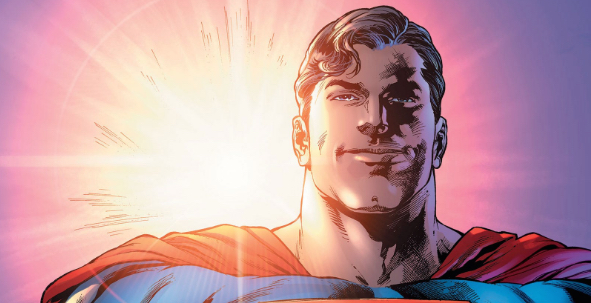
Spencer: One of the biggest criticisms I’ve seen thrown around about Superman as a character is that he’s “too powerful,” that nothing can challenge a man who can quite literally juggle planets. There’s a bit of truth to this, to be sure, but it’s a narrow criticism, one that only takes into consideration physical challenges; the most interesting Superman stories are the ones that challenge him morally, ethically, or in ways that make his physical abilities useless. Superman 1 is such a story, an issue that finds the character at his most physically competent, yet feeling more lost and helpless than ever before.  Continue reading

Sensational Irony in The Immortal Hulk 2

by Patrick Ehlers

This article contains SPOILERS. If you haven’t read the issue yet, proceed at your own risk!

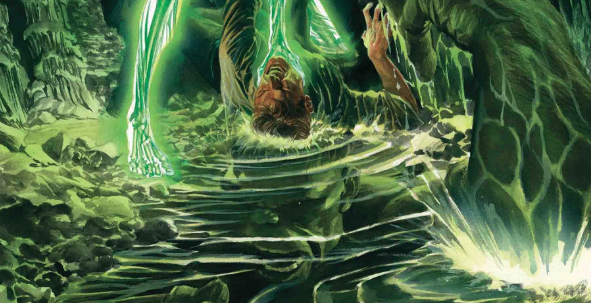
What scares you in media? I mean, we’ll all flinch at a well-timed jump scare: a sting of music, a flash of light, and suddenly we’re face to face with a monster. That’s a scare based on your senses, the creators manipulating your biological responses like buttons on a controller. Writer Al Ewing and artists Joe Bennett, Ruy José and Paul Mounts use sense-based scares as a smokescreen for the real horrors of The Immortal Hulk 2: irony.

This issue is so thematically compact and wonderful, it’s one of those rare superhero comics I’d recommend to anyone with a passing interest in The Hulk or horror comics. Even as Banner’s narration dips into some Civil War II plot nonsense, everything you need to understand the issue is contained within these 20 pages. Continue reading

Death Of The Inhumans 1: Discussion

By Ryan Mogge and Patrick Ehlers

This article contains SPOILERS. If you haven’t read the issue yet, proceed at your own risk!

Ryan: Narration can be a crutch, a device used to add exposition where story cannot carry itself, the epitome of “show don’t tell.” However, when it’s done well, it can be fantastic. In Death of the Inhumans 1, the narration’s tone and point of view work in concert with the story as it unfolds. At times, it feels as though the visual and the narration are two paths that run alongside one another and intersect intermittently. They inform each other and create a balance that elevates both elements to something more nuanced and affecting. Continue reading

Star Wars 50: Discussion

By Patrick Ehlers and Taylor Anderson

This article contains SPOILERS. If you haven’t read the issue yet, proceed at your own risk!

Patrick: With the conclusion of the “Mutiny on Mon Cala” story arc, things are looking up for our heroes. And why wouldn’t they? One of the features of Marvel’s interquel Star Wars series is that we know an awful lot about both the past and future of these characters. There’s a dramatic irony baked into the entire concept of this series. Any time Luke, Han, and Leia are in mortal danger, we can override our fears for their safety by simply remembering that they all live to fight another day. But that’s only half of it, right? We also know that the Rebels are on the run by The Empire Strikes Back. Writer Kieron Gillen and artists Salvador Larroca and Giuseppe Camuncoli use the oversized issue 50 to pivot from inevitable safety to inevitable danger. Continue reading

Mythological Omnivorism in Cosmic Ghost Rider 1

by Patrick Ehlers

This article contains SPOILERS. If you haven’t read the issue yet, proceed at your own risk!

I aways struggle to identify with the Punisher. The straight line from Army vet to man suffering from personal loss and PTSD to gun wielding maniac only ever plays as tragedy for me. Like… where’s the fantasy? Where’s the escapism? Writer Donny Cates and artist Dylan Burnett address this dissonance by taking the two most sadistic parts of Frank Castle’s origin — military service and a mind set on vengeance — and mythically amplifying them both in uniquely Marvel ways. The result is, and I can’t believe I’m saying this about a Frank Castle story, tons of fun. Continue reading

Quantum and Woody 7 Traps Our Heroes In Perfection

by Patrick Ehlers

This article contains SPOILERS. If you haven’t read the issue yet, proceed at your own risk!

What do your fantasies look like? I’m not trying to ask a dirty question here. When your mind wanders and you start to imagine the ideal form of your life, what does it look like? What form does your imagination take? Are you able to view yourself in your perfect environment, like some sort of omniscient viewer? Are you giving an interview about everything you’ve accomplished? Or are you in your own head, looking out on your perfect life? How you express your fantasy to yourself is as revealing as what you fantasize about. Eliot Rahal and Francis Portela’s Quantum and Woody 7 finds the Henderson brothers trapped in idealized fantasy worlds that embrace tropes of genre and medium in equal measure. Continue reading