Deadpool vs. Old Man Logan 1: Discussion

by Michael DeLaney and Spencer Irwin
This article contains SPOILERS. If you haven’t read the issue yet, proceed at your own risk!

slim-banner

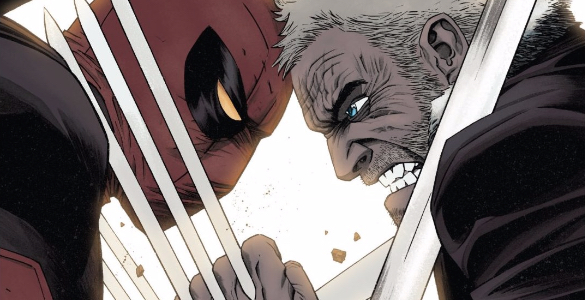
Michael: A common criticism of a piece of fiction is “nothing really happened.” The meaning of that blanket statement can vary depending on who the critic is and more specifically what they’re expecting. A great example of this is the Season 3 Breaking Bad episode “The Fly.” Critics praised the bottle episode as a brilliant character study while it left many audiences unimpressed with the fact that “nothing really happened.” While I try to appreciate the deeper meaning of a piece of work, I must say that in Deadpool vs. Old Man Logan 1…nothing really happens. Continue reading

The Art Makes the Issue in All-New Guardians of the Galaxy 12

By Taylor Anderson

This article contains SPOILERS. If you haven’t read the issue yet, proceed at your own risk!

Going to a comic convention can be a dangerous thing. No, I’m not talking about the festering cesspool that is the men’s bathrooms at C2E2 — I’m talking about artist alleys at present at all cons. With so many talented artists in one place, it’s easy to spot at least twelve pieces of art that catch your eye, which are a feast for the senses but a pain for your wallet. The thing is , it’s just hard to say no when you see a piece of artwork that appeals to you. Luckily, sometimes a monthly roles around that’s as easy on the wallet as it is on the eyes, as is the case with Guardians of the Galaxy 12. Continue reading

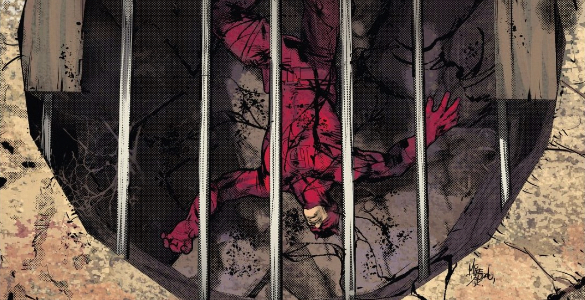
Killing Hope in Daredevil 27

by Drew Baumgartner

Daredevil 27

This article contains SPOILERS. If you haven’t read the issue yet, proceed at your own risk!

When you walk through the garden
You gotta watch your back.
Well I beg your pardon
Walk the straight and narrow track.
If you walk with Jesus
He’s gonna save your soul.
You gotta keep the devil
Way down in the hole.

Tom Waits, Way Down in the Hole

There are plenty of great morals to learn from The Wire, but one that left the biggest impression on me is the thought that many Americans simply don’t have access to the American Dream. Each successive series does a great job of detailing why both policing and education fail to end the drug trade, why politics fail to fix the police or the schools, and why the press fails to fix politics. It’s a disheartening lesson to learn, for sure, but it’s one we must reconcile with before we can mount any meaningful solutions. Unfortunately, many American’s are still too enamored of the old narrative of the American Dream — the kind represented by Matt Murdock’s “orphaned fighter’s son to high-powered attorney” origin — to accept that not everyone has access to that dream. Continue reading

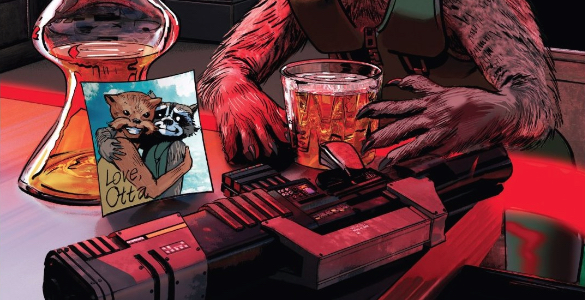
Rhetoric Paints the Picture in Rocket 6

by Patrick Ehlers

This article contains SPOILERS. If you haven’t read the issue yet, proceed at your own risk!

Rocket is an amazing series. Adam Gorham’s artwork is evocative, gritty and ambitious in a way that is simultaneously grounded and totally off the wall. There’s also the novelty of the persistent gutter narration, lending the whole thing a literary noire vibe that seldom makes its way into such a strongly visual medium. One aspect of this series I’ve seldom found an opportunity to praise is the rhetorical strength of Al Ewing’s writing. The story itself is compelling, but I’m referring to the moment-to-moment use of language and how Ewing uses tonal shifts, word play, and rhetorical flourishes to illustrate Rocket’s emotional journey. And this issue takes us on one hell of a journey. Continue reading

Gwenpool Trades Genre for Medium in Gwenpool 21

by Patrick Ehlers

This article contains SPOILERS. If you haven’t read the issue yet, proceed at your own risk!

This may be the first time in my life where I’m reading a superhero who is as obsessed with the gutter as I am. Since discovering that she can manipulate the physical space of the comic book page, Gwen no longer needs to rely on her knowledge of story tropes to defeat her enemies. Gwen is on something of a fan’s journey here, discovering that her real power (read: her real fandom) lies not in the genre but in the medium. Gwen’s no longer a fan of superhero stories, but a fan of of comics. Continue reading

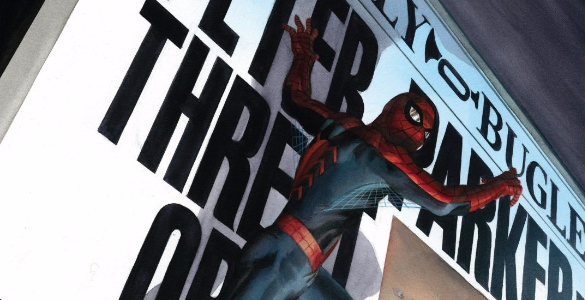
Parker Luck Returns in The Amazing Spider-Man 789

by Drew Baumgartner

Amazing Spider-Man 789

This article contains SPOILERS. If you haven’t read the issue yet, proceed at your own risk!

Here’s a question: What would you say is the platonic public perception of Spider-Man in the Marvel Universe? Never mind the exceptional circumstances of specific story arcs, do we imagine in general that the public sees Spider-Man as a hero, or do we think J. Jonah Jameson’s one-man crusade against him has influenced public opinion? I suppose I’ve always seen him as misunderstood by the general public, but his interactions with individual New Yorkers always seemed positive — there’s not a whole lot of ambiguity when you see him rescuing babies from burning buildings. Maybe it speaks to just how street-level Spider-Man has traditionally been that his sphere of personal influence would be small, but it sure seems like the citizens of Spider-Man’s New York are on the whole easily swayed by the media they consume. That’s probably an evergreen theme, but it’s one that feels particularly relevant in our modern political climate, and one that comes back in a decidedly unexpected way in Amazing Spider-Man 789. Continue reading

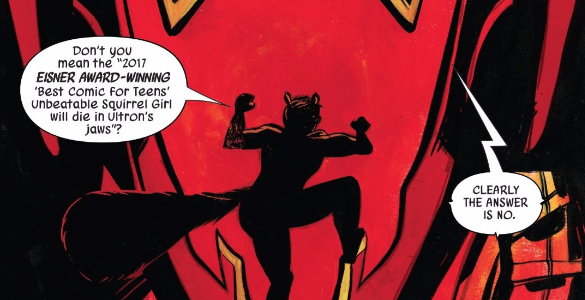
Doreen Inspires Good Once Again in The Unbeatable Squirrel Girl 25

by Taylor Anderson

This article contains SPOILERS. If you haven’t read the issue yet, proceed at your own risk!

There are some superheroes who are more good than others. Superman and Captain America are your prototypical heroes who have the reputations for always doing the “right thing.” Other heroes are more nebulous when it comes to how they carry out their heroing. The Punisher, for example kills people, and while Batman isn’t that extreme, he operates in the shadows in more ways than one. If you had to peg Doreen Green into one of these two pigeonholes, she would definitely fall in the former, and while that predictability risks being boring, with The Unbeatable Squirrel Girl, it never is. Continue reading

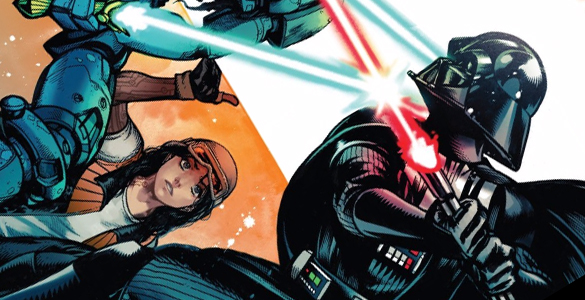
An Ending (of Sorts) in Star Wars: Doctor Aphra 12

by Michael DeLaney

This article contains SPOILERS. If you haven’t read the issue yet, proceed at your own risk!

Ah the finale: the last word a creator has on a particular story before they say goodbye. Some finales are literally the final word on a story, while others leave the door open for future adventures. Doctor Aphra 13 is an example of the latter — Kieron Gillen’s final story with Aphra before passing her on to writer Simon Spurrier. Continue reading

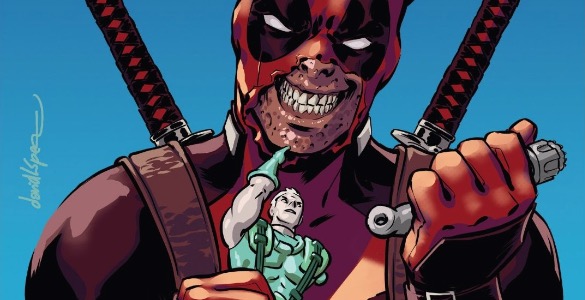
Despicable Deadpool 287: Discussion

by Patrick Ehlers & Taylor Anderson

This article contains SPOILERS. If you haven’t read the issue yet, proceed at your own risk!

slim-banner

Patrick: There’s a principle in screenwriting called “save the cat.” That phrase refers to the act of unambiguous good a character needs to perform in order to win the audience’s sympathy. To use the idiom’s namesake as an example, as long as our hero has rescued a cat from a tree branch, any other morally dubious behavior can be forgiven. One shred of evidence that he’s a good guy is enough to trick our brains into believing that he must actually be good. This may sound like kind of a hack technique, but writers use it all the time, particularly since the rise of antiheroes. Our boy Wade Wilson gets them all the time — the audience can recoil at 95% of his actions, just so long as he protects a kid, helps and old lady, or saves a cat. Despicable Deadpool 287 throws that convention out the fucking window. This isn’t the hero Deadpool, this is the cut-throat, single-minded, merciless merc with the mouth. Continue reading

Memories Come Rushing Back in All-New Wolverine 25

by Drew Baumgartner

All-New Wolverine 25

This article contains SPOILERS. If you haven’t read the issue yet, proceed at your own risk!

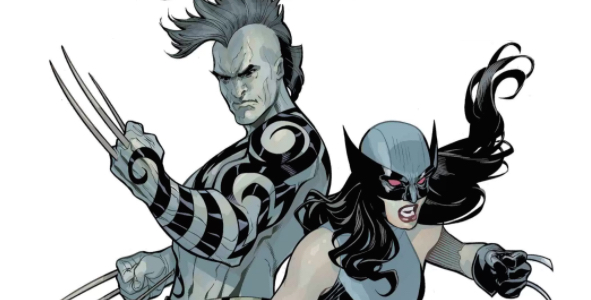
I think it’s fair to say that All New-Wolverine is more concerned with the idea of legacy than most comics. Laura is donning the mantle of her mentor, and the first arc of this series found her reconciling with her literal clones. Indeed, I might argue that it’s one of the greatest strengths of this series, as writer Tom Taylor has mined Laura’s history for ever more emotionally devastating gut-punches. So when issue 25 features a “Legacy” banner across the cover, it’s almost a promise of legacy-squared, somehow centralizing the idea of legacy even more than the series normally does. Those are daunting expectations, but Taylor and artist Juann Cabal more then live up to them, forcing Laura to relive some of her most traumatic memories. Continue reading