Simultaneous Silliness and Sincerity in Marvel Two-in-One 1

by Patrick Ehlers

This article contains SPOILERS. If you haven’t read the issue yet, proceed at your own risk!

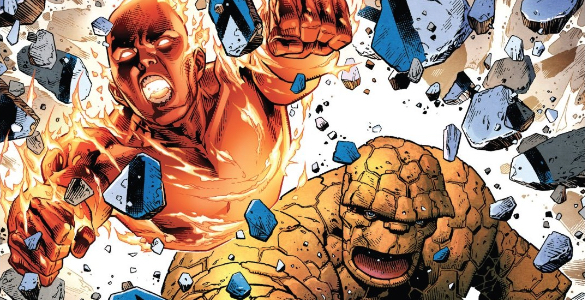
Patrick: Does writer Chip Zdarsky leverage humor to find pathos, or does he exploit genuine emotion for comedy? It’s almost impossible to tell. Zdarsky often rides the line between celebrating the absurdity and celebrating the sincerity of his characters and his stories. Marvel Two-In-One somehow achieves both simultaneously, giving the reader a sad, almost Venture Brothersian look into the loneliness and ennui of the last remaining members of the Fantastic Four, while never letting go of the inherent weirdness of these characters. It’s a stupendous feat of writing, emboldened by Jim Cheung’s reverent artwork. Continue reading

Angelic 4 Urges Us to Ask “Why?”

by Spencer Irwin

This article contains SPOILERS. If you haven’t read the issue yet, proceed at your own risk!

While organized religion is well known for rigid rules and requiring blind faith and obedience, I’ve never thought of them as qualities inherent to actually worshipping God. Malachi 3:10 implores worshippers to put God to the test in order to see for themselves the blessings he’ll bring those who love Him, while Genesis 18 describes a lengthy exchange between God and Abraham where Abraham continually questioned God’s intentions to destroy the cities of Sodom and Gomorrah, bartering for the lives of any righteous who might be in the city. I can really only speak for Judeo-Christian religions, but the point seems clear nonetheless: asking questions certainly seems to be an acceptable part of navigating faith. Forbidding questions only serves to empower men with agendas, as is the case in Simon Spurrier and Caspar Wijngaard’s Angelic 4. Continue reading

The Narrative Meanders in The Wild Storm 10

by Ryan Desaulniers

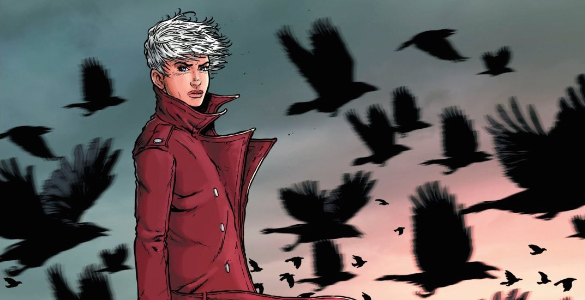
The Wild Storm 10

This article contains SPOILERS. If you haven’t read the issue yet, proceed at your own risk!

The opening panel of issue ten of The Wild Storm by Warren Ellis and artist Jon Davis-Hunt is a half-page shot showcasing a new table upon which coffee should not be be placed. Continue reading

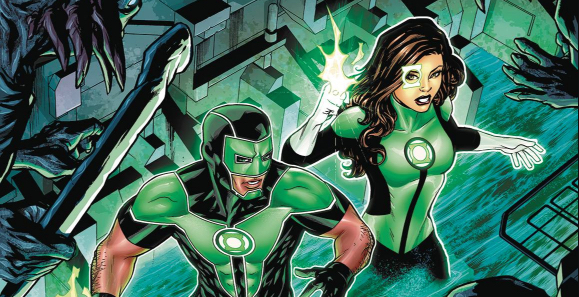
Green Lanterns 37 is a Clumsy Parable

by Patrick Ehlers

This article contains SPOILERS. If you haven’t read the issue yet, proceed at your own risk!

“I conducted my own investigation because no one listens to me. I got away with it because no one looks at me. Because, unless I have your reports, your coffee or your lunch, I’m invisible.”

Peggy Carter, Agent Carter

Patrick: Part of what I love about the short-lived Agent Carter television series is that, when it wants to, it can be thuddingly obvious about its themes and values. Peggy is a bad-ass super-spy often overlooked — or worse, taken advantage of — because she is a woman in the 1950s. The show loves putting these blatant statements of gender theory in Peggy’s mouth, but only once the show itself has actually demonstrated what she’s describing. It makes for an exhilarating story that embodies complicated values: having fun and having something to say at the same time. Green Lanterns 37 has an awful lot to say, but has not quite mastered how to have fun saying it. Continue reading

The Specificity of Allusions in Deadpool vs. Old Man Logan 3

by Drew Baumgartner

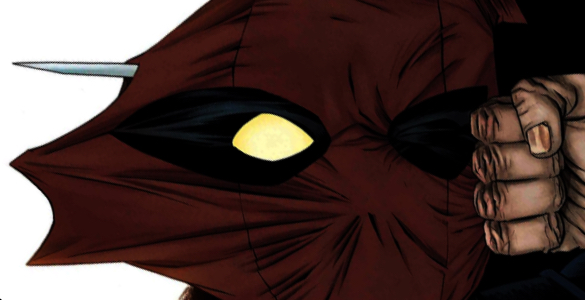
Deadpool vs Old Man Logan 3

This article contains SPOILERS! If you haven’t read the issue, proceed at your own risk.

Back in high school english class, I was daunted by the idea that every work of literature alludes to earlier, more foundational works. How could I ever understand the meaning of a novel if I haven’t also read the novels it references, and the novels those reference and so on and so on. I’m still fascinated by the notion that every work of art has an ever-branching family tree of influences, but I’m less concerned about missing them — a work lives or dies on its own merits, so if I don’t “get it,” I’m happy to pin that on the work itself. I have a largely similar attitude to comics, where general familiarity with the character and the world might be a safe assumption, but a given issue can’t take for granted that we’ve read any other comic, let alone one from years ago. And yet, comics also has this rich, ever-growing continuity that can (and some might argue should) inform every character’s identity. Such is the case with Deadpool Vs. Old Man Logan 3, which draws upon writer Declan Shalvey’s own personal history with Wade Wilson in one of the most rewarding ways I’ve seen in years. Continue reading

The Complexity of Magna Tolva in Doctor Aphra 15

by Taylor Anderson

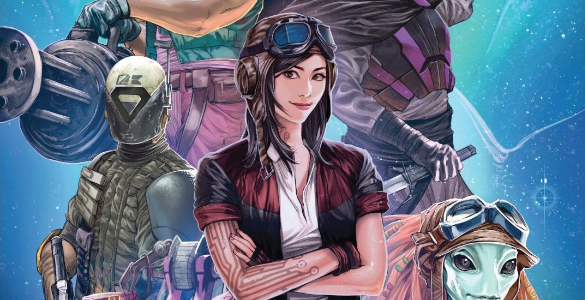
Star Wars Doctor Aphra 15

This article contains SPOILERS. If you haven’t read the issue yet, proceed at your own risk!

A lot of the time when I think about what makes Star Wars so much fun I think about the memorable characters. Darth Vader is the perfect villain, Han is the archetypical anti-hero, and Leia is the strong willed leader who won’t let herself or others fail. While all these characters are great, I have to admit that in many ways they’re pretty flat characters. Sure, you can argue that Leia, Han, and Vader all undergo a journey and gradually change, but none of them undergo a transformation that literally changes who they are. What I’m getting at here, is that Star Wars is sorely lacking in complex characters. It is for this reason, however, that Magna Tolva is such a welcome addition to the universe.  Continue reading

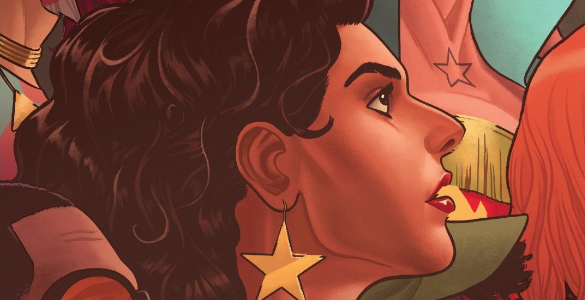
The Strength of Heritage vs. the Evils of Cultural Appropriation in America 10

by Spencer Irwin

America 10

This article will contain SPOILERS. If you haven’t read the issue yet, proceed at your own risk!

For better or for worse, America 10 brings all of the series’ developments thus far to a climax. Writer Gabby Rivera’s (assisted on art by Flaviano and Jen Bartel) attempts to find roles for the majority of America’s allies makes the issue feel overcrowded, especially since most of their efforts don’t really play a role in America’s victory, but her further exploration of the racial and cultural conflict between America and Oubliette (which I first talked about when covering issue 8) is far more successful. Rivera has a message she wants to get across, and it makes this issue feel focused and vital in a way the rest of this storyline sometimes hasn’t. Continue reading

Spider-Man is Finally Funny Again in Peter Parker: The Spectacular Spider-Man 298

by Michael DeLaney 

This article contains SPOILERS. If you haven’t read the issue yet, proceed at your own risk!

I know that Dan Slott’s fans are legion, but I’ve gotta say that Chip Zdarsky might be the heir apparent to the Spider-Man mythos. Despite the sometimes too-high concept “data blood” plot, Peter Parker: The Spectacular Spider-Man 298 accomplishes something that a lot of other Spider-Man stories don’t: it made me laugh. Continue reading

There’s Power Beyond the Hammer in Mighty Thor 702

by Taylor Anderson

This article contains SPOILERS. If you haven’t read the issue yet, proceed at your own risk!

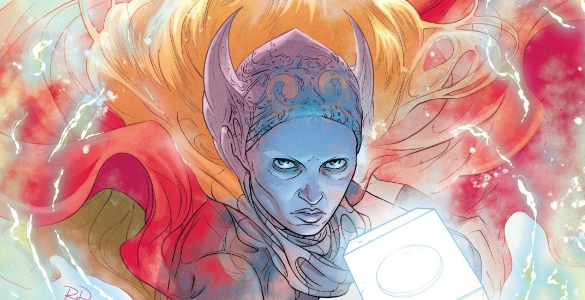
In the recent arc of Mighty Thor, tension has been building regarding Jane Foster’s inability to chose between being Thor or herself. At the crux of the matter is the fact that Jane has cancer which needs to be treated — which can only be done in her human form. However, she’s needed in virtually every corner of the universe as Thor to try and stop Malekith and his armies of evil. Forced to choose between saving thousands (millions?) and saving herself, Jane makes the obvious heroic choice. But as issue 702 shows, sometimes the obvious heroic choice isn’t always the best one. Continue reading

The Hole in the Center of Ms. Marvel 25

by Ryan Mogge

This article contains SPOILERS. If you haven’t read the issue yet, proceed at your own risk!

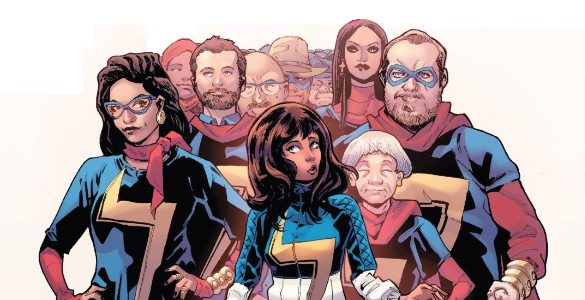
How does an issue of Ms. Marvel work without Kamala? Well, in the case of Ms. Marvel 25, I’d argue that it doesn’t. There are moments here that feel unmoored, floating in a pool of heightened drama without the grounded tether that Kamala offers when she is the center of the narrative.

Continue reading