The Details Drag Down a Strong Premise in Superman 30

by Spencer Irwin

This article contains SPOILERS. If you haven’t read the issue yet, proceed at your own risk!

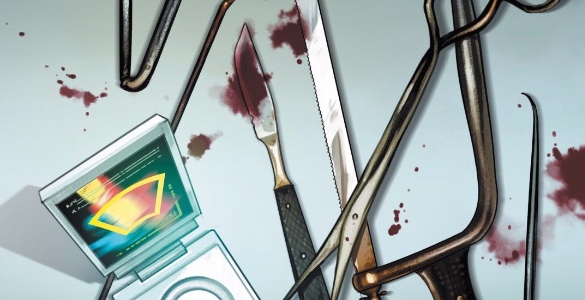
There’s a particular brand of story that eschews hard logic or consistent rules for pure emotional storytelling: think Doctor Who at its best, where rules are often bent or changed to support the emotional thrust a given episode, or even the old Teen Titans animated series, where Trigon was defeated by the metaphor of Raven growing up, even if there was never explanation given as to how she gained so much raw power. This kind of storytelling can be tricky: if the emotions and metaphors work well enough readers will forgive (or perhaps not even notice) any gaps in logic, but there’s always the risk that they won’t. For my money, Superman 30 falls a little too close to the latter category; there’s a strong emotional core here, but also a lot of details that don’t fully add-up or make sense. Continue reading
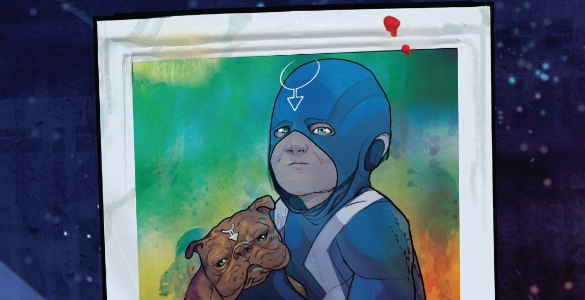
The Past is Both a Strength and a Weakness in Black Bolt 5

by Drew Baumgartner

Black Bolt 5

This article contains SPOILERS. If you haven’t read the issue yet, proceed at your own risk!

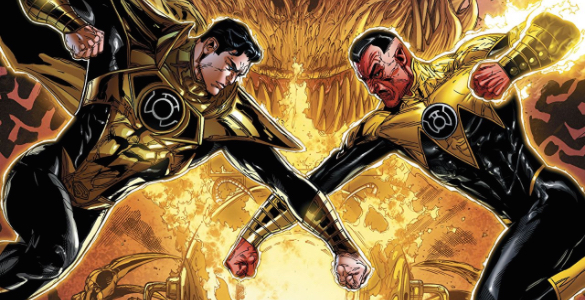
I had a boss who used to say “your greatest weapon is ultimately also the sword you fall upon.” That is, our strengths tend to secretly carry weaknesses. He usually meant it in terms of workplace skills — natural leaders might not make for great team players, for example — but I’ve found this idea remarkably insightful in people’s personal lives, as well. Maybe you draw strength from your extended family, though that may tie you down geographically, or from a hobby that also sucks up most of your free time. It’s an idea that’s relatively well-worn in superhero comics, but is generally limited to loved ones becoming liabilities. Black Bolt 5 offers a different take, injecting its usual style and emotional depth to both Blackagar’s strength and his weaknesses. Continue reading

Recursive Redundancy in Faith and the Future Force 2

by Drew Baumgartner

Faith and the Future Force 2

This article contains SPOILERS. If you haven’t read the issue yet, proceed at your own risk!

Hey, how long do you think Bill Murray repeated that day in Groundhog Day? There have been a few attempts to estimate some approximate number, but the only answer that really matters is “a lot.” We don’t need to see every day, or even be told about every day, so long as we get the idea that he’s repeating the day a ton. I mean, can you imagine if even the second day was chronicled in as much detail as the first one? That sounds interminable, but is largely what we get in Faith and the Future Force 2, with the added monotony that the arc of the issue is also more or less identical to the first issue. Continue reading

Subverting Dickens in Jean Grey 6

by Patrick Ehlers

This article contains SPOILERS. If you haven’t read the issue yet, proceed at your own risk!

“Before I draw nearer to that stone to which you point,” said Scrooge, “answer me one question. Are these the shadows of the things that Will be, or are they shadows of things that May be, only.”

Still the Ghost pointed downward to the grave by which it stood.

“Men’s courses will foreshadow certain ends, to which, if persevered in, they must lead,” said Scrooge. “But if the courses be departed from, the ends will change. Say it is thus with what you show me.”

The Spirit was immovable as ever.

Charles Dickens, A Christmas Carol

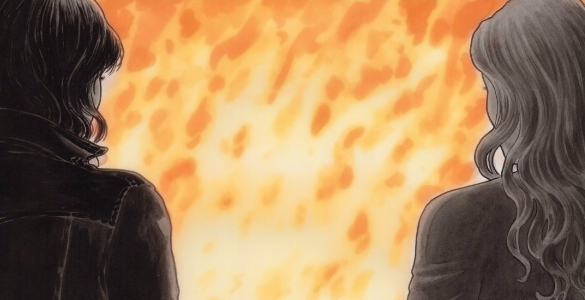
The point of A Christmas Carol is that Ebenezer Scrooge could — and should — abandon his avarice, and become a better man. The moral about the dangers of greed have aged remarkably well, but there’s something about the message “change who you are” that feels a little less virtuous in 2017. In Jean Grey 6, the titular X-Man has to come to nearly the opposite conclusion: there is no changing who you are, so you’d better find a way to accept yourself. Continue reading

The Inevitable Feels Vital in Saga 46

by Ryan Mogge

This article contains SPOILERS. If you haven’t read the issue yet, proceed at your own risk!

The most successful plot turns are ones that feel surprising but, in retrospect, inevitable. Brian K. Vaughan and Fiona Staples end Saga 46 with Petrichor and Robot in a passionate embrace. If this had happened on page one, perhaps the reader would have been thrown, but when the dust settles, it’s clear that this is where we were heading all along. Vaughan and Staples have fully established the depths of both Petrichor and Robot’s loneliness. Even their cliched verbal sparring into macking was telegraphed by the fact that they’ve both been reading romance novels, where kissing without first trading barbs is a rarity. Continue reading

Rowan’s Defenses May be Lacking in Black Magick 7

by Drew Baumgartner

Black Magick 7

This article contains SPOILERS. If you haven’t read the issue yet, proceed at your own risk!

We don’t often talk about procedurals in terms of “putting the pieces in place” — there’s too much directionality to all of the clue finding for the endgame to feel anything other than inevitable. Of course, for all of the procedural elements in Black Magick, it isn’t strictly a procedural. This issue is full of procedural scenes — all showing some degree of cause and effect — from Rowan’s “investigation” into Bruce Dunridge to her (and Alex’s separate) spellcasting, to Stepan Hahn’s own detective work. He’s the noose we’re consciously aware of (especially as the end of the issue puts him on a collision course with Ro), but it’s the procedures we don’t quite see the fallout of that intrigue me most. Continue reading

The Bitter Taste of Regret in Deadpool 35

by Michael DeLaney 

This article will contain SPOILERS. If you haven’t read the issue yet, proceed at your own risk!

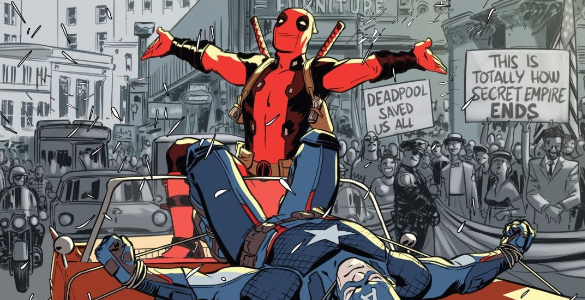
Releasing the same day as Secret Empire 10, Deadpool 35 is the first book that shows us a glimpse of the Marvel U the post-Secret Empire. It’s also the issue where Deadpool admits something that we’ve known since Steve Rogers ordered him to kill Coulson: Wade is heading for a fall. Continue reading

Different Kinds of Love in America 6

by Spencer Irwin

America 6

This article will contain SPOILERS. If you haven’t read the issue yet, proceed at your own risk!

There are many kinds of love, so it’s always frustrated me that society places such importance on romantic love as the be all, end all of adult life. Romance is great, but the love of friends and family can be just as fulfilling and vital, if not more so. America 6 finds Gabby Rivera, Kelly Thompson, and Ramon Villalobos exploring the role each of these kinds of love plays in America’s life, and interestingly enough, it looks like they might just agree with me when it comes to their importance. Continue reading

[Obscuring] Place in All-Star Batman 13

by Patrick Ehlers

This article contains SPOILERS. If you haven’t read the issue yet, proceed at your own risk!

When I was a kid, my family used to spend parts of our summer vacation at a cabin in the woods outside of Hayward, Wisconsin with our good family friends, the Pfarrs. The Cabin — which was all we ever called it — had a kind of romantic mythology about it, slowly crafted by years upon years of family bonding. There was a ill-used road into town that we had nicknamed “sneak path,” and which carried a (probably bogus) story about a young couple driving too fast along it and slipping in raccoon guts and driving off the road. We were all told that the Cabin itself was drunkenly constructed backwards, so that delightful front porch was meant to be in back, overlooking the lake. I have no idea if that last one is true, but to this day it feels right. I close my eyes and I see this space – it’s a comfort, a complete flash-memory, and the most common setting for my dreams. It’s a place of subconscious and unconditional love. In All-Star Batman 13, writer Scott Snyder and artist Rafael Albuquerque tap into the connection between place and relationships. Continue reading

Generations: Hawkeye and Hawkeye 1: Discussion

by Spencer Irwin and Taylor Anderson

Generations Hawkey and Hawkeye 1

This article contains SPOILERS. If you haven’t read the issue yet, proceed at your own risk!

slim-banner

Spencer: Other than a codename and skills with a bow and arrow, what do the two Hawkeyes have in common? Captain America first gifted Kate her codename because “she’s the only Avenger other than Clint ever to stand up to him,” but ever since Matt Fraction’s run, writers have been downplaying Clint’s brash outspokenness in favor of emphasizing what a total human disaster he is — and though not to the same degree, Kate’s characterization has followed suit. In Generations: Hawkeye and Hawkeye 1, Kelly Thompson and Stefano Raffaele find something else the two Hawkeyes have in common: crappy mentors. Continue reading