Peter Parker: the Spectacular Spider-Man Annual 1 Offers a Secret History for J. Jonah Jameson

by Drew Baumgartner

Peter Parker The Spectacular Spider-Man Annual 1

This article contains SPOILERS. If you haven’t read the issue yet, proceed at your own risk!

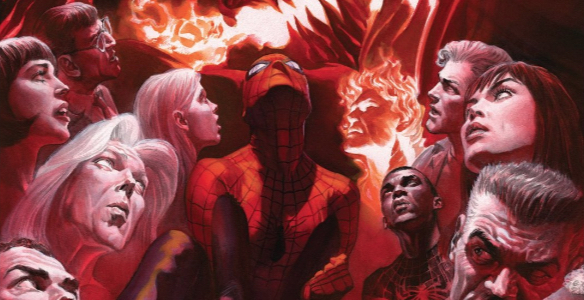
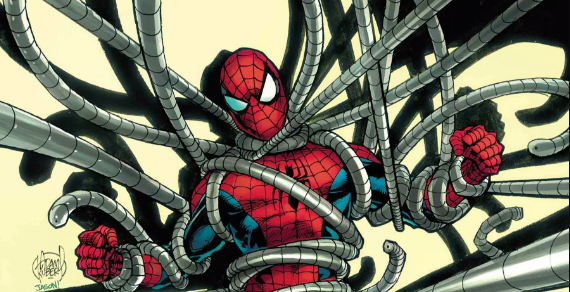
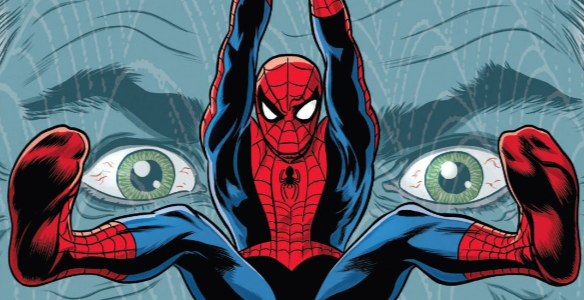
All fictional characters — especially in the compressed world of superhero comics — start as types. It’s only as we spend more time with them that they can be fleshed out into more fully-realized, nuanced characters. But, of course, being a type is often all a given character may need to be. And so, for decades, J. Jonah Jameson was little more than the irritable, muckraking editor of the Daily Bugle. That’s not a failure — it’s all he really needed to be to move the story forward, and he was still plenty entertaining. But as with any character that’s around for the better part of a century, those little glimpses we got of him started to add up, and creators started exploring who he was behind all of that bluster, giving us the JJJ we all know and love. He’s still that irritable muckraker, but we understand that there’s more too him. Indeed, there’s enough there that Jameson can anchor a story himself every now and then, as he does in Peter Parker: The Spectacular Spider-Man Annual 1. Continue reading
The Tantalization of Other Timelines in Peter Parker: the Spectacular Spider-Man 305

by Taylor Anderson

This article contains SPOILERS. If you haven’t read the issue yet, proceed at your own risk!

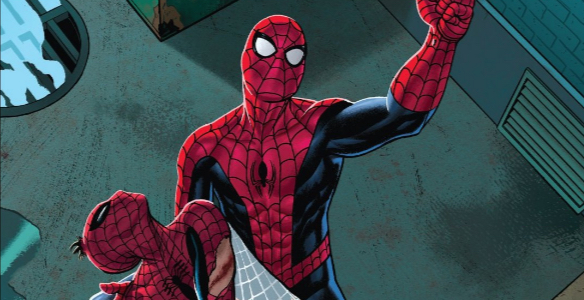
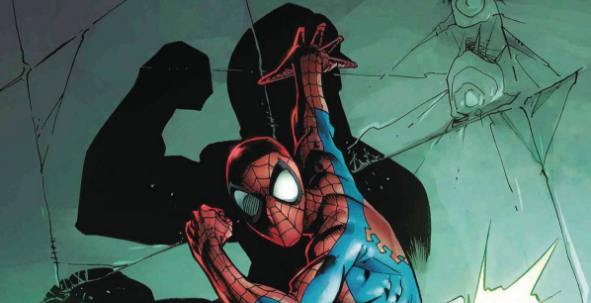
Every time I read a news story about a tweet our current commander in chief sends out, I can’t help but think how his predecessor or opponent in the election wouldn’t debase themselves in such a way. This inevitably leads me to wonder what an alternate timeline might look like where the current president didn’t win the election. What would the country look like? Would the oval office still be dignified and one that engenders respect and appreciation? I have some ideas about that, but I can never be sure exactly what that timeline holds. This idea, of other timelines, is tantalizing and one all people think about, and as such, it dominates the narrative of the Spectacular Spider-Man 305. Continue reading

Finding Strength in Others in The Amazing Spider-Man 800

by Spencer Irwin

This article contains SPOILERS. If you haven’t read the issue yet, proceed at your own risk!

Spider-Man has one of the most iconic, expansive, and enduring supporting casts in all of superhero comics, and that’s a fact Dan Slott has used to his advantage throughout his long tenure on The Amazing Spider-Man. He especially leans on his supporting cast in issue 800, the penultimate issue of his run and the grand finale of “Go Down Swinging.” It’s an issue all about the power of the people in Peter Parker’s life, be it the power he gives them, or the power they give him. Continue reading

A Big Goodbye in Invincible Iron Man 600

by Drew Baumgartner

Invincible Iron Man 600

This article containers SPOILERS. If you haven’t read the issue yet, proceed at your own risk.

Grant Morrison Animal Man

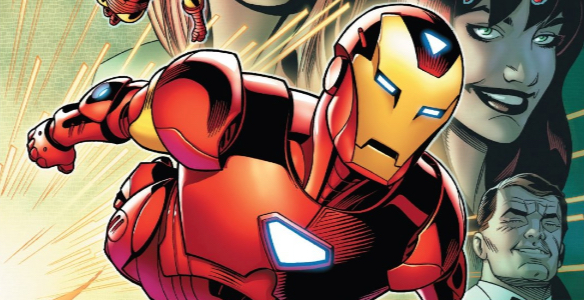
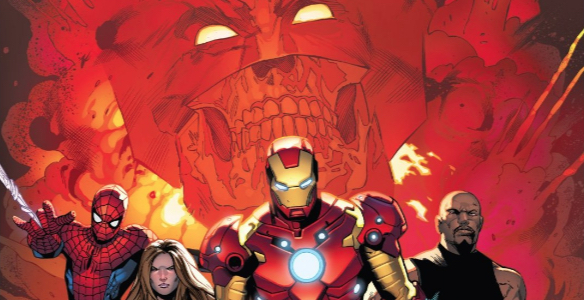
The ends of long creator runs in comics are a strange thing — an ending that isn’t an ending, a goodbye that isn’t a goodbye — but are also relatively commonplace. Indeed, those “final issues” are common enough to create a kind of map of morphologies, from those that send the characters in bold new directions to those that more or less put things back to neutral. One of the most common features, though, is that writers step out from behind the curtain to acknowledge their own departure. Some do this in a self-consciously postmodern way (a la Animal Man 26, excerpted above), but any hint of goodbye from the creative team breaks the fourth wall at least a little. We’ve written about plenty of those final issues over the years, but none quite as final as Invincible Iron Man 600, which isn’t just the finale of Brian Michael Bendis’s three-year run with the series, but of his 18-year run with Marvel. That is, he’s not just saying goodbye to the cast of Invincible Iron Man, but the Marvel Universe as a whole, which demands some kind of acknowledgement, which Bendis of course puts his trademark spin on. Continue reading

Ambiguity and Closure in Doctor Strange 390

by Patrick Ehlers

This article contains SPOILERS. If you haven’t read the issue yet, proceed at your own risk!

slim-banner

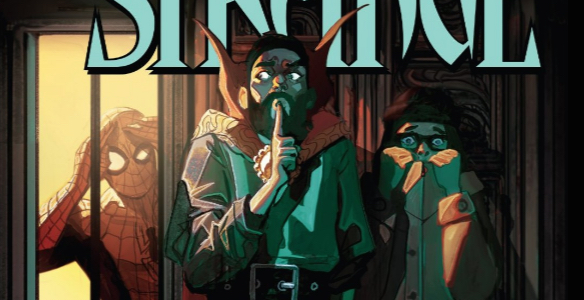
I had a writing teacher in college that used to say there were four kinds of stories. The first is the most common: the hero wants something, gets it, and is happy he got it. We see this one in superhero media all the time, right? Batman wants to catch the Riddler, he does, feels great about it. The second type of story is the hero wants something, gets it, is unhappy he got it. This is the old Twilight Zone twist — “I can live forever, BUT AT WHAT COST?” The last two kinds of stories are similar: hero wants something, doesn’t get it, is happy to have not gotten it, and; hero wants something, doesn’t get it, is unhappy to have not gotten it. Doctor Strange 390 manages to be a weird mix of all these types of stories, where even the question of who our hero is leads to some fascinating ambiguity. Donny Cates’ send-off to Doctor Strange is as mysterious, and true to the tone of the character, as a reader could possibly hope for. Continue reading

The Difference Between Mayoral Action and Superhero Action in Daredevil 602

By Patrick Ehlers

This article contains SPOILERS. If you haven’t read the issue yet, proceed at your own risk!

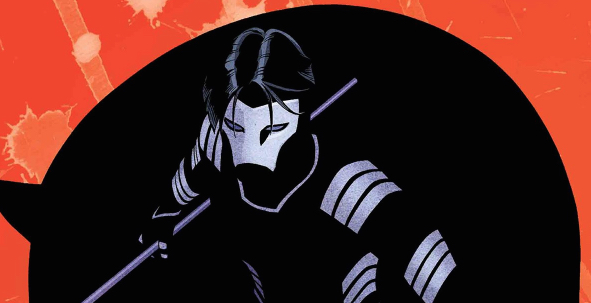
“New York City’s uniformed protectors are under attack by the Hand.” It’s a straightforward premise, one with both obvious drama and an obvious solution: superheroes fight the ninjas. But as of Daredevil 601, Matt Murdock is more than just a superhero; he’s also the mayor of New York. Suddenly those simple solutions don’t seem quite as simple. Charles Soule, Mike Henderson, Matt Villa and Clayton Cowles’ Daredevil 602 illustrate the difference between the streamlined drama of the superhero and the complicated drama of the mayor. Continue reading

“What Ifs” in Peter Parker: the Spectacular Spider-Man 304

by Taylor Anderson

This article contains SPOILERS. If you haven’t read the issue yet, proceed at your own risk!

One of my favorite episodes of Star Trek: the Next Generation involves Worf and parallel dimensions. In it, Worf is returning to the Enterprise from a Bat’leth tournament and through a bizarre set of circumstances finds himself transporting to different versions of his universe. In one, he’s married to Deanna Troi. In another he goes from placing first in the Bat’leth tournament to ninth. In yet another, he’s responsible for the inadvertent death of Goerdi La Forge. It’s a fun episode because it sets familiar characters and settings against an unfamiliar backdrop. This “what if” is a favorite of every Star Trek show and the same goes for comics. That being the case, you think I would be tired of the conceit, but the very opposite is true — I love it.

Continue reading

Luck vs. Skill in Domino 2

by Drew Baumgartner

Domino 2

This article containers SPOILERS. If you have not read the issue yet, proceed at your own risk!

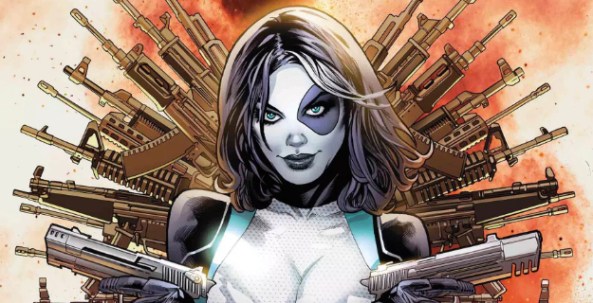
Is privilege just luck that we don’t recognize as luck? The failure to recognize the benefits afforded by our race, gender, class, nationality, or any other number of inborn factors in our lives? That is, a privileged person is a lucky person, but specifically one that misattributes their luck as merit or skill. This helps protect Domino from coming off as too privileged — she absolutely recognizes how lucky she is — though Gail Simone and David Baladeón take pains to make it clear that she’s not that lucky, and that much of her success is ultimately attributable to her skills, too. Continue reading

A Bait-and-Switch in Hunt for Wolverine: Adamantium Agenda 1

By Spencer Irwin

This article contains SPOILERS. If you haven’t read the issue yet, proceed at your own risk!

There’s a joke amongst fans that if a team exists in the Marvel Universe, Wolverine has been a part of it. This is an exaggeration — it’d be funny to see him joining up with the Champions or Young Avengers, but it hasn’t happened yet — but only slightly. Logan’s prolific stature in the Marvel Universe is what allows for an event like Hunt for Wolverine, which rounds up as many characters with connections to Logan as possible, no matter how tangential, from every corner of Marvel’s vast universe. It’s a bit of a bait-and-switch, as bringing in all these characters has so far (in the two issues of Hunt for Wolverine thus released) led to stories that are rather light on Wolverine himself. Tom Taylor and R.B. Silva lean into that idea in Hunt for Wolverine: Adamantium Agenda 1, pulling a bait-and-switch on their cast as well as their readers. Logan’s former New Avengers teammates think they’re rescuing Wolverine(‘s genetic code), but it turns out they’ve stumbled into a very different, much more personal scenario. Continue reading

The Burden of Tomorrow in Peter Parker: the Spectacular Spider-Man 303

by Taylor Anderson

This article contains SPOILERS. If you haven’t read the issue yet, proceed at your own risk!

More so than most superheroes, Spider-Man knows just how much of a sacrifice it takes to use his powers for good. In fact, the very reason he decided to become a hero at all revolves around the loss of his Uncle Ben. The list of hits doesn’t end there, though: Gwen Stacy, Aunt May, and and the sometimes friendly Osborns have all died at some point or another due to Spider-Man. This means that he’s a character as much defined by his tragic circumstances as he is by his superpowers, which begs the question: if he knew how terrible it is to be Spider-Man, would Peter Parker choose to be him anyway? Continue reading