No Heroes in Star Wars Poe Dameron 31

by Patrick Ehlers

This article containers SPOILERS. If you have not read the issue yet, proceed at your own risk!

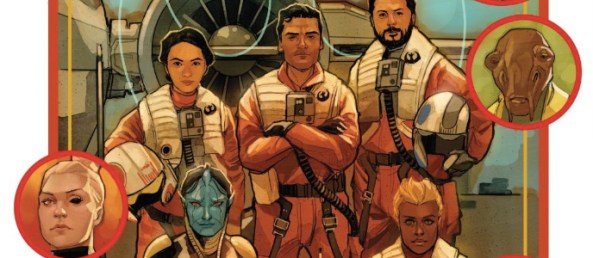
There’s a letter in the back of the final issue of Star Wars Poe Dameron that questions the disparity between the character we see in the comics and the character we see in Episode VIII. “In The Last Jedi, Poe’s actions show that he is brash and headstrong. During the movie he becomes a great leader.” And that’s true: in deed and in name, he is the Best Pilot in the Galaxy. Writer Charles Soule answers this letter with the following observation: “[Poe] hadn’t really failed to that point.” In The Force Awakens and Star Wars Poe: Dameron, he is still a singular hero. Star Wars: Poe Dameron 31 strips away the narrative myth of the Chosen One, forcing victory by ensemble, by circumstance, and by hope. Continue reading
Feature Panels Orient the Action in Extermination 3

by Drew Baumgartner

Extermination 3

This article contains SPOILERS. If you haven’t read the issue yet, proceed at your own risk!

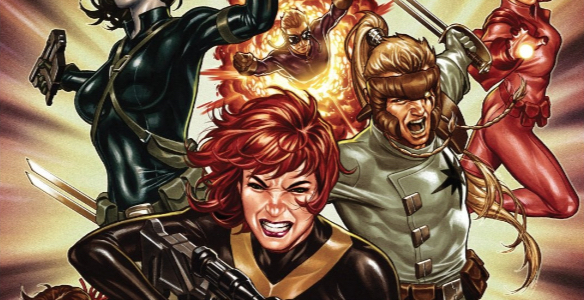
Tony Zhou’s Every Frame A Painting channel might just be my favorite outlet for analysis of visual media. Zhou tends to frame his videos very narrowly — such as the “How to do Visual Comedy” video excerpted above — but the lessons can be applied much more broadly. Which is my half-explanation for why I chose that particular video to kick off my analysis of Extermination 3 — not because this issue has anything to do with visual comedy, but because artist Pepe Larraz does such a brilliant job inventively eschewing lazy visual conventions. Continue reading

West Coast Avengers 2: Discussion

by Spencer Irwin and Michael DeLaney

This article contains SPOILERS. If you haven’t read the issue yet, proceed at your own risk!

Spencer: Kate Bishop’s California adventures — under the pens of both Matt Fraction and Kelly Thompson — have all more-or-less revolved around the idea of appearance, on Hollywood’s obsession with beauty, fame, and youth. On first glance, M.O.D.O.K.’s transformation into the chiseled B.R.O.D.O.K. in West Coast Avengers 2 seems fueled by the same kinds of obsessions, but there’s actually an even greater danger lurking deep within: B.R.O.D.O.K.’s preoccupation with appearance is driven entirely by dangerous entitlement and toxic masculinity. Continue reading

The Immortal Hulk 6 Lives Up To Its Title

by Michael DeLaney

This article contains SPOILERS. If you haven’t read the issue yet, proceed at your own risk!

slim-banner

The classic horror movie icons of yore served as metaphors — fractured mirrors of what we could become if we let go of those virtues that make us inherently human. While The Hulk is definitely an imperfect hero made in the Marvel fashion, he probably has more in common with the likes of Frankenstein’s monster or The Wolfman. Al Ewing recognizes this and has made it a focal point of Immortal Hulk. Continue reading

Severing Yet Another Tether to Bruce’s Humanity in Batman 55

by Spencer Irwin

This article contains SPOILERS. If you haven’t read the issue yet, proceed at your own risk!

slim-banner

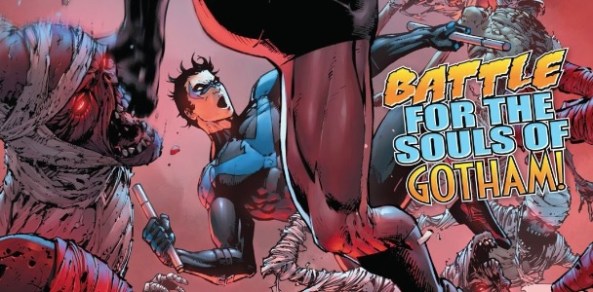
When first introduced back in 1940, Dick Grayson — then known as Robin, the Boy Wonder — was meant to provide a reference point for young readers, a way for them to see themselves in the stories they were reading. His youthful charm not only won over readers, but Batman himself, who quickly transformed from his early brooding, murderous, pulp-inspired incarnation into a more genial, bombastic character thanks to Robin’s influence. Even as modern interpretations of Batman return to a darker take on the character, Dick Grayson — now Nightwing — remains a tether to Batman’s humanity, a character who can bring out his lighter side even under the harshest circumstances. In Batman 55, Tom King and Tony Daniel highlight this vital role Nightwing fills, not just through his actions, but through the very structure of the issue. Continue reading

Batman Damned 1: Discussion

by Patrick Ehlers and Drew Baumgartner

This article contains SPOILERS. If you haven’t read the issue yet, proceed at your own risk!

Patrick: What is the first thing you do when you pick up your copy of Batman Damned #1? You’ve got fifty pages of stunning Lee Bermejo art on oversized, oddly-shapped pages, and a script from the legendary Brian Azzarello. It’s a mature, confident riff on Batman and crime and dark magic, but you eagerly thumb through that intrigue and drama and blah blah blah until you find the panel where you can sorta see Batman’s dick. Can you spot it without someone else increasing the contrast and circling it? It’s a rush — a taboo look at Bruce Wayne’s dong flopping lazily to right. And now, because you have this comic in your hands, you’re one of the people that saw it first hand.

It is a quintessential “made you look” moment. Bermejo and Azzarello have such command over the readers’ eye that they are able to direct us to one specific panel before we’ve even considered buying the book. Once this masterpiece is in your hands, you discover that it’s all about misdirection, slight of hand, and controlling what the reader sees and when they see it. Continue reading

The Amazing Spider-Man Annual 1 Presents a Feminist History

by Drew Baumgartner

Amazing Spider-Man Annual 1

This article contains SPOILERS. If you haven’t read the issue yet, proceed at your own risk!

Pixar

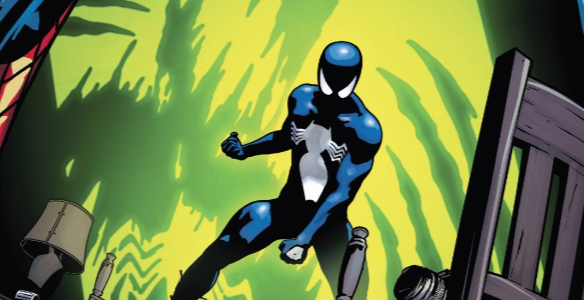
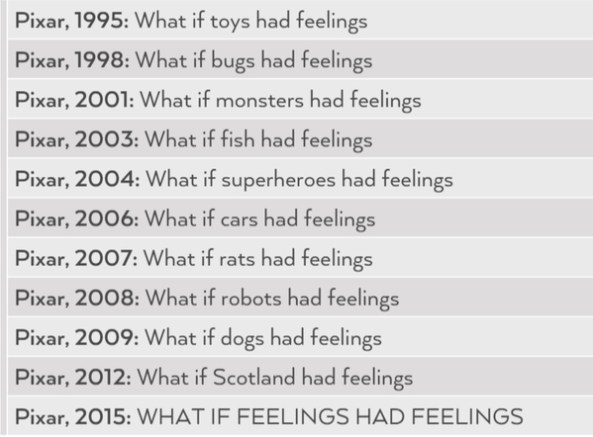
As a kid, I always suspected the inanimate objects in my life had secret lives of their own. It wasn’t so much that I thought they got up and walked around when I wasn’t looking, but that they had feelings and aspirations and friends that they cared about. That was the bit about Toy Story that really hit me when it came out — that my toys were desperate for my love and attention, and they felt neglected when I turned my attention elsewhere. Worrying about the feelings of inanimate objects speaks to some of my most well-worn neuroses, but I’d defend those early experiences as helping me practice sympathy for other humans. I hesitate to call Toy Story a feminist history, since the marginalized perspective it adopts is entirely fictional, but it certainly has the shape of a feminist history, cuing us (or, at the very least, eight-year-old me) into the heretofore ignored plight of children’s toys. (To be clear: “feminist history” isn’t the history of feminism, but feminist approaches to history — approaches that highlight otherwise overlooked perspectives and narratives in history.) With Amazing Spider-Man Annual 1, Saladin Ahmed and Garry Brown achieve something similar, retelling the classic arc “Alien Costume Saga” from the perspective of the Venom Symbiote. Continue reading

Full-Page Cutaway Gags Establish Tone in Superman 3

by Patrick Ehlers

This article contains SPOILERS. If you haven’t read the issue yet, proceed at your own risk!

Patrick: In its abstract, the story of Superman thus far is bleak. The Earth has been stranded in the Phantom Zone, everyone on the planet is suffering from Phantom Zone-related environmental poisoning (including the superheroes), and all the scariest Kryptontian villains have teamed up with Rogol Zaar to defeat Superman. That’s pretty dire, right? This thing is even dark down to its artistic team: Ivan Reis and Joe Prado work with realistically shaped and shaded characters, which sort of insists that all of this is happening to real human beings with real human physiology. Luckily, writer Brian Michael Bendis sets aside real and relevant space in the issue to make jokes and have fun with this Superman adventure. Continue reading

Creator vs Creation in Daredevil 608

by Michael DeLaney

This article contains SPOILERS. If you haven’t read the issue yet, proceed at your own risk!

“I did not ask for the life I was given. But it was given nonetheless.”                                                                 Mr. Eko, LOST

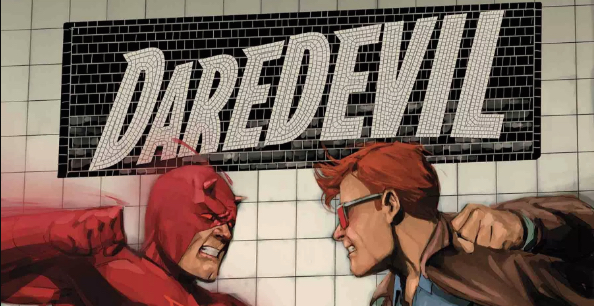
No one ever asked to be born – we emerge from the womb and are saddled with struggles specific to our circumstances. In Daredevil 608, Mike Murdock emerges from the ether/Matt Murdock’s imagination and has to deal with a world that doesn’t want to acknowledge his existence. Thus, he takes some aggressive measures to make them acknowledge it. Continue reading

“The End” is the Enemy in Fantastic Four 2

by Spencer Irwin

This article contains SPOILERS. If you haven’t read the issue yet, proceed at your own risk!

Back when the Future Foundation rode off into the sunset at the end of Secret Wars, ready to recreate and explore the multiverse, many fans (myself included) saw it as the perfect farewell to the characters. This leaves Dan Slott and Sara Pichelli with the unenviable task of bringing this “ending” to an end, of justifying more adventures for characters who had already received their happily ever after. Interestingly, Slott and Pichelli do so by demonizing the very idea of “endings,” by making “the end” the very villain that brings the Fantastic Four back together. Continue reading