Kill or be Killed 14: Discussion

By Drew Baumgartner and Ryan Desaulniers
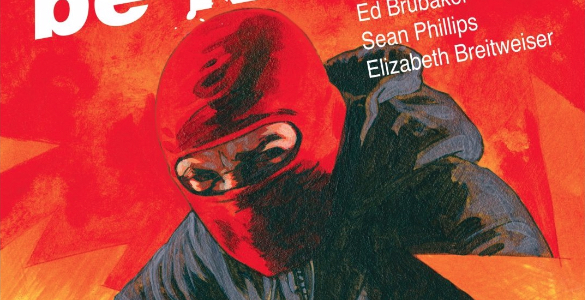
Kill or be Killed 14

This article contains SPOILERS. If you haven’t read the issue yet, proceed at your own risk!

Remove everything that has no relevance to the story. If you say in the first chapter that there is a rifle hanging on the wall, in the second or third chapter it absolutely must go off. If it’s not going to be fired, it shouldn’t be hanging there.

Anton Chekhov

Drew: I feel like we tend to talk about Chekhov’s Gun backwards: we often frame it as “a gun introduced in the first chapter must go off in the third,” but that “must” kind of scrambles the causality — guns don’t go off in narratives because they’ve been introduced; they’re introduced because they need to go off. If the gun doesn’t go off, it’s as irrelevant to the narrative as the rings of Saturn. It’s an essential concept for narrative efficiency, but my awareness of it undoubtedly influences my own understanding of what a story is. While a child may think of a story as “everything that happens to the characters between the beginning and the end” (I know I did), anyone familiar with Chekov’s Gun must recognize that a good story is, at the very least least, pared down to only the relevant events transpiring between the beginning and the end. It’s a notion that assures us that whatever we’re reading is important, which in turn provides some clues about what the narrative finds important. 14 issues in, one might think that we’d already have a great handle on what Kill or be Killed finds important, but this issue managed to surprise me with the details it chose to focus on. Continue reading

DC New Talent Showcase 2017

It’s the 2017 DC Comics New Talent Showcase! To cover it, Retcon Punch has assembled our finest old talent to say something about each of these stories.

slim-banner4 Continue reading

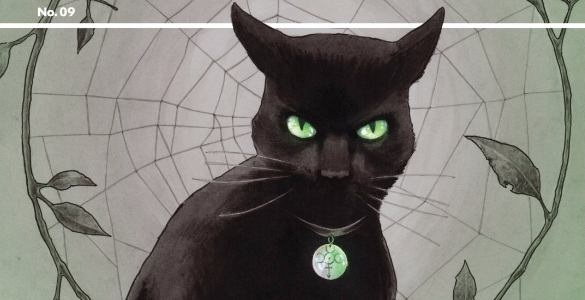
Black Magick 9 Keep Rowan in the Dark

by Drew Baumgartner

Black Magick 9

This article contains SPOILERS. If you haven’t read the issue yet, proceed at your own risk!

Whether it’s Harry Potter or Luke Skywalker, I tend to think of the prototypical fantasy protagonist as being relatively unfamiliar with the strange world they live in. It allows their confusion or surprise at the unexpected to mirror our own, and their ignorance offers a reasonable justification for someone to explain that wizards are real or that the Jedi channel a power called the force. A more knowledgable fantasy protagonist, then, might be hard for an audience to keep up with. I suspect this is how I’d feel about Rowan Black — who is undoubtedly knowledgable about the fantastical elements of her world — if she weren’t on her heels from issue one. She may have knowledge and motives that we don’t fully understand, but she’s just as clueless about what the heck is going on as we are. Indeed, issue 9 might even leave us with more knowledge than she has. Continue reading

Teenage Regrets in Batgirl 17

By Drew Baumgartner

Batgirl 17

This article contains SPOILERS. If you haven’t read the issue yet, proceed at your own risk!

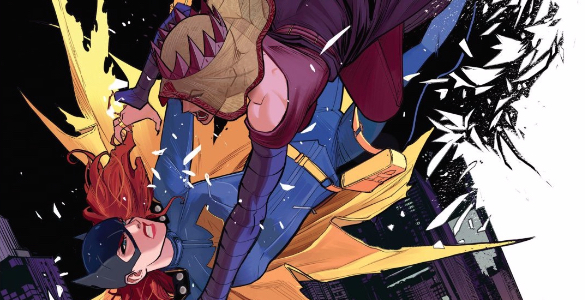
Teens are bad at perspective. It’s not their fault — adolescent brain development sticks them with overdeveloped emotional centers and underdeveloped reasoning centers — but it’s a big part of the reason they aren’t considered “adults.” Fortunately, the stakes for teens is often relatively low. Sure, who takes who to prom may feel like a big deal at the time, but maturity (and time and distance) reveal many teenage concerns to be the trivialities they always were. For that reason, it can be enlightening to revisit your biggest teenage regrets with a more worldly perspective — perhaps they’re not as regrettable as you remember. With Batgirl 17, Hope Larson and Chris Wildgoose seem to take that notion to heart, with a villain vainly asserting the opposite. Continue reading

Mining the Overlap in Teenage Mutant Ninja Turtles/Ghostbusters II 4

by Drew Baumgartner

Teenage Mutant Ninja Turtles Ghostbusters II 4

This article contains SPOILERS. If you haven’t read the issue yet, proceed at your own risk!

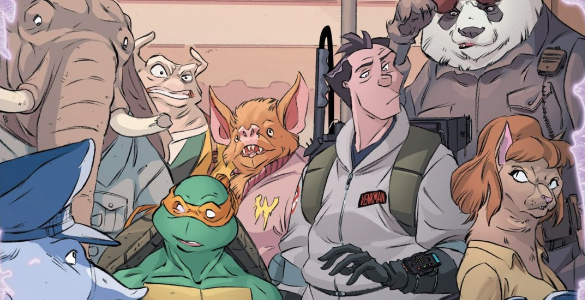
I love the idea of Platonic Forms — that there are ideas bigger and more perfect than any one example could ever be. The easiest examples are shapes; a “sphere” is a simple enough concept to imagine, but any real-world example of one, from the smallest subatomic particle to the largest star, isn’t quite as perfect, and is tied down to specific properties (weight, size, color) that have nothing to do with the idea of a sphere. And this is true of so much of our world. You can read the words I’m writing because you can identify every letter, but the same would be true if the letters were a different weight or color (or size or font, if I could figure out how to change those). In this way, we might imagine some kind of “pure” form of each letter that each example hints at, though I tend to prefer to think of it as the center of a disperse cloud of what each letter can be. Intriguingly (and increasingly), media franchises work in this same way. There may be a “pure” form of Batman that each comic, movie, cartoon, tv show, radio serial, etc. points us towards, but our reality gets to be much more interesting, as each actual manifestation highlights something different about the character and his world. The messiness of those different manifestations — the shape of the cloud they create — seems to be exactly what Teenage Mutant Ninja Turtles/Ghostbusters II  was designed to celebrate. Continue reading

Eleanor and the Egret 5: Discussion

By Drew Baumgartner and Patrick Ehlers

Eleanor and the Egret 5

This article contains SPOILERS. If you haven’t read the issue yet, proceed at your own risk!

slim-banner4

Drew: What moral do we take away from heroic self-sacrifice? We undoubtedly see nobility in a hero prizing the life and safety of others more than their own, but our own takeaway is likely much more modest — we might sacrifice our material comfort or time for the benefit of others, if not our lives. But is “self-sacrifice is good” the only way to look at those stories? Is it possible to look at a hero laying down their life for others and identify with those others — not the hero making the sacrifice, but the beneficiaries of that sacrifice? Is it possible that we see the hero’s death less as a noble choice and more as satisfying a cosmic need for heroes to die — a “sacrifice” in a very different sense of the word? It’s the kind of conclusion you might expect of a world-ending sci-fi computer to draw, but it’s also embedded in the idiosyncratic resolution of John Layman and Sam Kieth’s Eleanor and the Egret. Continue reading

A Surprise Backstory Reveals the Depth of Curse Words 10

by Drew Baumgartner

Curse Words 10

This article contains SPOILERS. If you haven’t read the issue yet, proceed at your own risk!

What is Curse Words to you? As a series that wears its sense of humor on its sleeve, it’s easy to pigeonhole it as an irreverent romp, complete with magical beards and a talking animal sidekick. “Pigeonhole” makes it sound like a negative, so I want to make it clear that 1) goofy, fun stories are worthy of our collective attention, and 2) Curse Words worked beautifully as a goofy, fun story. But I suppose we always knew there was something lurking beneath that slick facade, whether it was some piece of Wizord’s backstory or the suspicious nature of his new magic-stealing powers. With this issue, Charles Soule and Ryan Browne take that several steps further, establishing some devastating emotional stakes that are so surprising, they can’t help but force us to question everything about this series. Continue reading

Teenage Mutant Ninja Turtles 76: Discussion

By Drew Baumgartner and Ryan Mogge

Teenage Mutant Ninja Turtles 76

This article contains SPOILERS. If you haven’t read the issue yet, proceed at your own risk!

Drew: If there’s a sci-fi equivalent to “boy meets girl…” it might reasonably be “alien race comes in peace, humans react badly.” Where it goes from there depends a great deal on what type of story is being told, but the premise of an earnestly peaceful alien race forced to defend itself against panicky earthlings is full of the kind of themes sci-fi writers love, vilifying the xenophobia and shortsightedness that hold humanity back. Indeed, the human attack on the aliens is so despicable, storytellers have to go out of their way to make the aliens seem somehow suspicious — perhaps they look scary or seem to be keeping some kind of secret from us. That is, while we may come to sympathize with the aliens, there’s often some ambiguity to their intentions. This is decidedly not the case for the Triceratons in Teenage Mutant Ninja Turtles 76, whose intentions are clear to everyone — especially the reader — from the moment they arrive on Earth. It sets them up as the unequivocal good guys, allowing Agent Bishop to really cut loose as the issue’s villain. Continue reading

Peter Gets a New Set of Great Responsibilities in The Amazing Spider-Man 791

by Drew Baumgartner

Amazing Spider-Man 791

This article contains SPOILERS. If you haven’t read the issue yet, proceed at your own risk!

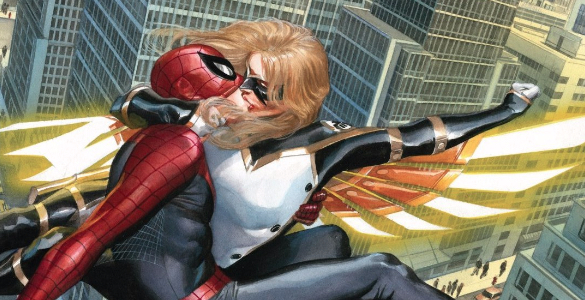
“With great power must also come great responsibility.” Every Spider-Man fan knows these words as well as Peter Parker himself, so you’d think we’d have a good handle on what it means. And we do, to some degree — Peter’s superhuman powers demand that he take on superhuman responsibilities — but much of the tension comes from how all that superheroing clashes with the other responsibilities in his life. Writer Dan Slott has always kept that aspect of Spider-Man in mind, giving Peter more personal and professional responsibilities than he can really keep track of. It’s a juggling act we’re all familiar with in our own lives, and Amazing Spider-Man 791 finds Slott adding one more that clearly means a lot to him: publishing deadlines. Continue reading

Help Drew Fund His Comics Anthology: MASKS

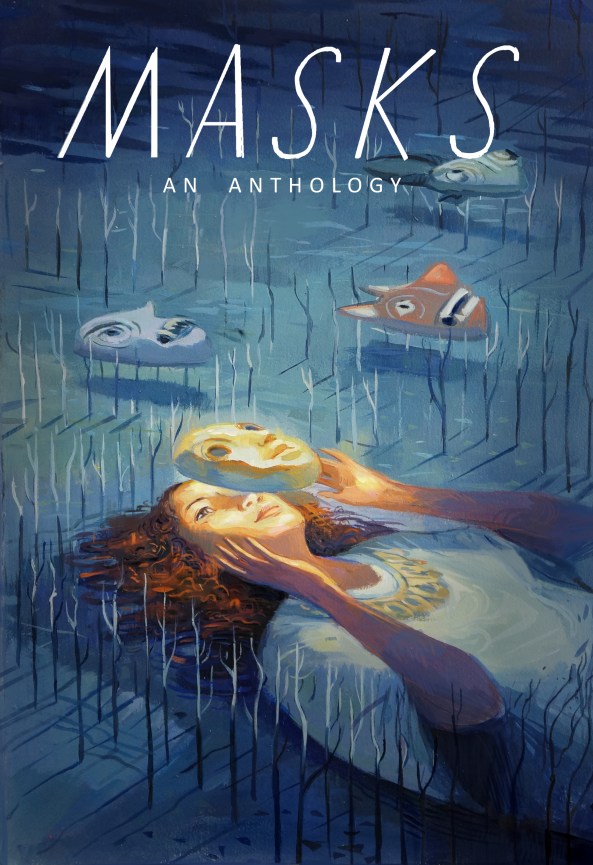
MASKS: An Anthology

Hi all! Drew here, interrupting our regularly scheduled programming to bring you a special announcement about a comics anthology I’ve spent the past several months putting together. It’s called MASKS: An Anthology, and it collects comics and essays about comics, all dealing with the theme of masks. It features writers and artists from all over the world, including our very own Patrick Ehlers and Spencer Irwin, who are both contributing essays. Patrick is also writing and drawing his first ever comic, which you’re not going to want to miss. It’s up on kickstarter now, where digital and physical copies are available alongside a number of other exciting rewards. I’m obviously a bit biased, but I think this is a project that will appeal to most of our readers, as it features innovative and varied comics alongside in-depth analyses. It’s a project I’m very proud of, and hope you’ll consider supporting. The kickstarter ends on November 22nd, so be sure to act fast! (Check out a few samples from the book after the break!) Continue reading